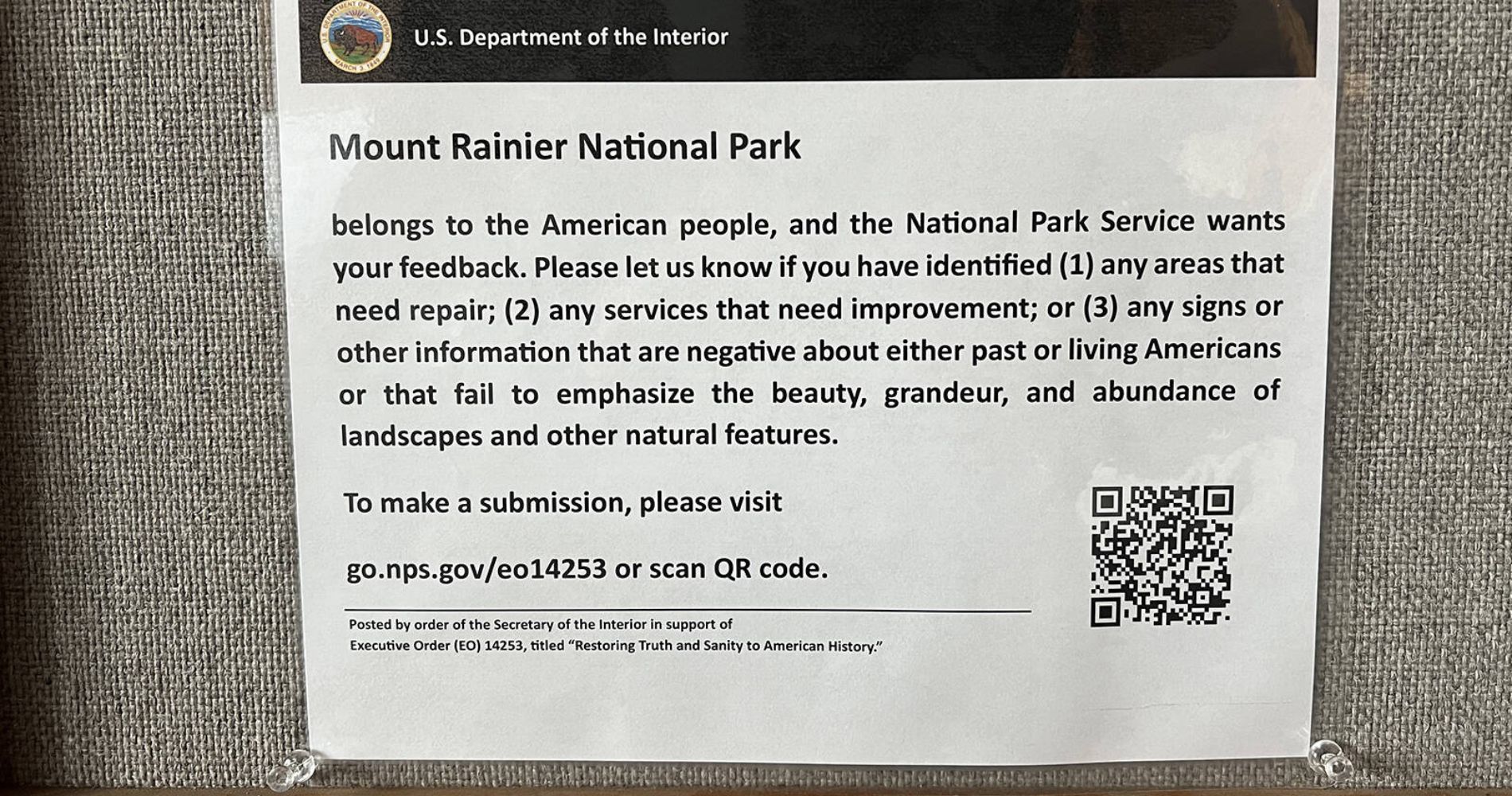
A comprehensive analysis of over 35,700 public comments submitted to the National Park Service (NPS) has revealed a resounding public rejection of an executive order aimed at removing "negative" content from park interpretive materials. The findings indicate that the American populace is "vehemently opposed to attempts to erase history and censor national parks," contradicting the administration’s stated intent to cultivate a more "positive" national narrative. This significant pushback comes a year after the NPS began soliciting feedback via QR codes posted at national park sites, a direct implementation of a presidential directive designed to review and potentially alter how American history, particularly its more challenging aspects, is presented to millions of visitors annually. Despite this overwhelming public sentiment, reports indicate that dozens of interpretive signs and exhibits across the national park system have already been modified or removed, raising concerns among historians, conservationists, and the public about historical integrity and the educational mission of these cherished sites.
The Genesis of a Policy: Restoring "Truth and Sanity"
The directive that sparked this widespread public engagement and subsequent controversy originated in March 2025, when then-President Donald Trump signed an executive order titled "Restoring Truth and Sanity to American History." This order articulated a clear policy objective: to direct the National Park Service to conduct a thorough review and, if deemed necessary, remove materials that "inappropriately disparage Americans past or living (including persons living in colonial times)." The order was framed by the administration as a necessary measure to correct what it perceived as overly critical or unpatriotic interpretations of American history within federal institutions, part of a broader cultural movement advocating for a more celebratory national narrative. Critics, however, viewed the order as an attempt to sanitize or even rewrite historical accounts, particularly those addressing difficult subjects such as slavery, indigenous displacement, and other societal injustices.
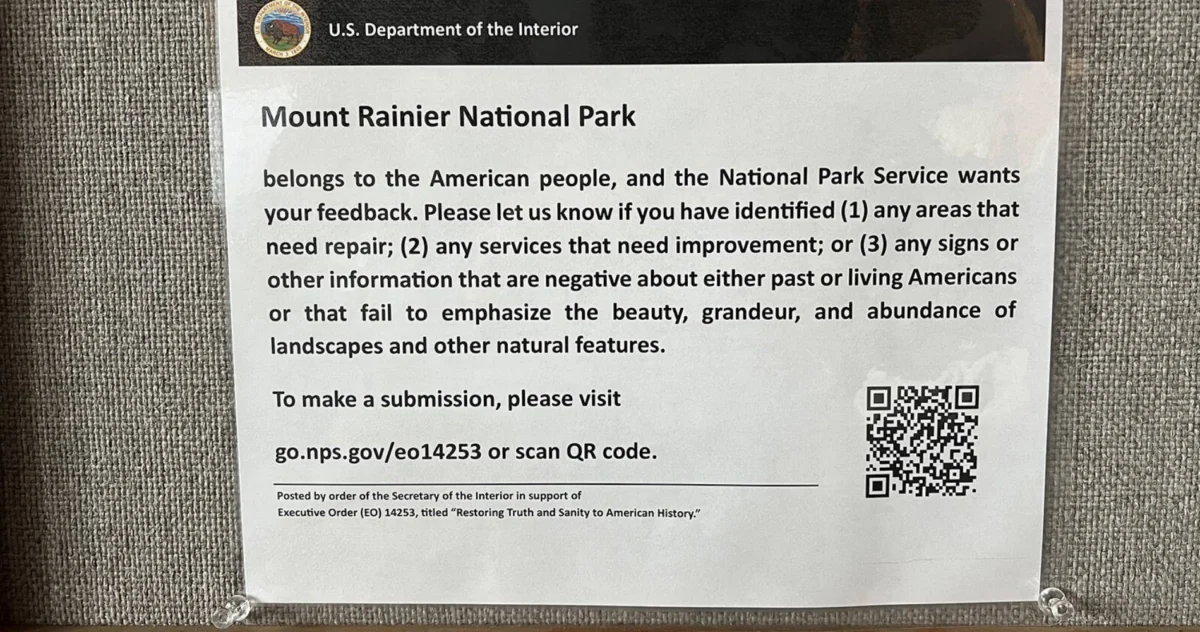
Following the presidential mandate, Interior Secretary Doug Burgum issued Secretary’s Order 3431, providing the operational framework for the NPS to implement the executive order. This secretarial order specifically instructed NPS staff to deploy QR code signs across all NPS properties. These signs explicitly asked visitors to identify "any signs or other information that are negative about either past or living Americans or that fail to emphasize the beauty, grandeur, and abundance of landscapes and other natural features." The mechanism was designed to directly gather public input on perceived historical negativity, allowing for a bottom-up approach to identifying content for potential revision.
A Year of Feedback: The Public Responds
Over the subsequent year, these QR codes became a conduit for public sentiment regarding the interpretation of American history within its national parks. Last month, the Interior Department released the compiled feedback, a dataset comprising 35,700 comments. While this number might seem substantial, it represents a "tepid response" according to the Associated Press, especially when considering the sheer scale of visitation to national parks. In the preceding year alone, the National Parks system welcomed 323 million visits across its more than 400 sites, suggesting that only a small fraction of visitors engaged with the QR code initiative. This low engagement itself could be interpreted in several ways: perhaps a lack of awareness, a general satisfaction with existing signage, or a deliberate choice by many visitors not to participate in what some might perceive as a "snitching" mechanism.
The true nature of the public’s response, however, became evident through detailed analyses of the released comments. The Center for Western Priorities (CWP), a nonpartisan conservation and advocacy organization, undertook a comprehensive review of the entire dataset. Their findings starkly contradicted the administration’s presumed objective. Out of the 35,700 submitted comments, CWP identified a mere 47 that explicitly flagged a sign for removal or expressed broad support for the administration’s content revision effort. This represents an astonishingly small fraction – less than 0.13% – of the total feedback received.
Delving deeper into these 47 comments, the CWP analysis revealed further nuances. Twenty of these comments, far from advocating for the removal of "negative" history, actually used the platform to "demand more inclusive history and better representation in signage, such as noting that a historical marker used a racial slur." This indicates a public desire for more comprehensive and accurate historical narratives, even if challenging, rather than a sanitized version. Another thirteen comments were found to be unclear, satirical, or merely pointed out factual inaccuracies in existing signage, unrelated to the "negative content" directive. This leaves an incredibly small contingent – only 14 visitors out of 35,700 – who utilized the form in the manner intended by the administration, specifically to flag content deemed "negative" about past or living Americans.
Furthermore, the CWP analysis uncovered that even when accounting for organized "form letters" from advocates who coordinated opposition to the executive order across numerous parks, an overwhelming 99.8% of the comments "defended historical accuracy, expressed support for the NPS, or pushed back against the order." This statistic underscores a powerful consensus among the public: a preference for historical accuracy and a strong defense of the NPS’s traditional role in presenting a full and nuanced account of American history.
Voices from the Parks: A Critique of the Initiative Itself
An independent analysis by the Associated Press echoed and reinforced CWP’s findings, concluding that the majority of the comments criticized the initiative itself, rather than supporting its premise. Visitors expressed strong disapproval of the administration’s efforts, often labeling them as fundamentally "un-American." For instance, one visitor to a North Carolina park reportedly called the administration’s efforts "un-American," while another objected to "having Americans call in and snitch on each other." These sentiments highlight a public discomfort with the idea of a government-sanctioned mechanism for reporting perceived historical "negativity," viewing it as an infringement on intellectual freedom and a potential harbinger of censorship.
Perhaps most illustrative of the public’s desire for comprehensive history was a comment from a visitor to Gateway Arch National Park in St. Louis. This visitor wrote, "We had a great time learning about the development of this site including the difficult parts of our American story. We need those reminders to help us become even better in the future." This comment encapsulates a widespread understanding that history, in its entirety – both its triumphs and its tribulations – serves as a crucial educational tool, fostering reflection and societal progress. The public, it appears, values the opportunity to engage with the full spectrum of the American experience, not just its celebratory aspects.
The Unseen Hand: Changes Despite Opposition
Despite this demonstrably overwhelming public opposition to the removal or alteration of historical content, the National Park Service has reportedly proceeded with changing or removing dozens of signs across its vast system. The Associated Press reports that these changes have occurred even as the NPS’s own collected data clearly indicates public sentiment runs counter to the administration’s policy. This discrepancy between public feedback and administrative action raises serious questions about the responsiveness of the NPS to citizen input and the degree to which political directives override professional judgment and public will.
A dedicated watchdog group, "Save Our Signs," has emerged as a critical monitor of these changes. Founded by a coalition of librarians, public historians, and data experts, Save Our Signs is actively documenting the impact of the executive order on park interpretive materials. University of Minnesota librarian and group member Jenny McBurney informed the Associated Press that the group has already documented the removal or modification of at least 59 signs. These changes, according to McBurney, specifically target content related to sensitive and often challenging topics, including slavery, women’s rights, and Native American history. For instance, specific details regarding the harsh realities of slave labor at historic plantations, the struggles for suffrage, or the forced displacement and massacres of indigenous peoples might be toned down, removed, or reframed to align with the "positive" narrative directive. This systematic alteration risks presenting an incomplete and potentially misleading account of America’s past.
In response to these developments, Save Our Signs is building a "People’s Archive," a citizen-led initiative that invites visitors to submit photos of existing signs and exhibits at national parks. This archive serves a dual purpose: to preserve a record of historical interpretation as it existed before the current directives, and to highlight any subsequent changes. It represents a proactive effort by the public to counter what they perceive as historical revisionism by creating an independent, verifiable record. Ms. McBurney emphasized the profound importance of this work, stating, "We hear from folks all over the country that history matters, that our national parks matter and that this is important to them."
Broader Implications and Future Outlook
The controversy surrounding historical interpretation in national parks is not an isolated incident but rather a microcosm of a larger national debate concerning how American history is taught, remembered, and presented in public spaces. This debate often reflects deep ideological divides regarding national identity, patriotism, and the role of government in shaping historical narratives. The executive order and its implementation by the NPS highlight the tension between political agendas and the principles of historical scholarship, which prioritize accuracy, context, and the inclusion of diverse perspectives.
Historians and academic bodies have largely expressed concern over attempts to sanitize history. Organizations like the American Historical Association frequently advocate for a comprehensive understanding of the past, arguing that glossing over difficult truths undermines critical thinking and prevents a true reckoning with national identity. The national parks, with their vast reach and educational mandate, play a crucial role in shaping public understanding of history. Any move to selectively present historical facts or diminish uncomfortable truths could erode public trust in these institutions and their ability to serve as objective educational resources.
The long-term implications of this policy are significant. If the NPS continues to alter historical narratives despite overwhelming public and expert opposition, it risks alienating a substantial portion of its visitor base and undermining its mission to preserve and interpret America’s natural and cultural heritage. The "People’s Archive" and similar grassroots efforts underscore the public’s vigilance and commitment to safeguarding historical accuracy. This ongoing tension may also invite further scrutiny from Congress, potentially leading to legislative challenges or oversight hearings aimed at protecting the integrity of historical interpretation within federal lands. Ultimately, the overwhelming public rejection of historical censorship in national parks serves as a powerful reminder of the enduring value Americans place on a truthful, comprehensive understanding of their collective past, in all its complexity.