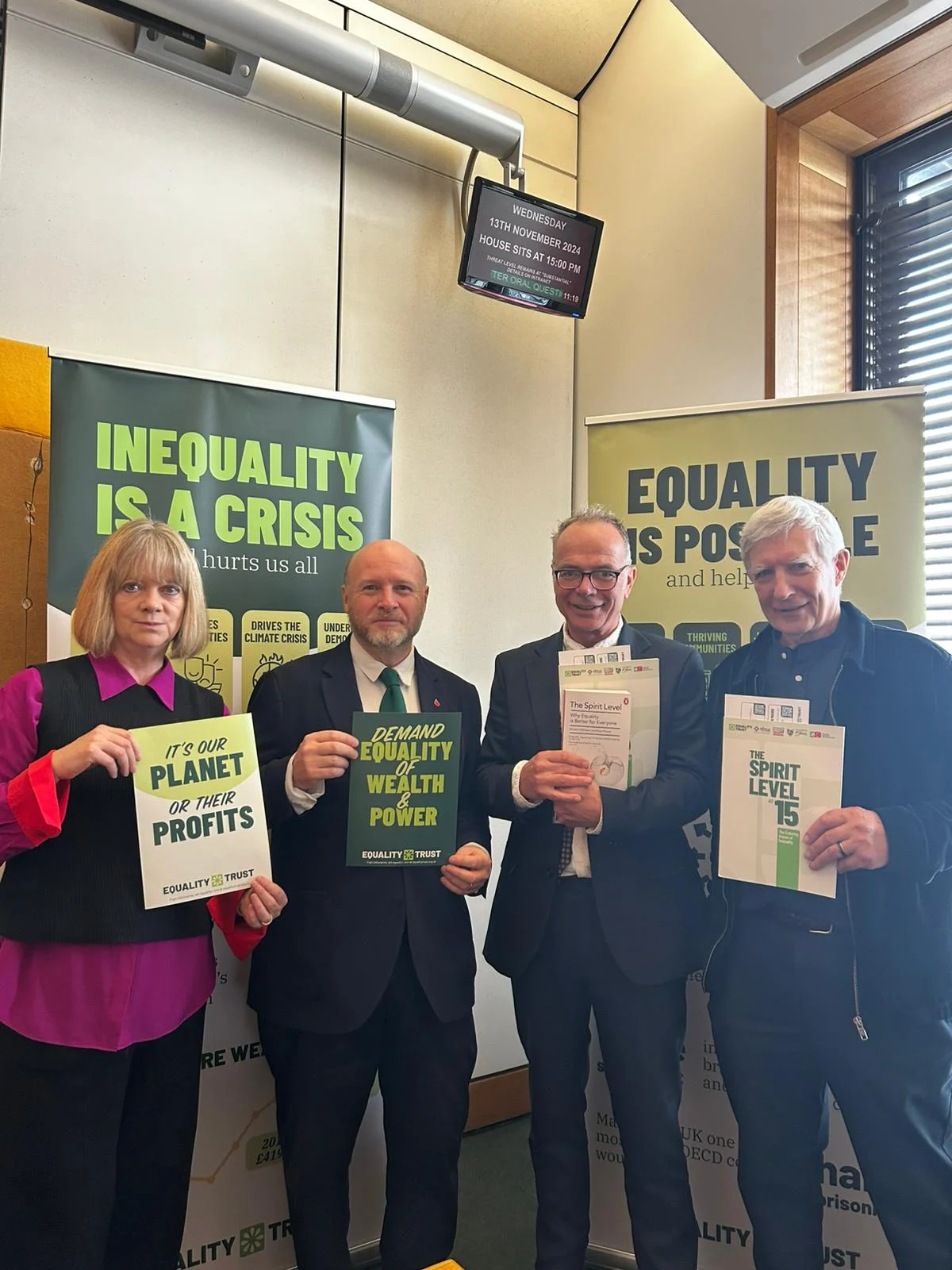
The Equality Trust has released a comprehensive analysis revealing that Britain’s billionaire class has reached an unprecedented level of wealth concentration, with 157 individuals now controlling assets equivalent to 22% of the United Kingdom’s Gross Domestic Product (GDP). This figure represents a dramatic shift from 1990, when the country’s 15 billionaires held wealth totaling just 4% of GDP. The report, titled "Billionaire Britain 2026," suggests that while national economic indicators may show growth on paper, the underlying reality for the majority of the population is one of stagnation and systemic exclusion—a phenomenon the researchers have labeled the "hollow economy."
The data, derived from decades of Sunday Times Rich List records and Office for National Statistics (ONS) figures, underscores a widening chasm between capital accumulation and the lived experience of the British workforce. According to the Trust, the richest 50 families in the UK now hold more wealth than the bottom 34 million citizens combined. This concentration of resources occurs against the backdrop of the longest pay squeeze in modern history, raising urgent questions about the efficacy of GDP as a primary measure of national prosperity.
The Evolution of Wealth Concentration: 1990 to 2026
The trajectory of British wealth accumulation has undergone a fundamental transformation over the last 36 years. When the Sunday Times first began tracking the nation’s wealthiest individuals in 1989, the list reflected an economy still transitioning from the post-war consensus toward a more deregulated, market-driven model. In 1990, 15 billionaires held approximately £27 billion, representing about 4p of every pound of national economic output.
By 2026, the number of billionaires has increased tenfold, and their collective wealth has swelled to nearly £670 billion. This equates to 22p of every pound of GDP. The criteria for entering the upper echelons of British wealth have also tightened; while the Sunday Times once tracked the top 1,000 wealthiest people, the focus has shifted to the top 350, with the entry threshold now standing at £350 million.
Analysts note that the source of this wealth has shifted significantly. In 1990, only three billionaires derived their primary wealth from property, inheritance, and finance. By 2025, that number rose to 42. Finance and insurance now account for 30% of all billionaire wealth in the UK, a fourfold increase in sectoral dominance. This shift toward "rentier capitalism"—where wealth is generated through the ownership of existing assets and the collection of rents or interest rather than the creation of new goods or services—is a central pillar of the Equality Trust’s "hollow economy" thesis.
Ghost GDP and the Illusion of Growth
The report introduces the concept of "Ghost GDP" to explain the disconnect between macroeconomic data and social wellbeing. The term, originally coined by Citrini Research in February 2026, describes an economy that appears robust in statistical reports but fails to provide tangible benefits to the general population. This distortion is increasingly driven by artificial intelligence and automated financial systems that optimize profit margins for asset owners without necessarily creating jobs or raising wages.
The Equality Trust points to the Republic of Ireland as a cautionary precursor. In 2025, Ireland reported a GDP growth rate of 12%, yet much of this was attributed to multinational corporations routing profits through Dublin for tax purposes. The distortion became so extreme that Irish authorities were forced to adopt a new metric, Modified Domestic Demand, to obtain an accurate picture of the actual domestic economy. The Trust argues that the UK is following a similar path, where property price inflation and financial market fluctuations drive GDP upward while the "real" economy—comprising public services, manufacturing, and household disposable income—remains under severe pressure.
Structural Corruption and the Capture of Institutions
The concentration of economic power has inevitably translated into political influence, a process the report describes as "structural corruption." This does not necessarily refer to illegal activity but rather to the legal and normalized ways in which extreme wealth shapes policy and governance.
Key findings in this area include:
- Political Donations: Large-scale political donations increased sixfold between 2002 and 2019, granting wealthy donors disproportionate access to policymakers.
- Media Concentration: Three major media conglomerates now control 90% of national newspaper circulation in the UK, significantly influencing the public narrative surrounding taxation and wealth distribution.
- Legislative Influence: The House of Lords has expanded to over 750 members, making it the second-largest legislative chamber in the world. Research cited by the Trust indicates a documented correlation between significant financial donations and appointments to the upper house.
Professor Kate Pickett, a patron of the Equality Trust and member of the consultative council to the International Panel on Inequality, argues that these dynamics create a "two-tier" society where the rules of the economy are written by and for those at the top. Even figures within the financial establishment have expressed concern; Larry Fink, CEO of BlackRock, warned in his 2026 annual letter that the scale of inequality driven by technological shifts could lead to social breakdown if not addressed through broader investment participation.
The Social and Human Cost of Inequality
The report emphasizes that the "hollow economy" has measurable physical and social consequences. Data from the Health Foundation indicates that healthy life expectancy in Britain has declined by two years over the past decade, falling to just under 61 years. Despite having the sixth-largest economy globally, the UK ranks second to last among comparable wealthy nations for healthy life years, trailing only the United States—the most unequal of the high-income countries.
Furthermore, the disparity in health outcomes is strictly tied to geography and wealth. Residents in the UK’s most affluent areas can expect up to 20 more years of healthy life than those in the most deprived communities.
The impact on the younger generation is equally stark. UNICEF’s 2026 Report Card 20 ranked the UK 24th for child wellbeing and 35th for income inequality among the world’s wealthiest nations. These rankings suggest that the current economic model is failing to provide a stable foundation for future generations, prioritizing short-term asset growth over long-term social stability.
Environmental Implications and Climate Plunder
The Equality Trust’s findings are bolstered by recent research from Oxfam regarding the environmental footprint of the ultra-wealthy. The "Climate Plunder" report found that the world’s richest billionaires produce more carbon through their investments, superyachts, and private jets in three hours than the average British citizen does in an entire lifetime.
In the UK, the richest 0.1% are estimated to be 56 times more polluting than those on the lowest incomes. Since 1990, carbon emissions from this elite group have risen by 53%, while the bottom 90% of the population has successfully reduced their emissions by 26%. The report argues that the climate crisis is inextricably linked to wealth inequality, as nearly 40% of billionaire investments remain concentrated in carbon-intensive industries such as oil, gas, shipping, and cement.
International Policy Shifts and the Move "Beyond GDP"
The release of the "Billionaire Britain 2026" report coincides with a burgeoning international movement to reform economic measurement. In May 2026, the United Nations High-Level Expert Group on Beyond GDP launched its final report, proposing a framework of 31 indicators to replace GDP. These indicators focus on wellbeing, equity, and environmental sustainability.
Simultaneously, Olivier De Schutter, the outgoing UN Special Rapporteur on Extreme Poverty, published a "Roadmap for Eradicating Poverty Beyond Growth." De Schutter’s thesis posits that the traditional pursuit of GDP growth has become an obstacle to poverty eradication, as the benefits of such growth are increasingly captured by the top 1% while the ecological costs are borne by the poor.
Recommendations for Systemic Reform
The Equality Trust concludes that "sticking plaster" solutions, such as minor adjustments to the welfare state or incremental tax changes, are no longer sufficient to address the scale of the crisis. Instead, the Trust advocates for a fundamental restructuring of the British economy through several key pillars:
- Progressive Wealth Taxation: Implementing a structural limit on the concentration of power through a comprehensive wealth tax on assets exceeding a certain threshold.
- Democratic Reform: Capping political donations and breaking up media monopolies to ensure that policy is not dictated by a narrow elite.
- New Economic Metrics: Adopting the UN’s "Beyond GDP" indicators to ensure national success is measured by health, education, and environmental stability rather than just financial flow.
- Institutional Replacement: Moving away from rentier capitalism toward an economy that rewards value creation and ensures that the benefits of technological advancements, such as AI, are distributed equitably.
The report serves as a stark reminder that while the Sunday Times Rich List celebrates individual success, the aggregate effect of such extreme wealth accumulation may be the hollowing out of the very nation that fostered it. As the UK navigates the mid-2020s, the debate over who the economy serves—and how that service is measured—has moved from the fringes of academia to the center of the national interest.