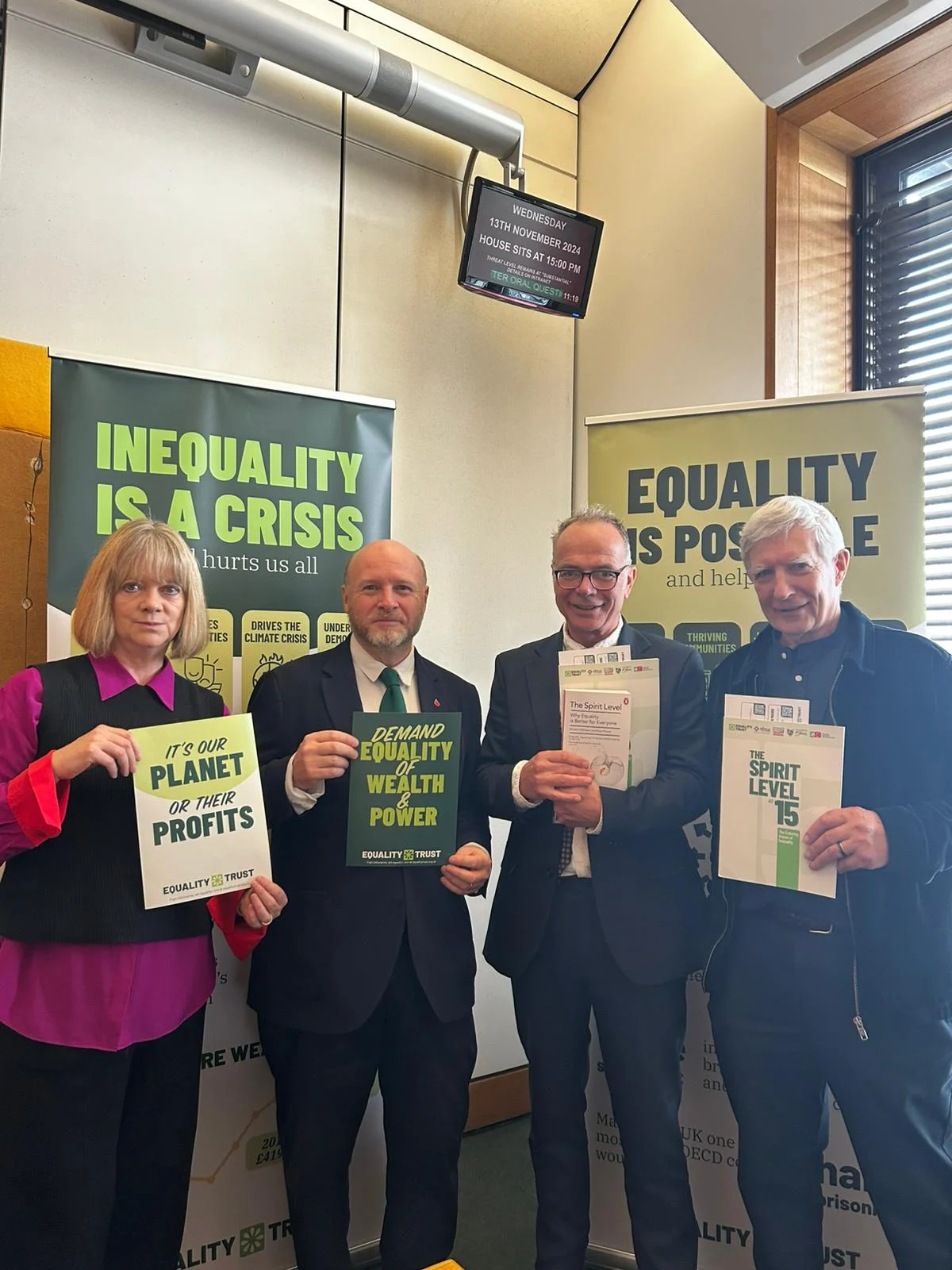
The Equality Trust has officially unveiled the findings of its landmark Community Economist project, a multi-regional initiative designed to demystify economic systems and empower citizens to advocate for structural change. By bridging the gap between academic economic theory and the lived realities of individuals across the United Kingdom, the project seeks to challenge the prevailing narrative that the economy is an immutable force governed by inaccessible logic. Launched as a collaborative effort involving volunteers from London to Scotland, the initiative marks a significant shift toward participatory economic research and social action, aiming to place human well-being at the center of fiscal and monetary policy.
The project’s culmination includes a comprehensive insight report and a documentary film that synthesize over ten hours of raw interview footage and thematic analysis. These resources highlight how systemic economic decisions manifest in the daily lives of citizens, affecting everything from housing security and educational attainment to the quality of interpersonal relationships. The release of these findings comes at a critical juncture for the UK, as the nation continues to grapple with the long-term effects of wealth concentration and the rising cost of living, which have left many feeling alienated from the mechanisms of national prosperity.
The Genesis of the Community Economist Initiative
For decades, the field of economics has been dominated by a top-down approach, where policy is often dictated by macroeconomic indicators like Gross Domestic Product (GDP) or inflation rates, sometimes at the expense of microeconomic stability for households. The Equality Trust identified a growing sense of "economic fatalism" among the public—a belief that the economy is something that "happens" to people rather than a system they can influence. To combat this, the Community Economist project was conceived as a hybrid of social research, adult education, and grassroots activism.
The recruitment process for the project reflected a high demand for economic literacy and agency. Despite the technical nature of the subject, the trust received a surge of applications from individuals with no formal training in economics but with profound personal experiences of economic inequality. From this pool, ten volunteers were selected to undergo a rigorous 12-week training program. This cohort was intentionally diverse, representing a cross-section of the UK’s geographic and socio-economic landscape, ensuring that the resulting data would be reflective of a wide array of perspectives.
Methodology: Training and Community Reporting
The core of the project relied on "community reporting," a methodology that prioritizes the voices of those usually excluded from policy discussions. Over the course of three months, the ten volunteers participated in a series of intensive workshops focused on storytelling, qualitative interview techniques, and thematic analysis. The goal was not to turn these volunteers into traditional economists, but to equip them with the tools to document the "human economy."
The central inquiry guiding their research was: "What would it be like if everyone had what they needed to live a good life, and how would that be different from how things are now?" This question was designed to bypass technical jargon and tap into the fundamental values and aspirations of the community. By asking neighbors, colleagues, and local residents to envision a functional economy, the Community Economists were able to collect narratives that are often missed by standard statistical surveys.
The volunteers collected over ten hours of footage, which was then meticulously curated into a series of narratives. These stories do not merely list grievances; they offer a sophisticated critique of how the current economic model fails to support the basic requirements of a "good life." The training empowered the volunteers to see themselves as legitimate contributors to economic discourse, breaking the monopoly that "experts" have traditionally held over the subject.
Contextualizing UK Economic Inequality in 2026
The findings of the Community Economist project are set against a backdrop of persistent economic disparity in the United Kingdom. While the nation remains one of the world’s largest economies, wealth distribution continues to be a point of intense national debate. According to data from the Office for National Statistics (ONS) and independent think tanks, the top 10% of households in the UK hold approximately 43% of the nation’s wealth, while the bottom 50% hold less than 5%.
This concentration of resources has tangible effects on social mobility and public health. Research consistently shows that societies with high levels of income inequality experience lower levels of trust, higher rates of mental health issues, and decreased life expectancy. The Community Economists’ report echoes these findings, noting that "private worries" regarding rent, debt, and precarious employment are universal themes across the UK. By documenting these experiences, the project provides a human face to the abstract data points often cited in parliamentary debates.
Chronology of the Project Phases
The Community Economist project is structured as a multi-year strategy to move from observation to action. The timeline of the project is divided into three distinct phases:
Phase 1: Recruitment, Training, and Reporting (Completed)
This initial phase focused on building the foundational cohort of Community Economists. It involved the 12-week curriculum, the collection of community stories, and the production of the insight report and film. This stage was characterized by the development of strong interpersonal bonds among the volunteers, who moved from being strangers to a cohesive unit of advocates.
Phase 2: Advocacy, Message Testing, and Coalition Building (Ongoing)
The project is currently entering its second phase. The focus has shifted toward utilizing the insights gathered to influence public opinion and policy. This involves "message testing"—determining which narratives most effectively resonate with the public and policymakers—and building alliances with other NGOs, labor unions, and community organizations. The goal is to turn individual stories into a collective mandate for change.
Phase 3: Social Action and Systemic Reform (Future)
The final phase will see the culmination of the evidence and energy gathered in the previous stages. This will involve direct social actions—ranging from local community wealth-building projects to national-level advocacy campaigns—designed to implement specific economic reforms. The Equality Trust envisions this phase as the transition from "what we know" to "what we do," ensuring that the project results in tangible policy shifts.
Thematic Insights: Beyond the Bottom Line
The report released by the Community Economists identifies several key themes that define the current economic experience of the UK public. One of the most prominent themes is the "decoupling of work and security." Many interviewees expressed that despite working full-time, they remained unable to afford stable housing or provide for their children’s future aspirations. This suggests a fundamental breakdown in the "social contract" that previously promised a degree of stability in exchange for labor.
Another significant finding is the impact of economic stress on social cohesion. The "economy" is often experienced as a source of isolation, where the struggle for survival leaves little room for community engagement or the maintenance of relationships. Conversely, the project found that when people are given the space to discuss these issues collectively, the sense of isolation diminishes, replaced by a shared sense of purpose.
The report also highlights a "visionary gap." When asked what a "good life" looks like, most respondents did not point to excessive wealth or luxury. Instead, their aspirations were remarkably modest: secure housing, time to spend with family, access to quality education, and the ability to contribute meaningfully to society. The report argues that if the economy cannot provide these basic requirements for the majority of the population, it is the system, not the people, that is failing.
Implications for Future Policy and Discourse
The Community Economist project challenges the traditional boundaries of economic expertise. By asserting that "people make economies," The Equality Trust is advocating for a more democratic approach to financial and social planning. The implications of this are profound; it suggests that economic policy should be subject to the same level of public scrutiny and participation as any other area of democratic life.
Analysts suggest that this model of community-led research could serve as a blueprint for other sectors, such as healthcare or environmental policy. By centering lived experience, policymakers can avoid the pitfalls of "spreadsheet-driven" decisions that may look good on paper but have devastating real-world consequences. The project emphasizes that economic justice is not just about the redistribution of wealth, but also the redistribution of power and the right to define what an economy is for.
As the project moves into its advocacy phase, the focus will be on turning "private worries into shared action." The Equality Trust and its team of Community Economists are calling for a fundamental re-evaluation of national priorities, urging a shift toward an economy that prioritizes human flourishing over mere capital accumulation. With the evidence gathered and the film now in circulation, the project stands as a testament to the power of community voice in the face of systemic inequality. The journey toward a more inclusive economy has only just begun, but the Community Economists have provided a clear map for the road ahead.