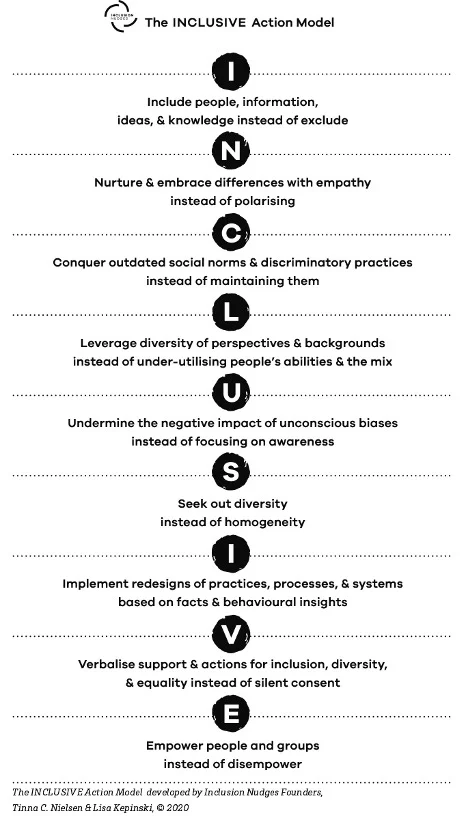
The efficacy of diversity, equity, belonging, and inclusion (DEBI) initiatives hinges profoundly on the precise language and definitions employed. A burgeoning body of research and decades of practical experience indicate that the way these fundamental terms are framed directly influences stakeholder engagement, shapes outcomes, and can inadvertently erect barriers to progress. Far from being mere semantics, the definitions we adopt for DEBI work determine whether efforts are met with genuine understanding and action, or with skepticism, resistance, and ultimately, failure. The Inclusion Nudges change approach, for instance, champions a re-evaluation of these definitions to reveal underlying obstacles and galvanize collective action towards making inclusion an inherent norm.
The Unseen Chasm: Words as Trip Wires
Imagine a scenario where key organizational change initiatives are launched, yet the very words central to their mission trigger vastly different, often negative, reactions across the workforce. This is the silent struggle facing many DEBI efforts. Terms like "diversity," "equity," and "inclusion" can evoke a spectrum of thoughts, feelings, associations, and memories that are deeply personal and shaped by individual experiences and societal narratives. While one person might envision empowerment and opportunity, another might perceive blame, exclusion, or an imposition.
Over the past two decades, common patterns of misinterpretation have emerged, creating what can be described as "hidden trip wires" within organizations. These often manifest as internal monologues or expressed sentiments such as:
- "Diversity isn’t my concern; it only applies to minority groups, not to me." This perspective immediately disengages majority groups, positioning DEBI as an issue for "others."
- "I’m the one facing discrimination. Don’t ask me to fix it—that’s your problem (referring to the majority)." This reaction stems from a sense of burden and exhaustion among those historically marginalized, shifting responsibility rather than fostering shared ownership.
- "You’re diverse, so you fix it—it’s your problem (referring to minority groups)." This unfairly delegates the complex work of systemic change to those who are already underrepresented, ignoring the power structures at play.
- "DEBI isn’t part of my core job description; I lack the time. Someone else needs to handle it." This reflects a perception of DEBI as an add-on, separate from core business objectives, rather than an integrated operational imperative.
- "Let’s focus on attracting ‘diversity talent’ (implying only women or minorities)." This narrows the definition of diversity to specific demographic categories, potentially overlooking other valuable forms of difference and reinforcing tokenism.
- "If we promote women and minorities, it means excluding others (e.g., white men)." This zero-sum game mentality fuels fear of loss, particularly among historically privileged groups, hindering collaborative efforts.
These reactions are not random; they are deeply rooted in how DEBI initiatives have historically been conceived and communicated. Many organizations have traditionally focused on setting diversity targets for specific minority groups or women, rather than for the collective workforce. Programs often aim to "help the minority" or "fix the women" to achieve gender equality, inadvertently placing the onus on the marginalized group to adapt, rather than addressing systemic biases and cultural norms. This approach often leads to a focus on assimilation rather than genuine inclusion, reinforcing "us vs. them" biases and ultimately working against the very intentions of DEBI by excluding crucial segments of the population.
The Perilous Power of Words: Cognitive and Emotional Impacts
The challenge of misaligned DEBI efforts is profoundly exacerbated by the intrinsic power of language. Words are not neutral; they are powerful architects of our perceptions, behaviors, and cultures. Cognitive psychology and behavioral economics offer robust evidence of this influence. For instance, the "priming effect" demonstrates how exposure to certain words or images can unconsciously steer our thoughts and subsequent actions. A classic study illustrated this by showing participants words associated with the elderly (e.g., "wrinkle," "forgetful"), which subsequently caused them to walk slower than a control group exposed to neutral words. Similarly, attempts to counter stereotypes can backfire; telling girls "girls are as good as boys at math" inadvertently reinforces the underlying, false belief that boys are inherently better.
Beyond cognitive priming, words also trigger powerful emotions that drive unconscious thinking, decision-making, and behavior. Several key emotional responses often impede DEBI progress:
- Fear of Loss (Loss Aversion): When diversity is framed as a zero-sum game—one group’s gain necessitates another’s loss—it activates loss aversion bias. This deeply ingrained human tendency makes individuals disproportionately sensitive to potential losses compared to equivalent gains. If equality is perceived as a relinquishing of power or privilege, it triggers a strong desire to maintain the status quo, fostering resistance to change. This is a significant hurdle in organizations where established hierarchies or historical advantages are challenged.
- Strengthening Tribalism: Humans possess an innate tribal mentality, often manifesting as an unconscious fear of the "unknown" or "out-groups." When DEBI language inadvertently highlights differences in a way that signals "otherness," it can activate this instinctive response, leading to unconscious exclusion. People tend to trust and process information more readily from "in-group" members, while dismissing or devaluing input from "out-group" individuals. This impacts knowledge sharing, collaboration, and the effective integration of diverse perspectives.
- Shame and Guilt: A less acknowledged, but profoundly impactful, emotional barrier is shame. Individuals may feel shame when DEBI language implicitly or explicitly blames them for past discrimination (even if unintentional) or highlights their unearned privilege. This can lead to defensive behaviors, including unconscious micro-aggressions against those perceived as triggering these feelings. Such reactions create a "stuck pattern" that paralyzes genuine engagement and dialogue.
These psychological and emotional responses, if left unaddressed, can create an absurd reality where well-intentioned DEBI efforts are undermined by the very language used to promote them. The absence of clearly articulated and universally understood definitions leaves individuals to construct their own interpretations, leading to a fragmented and often counterproductive approach to change.
The Evolution of DEBI and the Need for Clarity
The journey of DEBI in organizations has seen significant shifts over the past few decades. Initially, the focus was largely on compliance and legal mandates, ensuring non-discrimination and basic representation. This evolved into diversity quotas and targets, primarily focused on increasing demographic numbers. More recently, the emphasis has shifted towards creating inclusive cultures and fostering a sense of belonging, recognizing that diversity alone does not guarantee equitable outcomes or engagement.
However, the framing and definitions of these terms have often lagged behind this evolution. Many organizations still operate with implicit, unarticulated definitions, leading to widespread conceptual misalignment. For some, "diversity" might still be narrowly equated with "women" or "minorities." "Inclusion" might be reduced to organizing "diversity networks" or tokenistic activities, rather than fundamentally altering systems and behaviors. "Equity" might be mistakenly simplified to "diversity hiring targets" without addressing systemic barriers to advancement or fair treatment.
This lack of a common framework of understanding creates an "absurd reality" where organizations expect aligned actions from a workforce operating with vastly different mental models. The consequence is stalled progress, cynicism, and a failure to harness the true benefits of DEBI.
The Inclusion Nudges Approach: Guiding Stars for Systemic Change
Recognizing this critical gap, the Inclusion Nudges global initiative advocates for formally articulated, action-oriented definitions that serve as "guiding stars" for organizational change. These definitions are designed to be universally understood, foster engagement, and facilitate systemic redesign across actions, behaviors, systems, and cultures.
The definitions championed by Inclusion Nudges are:
- Diversity: The Mix of All of Us. This definition broadens the scope beyond specific demographic categories to encompass all people and the full spectrum of their differences—demographic, experiential, cognitive, and more. It emphasizes that diversity is about everyone, not just a subset. By framing diversity as "the mix of all of us," it moves away from an "us vs. them" dichotomy and encourages collective ownership.
- Equity: The Fairness Frame for the Mix. Equity is defined as ensuring all individuals have equal access to opportunities and fair treatment, actively working to eliminate discriminatory practices, systems, laws, policies, social norms, and cultural traditions. It explicitly addresses power imbalances and corrective actions needed to rectify existing inequalities. This definition underscores that equity is about systemic fairness, not just individual goodwill.
- Belonging: I Feel Valued as a Part of the Mix. Belonging focuses on the individual’s lived experience within a setting. It signifies a state where individuals feel welcomed, safe, seen, heard, and valued, enabling them to be their full, authentic selves without needing to "cover" or downplay their traits. True belonging emerges as a result of effective diversity, equity, and inclusion practices.
- Inclusion: Welcoming and Applying the Mix. Inclusion is about fostering the structures, systems, processes, culture, behaviors, and mindsets that embrace and respect all people and all their diversity. Crucially, it emphasizes actively seeking out, welcoming, and applying diverse knowledge, perspectives, information, and ideas. Inclusion involves challenging exclusionary norms, being open to others, and speaking up for fairness. It is about ensuring all people can participate and contribute to their fullest potential.
Beyond Articulation: Engaging for Inclusive Action
While articulating clear definitions is a vital first step, merely communicating them is insufficient. Rational understanding, residing in the conscious mind (System 2 thinking), often fails to translate into inclusive behavior, which is frequently driven by unconscious biases and habits (System 1 thinking). For definitions to become truly impactful, they must resonate with individuals’ lived experiences and lead to concrete actions.
A superior approach involves engaging all people in collaboratively defining what diversity, equity, belonging, and inclusion mean to them in practical terms. This shifts the focus from abstract words to tangible actions. Instead of asking "What is inclusion?", organizations should ask, "What specific actions and behaviors make you feel included, valued, respected, and empowered here?" This co-creation process yields context-specific definitions and, critically, "onboards" individuals into the change initiative by giving them ownership.
Making Actions Visible and Normative
Once these inclusive behaviors are identified, the next crucial step is to make them highly visible and normative. Instead of burying them in complex documents or spreadsheets, organizations should:
- Share Real-Life Examples: Communicate diverse, practical examples and personal stories of inclusive behaviors through various channels.
- Display Prominently: Post these examples on walls in factories, offices, meeting rooms, and public spaces, illustrating how inclusion manifests in everyday interactions. This leverages social proof, showing that these behaviors are practiced by peers.
- Communicate Incrementally: When sharing internally, focus on one example at a time. Highlight that "peers and similar others" are demonstrating these behaviors. If data supports it, explicitly state, for instance, "8 out of 10 of your colleagues are doing X," reinforcing the desired norm.
This approach bypasses the cognitive overload of abstract concepts and instead provides clear, actionable cues that can unconsciously influence behavior.
Achieving Inclusion Without Overusing the "I" Word
Ultimately, the goal is to integrate DEBI so deeply into an organization’s fabric that it becomes "how work gets done here," or "how people experience being in the group," rather than a standalone initiative or a set of buzzwords. This means strategically shifting the language away from the DEBI terms themselves and towards the desired outcomes.
For example, instead of saying "we need more inclusion," one might say, "we need the thinking from everyone for new solutions" or "we need our systems designed to enable our most objective decision-making." This outcome-oriented framing connects DEBI directly to core business objectives like innovation, performance, agility, and employee well-being, making it relevant and understandable to a broader audience.
By focusing on inclusive actions, engaging the workforce in defining what those actions look like, and embedding these behaviors into the organizational culture through subtle "nudges" rather than abstract mandates, organizations can overcome the lingual labyrinth. This deliberate shift in framing and communication creates positive associations, minimizes resistance, and fosters an environment where diversity is truly welcomed, equity is systematically ensured, and belonging becomes the natural state for all. This is the essence of the Inclusion Nudges movement: transforming definitions into reality, making inclusion the norm—everywhere, for everyone.