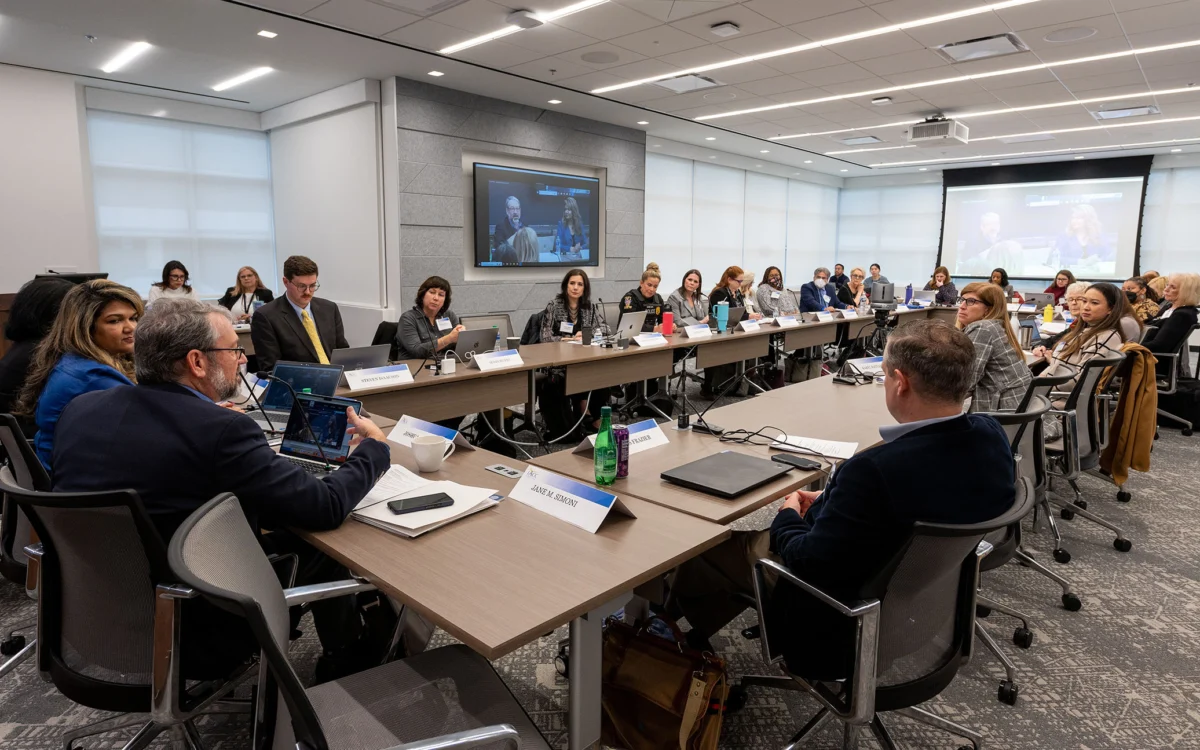
Federal officials have announced a postponement of a crucial meeting for the Interagency Autism Coordinating Committee (IACC), a pivotal advisory body shaping the nation’s approach to autism spectrum disorder. This decision follows significant backlash from autism advocates who expressed alarm at the government’s initial plan to allow a mere four days for public comment on a comprehensive draft strategic plan. The U.S. Department of Health and Human Services (HHS) confirmed to Disability Scoop on Wednesday that the IACC meeting, originally slated for July 31, will be rescheduled for late August. Concurrently, a new, extended deadline for public feedback will be established.
Background: The IACC and Its Strategic Mandate
The IACC, a collaborative body comprising federal officials and representatives from the autism community, plays a critical role in advising the Secretary of Health and Human Services on a wide array of issues pertaining to autism. Its primary responsibility is the development and dissemination of a strategic plan that guides federal autism research, service provision, and support initiatives. This plan, mandated by the Autism CARES Act, is intended to be updated annually and serves as a vital roadmap for both government agencies and private organizations in prioritizing resource allocation. The latest iteration of autism legislation further amplifies the plan’s significance by stipulating that the National Institutes of Health’s autism research budget should be informed by its recommendations.
The IACC’s strategic planning process has historically been a lengthy and iterative one, designed to foster broad stakeholder engagement. The previous strategic plan, approved in 2023, was a substantial document of nearly 250 pages. Its development involved approximately two years of work, including soliciting input on priorities from the outset, convening a dedicated working group, and undergoing two drafts before its final release. This phased approach allowed for repeated opportunities for the public to shape the document as it evolved.
The Catalyst for Delay: A Compressed Public Comment Period
The recent controversy erupted when the IACC released a 336-page draft strategic plan on a Monday, coupled with an incredibly restrictive four-day window for public comment. This compressed timeline drew immediate criticism from a coalition of prominent autism advocacy organizations, who argued that it created an insurmountable barrier to meaningful participation, particularly for caregivers facing daily challenges.
"For caregivers of people with profound autism, who frequently can’t even get a shower for themselves every four days, this timeline created a barrier to participation," stated Judith Ursitti, co-founder and president of the Profound Autism Alliance. Her organization, alongside the Autism Science Foundation, the Autism Society of America, the Coalition of Autism Scientists, the National Council on Severe Autism, Autism Speaks, and the Autistic Self Advocacy Network, collectively urged the IACC to extend the public comment period to a more feasible 90 days.
The sheer volume of the document, coupled with the brevity of the comment period, raised concerns that critical feedback from diverse segments of the autism community would be overlooked. Advocates emphasized that the strategic plan’s influence extends to the allocation of billions of dollars in research funding and policy development, making comprehensive public input essential.
Official Response and Extended Timeline
In response to the widespread pushback, Emily Hilliard, a spokesperson for HHS, acknowledged the committee’s decision to extend the public comment period. "After receiving feedback from autism stakeholders, the Interagency Autism Coordinating Committee (IACC) will extend the public comment period," Hilliard stated. "The committee appreciates the strong engagement from the autism community and remains committed to ensuring feedback is heard and thoughtfully considered as part of its process."
While HHS has yet to officially announce the precise dates for the rescheduled meeting and the new comment period, Dr. Sylvia Fogel, chair of the IACC, indicated in a social media post on Wednesday that the public comment deadline will now be August 20 at 5 p.m. ET. Fogel emphasized the committee’s commitment to urgency under the Autism CARES Act while also acknowledging the necessity of robust public engagement.
"Many individuals with autism, their families, clinicians, researchers, and advocates have spent years, and in some cases decades, raising concerns, only to feel that their most urgent priorities were not heard or addressed," Fogel remarked. "Meaningful public participation requires not only sufficient time to comment on the current Draft, but also responsiveness to concerns raised repeatedly over time."
Analysis of the Draft Strategic Plan and Potential Implications
The newly released draft strategic plan represents a significant departure from previous versions, both in its length and its apparent scope. Advocates have noted that it is longer than any prior strategic plan and that the process by which it was developed lacked transparency, with its creation occurring largely in private following a recent overhaul of the IACC’s membership.
HHS Secretary Robert F. Kennedy Jr. undertook a significant restructuring of the IACC earlier this year, a move that sidelined representatives from some of the nation’s leading autism organizations. In their place, several new members were appointed who have been associated with controversial viewpoints, including vaccine skepticism and other unconventional approaches to autism. This shift has led to concerns that the new strategic plan may reflect a departure from established scientific consensus and prioritize less evidence-based methodologies.
Helen Tager-Flusberg, director of the Center for Autism Research Excellence at Boston University and a leading figure in the Coalition of Autism Scientists, expressed mixed reactions to the draft. While commending its inclusion of crucial areas such as diagnosis, housing, and mental health services, she raised significant concerns about other sections. Specifically, she pointed to a section on improving communication for non-speaking individuals with autism, as well as the apparent omission of key research areas.
"It is not clear whether the plan would support continued funding for genetics, neuroscience, screening or treatments other than pharmaceuticals. None of these key topics are included," Tager-Flusberg stated. She further elaborated, "Given that the (plan) includes many proposals that are consistent with (Kennedy’s) views on autism, if this plan is approved by the IACC, this will (give) him license to radically change the priorities for future autism research."
The inclusion of "profound autism" as a specific focus area was noted as a positive development by Judith Ursitti of the Profound Autism Alliance, as this had not been a distinct area of emphasis in prior plans. However, many other advocates reported a similar experience of finding both valuable content and questionable proposals within the document, underscoring the need for thorough review and public discourse.
Broader Impact and the Path Forward
The controversy surrounding the IACC’s strategic plan highlights a recurring tension between the government’s need for efficient policy development and the imperative for inclusive and transparent public engagement. The Autism CARES Act mandates an annual update to the strategic plan, a process that requires careful consideration of evolving research, emerging needs, and the lived experiences of individuals with autism and their families.
The delay in the IACC meeting and the extension of the public comment period represent a significant victory for advocacy groups seeking to ensure that the voices of the autism community are not marginalized in the formation of federal policy. The prolonged comment period, ideally extending to the 90-day mark advocated for, will allow for a more thorough examination of the 336-page document and the submission of well-considered feedback.
"So far, I have skimmed the document and applauded its focus on navigating diagnosis, housing, mental health and other services," said Helen Tager-Flusberg. "But, she said other portions, including a section on improving communication for individuals with autism who are nonspeaking, were concerning."
The IACC’s strategic plan has direct implications for the allocation of substantial federal funding for autism research and services. A plan that deviates from evidence-based practices or overlooks critical areas of scientific inquiry could have long-term negative consequences for the autism community. The recent overhaul of the IACC’s membership and the private development of the draft plan have fueled anxieties about the potential for a shift in research priorities that may not align with the broader scientific consensus or the most pressing needs of individuals with autism.
Moving forward, advocates are calling for greater transparency and a more collaborative approach to the IACC’s work. "Moving forward, I strongly encourage the IACC to conduct their work in the public eye and allow appropriate time for the community to engage," Ursitti urged. "This will pave the path to progress that we all desire." The extended timeline offers an opportunity for a more robust dialogue, aiming to ensure that the final strategic plan truly reflects the diverse needs and priorities of the entire autism community.