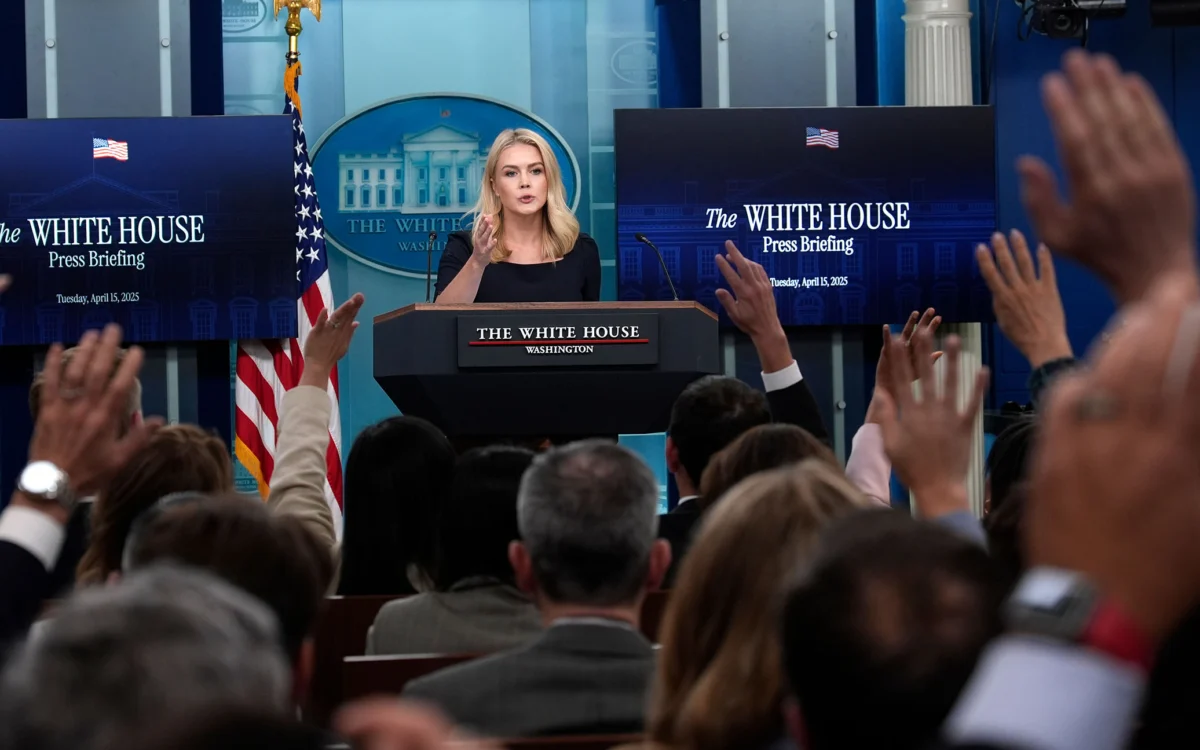
The White House is mounting a significant legal challenge to a long-standing lawsuit concerning its disability accommodations, directly questioning the fundamental right of individuals with disabilities to sue the federal government for alleged violations of civil rights laws. This contentious legal battle, which began with a specific demand for sign language interpreters at press briefings, has now evolved into a broader legal argument that could have far-reaching implications for disability rights across all federal agencies. At its core, the administration’s appeal seeks to curtail the avenues through which people with disabilities can seek redress when they believe their rights have been infringed upon by federal entities.
The Genesis of the Legal Dispute: Access to Information
The immediate catalyst for this legal confrontation was a federal court order issued last year, mandating the White House to reinstate sign language interpreters at numerous press briefings. This order was the outcome of a lawsuit filed by the National Association of the Deaf (NAD) and two deaf individuals. Their central argument was that the absence of interpreters constituted a violation of Section 504 of the Rehabilitation Act of 1973. This landmark legislation explicitly prohibits discrimination based on disability in any program or activity receiving federal funding, which unequivocally includes the White House.
The NAD’s suit highlighted a perceived erosion of accessibility that began shortly after President Donald Trump took office. Prior to this period, American Sign Language (ASL) interpreters had been a regular feature at White House press briefings, ensuring that deaf and hard-of-hearing individuals could access crucial information in real-time. The abrupt cessation of this practice, according to the plaintiffs, created a significant barrier to communication and participation in public discourse for a substantial segment of the population.
The lawsuit contended that ASL is a distinct language with its own unique grammar and structure, making reliance solely on closed captioning or subsequent transcripts insufficient for many ASL users to fully comprehend complex or rapidly delivered information. The administration, however, argued that existing captioning and transcripts provided adequate accessibility and that mandating interpreters would "severely intrude on the President’s prerogative to control the image he presents to the public." This assertion was met with strong opposition from disability advocates, who viewed it as prioritizing political optics over fundamental civil rights.
In November of the previous year, U.S. District Judge Amir H. Ali issued a preliminary injunction, ruling that the White House must provide qualified ASL interpreters at all publicly announced press briefings conducted by the President or the White House Press Secretary. Following this judicial intervention, the White House did, in fact, begin to include ASL interpreters at some events, a move that suggested a partial compliance with the court’s order. However, the underlying legal challenge and the administration’s broader stance on disability rights litigation remained unresolved.
Escalation of the Legal Battle: A Challenge to the Right to Sue
The Trump administration’s response to the judge’s order was not merely to comply with the injunction but to launch a broader legal offensive through an appeal to the U.S. Court of Appeals for the District of Columbia. The core of their appeal lies in a novel and deeply concerning legal argument: that individuals with disabilities do not possess the right to sue federal agencies directly under Section 504 of the Rehabilitation Act.
In their court filings, attorneys from the Department of Justice articulated this position forcefully. They argued that "The Rehabilitation Act’s text, structure, and history make clear that Section 504 – even assuming it provides for an individual right – does not provide a private right of action against federal agencies in their programmatic capacities." Instead of a direct lawsuit under Section 504, the administration contends that individuals who believe they have faced discrimination should pursue their claims through the Administrative Procedure Act (APA).
Disability advocates and legal experts have expressed alarm at this interpretation. They point out that the APA, while a mechanism for challenging agency actions, typically involves a higher burden of proof and a more limited scope of remedies compared to a direct claim under Section 504. The latter has historically provided a more direct and robust pathway for individuals to seek justice when federal entities fail to uphold their obligations to provide equal access and prevent discrimination.
Precedent and Opposition: A Long-Standing Legal Framework Under Threat
The administration’s argument is seen by many as a significant departure from decades of established legal precedent. For over forty years, the private right of action under Section 504 has been the bedrock upon which individuals with disabilities have relied to hold the federal government accountable. This right has been instrumental in forcing systemic changes and ensuring compliance with accessibility standards across a vast array of federal programs and services.
"They’re arguing in a nutshell that there is no private right of action, that there is no right for an individual to go before the court and say my rights have been violated under Section 504," explained Amy Robertson, an attorney who filed an amicus brief in the case on behalf of nine prominent disability advocacy groups. "It really would mean it would be more difficult to challenge discrimination by any federal agencies."
The implications of such a ruling are profound. If the administration’s argument prevails, it could drastically hinder the ability of people with disabilities to seek recourse for discrimination encountered across the entire spectrum of federal interactions. This includes, but is not limited to:
- Transportation Security Administration (TSA): Individuals facing accessibility barriers or discriminatory treatment during airport security screenings.
- Social Security Administration (SSA): Challenges in obtaining accessible application materials, communication, or accommodations for disability benefit claims.
- National Parks and Federal Lands: Ensuring accessibility for visitors with mobility impairments or other disabilities.
- Veterans Affairs (VA) Hospitals: Access to healthcare services and facilities.
- Federal Prisons: Ensuring adequate accommodations for incarcerated individuals with disabilities.
- Federal Educational Institutions: Access to programs and facilities.
The amicus brief filed by the coalition of disability groups eloquently summarized the potential fallout: "For more than four decades, disabled people have relied on the private right of action under Section 504 to hold the federal government accountable when it discriminates – in national parks, veterans’ hospitals, federal prisons, and the halls of power. Those gains were not won through agency self-policing. They were won by disabled people going to court. A ruling eliminating that right as to executive agencies would close the courthouse door to the many millions of disabled people who participate in federal programs, at precisely the moment when federal enforcement of disability rights is most uncertain."
The organizations that joined this critical amicus brief represent a broad spectrum of the disability advocacy community, including the Disability Rights Education and Defense Fund, the American Association of People with Disabilities, the Autistic Women & Nonbinary Network, CommunicationFIRST, Disability Law United, Disability Rights Bar Association, Justice in Aging, the National Federation of the Blind, and Paralyzed Veterans of America. Their collective voice underscores the widespread concern and unified opposition to the administration’s legal strategy.
A Shifting Landscape of Federal Enforcement
Adding to the gravity of this legal challenge is the context of federal enforcement of disability rights. Disability advocates have expressed increasing concerns about the perceived weakening of federal oversight and enforcement mechanisms. In such an environment, the ability for individuals to directly seek legal remedies through the courts becomes even more crucial. If the government’s argument is accepted, it would effectively shift the burden of enforcement almost entirely to federal agencies, which advocates fear may not possess the will or resources to proactively address all instances of discrimination.
The irony is not lost on disability rights proponents that the federal government itself has, in numerous past cases, advocated for and benefited from the very private right of action it now seeks to dismantle. This historical consistency has been a cornerstone of ensuring accountability.
The Road Ahead: A Critical Legal Juncture
The case is now poised to be heard by a three-judge panel from the U.S. Court of Appeals for the District of Columbia. The timing of this hearing remains uncertain. The outcome of this appeal could set a significant precedent, either reaffirming or fundamentally altering the ability of people with disabilities to seek legal recourse against federal agencies for discrimination.
The White House has not issued a public comment regarding its latest legal claims, and the Department of Justice has referred inquiries to its existing court filings. This silence, coupled with the aggressive legal stance, has amplified concerns within the disability community about the administration’s commitment to upholding the rights and ensuring the full participation of individuals with disabilities in all aspects of federal life. The legal battle over ASL interpreters at press briefings has, therefore, evolved into a far more significant fight for the fundamental right to access justice and equality under the law for millions of Americans with disabilities.