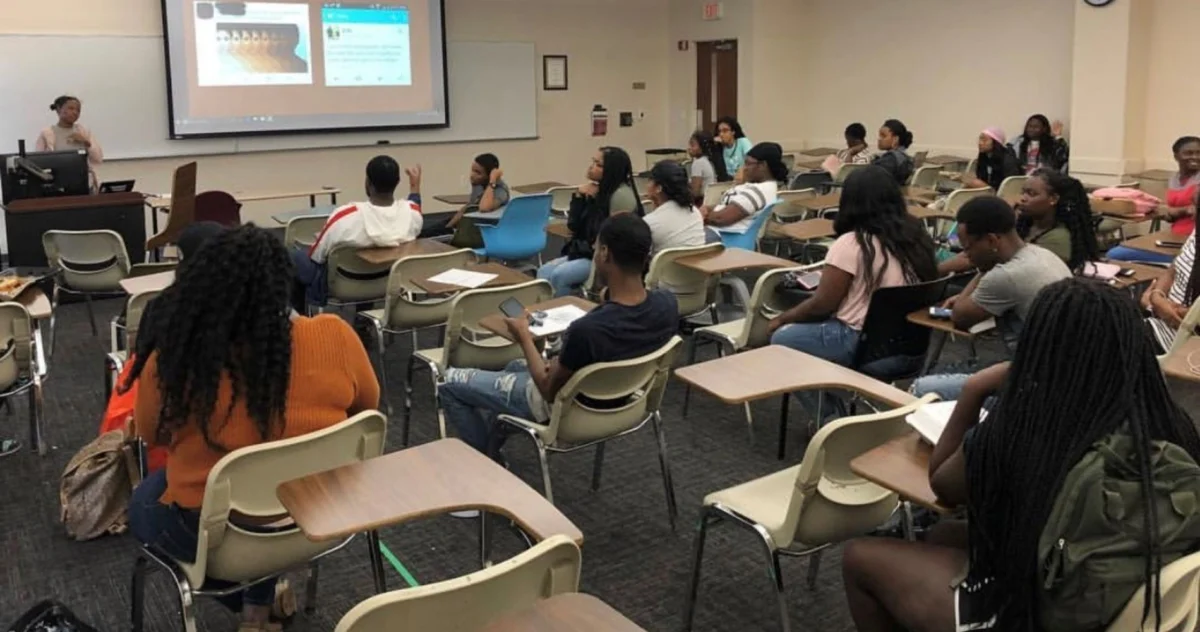
The U.S. Court of Appeals for the Eleventh Circuit delivered a significant blow to Florida’s legislative efforts last week, ruling that the state’s contentious “Stop WOKE” Act, which sought to restrict discussions on race and gender in public university classrooms, violates the First Amendment’s fundamental guarantee of freedom of speech. This landmark decision reaffirms the principles of academic freedom and intellectual inquiry within higher education, drawing a clear line against state-imposed ideological conformity.
The Eleventh Circuit’s Landmark Decision on Academic Freedom
In a powerful rebuke to the state’s arguments, the appellate court declared Florida’s Individual Freedom Act—colloquially known as the “Stop WOKE” Act—to be “a naked prohibition on disfavored speech.” U.S. Circuit Judge Britt Grant, an appointee of former President Donald Trump, authored the majority opinion, joined by Senior U.S. Circuit Judge Charles Wilson, a Bill Clinton appointee. The opinion underscored that the First Amendment explicitly prevents the government from suppressing the expression of an idea simply because it might be deemed offensive or disagreeable by societal standards.
“The First Amendment rests instead on a simple truth: The people lose whenever the government transforms prevailing opinion into enforced conformity,” Judge Grant wrote, encapsulating the court’s core philosophy in this case. This statement highlights the judiciary’s role in safeguarding a marketplace of ideas, particularly within academic institutions designed for critical thought and intellectual exploration. The ruling upheld a district court’s injunction, effectively barring state officials from enforcing the controversial law across Florida’s vast public university system, which serves over 400,000 students across 12 institutions.
Unpacking Florida’s "Stop WOKE" Act: A "Blacklist of Ideas"
Florida Governor Ron DeSantis signed the Individual Freedom Act into law in 2022, framing it as a measure to protect college students from what he termed “indoctrination.” The legislation specifically barred any “training or instruction that espouses, promotes, advances, inculcates, or compels” students at public colleges and universities to believe any of eight specified concepts related to race, color, sex, or national origin.
These prohibited concepts constituted what an attorney for the plaintiffs critically termed a “blacklist of ideas.” Among them were notions suggesting that members of one race, color, sex, or national origin are inherently morally superior to others; that a person is “inherently racist, sexist or oppressive” solely by virtue of their race or sex; or that individuals should experience “guilt, anguish, or other forms of psychological distress” due to historical actions committed by other members of the same race or sex. The law was broadly interpreted by its opponents as a direct attempt to stifle candid discussions about America’s complex racial history, including the legacies of slavery and the Jim Crow era.
The law’s provisions were not merely suggestive; they carried substantial weight. It imposed severe penalties for endorsing viewpoints deemed “disfavored,” potentially extending beyond the classroom. Both individual professors and entire universities faced “dramatic financial consequences for noncompliance.” For instance, the court cited the University of South Florida, which stood to lose over $73 million during the 2021-2022 academic year had the law been fully enforced. Furthermore, the legislation created a chilling environment where students could report professors for alleged violations, triggering investigations that could lead to disciplinary actions, including termination, even if professors attempted to modify their curricula to comply.
Legislative Intent and Broader Context: The National Anti-WOKE Movement
The “Stop WOKE” Act emerged from a broader national political movement, championed by conservative leaders, to combat what they perceive as “woke ideology” in education. This movement often targets concepts like Critical Race Theory (CRT), which examines how race and racism have shaped legal systems and societal structures in the United States. While CRT is primarily an academic framework taught in higher education and law schools, it has become a flashpoint in culture wars, frequently conflated with broader diversity, equity, and inclusion (DEI) initiatives.
Under Governor DeSantis, Florida has been at the forefront of this movement. The state has passed legislation restricting discussions on LGBTQ+ topics in schools (the “Don’t Say Gay” law), removed books from school libraries, and appointed conservative members to university boards, all aimed at reshaping the educational landscape according to a specific ideological viewpoint. Proponents argue these measures protect children and students from politically charged content and ensure a neutral learning environment. Opponents, however, contend that such laws amount to censorship and undermine the foundational principles of academic freedom and intellectual inquiry.
The legal challenge to Florida’s law, known as Pernell v. Lamb, was brought by a coalition of students, professors, and a student organization from six of Florida’s public universities. They argued that the law’s restrictions on speech suppressed politically disfavored viewpoints, thereby violating their First Amendment rights. The district court initially agreed, issuing an injunction against the law’s enforcement, a decision that Florida then appealed to the Eleventh Circuit.
A Chronology of Legal Challenges and Judicial Review
The journey of the "Stop WOKE" Act through the courts began shortly after its enactment.
- April 22, 2022: Governor Ron DeSantis signs the Individual Freedom Act (HB 7), widely known as the "Stop WOKE" Act, into law.
- July 2022: Lawsuits are filed challenging the constitutionality of the act, including Pernell v. Lamb, brought by professors and students with the support of the NAACP Legal Defense Fund, the American Civil Liberties Union (ACLU), and ACLU of Florida.
- August 18, 2022: U.S. District Judge Mark Walker issues a preliminary injunction blocking the enforcement of parts of the "Stop WOKE" Act in universities, calling it "positively dystopian." His ruling focused on the law’s infringement on academic freedom and free speech.
- September 2022: Florida officials appeal Judge Walker’s injunction to the Eleventh Circuit Court of Appeals.
- March 7, 2024 (or proximate date): The U.S. Court of Appeals for the Eleventh Circuit upholds the district court’s injunction, finding the law unconstitutional.
This chronology illustrates the rapid judicial response to the law, highlighting the immediate concerns raised by its broad prohibitions and the perceived threat to established constitutional rights.
The State’s Arguments and the Court’s Emphatic Rebuttal
In its defense, the State of Florida put forth several justifications for the "Stop WOKE" Act, each of which was systematically dismantled by the Eleventh Circuit. One primary argument centered on the idea that because the government pays professors’ salaries, it therefore has “total control over her classroom speech.” The State asserted, “Because the government pays the professors’ salaries, Florida says, their speech is the State’s speech.”
The court’s response was unequivocal: “Emphatically no.”
The Eleventh Circuit vehemently rejected this “salary-for-speech” rule, calling it “a breathtaking assertion of power to ban unpopular ideas from public discourse in the very places the State’s own statutes recognize as centers of inquiry—classrooms where students are trusted to puzzle through ideas that are good and bad, easy and hard, ideally getting ever closer to the truth.” The court emphasized that such a rule directly offends the nation’s critically important tradition of academic freedom. It cited Supreme Court precedent, stating, “Time and again, the Supreme Court has made clear that teachers do not shed their constitutional rights to freedom of speech or expression at the schoolhouse gate.” The opinion further invoked the notion that “the essentiality of freedom in the community of American universities is almost self-evident… To impose any strait jacket upon the intellectual leaders in our colleges and universities would imperil the future of our Nation.”
The court elaborated that Florida’s restrictions represented an attempt to “force uniformity of thought on students by curtailing the free exchange of ideas in universities—the very environments traditionally regarded as laboratories for expression and truth seeking.” It cautioned that “compelling certain beliefs by suppressing ‘individual thought and expression’ is ‘especially’ dangerous in the classroom context, ‘where the State acts against a background and tradition of thought and experiment that is at the center of our intellectual and philosophic tradition.’”
Florida offered two additional justifications, both of which the court found lacking. The first was a “weak” claim that the law served as an anti-discrimination measure. The court rejected this, pointing out that the law did not limit actual discrimination but rather “assumes that mere exposure to what the State views as the wrong viewpoint is itself a serious harm.” The court countered this by stating, “hearing an idea you disagree with is not discrimination; it is an opportunity to come up with a better idea, or maybe even change your mind.”
The second justification asserted that the law protected the state’s “most cherished ideals.” This, too, was dismissed. The court stated, “Though the government has plenty of ways to promote its own viewpoint, puppeteering every university professor in the state is not one of them.” It concluded that “forcing an official government line—in a college classroom of all places—is exactly the ‘pall of orthodoxy’ that the First Amendment will not tolerate.”
The Greatest First Amendment Sin: Viewpoint Discrimination
The court ultimately concluded that viewpoint-based restrictions on speech constitute “the greatest First Amendment sin.” It stressed the inherent danger of laws designed to compel or ban specific beliefs, especially within an educational setting. “When the government seeks not just to restrict speech based on its subject matter, but also seeks to dictate what particular opinion or perspective individuals may express on that subject, the violation of the First Amendment is all the more blatant,” the court wrote.
The federal appeals court’s decision firmly established that Florida’s law was “an unconstitutional direct penalization of protected speech” that violates the First Amendment. It thus upheld the district court’s injunction, preventing the law’s enforcement in Florida’s public universities.
Reactions and Legal Community Insights
The ruling was met with enthusiasm by the plaintiffs and their legal representatives. LeRoy Pernell, a professor at Florida A&M University College of Law and a named plaintiff in the lawsuit, expressed his delight in a statement: “We are thrilled the court has stopped the erasure of topics that have real implications for our students, allowing them to learn, discuss and develop tools for combatting the complex issue of racism in our country without being gagged by those who would dictate that only state-approved thought may be promoted.”
Jin Hee Lee, director of strategic initiatives at the NAACP Legal Defense Fund, which, along with the American Civil Liberties Union, ACLU of Florida, and the law firm Ballard Spahr, filed the Pernell v. Lamb lawsuit, echoed this sentiment. She described the “Stop W.O.K.E Act” as “an egregious example of widespread efforts across the country, most notably in Florida, to force the public higher education system to adopt the viewpoints of those in power.” Ms. Lee highlighted the significance of this decision as the first instance where an appellate court has directly addressed the constitutionality of laws restricting speech in college classrooms. She asserted that the ruling makes it clear that “Florida cannot actively erase their history of discrimination or their lived experiences without running afoul of our Constitution.”
While Governor DeSantis’s office and the State of Florida have yet to issue a definitive statement regarding a potential appeal, legal experts anticipate that the state may seek to take the case to the U.S. Supreme Court. However, the strong and clear language of the Eleventh Circuit’s opinion, rooted in long-standing First Amendment jurisprudence and academic freedom principles, presents a formidable challenge for any such appeal.
Implications for Academic Freedom and Beyond
This ruling carries significant implications, not only for Florida but also for the broader landscape of academic freedom across the United States. Many other states have considered or enacted similar legislation aimed at restricting discussions on race, gender, and other "divisive concepts" in educational settings, particularly in K-12 schools and public universities. The Eleventh Circuit’s decision sets a powerful precedent, indicating that federal courts are prepared to scrutinize and strike down such laws when they infringe upon constitutional rights, especially free speech.
The ruling reinforces the understanding that public universities, even while funded by the state, are not mere extensions of government speech but rather vital arenas for robust intellectual exchange, critical inquiry, and the pursuit of truth. It underscores the judiciary’s role in protecting educators’ ability to teach and students’ right to learn about complex and sometimes controversial topics without fear of state censorship or retribution.
This decision also contributes to the ongoing national debate about the balance between state control over public education and the imperative of academic autonomy. It serves as a stark reminder that attempts to impose ideological uniformity, no matter how well-intentioned, often collide with the fundamental constitutional protections afforded to speech and expression. As legal challenges to similar laws continue to unfold across the country, the Eleventh Circuit’s ruling in Pernell v. Lamb will undoubtedly stand as a pivotal reference point, championing the essentiality of freedom in the community of American universities.