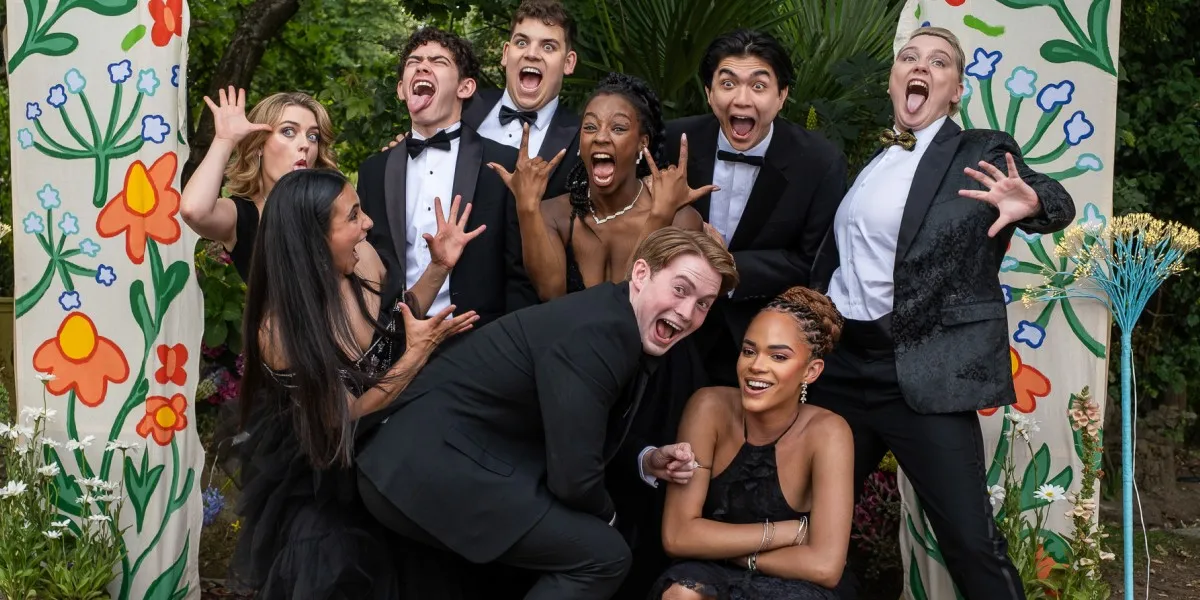
Netflix has officially released the final installment of the globally acclaimed Heartstopper franchise, concluding the coming-of-age narrative with a two-hour feature film titled Heartstopper: Forever. The cinematic finale serves as the definitive conclusion to the television adaptation of Alice Oseman’s graphic novels, providing a structured resolution for the series’ central protagonists and their extended social circle. While the transition from an episodic format to a feature film marks a departure for the production, the movie aims to synthesize the remaining narrative arcs into a cohesive farewell, addressing the complexities of the transition from secondary education to early adulthood.
Narrative Structure and Chronological Progression
Heartstopper: Forever adopts a seasonal structure to navigate the final academic year of the protagonists at Truham Grammar School and Higgs Girls’ School. This chronological approach allows the film to cover a significant duration of time, documenting the evolution of relationships and individual ambitions as the characters prepare for post-secondary life.
The film is divided into four distinct segments—Autumn, Winter, Spring, and Summer—each highlighting pivotal milestones in the characters’ development:
- Autumn: The narrative focuses on Charlie Spring (played by Joe Locke) as he assumes a leadership role within the school community, running for the position of Head Boy and establishing a formal Pride Club. Concurrently, Nick Nelson (played by Kit Connor) begins the rigorous process of university applications while gaining professional experience at a local animal shelter.
- Winter: The plot centers on the domestic stability of the central couple as they celebrate their two-year anniversary. This segment explores the deepening of their emotional bond amidst the academic pressures of their final year.
- Spring: As graduation nears, the narrative shifts toward the anxiety of the future. The characters grapple with the societal trope that teenage relationships are inherently fleeting, a concern exacerbated by the observation of peer relationships under strain.
- Summer: The final segment culminates in the departure for university and gap years. It emphasizes the "bittersweet" nature of high school conclusions, focusing on the preservation of friendships despite geographical separation.
Casting Transitions and Production Continuity
A notable shift in the production of Heartstopper: Forever is the recasting of Sarah Nelson, Nick’s mother. Due to scheduling conflicts, Academy Award winner Olivia Colman was unable to return for the finale. The role was assumed by Anna Maxwell Martin, who has been noted for maintaining the character’s supportive and grounded presence. This transition is highlighted in a pivotal scene where Sarah advises Nick on the nature of long-term commitment, stating that "love is a choice" made daily—a thematic cornerstone for the film’s exploration of mature relationships.
The film also places a significant emphasis on technical elements, specifically the musical score, which has been a signature component of the series’ identity. The soundtrack continues to utilize indie-pop and synth-heavy compositions to mirror the emotional internalities of the characters, maintaining the "hand-drawn" aesthetic through subtle visual cues like the series’ trademark animated flourishes.
Thematic Depth: Mental Health and Healthy Masculinity
Unlike many contemporary teen dramas that prioritize high-stakes trauma or sensationalism, Heartstopper: Forever maintains the series’ commitment to "pure-of-heart" storytelling while addressing serious psychological themes. The film continues to document Charlie Spring’s ongoing journey with an eating disorder and self-harm impulses. Critically, the narrative avoids a "miracle cure" trope, instead depicting these issues as manageable conditions that require consistent support and self-awareness.
Furthermore, the film serves as a pedagogical model for healthy masculinity. The interactions between Nick, Charlie, Tao Xu (William Gao), and Isaac Henderson (Tobie Donovan) emphasize emotional literacy. The script portrays young men engaging in platonic physical affection and open dialogue about their fears and insecurities. This portrayal stands in contrast to "toxic" or "patriarchal" models often found in media, offering a reality-based alternative for younger audiences.
Secondary Character Arcs and Representation
While the central focus remains on the relationship between Nick and Charlie, Heartstopper: Forever attempts to provide closure for its ensemble cast, though the condensed movie format necessitates that some developments occur in the background.
- Elle Argent and Tao Xu: The film explores the strain of impending distance on their relationship. Elle (Yasmin Finney) is depicted as a burgeoning activist, delivering a poignant speech regarding the challenges of being an openly transgender individual in the current sociopolitical climate. Her participation in a Pride event serves as a visual representation of her personal growth and public confidence.
- Imogen Heaney: Previously characterized as the "token straight friend," Imogen (Rhea Norwood) undergoes a significant identity arc. The film tracks her realization of her sexuality, moving from identifying as bisexual in the autumn to coming out as a lesbian by the summer.
- Isaac Henderson and Tori Spring: The film provides a rare moment of "asexual bonding" between Isaac and Charlie’s sister, Tori (Jenny Walser). Isaac’s aspiration to become an author is introduced, though the specifics of his literary ambitions remain open-ended.
- Tara Jones and Darcy Olsson: The couple remains a pillar of stability throughout the film, representing a successful long-term queer relationship that provides a blueprint for the younger characters.
Data Analysis: LGBTQ+ Representation in Digital Media
The conclusion of Heartstopper comes at a critical juncture for LGBTQ+ representation in television. According to the GLAAD 2024-2025 "Where We Are on TV" report, there has been a documented trend of "pre-mature" cancellations of series featuring queer leads. The report indicates that while representation has increased in volume over the last decade, the longevity of these shows is often compromised by shifting streaming priorities.
Heartstopper: Forever is a statistical outlier in this landscape. By reaching a definitive four-part conclusion (three seasons and one film), it provides a level of narrative finality rarely afforded to LGBTQ+-centric programming. The show’s impact on "the culture as a whole" is cited as a significant factor in its ability to secure a finale, with the series consistently appearing in Netflix’s Top 10 across dozens of countries during its seasonal runs.
Broader Implications and Cultural Impact
The film’s conclusion addresses the concept of "queer joy" as a radical act. By prioritizing a positive outcome for its characters, Heartstopper: Forever functions as a counter-narrative to the "tragic queer" trope historically prevalent in Western cinema. The film emphasizes that while the characters face real-world struggles—including bullying, transphobia, and mental health crises—their primary narrative driver is love and community support.
The legacy of the series is expected to extend beyond its runtime. The "Heartstopper Effect" has been credited with increasing the visibility of young adult queer literature and fostering safer environments in educational settings. The film’s inclusion of "Alfie," a younger student mentored by Charlie, illustrates the cyclical nature of community building within the LGBTQ+ experience.
Conclusion and Supplementary Media
As the Heartstopper series reaches its formal end, Netflix has announced supplementary content to facilitate the transition for the fanbase. In addition to the three existing seasons and the finale movie, the "Official Heartstopper Podcast" will continue to release retrospective episodes. Furthermore, a documentary titled Ending on a High is scheduled for release later this week, offering a behind-the-scenes look at the production of the film and the cast’s final days on set.
The film concludes on a note of realistic optimism. As Tao Xu observes in the final act, the physical separation of the friend group does not negate the transformative impact they had on one another during their formative years. While the digital availability of such shows can be subject to the whims of streaming platforms, the cultural footprint of Heartstopper remains a documented milestone in 21st-century queer media.