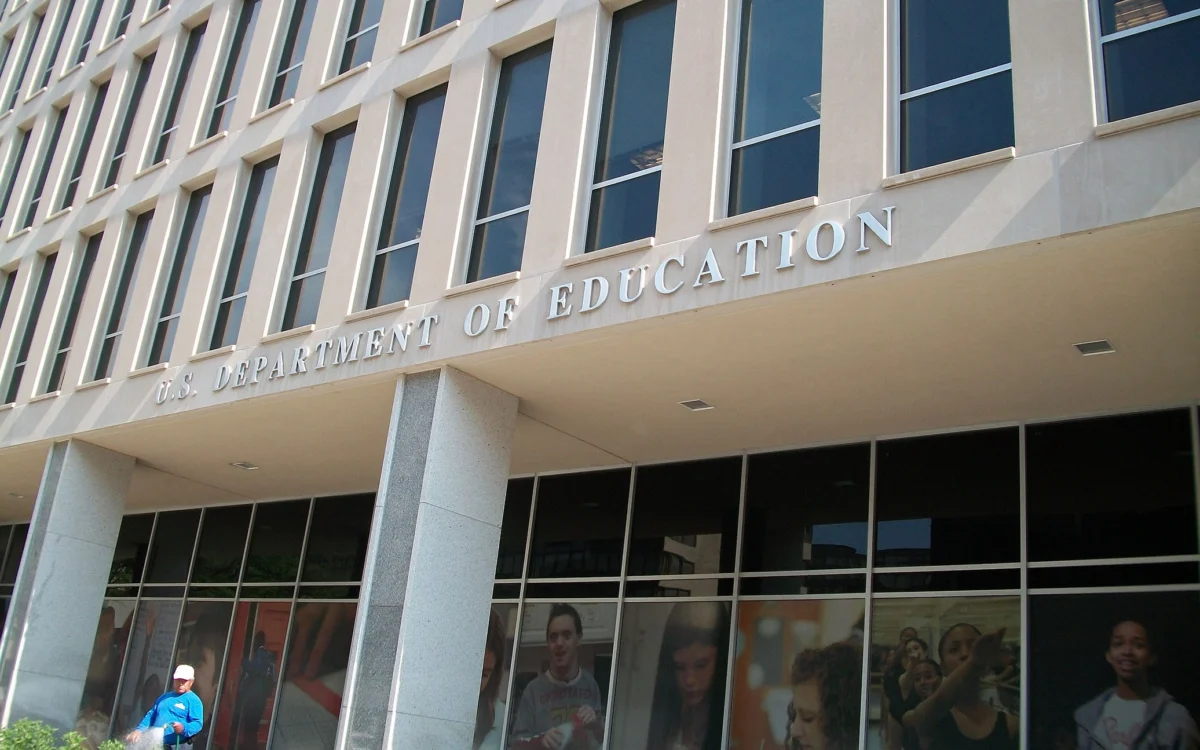
The landscape of federal oversight for students with disabilities is undergoing a profound and contentious transformation, marked by sudden executive departures, sweeping interagency staff relocations, and intense legislative resistance. Kelly Rogers, the acting assistant secretary for the Office of Special Education and Rehabilitative Services (OSERS) at the U.S. Department of Education, announced her unexpected resignation to agency staffers, stating that she would vacate her post by the end of the week and return to her home state of Florida.
This high-profile departure coincides precisely with the execution of a controversial restructuring plan that transfers more than 100 OSERS employees to the Department of Health and Human Services (HHS). Simultaneously, 57 personnel from the Education Department’s Office for Civil Rights (OCR) are slated to relocate to the Department of Justice (DOJ). These sweeping shifts represent the tangible implementation of interagency agreements originally formulated earlier this year, designed to offload core operational responsibilities traditionally managed exclusively under the umbrella of federal education governance.
The abrupt exit of Rogers—who has held the position since May and previously intended to supervise the transitioning OSERS workforce from the Education Department while leveraging HHS support—has injected a profound layer of operational ambiguity into an already volatile transition. While Education Department leadership maintains that the reorganization will ultimately streamline services and bolster civil rights enforcement, disability advocates, labor representatives, and congressional leaders are raising alarms over what they view as the systematic dismantling of a cabinet-level agency dedicated to the nation’s most vulnerable student populations.
Chronology of a Disruption: From Interagency Deals to Leadership Flight
The mechanics of the current upheaval trace back to strategic interagency agreements struck earlier this year, which laid the groundwork for delegating specialized federal duties to external departments. In June, the Department of Education formally announced its intention to offload substantial special education functions to HHS, alongside targeted civil rights enforcement tasks to the DOJ.
By July, operational details began to emerge. Rogers publicly outlined plans indicating that OSERS staff would physically transition to HHS facilities and operational structures, though she initially planned to maintain supervisory control from her post within the Department of Education. However, the rapidly accelerating timeline of the physical relocations—occurring concurrently this week—appears to have collided with internal disagreements, strategic misalignment, or the daunting administrative complexity of the transfer.
According to data compiled by the American Federation of Government Employees (AFGE) Local 252, the union representing Department of Education workers, these moves are part of a much broader downsizing and dispersal strategy. Union officials report that nearly 180 Education Department staffers have been transferred across four distinct federal agencies over the course of the summer. Furthermore, the agency has initiated plans to downsize its physical footprint by relocating its headquarters to a smaller building, with additional offices scheduled for dispersal in the coming months.
In her farewell email to OSERS personnel, obtained by independent disability media outlets, Rogers attempted to project confidence in the agency’s trajectory. “While I am stepping away, I remain confident in the team’s ability to continue moving forward with strengthened outcomes for individuals with disabilities through the HHS partnership,” she wrote.
Yet, her departure leaves a critical vacuum. Department of Education officials have declined to clarify who will assume leadership of OSERS, whether the successor will originate from within education circles or HHS, or how the sudden loss of top-tier continuity will impact the ongoing administrative handoff.
Official Justifications and the Counter-Narrative from Advocates
The Department of Education has defended the restructuring as a forward-thinking initiative aimed at maximizing interagency synergies. In official statements, agency spokespersons have expressed enthusiasm for the partnerships, arguing that collaboration between federal departments will ultimately yield enhanced educational outcomes for students with disabilities and more robust civil rights protections across American schools and university campuses.
Proponents of the reorganization argue that pooling resources with HHS—an agency with vast infrastructure in health, human services, and developmental disability programs—could theoretically bridge gaps between educational support and medical or social services.
However, this rationale has met fierce resistance from the community of educators, legal scholars, and disability rights advocates who have spent decades defending the integrity of the federal education apparatus. Critics argue that dispersing vital education mandates across multiple cabinet departments will create administrative silos, complicate regulatory compliance, and dilute federal accountability.
Stephanie Smith Lee, who served as director of the Education Department’s Office of Special Education Programs under President George W. Bush and is currently the co-director of policy and advocacy at the National Down Syndrome Congress, sharply criticized the administration’s rationale.
“It is deeply disturbing that OSERS staff are being physically moved to HHS this week and OCR staff are being moved to DOJ,” Lee said. “The administration claims that dismantling the Department of Education will lead to reduced bureaucracy. In fact, the opposite will occur as states, schools, and families will need to deal with multiple agencies for guidance, funding, and regulatory issues, and we lose the current collaboration among offices.”
Echoing these concerns, Chad Rummel, chief executive officer of the Council for Exceptional Children, emphasized the immediate psychological and operational toll the transition is taking on the educational workforce.
“Having the OSERS leader step down during this transition from the Department of Education to HHS adds chaos and uncertainty, raising concerns among educators, families, and advocates,” Rummel noted. “Department of Education staff should be focusing on supporting educators, strengthening special education, and improving outcomes for students with disabilities, rather than getting bogged down in reporting structures, internal agreements, and unclear priorities.”
Legislative Pushback and the Battle in Congress
As executive agencies press forward with the relocations, the conflict has escalated to Capitol Hill, setting up a high-stakes jurisdictional showdown between the executive branch and Congress.
Lawmakers from both sides of the aisle have grown increasingly wary of the administration’s strategy to bypass traditional legislative channels to reshape federal oversight of education. In July, the Senate Health, Education, Labor, and Pensions (HELP) Committee advanced a legislative package specifically designed to halt the Department of Education from transferring OSERS functions or entering into binding operational offloading agreements with external agencies. A companion bipartisan measure has since been introduced in the House of Representatives, signaling broad, cross-party apprehension regarding the integrity of federal special education mandates.
Despite the pending legislation, the Department of Education has continued to execute the transfer agreements, leaving external stakeholders grappling with a rapidly shifting operational reality on the ground.
Jacqueline Rodriguez, CEO of the National Center for Learning Disabilities, underscored the acute anxiety felt by families and educational administrators navigating the transition. “OSERS staff are moving to HHS now, and basic questions remain about who will be in charge and how this will work in practice,” Rodriguez said. “We continue to urge Congress to stop these transfers.”
Broader Implications for Special Education and Federal Oversight
The ongoing restructuring of the Department of Education and the sudden leadership vacuum at OSERS carry profound implications for the nearly 7.5 million school-aged children in the United States who receive special education and related services under the Individuals with Disabilities Education Act (IDEA).
Historically, OSERS has served as the federal focal point for ensuring that states and local school districts comply with federal civil rights and educational mandates for students with developmental, physical, and cognitive disabilities. By shifting core personnel to HHS—an agency whose primary mission is public health and human welfare rather than K-12 instruction or pedagogy—critics fear that the specialized educational expertise housed within OSERS may be marginalized or diluted.
Furthermore, the relocation of civil rights enforcement personnel from the Department of Education’s OCR to the DOJ complicates the enforcement mechanism for federal anti-discrimination laws, such as Section 504 of the Rehabilitation Act and Title II of the Americans with Disabilities Act. While the DOJ possesses formidable litigation capabilities, education advocates argue that the day-to-day regulatory guidance, technical assistance, and proactive compliance monitoring historically provided by education-focused civil rights attorneys are fundamentally different from prosecutorial legal enforcement.
As the physical moves continue and the search for Kelly Rogers’ successor remains shrouded in uncertainty, the immediate future of federal special education policy hangs in the balance. With federal courts, congressional committees, and administrative agencies locked in competing trajectories, educators, local school districts, and families of students with disabilities are left to navigate an increasingly fragmented federal landscape.