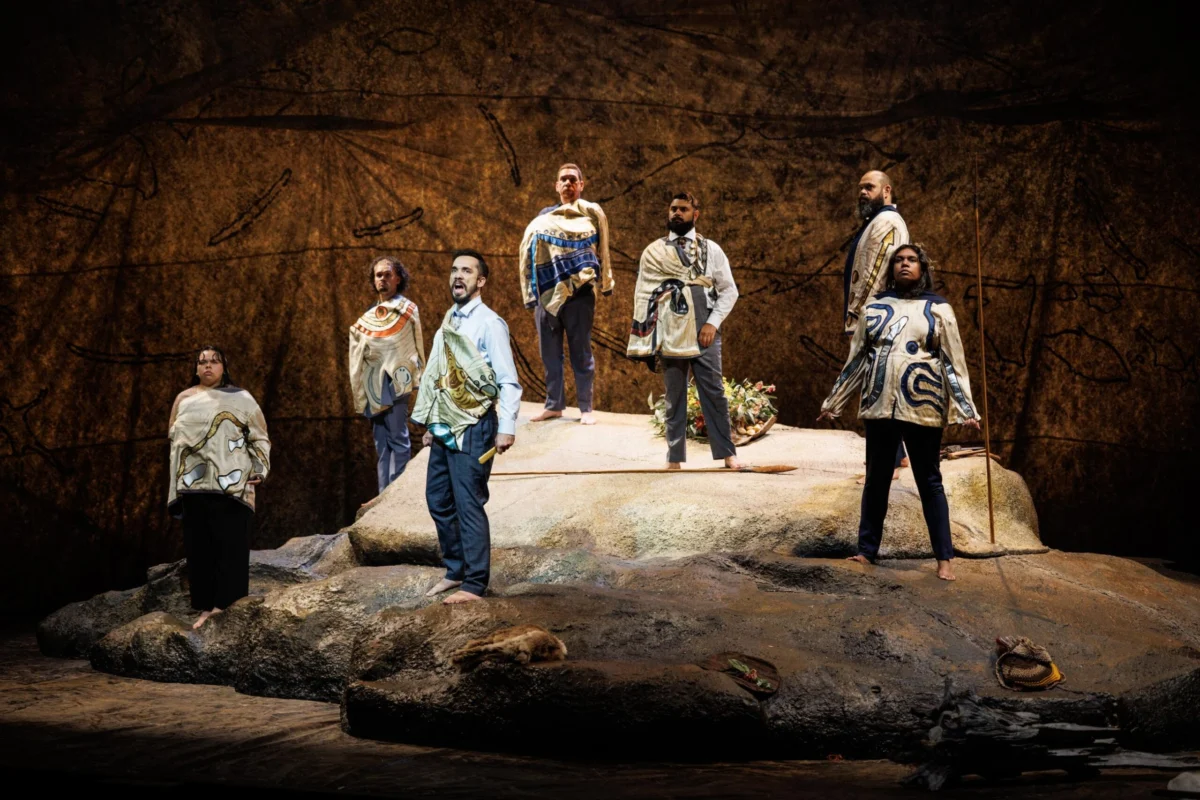
Rooted in the Yuin and Bundjalung languages, the word Moogahlin translates to "to play" or "to fool around." Yet, the living philosophy behind the term carries profound weight, anchoring one of the most vital forces in contemporary Australian performance. Founded in 2009 by Indigenous theater veterans Lily Shearer, Fred Copperwaite, and Dr. Liza-Mare Syron, Moogahlin Performing Arts emerged from the historic Aboriginal community of Redfern in Sydney. Rejecting the constraints of Western theatrical traditions—such as script-bound narratives and proscenium arches—the company honors millennia of First Nations storytelling by fusing dance, music, visual art, oral traditions, and songlines.
Over the past decade and a half, Moogahlin has evolved from an artist-run grassroots setup into an international touring powerhouse. Through landmark productions like Jane Harrison’s The Visitors and foundational platforms like the Yellamundie Festival, the company challenges colonial historical records while fostering independent First Nations creators. By bridging cultural advocacy with artistic excellence, Moogahlin exemplifies how modern theater can serve as a vehicle for community healing, environmental justice, and cultural survival.
Chronology and Origins: From Redfern’s Activist Roots to Formal Establishment
The genesis of Moogahlin is intrinsically tied to the political history of Redfern, widely recognized as the "Blak Capital" of Australia and the geographic heart of the modern First Peoples civil rights movement. In November 2007, following the passing of Uncle Kevin Smith—a respected actor and Aboriginal activist who had long envisioned a local Indigenous theater company—his family urged community artists to pick up the baton. Moogahlin was officially incorporated on May 19, 2009.
During the late 1960s and 1970s, Redfern became a hub where Indigenous civil rights activists exchanged ideas directly with the U.S. Black Panther movement. The neighborhood’s central block, known simply as "The Block," represents Aboriginal-owned land successfully secured in 1972 after community members staged a tent embassy to demand land rights. This activism coincided with the closure of state- and church-run missions between the late 1930s and late 1960s—institutions designed to enforce assimilation and cultural erasure. When these missions closed, generations of displaced families, many affected by the Stolen Generations policies, migrated to Redfern seeking employment and a reconnection to community.
In its early years, Moogahlin operated entirely on a project-by-project basis. Founders balanced outside employment to sustain themselves, storing their organization’s records in a single filing cabinet moved from workplace to workplace. A major turning point occurred in 2014 when the Carriageworks Performing Arts Centre invited the company into residency. This partnership provided physical office space and organizational backing, enabling Moogahlin to secure multi-year operational funding from Creative Australia (formerly the Australia Council for the Arts) and Create NSW. This financial stability shifted the company from hand-to-mouth survival to long-term strategic planning.
The Impact of The Visitors: Inverting the Colonial Gaze
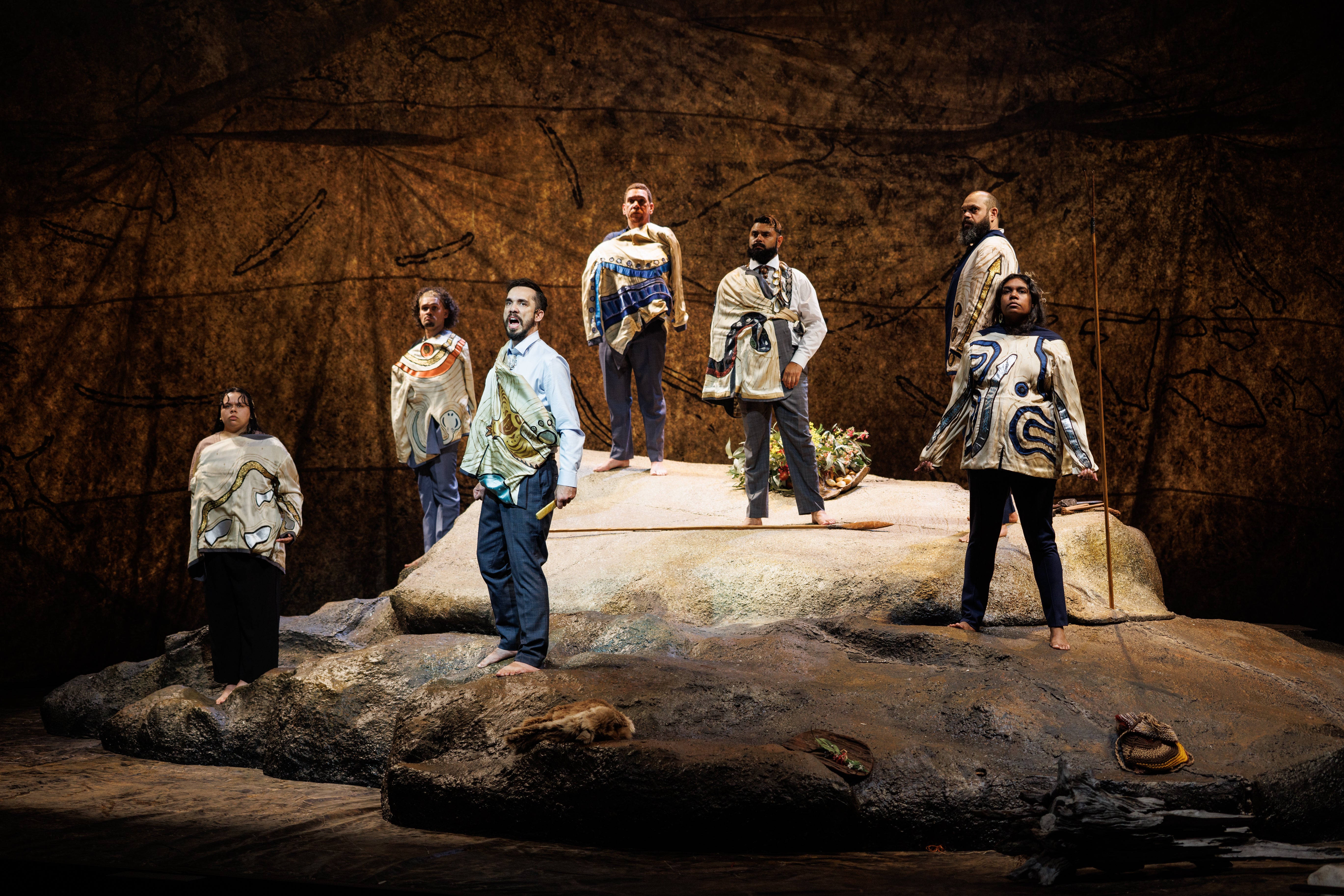
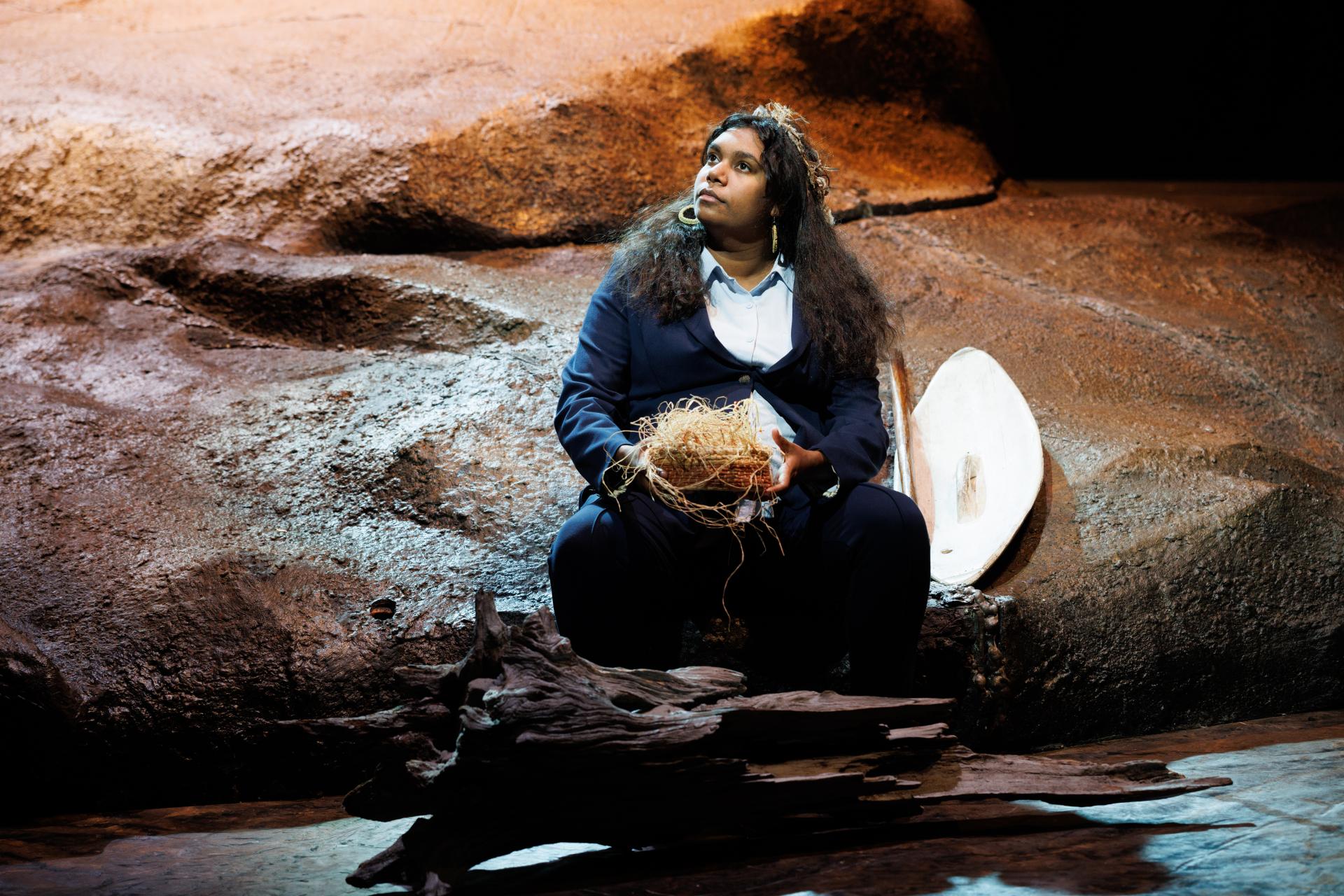
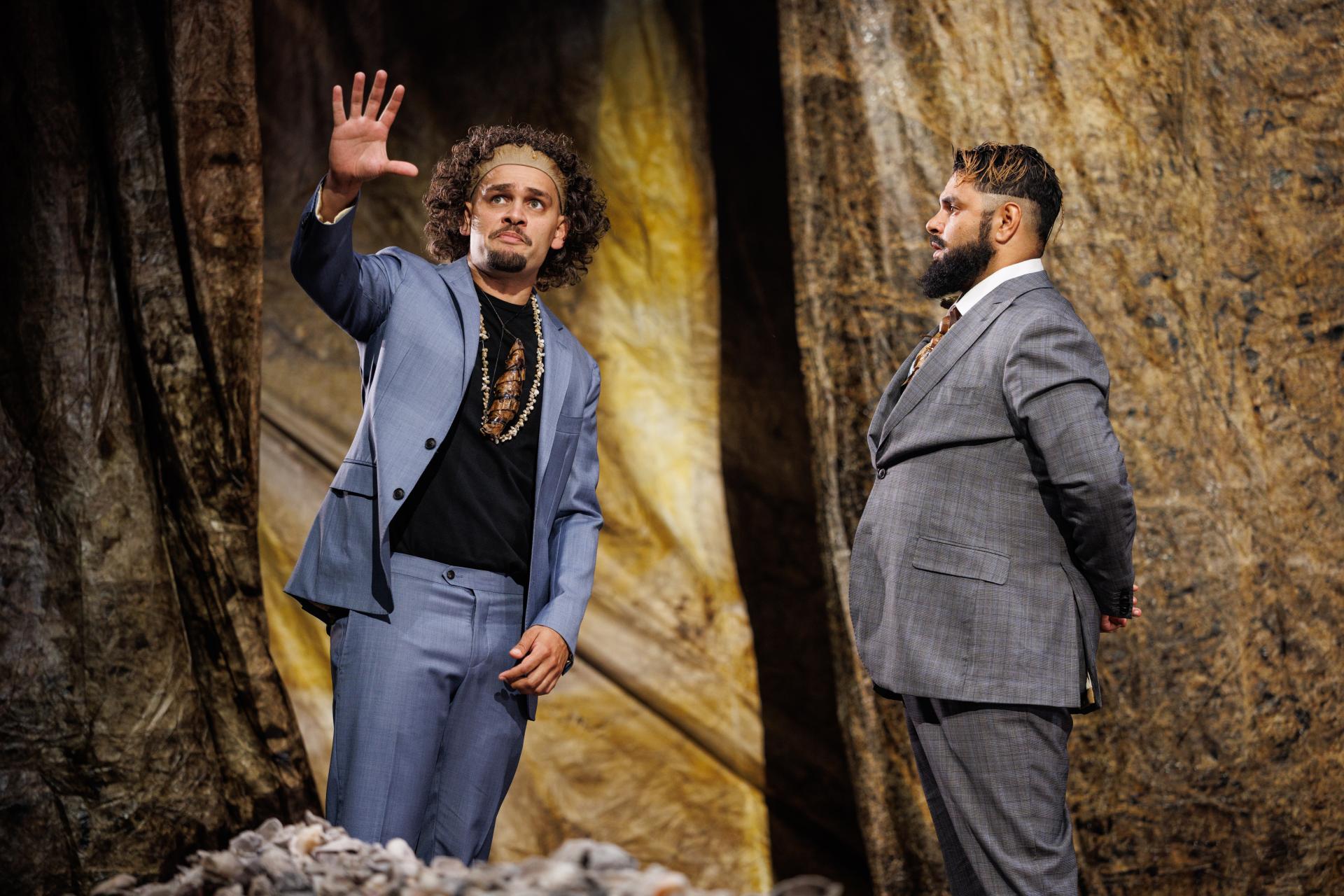
Moogahlin’s international profile reached new heights with The Visitors, written by Muruwari playwright Jane Harrison. Originally pitched as First Contact at Moogahlin’s inaugural Yellamundie Festival in 2013, the play underwent seven years of dramaturgical development before premiering at Carriageworks during the 2020 Sydney Festival under the direction of Fred Copperwaite and production of Liza-Mare Syron. In 2023, a re-staged version directed by Wesley Enoch premiered at the Sydney Opera House as part of its 50th-anniversary program, followed by international engagements, including a run at New York City’s Perelman Arts Center (PACNYC).
The Visitors centers on a historical event set in 1788: six senior Aboriginal law men and women, alongside one new initiate, convene in Sydney Cove to deliberate on the arrival of the British First Fleet. Rather than viewing history through the perspective of European colonizers, the play inverts the colonial gaze. Harrison utilized meticulous archival research, incorporating phrases and descriptions from British logs—some of which offensively characterized Aboriginal people—to highlight the stark disconnect between European accounts and Indigenous realities.
To maximize accessibility, Moogahlin developed three distinct production models:
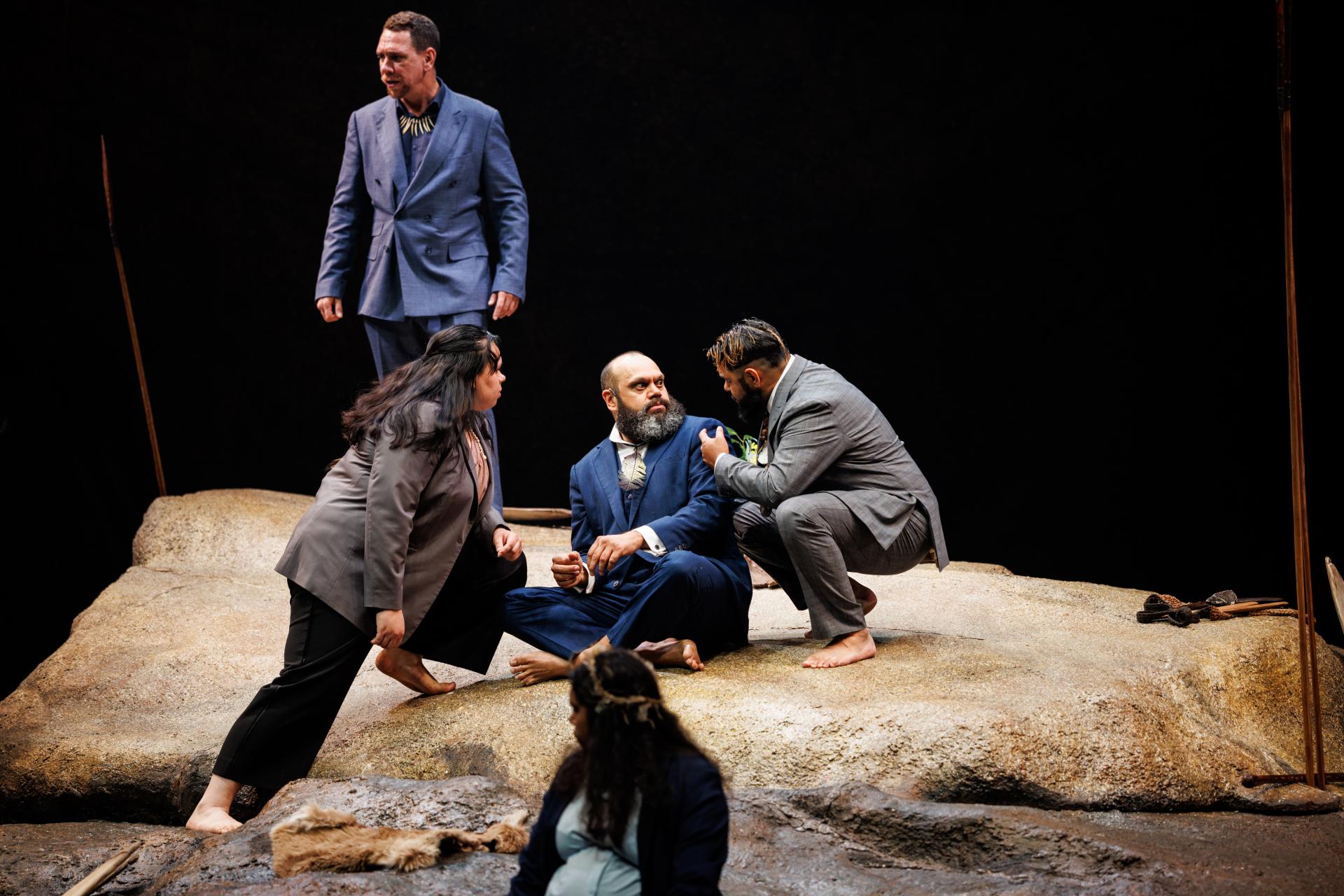
- Version A: A mainstage configuration featuring a massive sandstone set piece nicknamed "Bertha," designed for venues like the Sydney Opera House and PACNYC.
- Version B: A compact, flexible touring setup tailored for regional Australian theaters.
- Version C: A stripped-back boardroom-style configuration intended for intimate community spaces, missions, and reservations.
According to regional tour data, these adaptations have driven record attendance among local First Nations community members, transforming mainstream theater spaces into welcoming environments for Indigenous audiences.
Cultivating Talent: The Yellamundie Festival
In addition to producing touring works, Moogahlin drives the development of new Indigenous performance through the biennial Yellamundie Festival. Launched in 2013 following the National Indigenous Theatre Forum in Cairns, the festival takes its name from the Dharug word for "storyteller."
Designed exclusively for independent First Nations artists, the festival accepts 50 to 60 applications per cycle, selecting six works for intensive workshop development and public showcase. Under Artistic Director Lily Shearer, the festival expanded its scope beyond script-based plays to encompass dance, movement, musical composition, and traditional storytelling formats. Across its seven editions, Yellamundie has developed 51 original works, with 21 progressing to full mainstage productions across Australia. Moogahlin commits to fully producing at least one work from each festival cohort.
Environmental Advocacy and Cultural Survival
Moogahlin’s mission extends beyond the stage into environmental and cultural advocacy through its biennial Baiame Ngunnhu Festival, established in 2015. Held along the Ba-Wun (Barwon) River in Brewarrina, New South Wales, the festival takes place alongside the traditional Ngunnhu—an ancient stone-pen fish trap system recognized as one of the oldest human-made structures on Earth, predating both Stonehenge and the Egyptian Pyramids.
The festival addresses critical ecological threats facing the region, including riverbank degradation from cattle, invasive European carp, and extensive water extraction by commercial cotton farms. By linking ecological health directly to cultural survival, Moogahlin uses the festival as a platform to advocate for water rights and environmental justice, emphasizing that the well-being of the land and its First Peoples are inextricably connected.
Broader Implications and Sector Challenges
Despite the artistic triumphs of companies like Moogahlin, Ilbijerri Theatre Company, and Yirra Yaakin, Australia’s Indigenous theater sector remains remarkably small. Practitioners continually balance creative development with profound community support obligations, including navigating the intergenerational trauma of the Stolen Generations and assisting individuals reconnecting with their heritage after decades of systemic assimilation pressures.
Industry analysts note that organizations like Moogahlin perform a vital dual function: challenging institutional exclusion within the arts sector while actively repairing social fractures within Indigenous communities. By dismantling Western theatrical paradigms and centering First Nations epistemologies, Moogahlin Performing Arts continues to redefine the boundaries of global contemporary performance.