India has achieved monumental strides in public health over the past two decades, significantly expanding the reach of its Universal Immunization Programme (UIP) and dramatically reducing child mortality rates. Among the most critical metrics of this progress has been the steady decline in the number of "zero-dose" children—infants and toddlers who have failed to receive even their first dose of the diphtheria, tetanus, and pertussis (DTP1) vaccine. Despite these nationwide triumphs, public health authorities face a stubborn final frontier: localized clusters of unimmunized and under-immunized children residing primarily in dense urban pockets, marginalized communities, and hard-to-reach geographic terrains.
To bridge this remaining immunity gap, health agencies, researchers, and government officials have increasingly recognized that top-down, one-size-fits-all immunization campaigns are no longer sufficient. The barriers preventing a child from receiving life-saving vaccines in a bustling urban slum in Uttar Pradesh differ vastly from those in a remote rural hamlet in Bihar. Addressing these nuanced, micro-level challenges requires adaptive, community-driven strategies.
In response, a collaborative public health initiative deployed a dynamic "Learning by Doing" framework across select urban areas in the northern states of Bihar and Uttar Pradesh. By fusing human-centred design principles with real-time operational learning, this methodology sought to decode the localized barriers to vaccination, co-create context-specific solutions with families and frontline workers, and continuously refine interventions based on on-the-ground realities.
The Scale of India’s Immunization Challenge
To understand the gravity of the interventions in Bihar and Uttar Pradesh, one must examine the broader epidemiological landscape of immunization in India. For decades, the Ministry of Health and Family Welfare, alongside international partners such as the World Health Organization (WHO), UNICEF, and Gavi, the Vaccine Alliance, has systematically worked to plug gaps in the immunization cold chain and delivery logistics.
Historically, rural areas bore the brunt of vaccine deprivation due to logistical bottlenecks, rugged terrain, and a scarcity of health facilities. However, rapid urbanization has triggered a massive demographic shift. Millions of families migrate from rural hinterlands to urban and peri-urban centers in search of economic livelihoods. Many settle in informal settlements, unauthorized colonies, and construction sites characterized by overcrowding, poor sanitation, and transient populations.
In these urban environments, public health infrastructure often fails to keep pace with population growth. Migrant caregivers frequently lack local social support networks, face irregular daily-wage employment hours that clash with static health facility timings, or harbor deep-seated vaccine hesitancy fueled by misinformation. Consequently, urban and peri-urban areas have emerged as significant contributors to the remaining pool of zero-dose children in India.
Bihar and Uttar Pradesh—India’s two most populous states—house a disproportionate share of these vulnerable urban pockets. While both states have recorded substantial improvements in overall immunization coverage through intensified missions like Mission Indradhanush, persistent pockets of resistance and exclusion continue to test the resilience of public health systems.
The Genesis of the "Learning by Doing" Framework
Recognizing that traditional administrative tracking systems often failed to capture the complex socio-cultural realities of urban migrants and marginalized communities, public health practitioners sought an alternative approach. The traditional paradigm typically involved designing a strategy at the state or national level, rolling it out uniformly, and evaluating its success months later through lagging health indicators.
The "Learning by Doing" model inverted this dynamic. Instead of imposing external solutions, the initiative prioritized active listening, rapid prototyping, and iterative problem-solving directly within the communities experiencing the highest drop-out and zero-dose rates.
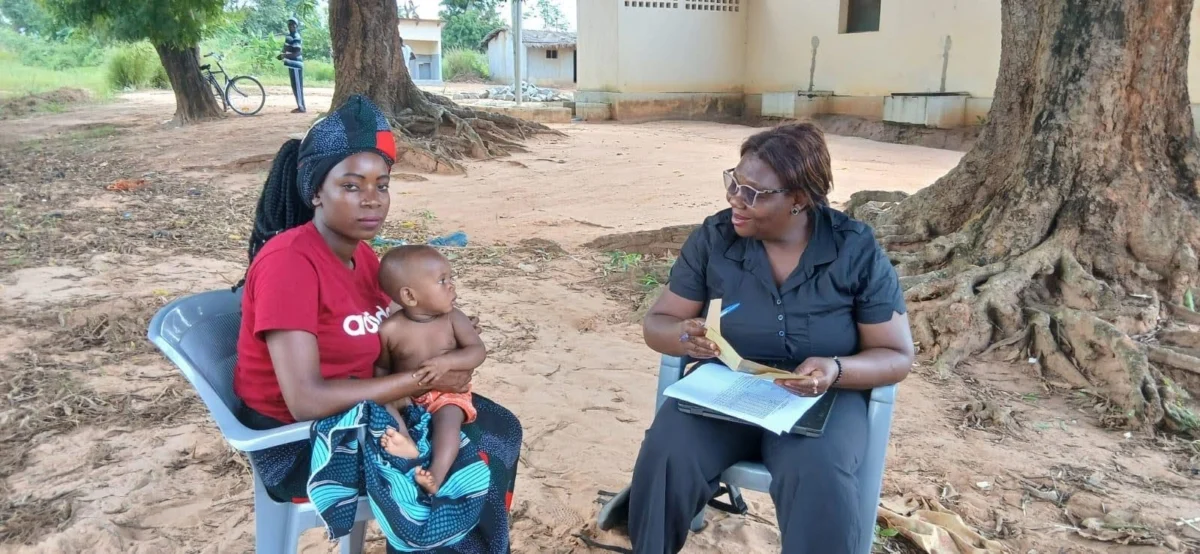
Central to this methodology was the integration of human-centred design (HCD). Rather than treating caregivers merely as passive recipients of health services, HCD positions them as active co-designers of the solutions. Health authorities sat down with mothers, fathers, community elders, frontline Accredited Social Health Activists (ASHAs), Auxiliary Nurse Midwives (ANMs), and local municipal leaders to map out the exact pain points in the immunization journey.
The Three-Phase (3D) Operational Architecture
The implementation of the initiative was meticulously organized around a structured three-phase architecture known as the 3D model: Define, Design, and Deliver.
Phase 1: Define
The initial phase focused on deep immersion and diagnostic mapping. Rather than relying solely on secondary health data, teams conducted qualitative research in targeted urban wards of Bihar and Uttar Pradesh. They mapped out the daily routines of migrant families, identified specific communication gaps, and cataloged operational bottlenecks faced by frontline workers.
For instance, researchers discovered that many urban working mothers could not visit immunization sessions held during standard weekday morning hours because they worked as domestic help or daily wage laborers. Furthermore, migrant families frequently moved between rental accommodations within the city, causing them to fall through the cracks of fixed-site health registries. By clearly defining these micro-barriers, the initiative moved beyond generalized assumptions about "vaccine hesitancy" and pinpointed exact structural and behavioral friction points.
Phase 2: Design
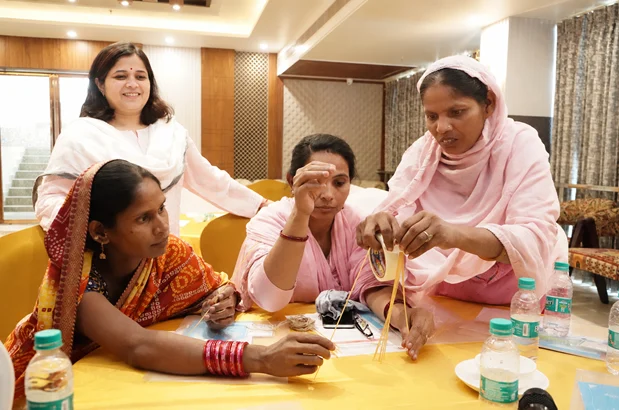
Armed with granular insights from the definition phase, the stakeholders—ranging from grassroots health workers to district-level government bureaucrats—entered collaborative co-creation workshops. During this phase, potential solutions were brainstormed, prototyped, and tailored to the unique ecosystem of each urban pocket.
Rather than deploying a generic mass-media campaign, the design teams crafted localized interventions. These included flexible, extended-hours immunization sessions tailored to the shift patterns of working parents; peer-led community mobilization networks utilizing trusted local voices; and simplified, portable tracking mechanisms to ensure migrant children retained their immunization status across relocations.
Phase 3: Deliver
The final phase translated co-created concepts into active field implementation. However, unlike rigid public health rollouts, the delivery phase was treated as a continuous learning loop. Implementation teams closely monitored how communities interacted with the new interventions in real time. Feedback loops were established to capture immediate operational hurdles. If a specific outreach camp recorded low turnout, teams rapidly pivoted—adjusting the timing, altering the communication strategy, or deploying mobile reminder systems via local leaders.
Voices from the Ground: Stakeholder and Official Perspectives
The success of the Bihar and Uttar Pradesh urban immunization initiatives hinges heavily on the tireless efforts of frontline health workers, who serve as the crucial bridge between institutional health machinery and hesitant communities.
Public health officials involved in the oversight of the program have emphasized that community engagement is no longer an optional accessory to immunization drives, but a core epidemiological necessity.
"When we look at zero-dose children in densely populated urban settings, the barrier is rarely just about vaccine availability," noted a senior public health consultant familiar with the rollout in Uttar Pradesh. "The vaccines are there, the cold chain is functional, and the facilities exist. The real challenge is relational and operational. If a mother is working twelve hours a day to feed her children, visiting a government dispensary between 10 AM and 2 PM is an economic impossibility. By involving the community in designing alternative delivery times and neighborhood-level outreach, we change the equation from compliance to accessibility."
Similarly, district health officers in Bihar highlighted how the human-centred design approach empowered local ASHAs and ANMs. Frontline workers, often overburdened and demoralized by rigid administrative targets, reported feeling heard and supported when their localized feedback directly influenced programmatic adaptations.
"Our frontline workers know every lane, every family, and every rumor circulating in these urban settlements," stated a district immunization officer in Bihar. "When we gave them the tools and the permission to experiment with localized solutions—such as evening vaccination camps near construction sites or engaging local shopkeepers as informational anchors—we saw an immediate surge in community trust."
Data, Metrics, and the Broader Epidemiological Implications
While qualitative human-centred design provides the empathy and adaptability required for complex urban environments, the ultimate measure of success remains quantitative: the sustained reduction of zero-dose and under-immunized children.
Data compiled across pilot urban wards in Bihar and Uttar Pradesh demonstrated encouraging trends during the implementation window. Districts that integrated adaptive, community-led problem-solving experienced notable improvements in timely vaccination completion rates compared to control areas relying on conventional outreach methods. Specifically, tracking mechanisms revealed a significant decrease in vaccine drop-outs between the first dose (DTP1) and the third dose (DTP3), indicating that initial hesitancy was successfully mitigated through sustained, trust-building engagement.
From a broader macroeconomic and public health perspective, these findings carry profound implications for national immunization policy in India and other developing nations grappling with urban migration. As populations continue to urbanize, traditional public health models predicated on fixed rural village structures will inevitably encounter diminishing returns.
The application of the 3D framework (Define, Design, Deliver) in Bihar and Uttar Pradesh demonstrates that systemic bottlenecks can be effectively dismantled through localized innovation and cross-sectoral collaboration. By treating urban communities not as difficult-to-reach statistical anomalies, but as active partners in problem-solving, health authorities have forged a scalable blueprint for reaching the most vulnerable children.
Looking Ahead: Sustaining Momentum
As India presses forward in its ultimate quest to eliminate zero-dose children entirely, the experiences harvested from the urban alleys of Bihar and Uttar Pradesh offer a vital roadmap. The challenge ahead lies in institutionalizing these agile, human-centred methodologies within mainstream state health budgets and administrative frameworks.
Scaling continuous learning and co-creation requires shifting bureaucratic mindsets from strict compliance monitoring to adaptive management. State governments must empower district health teams with the flexibility to test, fail, learn, and rapidly iterate solutions tailored to hyper-local contexts.
Ultimately, the story of Bihar and Uttar Pradesh is not merely about administering vaccines; it is a testament to the power of inclusive public health governance. By listening closely to the lived realities of caregivers, honoring the frontline workers who navigate the complexities of urban poverty every day, and fostering a culture of collaborative problem-solving, India is proving that even the most deeply entrenched systemic barriers can be overcome—one community, one neighborhood, and one child at a time.