The release of the Age Action Annual Report 2025, unveiled during the organization’s Annual General Meeting, serves as a comprehensive ledger of the shifting landscape for older people in Ireland. As the nation faces a demographic transition characterized by an increasingly aging population, the report provides a detailed overview of the non-profit sector’s efforts to combat ageism, alleviate social isolation, and influence public policy. The document functions not merely as a summary of organizational achievements, but as a critical assessment of the structural challenges currently impacting the dignity, security, and equality of Irish citizens in their later years.
A Year of Advocacy and Strategic Engagement
Throughout 2025, Age Action’s mandate focused on the intersection of direct service delivery and high-level policy advocacy. The organization’s strategic framework for the year was designed to address systemic barriers, particularly in the realms of income security, housing, healthcare access, and the persistent digital divide that threatens to marginalize older cohorts.
The 2025 reporting period was defined by a series of structured interventions. By engaging directly with government departments and regulatory bodies, Age Action sought to ensure that the voices of older people were not sidelined in national discourse. The organization submitted numerous position papers and policy briefs, addressing the socioeconomic strain caused by the rising cost of living, which disproportionately affects those on fixed pensions. Furthermore, the report emphasizes the importance of adult safeguarding, advocating for legislative reforms that protect older individuals from financial, physical, and psychological abuse.
Chronology of Key Developmental Milestones
The trajectory of Age Action’s activities in 2025 followed a deliberate, phased approach to community and national engagement. The calendar year was marked by several flagship initiatives that served to operationalize the organization’s core mission.
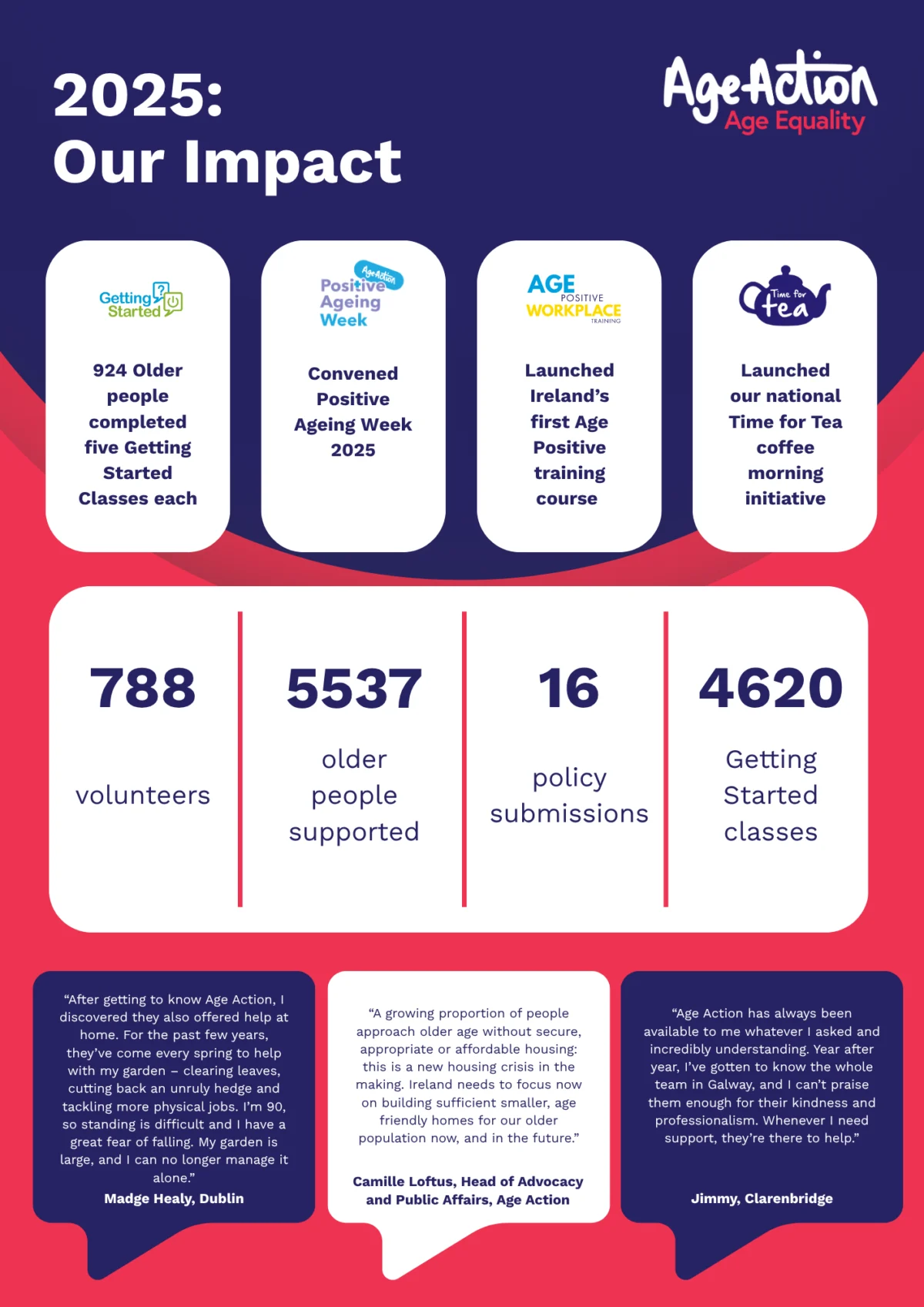
Early in the year, the primary focus was on the expansion of support services, which saw thousands of older individuals accessing tailored assistance programs. These services ranged from home maintenance support to digital literacy training, providing a necessary bridge for those navigating an increasingly technological society.
In the second quarter, the organization reached a pivotal milestone with the launch of Ireland’s first "Age Positive" training course. This educational initiative was developed to dismantle internalized and external ageism by fostering intergenerational understanding and equipping service providers with the tools to implement age-friendly practices.

The third quarter saw the rollout of the national "Time for Tea" initiative, a community-driven campaign designed to combat social isolation. By facilitating local gatherings and fostering social connectivity, the program addressed the qualitative aspects of aging that are often neglected in traditional policy frameworks.
The final quarter was anchored by the convening of Positive Ageing Week 2025. This annual event served as a focal point for national advocacy, bringing together policymakers, health professionals, and older citizens to discuss the implementation of the National Positive Ageing Strategy. The success of this week underscored the growing public appetite for a more nuanced understanding of the aging process.
Data-Driven Insights and Service Impact
The 2025 report underscores the quantitative impact of the organization’s work. While the full scope of data is detailed in the digital version of the report, the provided highlights suggest a significant increase in service utilization compared to previous years. Thousands of direct interactions with older people have provided a rich dataset regarding the lived experiences of Ireland’s aging demographic.
The data highlights a clear correlation between the availability of practical, localized supports and the overall well-being of the target demographic. For instance, the demand for digital inclusion services—programs that teach older citizens how to navigate online banking, healthcare portals, and government services—saw an unprecedented spike in 2025. This reflects a broader national trend where essential services are being digitized at a pace that often outstrips the digital literacy rates of the elderly population. Age Action’s efforts in this area have proven to be a vital public service, effectively mitigating the risk of social and economic exclusion.
Perspectives on Policy and Institutional Support
The release of the report has drawn attention from stakeholders across the voluntary and statutory sectors. While the report focuses on Age Action’s internal performance, the implications of its findings are far-reaching. Industry observers note that the organization’s continued focus on the "rights-based approach" to aging marks a shift away from the traditional, purely charitable model toward one that demands systemic accountability.
"The importance of ensuring that older people’s needs and rights remain at the heart of our national agenda cannot be overstated," noted a spokesperson associated with the organization’s leadership team during the AGM. The sentiment echoes a broader consensus among advocacy groups that the Irish state must integrate age-proofing into all future legislative and budgetary decisions. By documenting the experiences of thousands of individuals, the report provides a compelling evidence base for these arguments, making it increasingly difficult for policymakers to ignore the specific requirements of the over-65 demographic.
The Broader Implications for Irish Society
The findings presented in the 2025 Annual Report arrive at a critical juncture. Ireland is experiencing a significant demographic shift, with the Central Statistics Office projecting a continued increase in the proportion of the population aged 65 and over. This structural change necessitates a radical rethinking of how the state provides housing, healthcare, and income support.

One of the most profound implications of the report is the urgent need for a cohesive housing strategy that addresses the needs of older citizens. The report highlights that many older people remain trapped in housing that is no longer suitable for their mobility needs, yet they lack the financial or logistical support to transition to appropriate living arrangements. This "housing squeeze" not only impacts the individual’s quality of life but also places an unnecessary burden on the national health system, as delayed access to appropriate housing often leads to avoidable health complications and hospital admissions.
Furthermore, the report’s focus on income inequality serves as a stark reminder of the limitations of the current pension system. With the cost of living—particularly energy and heating costs—rising, the report provides a granular look at how inflation erodes the purchasing power of older citizens. The advocacy efforts detailed in the report regarding pension reform and cost-of-living supports highlight the necessity for a more robust social safety net that accounts for the specific vulnerabilities of the elderly.
Conclusion and Future Outlook
The conclusion of the 2025 reporting cycle marks a transition into the next phase of Age Action’s mission. By successfully navigating the complexities of the past year—from the launch of educational initiatives to the intensive lobbying efforts at the national level—the organization has solidified its role as a primary advocate for the aging population.
The gratitude expressed toward volunteers, partners, and the older people themselves acknowledges that the success of these programs is predicated on a collaborative, community-wide effort. As the report concludes, the focus for the coming years remains clear: to continue advocating for an Ireland where age is not a barrier to participation, where security is a baseline rather than a luxury, and where equality is maintained throughout every stage of the life cycle.
For stakeholders, policymakers, and the general public, the 2025 Annual Report stands as a vital resource. It offers both a reflection on past challenges and a roadmap for the future. The data, stories, and policy recommendations contained within serve as a call to action for all sectors of Irish society to prioritize the dignity of its older citizens. The full report, which includes detailed breakdowns of financial performance, service metrics, and specific policy submissions, is available for public review, providing a transparent look at the work being done to shape a more inclusive future for everyone in Ireland. As the nation continues to navigate the complexities of an aging society, the insights provided by Age Action will undoubtedly remain a cornerstone of the national conversation.