The fundamental mandate guiding Indigenous Peoples across Canada—encompassing traditional hereditary systems, elected Chiefs and Councils, and diverse grassroots collectives—centers upon the enduring stewardship of Mother Earth and all living beings. For millennia, Indigenous governance has been inextricably linked to the ecological health of ancestral territories. This paradigm relies on collective decision-making, intimate ecological knowledge, and a profound ethical responsibility to preserve natural resources for future generations.
However, this foundational philosophy has increasingly placed First Nations, Inuit, and Métis communities on a collision course with federal and provincial economic agendas. As Canada pushes to accelerate large-scale resource extraction and infrastructure development, a deep structural conflict has emerged between state-driven industrial expansion and Indigenous inherent and constitutional rights. This friction has manifested in widespread resistance movements, intense legal battles, and renewed scrutiny over Canada’s compliance with international human rights standards regarding Free, Prior, and Informed Consent (FPIC).
The Ecological and Cultural Imperative of Land Stewardship
For Indigenous Nations, the relationship with the land is not merely economic or recreational; it is the bedrock of identity, spirituality, and physical survival. Unlike many industrialized societies that became disconnected from earth-based cosmovisions, most First Nations have maintained traditional practices—such as hunting, fishing, and foraging—alongside contemporary lifestyles.

This deep-rooted dependency fosters a reciprocal ethical framework. Within Wet’suwet’en law, the health of the territory and the well-being of the community are mutually constitutive. Land defenders emphasize that traditional harvests are integrated directly into governance systems, such as the potlatch and feast systems, where resources are shared, laws are enacted, and leadership responsibilities are validated. Consequently, opposition to industrial megaprojects is driven by an existential necessity to protect the ecological foundations that sustain future generations and preserve traditional knowledge systems.
Chronology of Resistance: A Decade of Escalating Tensions
Over the past decade, Canada has witnessed heightened friction between Indigenous land defenders and corporate-state alliances seeking to develop unceded territories.
- 2014–2018: Opposition to the Coastal GasLink pipeline intensifies in northern British Columbia. Wet’suwet’en hereditary chiefs establish checkpoints and enforcement of traditional law to block construction on unceded lands.
- 2018–2020: The Royal Canadian Mounted Police (RCMP) conduct militarized enforcement actions against Wet’suwet’en land defenders, resulting in high-profile arrests and drawing international condemnation.
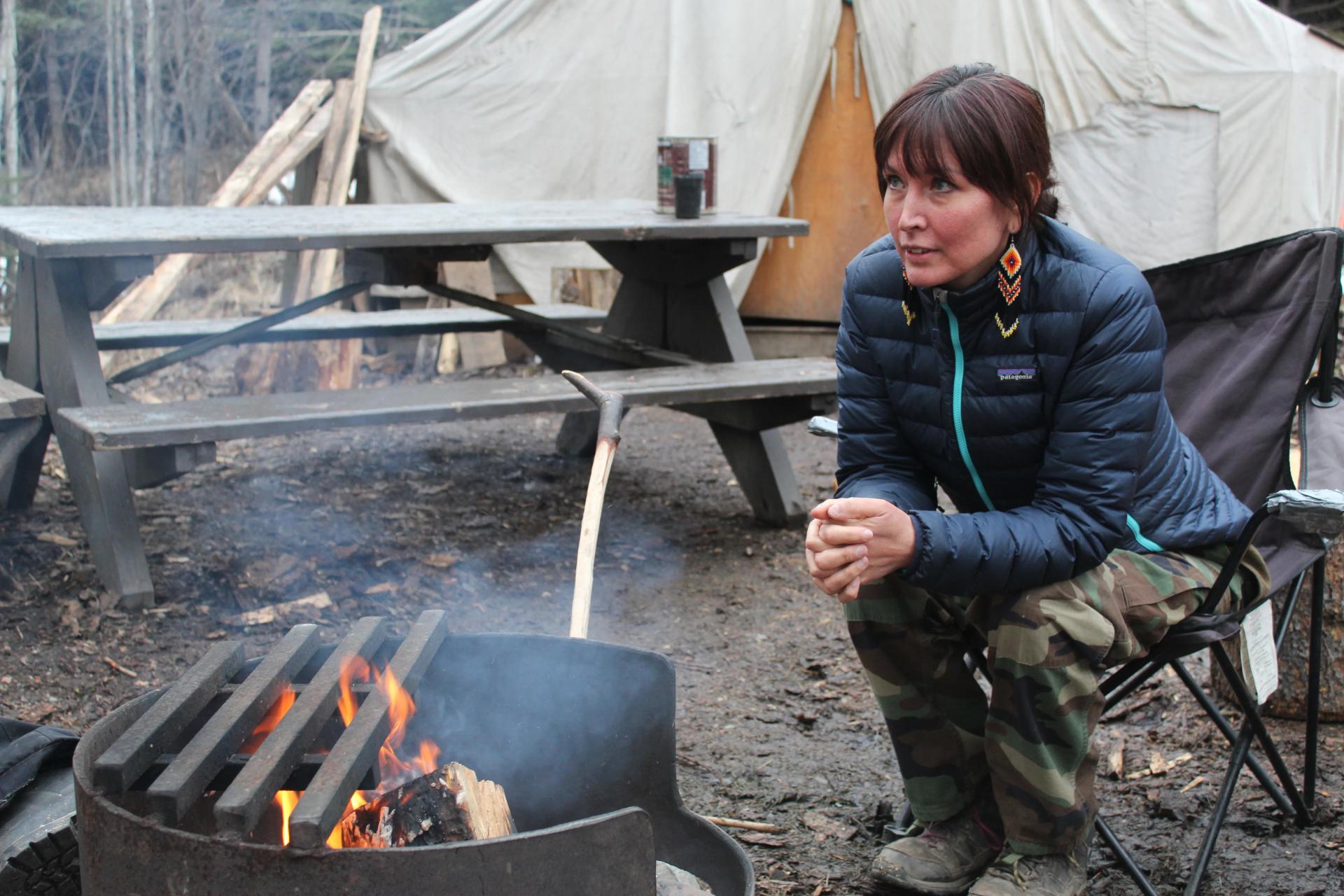
- 2021: Camp Morning Star is established near Winnipeg Lake, Manitoba, to protest and halt sand extraction projects threatening local ecosystems and water purity.
- 2021: The federal government formally adopts and implements the United Nations Declaration on the Rights of Indigenous Peoples (UNDRIP) Act, legally committing Canada to align its laws with international standards of Indigenous consent.
- 2024: Amnesty International designates Wet’suwet’en leader Chief Dsta’hyl as a prisoner of conscience following a 60-day house arrest sentence for resisting pipeline development, marking a historic first for Canada.
- Present: Legislative pushbacks continue as federal and provincial governments introduce fast-tracking bills—such as Federal Bill C5, Ontario Bill 5, and British Columbia Bill 14—designed to expedite major industrial projects, bypassing traditional consultation frameworks.
Militarized Enforcement and the Criminalization of Dissent
As Indigenous communities assert their jurisdiction over unceded territories, state responses have frequently relied on heavy-handed policing rather than diplomatic negotiation. Grand Chief Steward Phillip of the Union of British Columbia Indian Chiefs has frequently criticized the deployment of the RCMP during enforcement operations, characterizing their tactics as a paramilitary enforcement regime. According to Indigenous leaders, the deployment of tactical units, assault weapons, surveillance drones, and helicopters serves to intimidate peaceful land defenders and protect corporate bottom lines at the expense of human rights.
This securitization of resource extraction has increasingly extended into the judicial system. Legal mechanisms, including civil injunctions sought by private energy and mining corporations, are frequently deployed to criminalize land defenders. The 2024 Amnesty International designation of Wet’suwet’en leader Chief Dsta’hyl as a prisoner of conscience underscored how Canadian courts have been utilized to penalize individuals exercising their inherent sovereignty. Human rights observers argue that such actions demonstrate a systemic failure by provincial and federal authorities to recognize and uphold the right to Free, Prior, and Informed Consent.
Legislative Push and the Erosion of Constitutional Obligations
The systemic friction between Canadian economic ambitions and Indigenous rights is currently exacerbated by legislative initiatives aimed at fast-tracking development. Organizations such as the Assembly of First Nations (AFN)—representing 634 Chiefs and communities across the country—have voiced vehement opposition to executive and legislative measures designed to bypass environmental assessments and meaningful consultation.
These fast-tracking policies run counter to established domestic and international legal frameworks. Under Section 35 of the Canadian Constitution Act, 1982, existing Aboriginal and Treaty rights are recognized and affirmed, imposing a strict constitutional duty on the Crown to consult and, where appropriate, accommodate Indigenous communities when government actions might infringe upon their rights. Furthermore, the passage of the federal UNDRIP Act in 2021 obligates the Canadian state to take all necessary measures to ensure statutory laws conform with the United Nations Declaration, which explicitly guarantees Indigenous self-determination and ownership over traditional lands.
The Historical Context of Treaties and Unceded Territories
To understand the complexity of contemporary land disputes, one must examine the foundational history of the Canadian state. Upon initial contact in the 1500s, European colonial powers—primarily Great Britain and France—engaged with Indigenous groups as sovereign, self-determining Nations. Recognizing the military and geopolitical strength of Indigenous societies, the Crown entered into formal treaty negotiations, acknowledging Indigenous territorial ownership.
However, a significant portion of Canada—particularly large areas of British Columbia and the North—remains unceded territory. These lands were never surrendered through treaties, meaning that Indigenous title and jurisdiction over these regions have legally persisted under both international law and traditional Indigenous legal systems.

Despite this historical reality, contemporary federal and provincial governments frequently treat Indigenous governance structures as subordinate entities, functioning akin to municipal governments rather than equal, sovereign political partners. This approach fundamentally misinterprets the constitutional and inherent status of First Peoples.
Implications for Self-Determination and Democratic Governance
At the heart of the ongoing struggle is the realization of Articles 3 and 4 of UNDRIP, which enshrine the right to self-determination and self-government. Indigenous legal systems—guided by Elders, knowledge keepers, and traditional laws—operate on principles of holistic ecological health and collective well-being, contrasting sharply with Western corporate models driven by short-term financial returns.
Analysts note that Canada faces a critical juncture. Continuing down the path of legal confrontation, aggressive policing, and the marginalization of hereditary governance systems damages the country’s democratic credibility and results in costly, protracted legal disputes. Conversely, embracing historical justice by integrating Indigenous governments as equal partners in federal and provincial decision-making offers a viable pathway toward sustainable resource management.
Ultimately, honoring Indigenous sovereignty is not merely a legal obligation under Section 35 and UNDRIP; it represents a pragmatic necessity. By integrating traditional leadership and ecological stewardship into national policy-making, Canada can better balance economic prosperity with the long-term sustainability of its natural environment for generations to come.