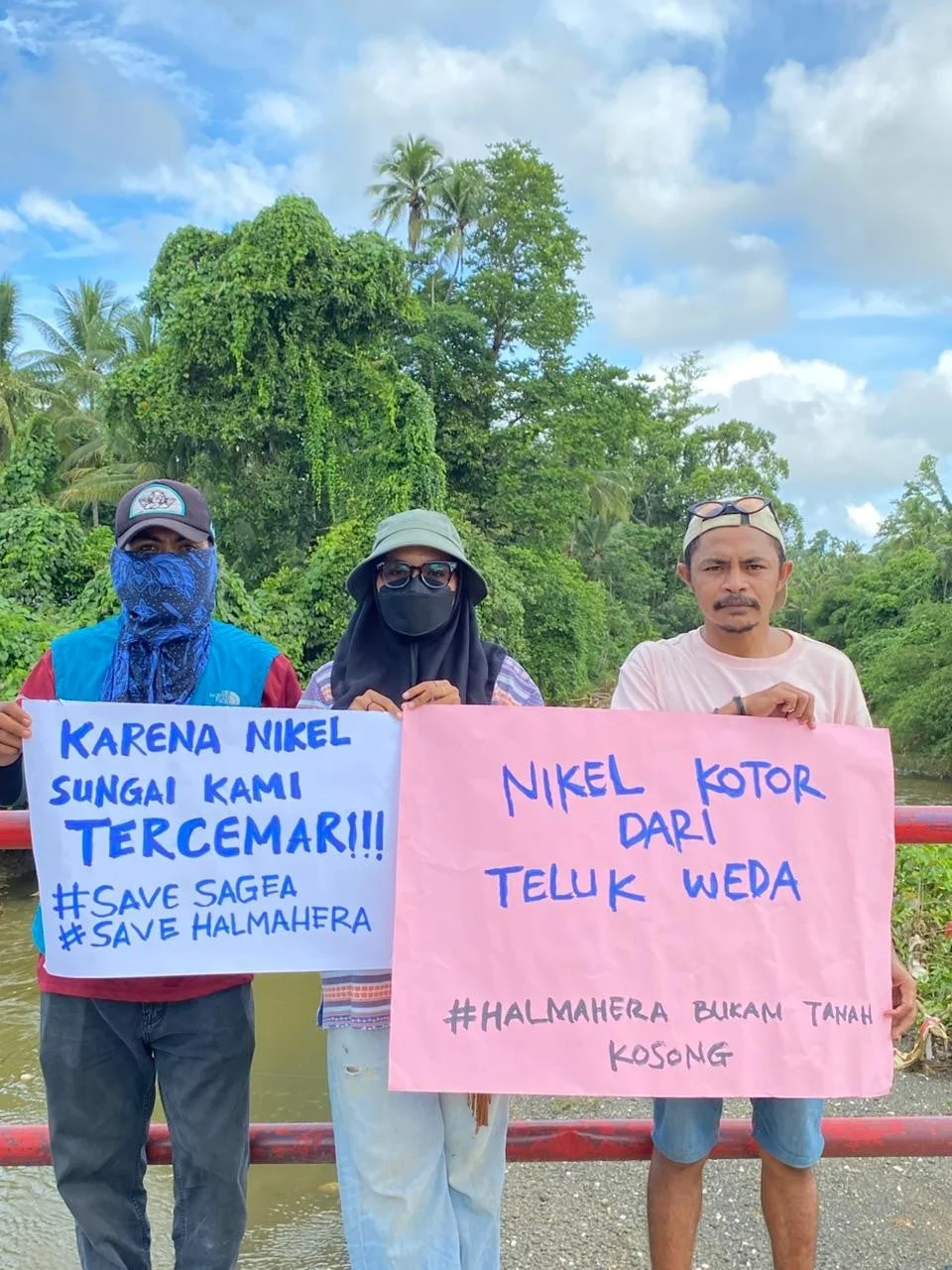
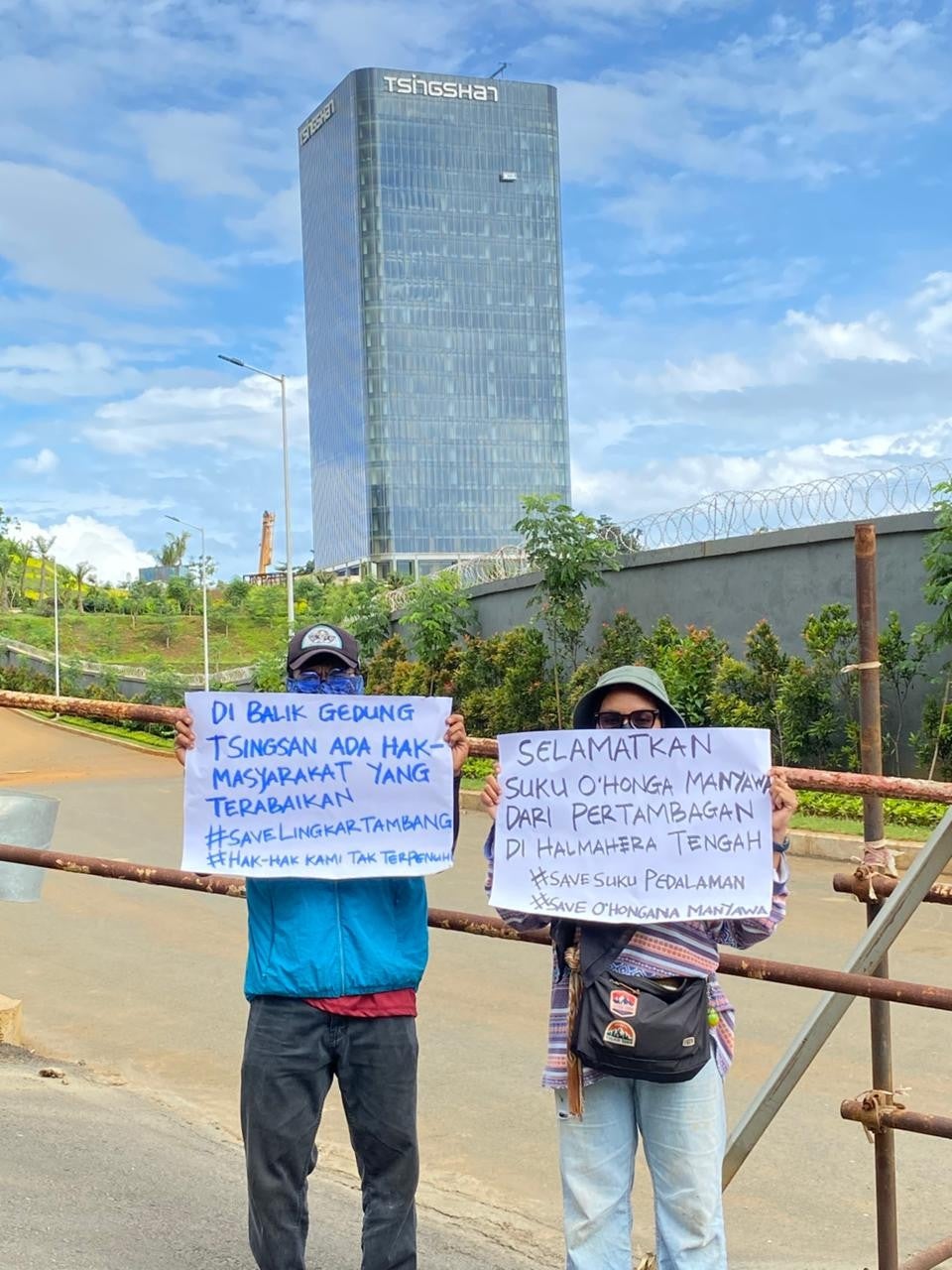
On May 28 and 29, 2026, a somber yet resolute wave of silent demonstrations swept across strategic locations in Weda Bay, North Maluku, marking Indonesia’s Anti-Mining Day. A coalition of local residents and environmental activists, united under the banner of preserving their ancestral lands and livelihoods, voiced urgent calls for an immediate cessation of the nickel industry’s rapid and aggressive expansion in the region. The protests, characterized by the poignant display of placards, targeted key industrial infrastructure, including vital transport routes connecting PT Indonesia Weda Bay Industrial Park (IWIP) and PT Tekindo, as well as the imposing Tsingshan Tower, a symbol of the region’s burgeoning extractive economy.
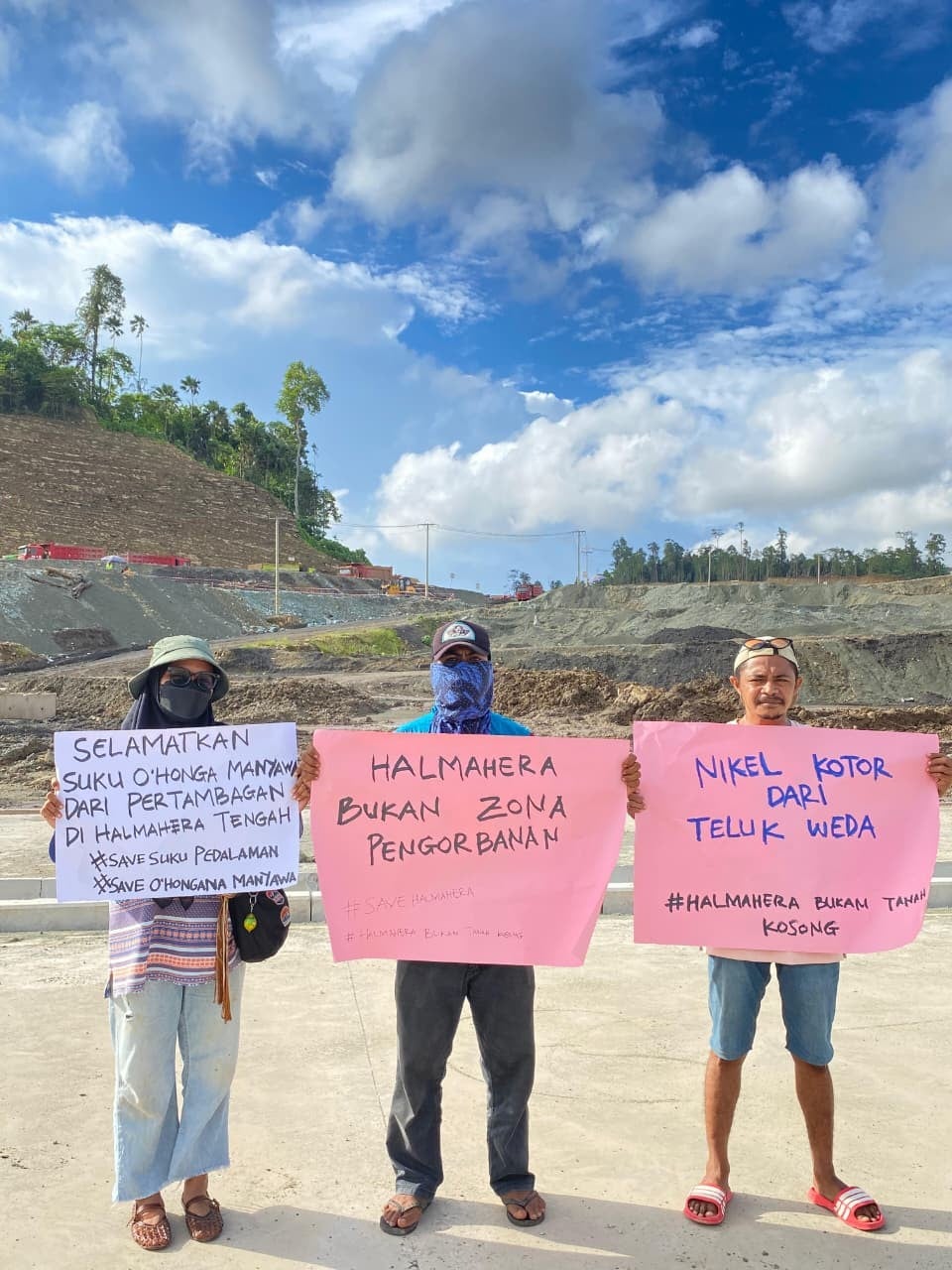
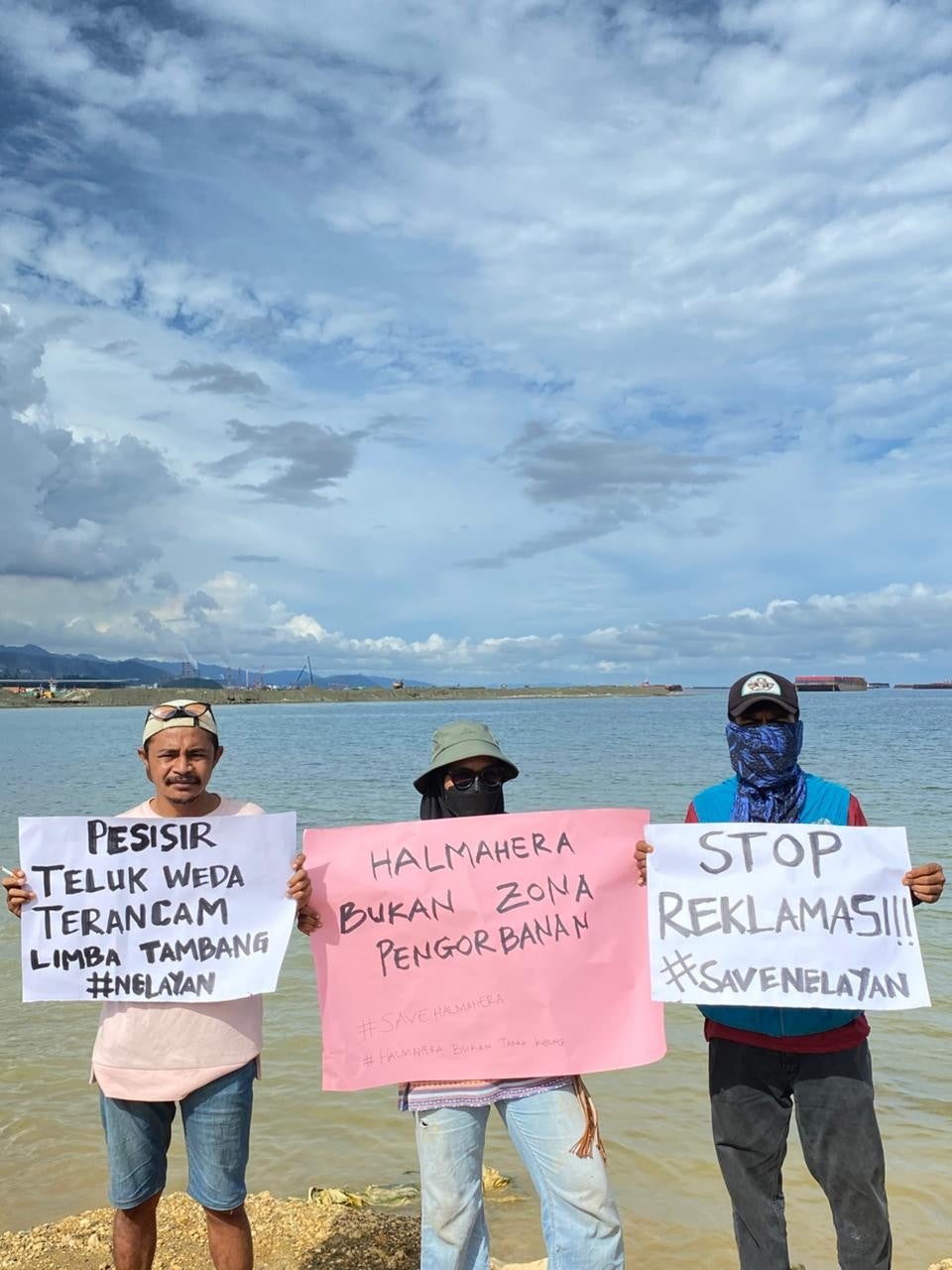
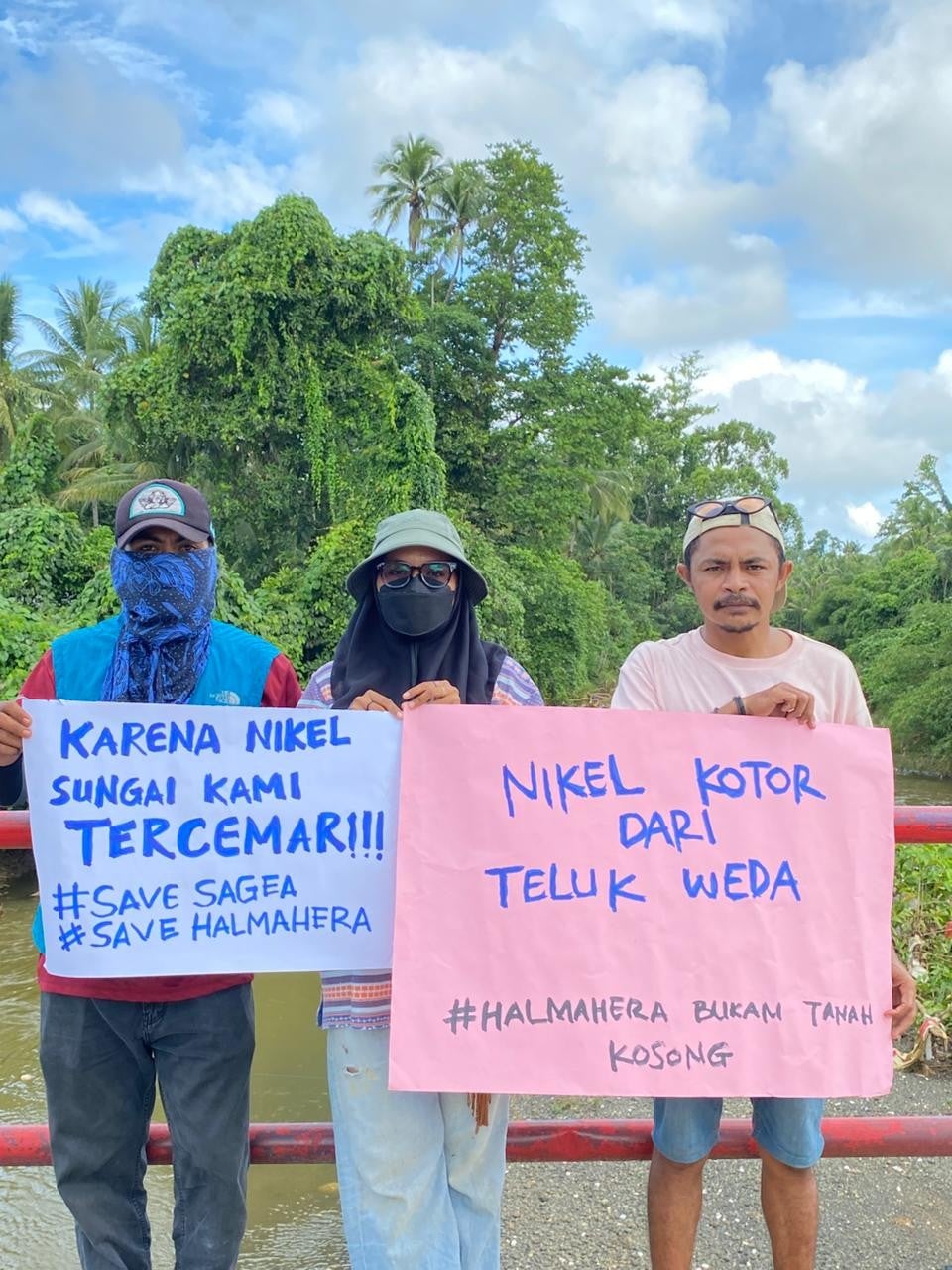
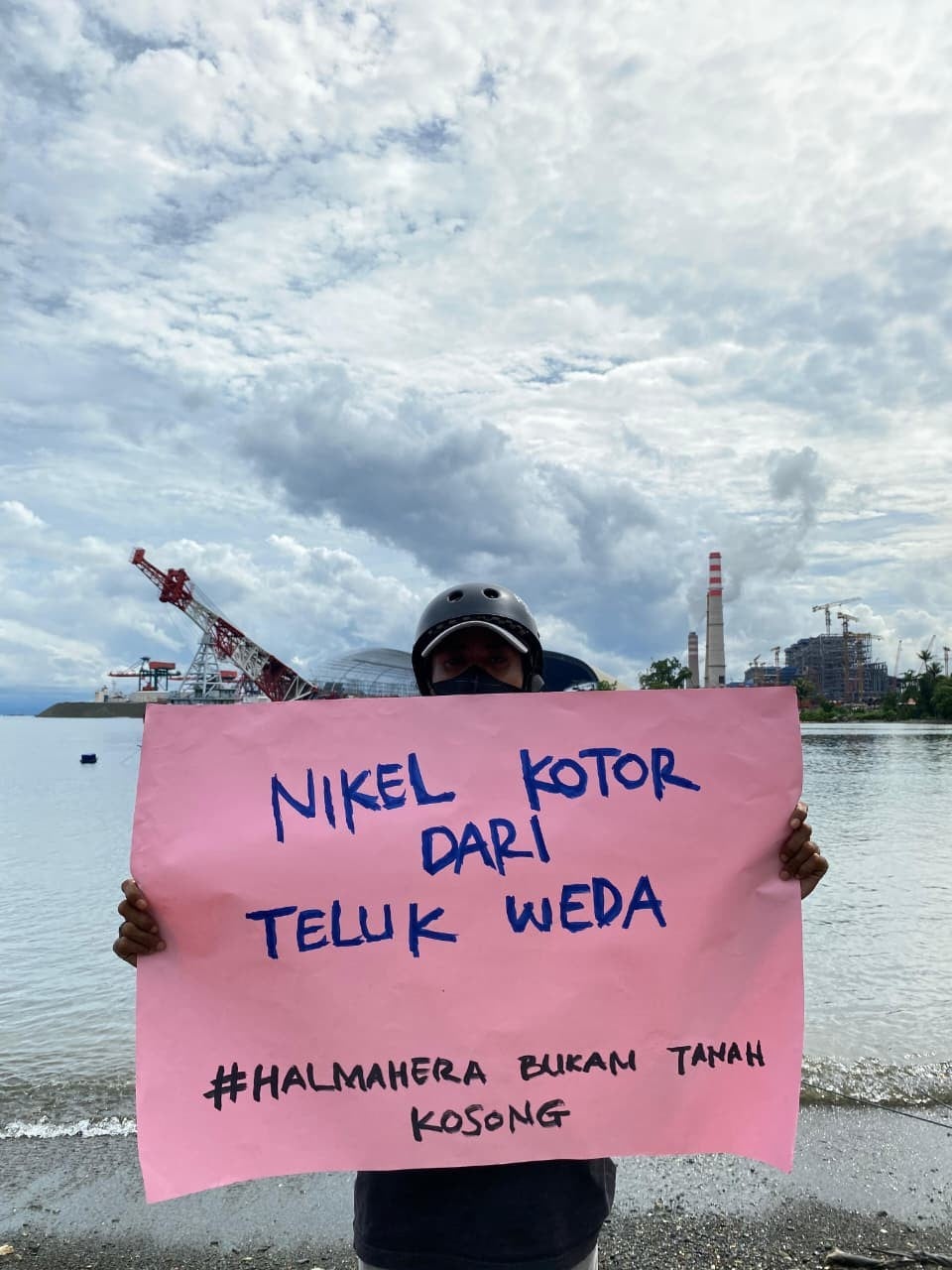
The messages carried by the demonstrators laid bare the stark local realities underpinning the global push for a green energy transition. Placards bore impassioned pleas such as "Save the O’Hongana Manyawa Tribe from Mining in Central Halmahera," "Halmahera is not a sacrifice zone," "Dirty nickel from Weda Bay," "Weda Bay is not a sacrifice zone for the global battery and electric vehicle industry," and "The Weda Bay coast is threatened by mining waste—stop reclamation, save the fishermen." These were not mere slogans but the distilled anguish of communities witnessing their natural heritage and way of life systematically dismantled.
The silent protests, orchestrated by groups including Save Sagea activists and residents from Lelilef Woebulen, unfolded at pivotal sites. Demonstrators congregated at Kawinet Peak in Sagea Village, overlooking the nickel mining operations of PT Mining Abadi Indonesia, a contractor for PT Zhong Hai Rare Metal Mining Indonesia. Further actions took place along the coast of Lelilef Village, in Gemaf Village, at the Ake Kobe River bridge, at Lokulamo’s distinctive Two-Finger Hill, and along the main arteries connecting the sprawling industrial zones. The contiguous nature of these protests underscored the widespread impact of industrial encroachment.
A Legacy Under Siege: The Ecological and Cultural Cost
The core of the protesters’ grievances lies in the severe ecological and cultural toll exacted by the nickel industry’s unchecked growth. Activists argue that the global demand for minerals essential to electric vehicles and renewable energy technologies is being met through the systematic destruction of local ecosystems and the displacement of Indigenous communities.
Rifya Rusdi, a prominent Save Sagea activist, founder of the Halmahera Coastal Women’s School, and a resident of Sagea, articulated this sentiment forcefully. "The energy transition must not be built on environmental destruction or the sacrifice of local communities," she stated. "For this reason, we firmly reject further industrial expansion in the region." Her words echo a growing sentiment among those whose lives are inextricably linked to the natural environment.
Central to the cultural fabric of the Sagea and Kiya villages are critical ecological and cultural sites, including the Sagea Karst, Boki Moruru Cave, and Yonelo Lake. These areas are not merely geographical features but hold deep historical, spiritual, and practical significance for the local populations. They now face unprecedented threats from the expanding nickel and limestone mining operations, which have led to widespread deforestation, the erosion of karst formations, and the contamination of water sources.
Rifya, speaking as a member of the Sagea Kiya community, highlighted the existential threat posed by the industrial expansion. "We see our village, rich in tourism potential and essential to local livelihoods, being threatened with erasure," she explained. "Forests and mountains are being cleared and leveled for mining expansion, leaving residents to question how our communities are expected to survive under a development model justified in the name of energy transition."
The Irony of "Green" Development: Industrial Boom and Social Disruption
In recent years, Central Halmahera, and particularly the Weda Bay region, has transformed into a global nexus of nickel production. This rapid industrialization has dramatically reshaped the landscape, replacing verdant forests, fertile farmlands, pristine rivers, and vibrant coastal ecosystems with a dense network of processing smelters, captive coal-fired power plants, extensive haul roads, and jetties. The PT Industrial Park, a central player in this transformation, continues its relentless expansion through large-scale coastal reclamation, deforestation, and the construction of power infrastructure.
This industrial surge has had profound ecological and social consequences. Coastal areas that once sustained vibrant fishing communities are now repurposed as industrial logistics corridors, choked with the constant movement of ore carriers and coal barges. The sea, a lifeblood for local economies, has increasingly become a conduit for industrial operations.
A multitude of companies are involved in the nickel and limestone mining operations surrounding the Sagea watershed and across Central Halmahera. These include PT Mining Abadi Indonesia, PT Zhong Hai Rare Metal Mining Indonesia, PT Weda Bay Nickel, PT Halmahera Sukses Mineral (formerly PT Harus Sukses Mineral), PT Tekindo Energi, PT Dharma Rosadi Internasional, and PT Karunia Sagea Mineral, which holds a limestone production permit. The sheer number and scale of these operations underscore the intensity of the resource extraction in the region.
The protest near the Tsingshan Tower within the Weda Bay nickel industrial estate held particular symbolic weight. The tower, an imposing structure overlooking the industrial complex, was described by activists as a stark representation of the centralized power dictating the region’s extractive economy. Rifya Rusdi observed that from this vantage point, policies that "subjugate" the region through the nickel industry are conceived and implemented. She lamented that the living spaces of local communities are being dictated by industrial imperatives, with the future of these communities gambled away to serve the demands of the global supply chain.
From Fishing Grounds to Industrial Zones: The Daily Reality of Pollution
The impact of industrial activities on the coastal environment and the livelihoods of fishermen is a critical concern. According to Rifya, increased shipping activities and ongoing coastal reclamation have significantly narrowed traditional fishing grounds. This has led to increased sedimentation in coastal waters, rendering the marine environment more treacherous. The water clarity has diminished, resulting in a noticeable decline in fish catches. Fishermen are now compelled to venture farther offshore, navigating the increasingly congested and dangerous waters occupied by industrial traffic.
The degradation is no longer a distant threat but a palpable daily reality for residents. They grapple with industrial dust settling on their homes, corrosion damaging their roofs, polluted water sources, and the pervasive threat of mud floods originating from denuded hillsides. Farmland has been lost to mining concessions, rivers are choked with sediment and pollution, and wells and boreholes, once reliable sources of fresh water, are now deemed unsafe for consumption.
Public health concerns are also escalating, with reports of respiratory illnesses and exposure to hazardous industrial substances such as mercury and arsenic. Rivers like the Ake Kobe River, a site of one of the protests, are under immense environmental pressure. Upstream deforestation and mining activities have severely degraded water quality, disrupting vital water sources and jeopardizing the food security of downstream communities.
The protesters also expressed deep solidarity with the O’Hongana Manyawa People, an Indigenous group whose ancestral lands and forests are increasingly encroached upon by extractive industrial expansion. For activists, the crisis in Central Halmahera transcends mere natural resource exploitation; it is an aggressive process of displacement and dispossession. Land is commodified, forests are treated as industrial assets, rivers are transformed into conduits for industrial waste, and coastal areas are converted into logistical infrastructure.
In this relentless pursuit of resources, Indigenous Peoples and local communities are left in the most precarious positions. They face the loss of their ancestral lands, are often relegated to low-wage labor within the very industries that disrupt their lives, or risk criminalization when they attempt to defend their territories. The nickel boom has also exacerbated social tensions within Weda Bay villages, leading to a shrinking of habitable spaces and a severe erosion of residents’ autonomy over their land.
The "Dirty Nickel" Narrative: A Contradiction in Green Aspirations
Amidst this unfolding environmental and social crisis, the government and corporations continue to promote a narrative of clean energy and a "green" economy. Electric vehicles are lauded as harbingers of a sustainable future, while communities situated near mining sites endure pollution, health crises, environmental devastation, and the erosion of their traditional livelihoods.
Rifya Rusdi sharply refutes the notion of "green" industry when it is built upon such foundations. "There is nothing truly green about an industry built on deforestation, marine pollution, land grabbing, and the destruction of Indigenous living spaces," she asserted. She unequivocally labels the nickel extracted from the region as "dirty nickel," a product of ecological destruction, the theft of ancestral lands, human rights violations, polluted seas, damaged rivers, and deforested landscapes.
"We refuse to let Weda Bay become a sacrifice zone for the demands of the global electric vehicle battery industry," Rifya declared. She concluded by stating that residents unequivocally reject any future predicated on the destruction of the living spaces of coastal communities, farmers, women, fishermen, and Indigenous Peoples in Central Halmahera. The silent protests of May 2026 were a powerful, albeit quiet, testament to this unyielding resolve.
This article was written by a journalist covering Indigenous Peoples of the Indonesian Archipelago, specifically the Maluku Islands, and is a 2026 Cultural Survival Indigenous Journalism Fellow. This journalist is a human rights defender based in Indonesia with over two decades of experience in media advocacy for women, children, and Indigenous communities. Her work has focused on documenting the violation of Indigenous Peoples’ rights to land and access to customary forests by extractive industries. Through this fellowship, she aims to amplify the voices of Indigenous communities, focusing on the environmental impacts of mining and the disruption of local economies and Indigenous land rights caused by mining expansion.