For countless generations, the Maasai people of East Africa have successfully governed their communities through an intricate socio-political framework that seamlessly integrates leadership with land tenure, culture, spirituality, livestock management, and collective responsibility. Unlike centralized governance models built around a single, powerful individual, the Maasai system operates as a dynamic, living network. This network comprises Elders, women, spiritual leaders, family heads, and broad community assemblies, with each constituent carrying distinct, complementary responsibilities. Within this framework, authority is never an inherited right; rather, it is continually earned through active service, wisdom, unwavering integrity, extensive life experience, and a demonstrated ability to protect the physical and spiritual well-being of the entire community.
Today, these customary structures continue to guide pastoralist communities through severe ecological challenges, including prolonged droughts, localized land conflicts, sweeping social changes, and mounting commercial pressures from state-backed conservation initiatives, tourism expansions, and foreign investment projects. Even as formal administrative powers are exercised by modern state institutions across Kenya and Tanzania, Maasai customary governance remains the beating heart of community identity, conflict resolution, and daily decision-making.
Governance as a Collective Responsibility and the Age-Set System
The foundational philosophy of Maasai leadership is rooted in the intrinsic principle that no individual exists in isolation. Every person belongs to a deeply interconnected web encompassing a family, a clan, a specific neighborhood, an age-set, a geographic territory, and the wider ethnic community. Consequently, decisions that directly affect communal grazing land, vital water points, livestock health, traditional ceremonies, peace negotiations, and inter-community relations are never expected to be made behind closed doors or by solitary executives. Instead, traditional protocol dictates that all significant matters be brought before open community gatherings. In these forums, traditional leaders—including spiritual guides, clan heads, and age-set representatives—alongside respected Elders and everyday community members, contribute their localized knowledge. Deliberations continue patiently until the assembly reaches a broad consensus, ensuring that the final decision robustly protects the collective interest.
A cornerstone of this social and political architecture is the age-set system. As young males mature, they transition through a highly structured series of age-grades, moving deliberately from boyhood into warriorhood (moran) and ultimately into senior adulthood. Each age-set develops a distinct, cohesive identity characterized by internal solidarity, specific community duties, and representative leadership roles. At the helm of these structures is the Olaigwanani, a recognized age-set or clan leader and spokesperson. The Olaigwanani does not rule autocratically; rather, his mandate is to represent, coordinate, advise, and guide his people. To maintain legitimacy, an Olaigwanani must be an active listener, a clear communicator, and a steadfast guardian of community unity. Crucially, he is continuously supported by a council of Elders and lacks the authority to enact major decisions without extensive prior consultation.
Elders hold profound moral and practical authority derived from their deep institutional memory. They carry centuries of customary law, historical knowledge, and a comprehensive mapping of relationships spanning various clans, territories, and generations. Their daily responsibilities include mediating disputes, guiding family matters, directing sacred ceremonies, negotiating regional peace treaties, and interpreting communal responsibilities. However, this legitimacy is strictly conditional: an Elder who repeatedly acts out of self-interest or dishonesty risks forfeiting his moral authority entirely, regardless of any lingering social status.
Customary Dispute Resolution and Pastoral Land Management
When conflicts inevitably arise—whether over livestock rustling, matrimonial disputes, overlapping grazing boundaries, or shared family responsibilities—the community relies on restorative rather than punitive justice. Customary dispute resolution is meticulously designed to restore fractured relationships and re-establish social harmony rather than merely impose penalties on an offender. Elders systematically convene both affected parties, grant them equal opportunity to air grievances, and facilitate mediated agreements that enable the community to continue living harmoniously side by side.
This robust self-governance model is fundamentally inseparable from pastoral land management. Across the vast East African drylands, rangelands are far from empty, unclaimed spaces waiting for industrial or agricultural investment. Instead, they are intensely managed, collectively utilized landscapes comprising a complex mosaic of wet-season and dry-season grazing areas, traditional livestock migration routes, mineral-rich salt licks, critical water points, medicinal plant reserves, sacred cultural sites, wildlife habitats, and protected zones reserved exclusively for vulnerable animals like newborn calves.
Maasai herders apply sophisticated ecological knowledge accumulated over centuries to determine precisely when different sectors of the landscape should be actively grazed or left to rest. Pastoralists assess pasture quality through meticulous indicators, including the emergence of specific perennial grasses, soil moisture conditions, water availability, livestock body condition, and changing seasonal weather patterns.
The Imperative of Mobility and Contemporary External Pressures
The viability of this pastoralist economy depends entirely on unimpeded mobility. During periods of severe drought, livestock must travel across vast geographical distances to reach distant water sources and resilient pastures. Traditional leaders routinely negotiate cross-territorial access, coordinate rotational grazing, prevent the premature exploitation of reserved conservation zones, and proactively defuse tensions with neighboring groups. Historically, these adaptive practices have allowed humans, domestic livestock, and diverse wildlife populations to peacefully coexist across highly variable and fragile dryland ecosystems.
However, the rapid modern fragmentation of these rangelands has severely undermined traditional governance systems. The imposition of rigid conservation boundaries, commercial farming operations, exclusive tourism concessions, expanding road networks, trophy-hunting zones, and private land investments has progressively choked off traditional migration corridors. When pastoralist communities are forcibly severed from their dry-season grazing areas and historical livestock routes, they simultaneously lose the capacity to apply their localized ecological knowledge responsibly. The predictable result of this spatial constriction is severe localized overcrowding, accelerated pasture degradation, inter-communal conflict, catastrophic livestock mortality, and deepening rural poverty.
Women’s Leadership, Spiritual Authority, and Evolving Advocacy
While external observers have historically mischaracterized Maasai governance as an exclusively patriarchal domain, women have always wielded profound social, cultural, spiritual, and household authority. Even when formally excluded from public political assemblies, women manage the daily operations of households, direct food and water distribution, construct traditional homes, and hold specialized knowledge linking family health directly to livestock welfare and environmental conservation. Furthermore, women serve as the primary custodians of intangible cultural heritage, preserving and transmitting oral histories, medicinal plant knowledge, sacred songs, and foundational community values to younger generations.
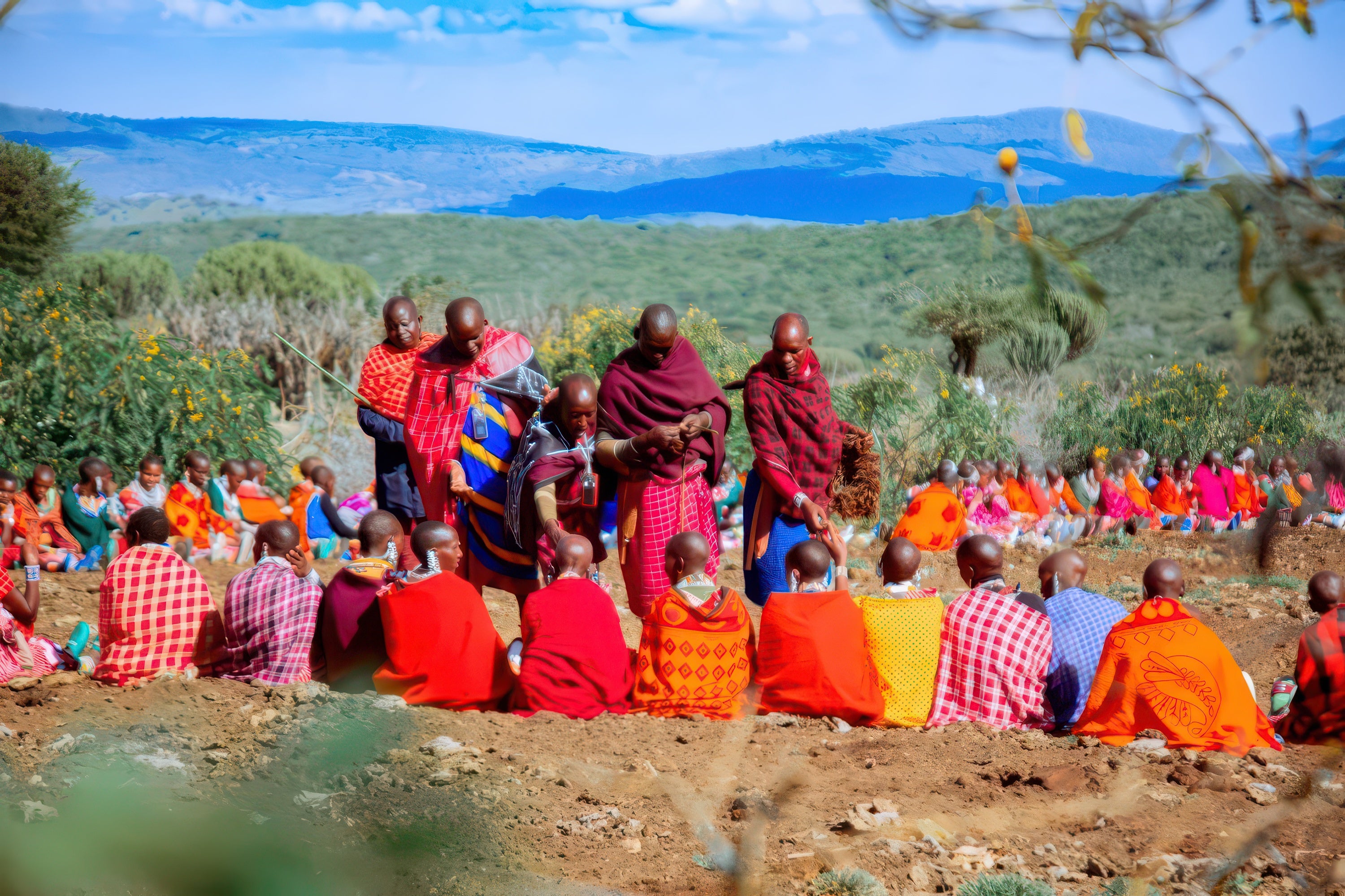
Maasai women also act as vital ecological monitors. By closely observing subtle shifts in water availability, nutritional security, livestock productivity, disease vectors, and household vulnerability, women generate empirical intelligence that is critical to effective community decision-making. When necessary, women collectively mobilize to express public approval, profound concern, spiritual blessings, or vocal protests through synchronized gatherings, traditional songs, ceremonies, and direct engagement with male Elders. Their collective moral voice carries immense weight, frequently steering family and community trajectories.
Despite these vital contributions, entrenched patriarchal practices have historically limited women’s formal participation in land allocation committees, village government leadership, and high-level negotiations with state actors or corporate investors. In response, modern Maasai women are actively demanding full recognition by reforming customary governance structures to reflect the rights and knowledge of the entire community. Organizations such as Indigenous Women Development Affairs (IWDA) provide critical institutional support, empowering women to secure seats on village councils, lead land-use discussions, participate in environmental governance bodies, and engage in high-level human rights advocacy. Today, Maasai women are increasingly represented on local committees responsible for rangeland management, conservation oversight, and community finance.
Self-Governance Under Pressure: The Tanzania Context
In Tanzania, customary Maasai governance operates within a complex, often contradictory matrix alongside statutory village governments, district administrative authorities, formal courts, state conservation agencies, and national legislation. This multilayered reality generates both operational opportunities and severe institutional tensions. While some forward-thinking traditional leaders maintain collaborative relationships with elected and appointed state officials, others find themselves relegated to token advisory roles, consulted only after major policy decisions have already been finalized.
In numerous instances, communities receive formal notifications regarding sweeping land-use plans, restrictive conservation edicts, tourism developments, or carbon offset projects long after high-level negotiations are complete. When external negotiators bypass broad community assemblies and instead selectively identify and co-opt a small handful of individuals as purported "community representatives," they actively manufacture internal divisions and undermine traditional accountability.
Meaningful self-governance inherently requires the strict adherence to the international standard of Free, Prior, and Informed Consent (FPIC). Affected communities must receive comprehensive project information in their native languages, be granted adequate time to deliberate proposals through their own customary institutions, and ensure the full inclusion of women and youth in the process. Communities must retain the absolute freedom to accept, reject, or completely reshape proposed activities on their ancestral lands. True consultation cannot be reduced to administrative attendance sheets or reactive public meetings convened merely to rubber-stamp decisions that have already been made behind closed doors.
Recent developments in sensitive regions such as Ngorongoro and Loliondo vividly illustrate why robust Indigenous governance remains an existential necessity. Escalating restrictions on traditional land access, arbitrary livestock confiscation, the systematic reduction of basic public services, and direct pressures of physical displacement threaten not only immediate pastoralist livelihoods but also the intricate social institutions through which Maasai communities govern their daily lives. Independent human rights reports have continually documented profound concerns regarding restricted access to essential health services, coercive relocation pressures, and aggressive state interference with traditional pastoralism in the Ngorongoro Conservation Area.
Preserving Heritage While Embracing Adaptation
Preserving and strengthening Maasai governance does not mean freezing a vibrant culture in an idealized past. Rather, it requires actively reinforcing its core principles—collective responsibility, institutional accountability, consensus-based decision-making, profound respect for Elders, the vigilant protection of ancestral lands, intergenerational knowledge transfer, and dedicated service to the community—while simultaneously ensuring internal equality and responding pragmatically to modern realities.
Moving forward, the survival of these systems demands enhanced collaboration among customary leaders, women’s advocacy groups, youth networks, local government structures, civil society organizations, and legal human rights advocates. There is an urgent need to comprehensively document customary laws, traditional grazing institutions, oral histories, and ecological knowledge bases, while simultaneously safeguarding sacred and confidential cultural information from exploitation. Furthermore, younger generations must be mentored not merely in the nomenclature of traditional leadership structures, but in the enduring ethical values that imbue those structures with legitimacy.
Modern digital tools offer valuable assistance in recording community decisions, mapping vital ecological resources, preserving oral archives, and communicating external threats to a global audience. However, technology must remain strictly under community control to prevent the unauthorized extraction, commercialization, or academic publication of Indigenous knowledge without explicit consent.
Ultimately, for the Maasai people, self-governance is about maintaining a living, reciprocal relationship encompassing human kin, ancestral territories, domestic livestock, wildlife populations, spiritual ancestors, and unborn generations. As environmental degradation and political pressures intensify across East Africa, the long-term survival of Maasai governance will depend entirely upon the legal recognition of collective land rights and the restoration of the community’s sovereign authority to determine its own future.
Far from acting as obstacles to national development, Indigenous governance systems represent empirically proven models of ecological resilience, environmental stewardship, local peacebuilding, and profound human belonging. Safeguarding these systems is essential not solely for the cultural survival of the Maasai people, but for the ecological health of the fragile dryland biomes that these communities have successfully sustained for centuries. Maintaining a robust Indigenous governance framework requires radical honesty regarding internal inequalities; culture must serve to protect human dignity rather than silence women, youth, persons with disabilities, or economically marginalized households. The traditions of the Maasai remain living, dynamic systems fully capable of critical self-reflection, adaptation, and enduring change.
Alice Tipap (Maasai) is the Climate Change Action Coordinator at Indigenous Women Development Affairs (IWDA).