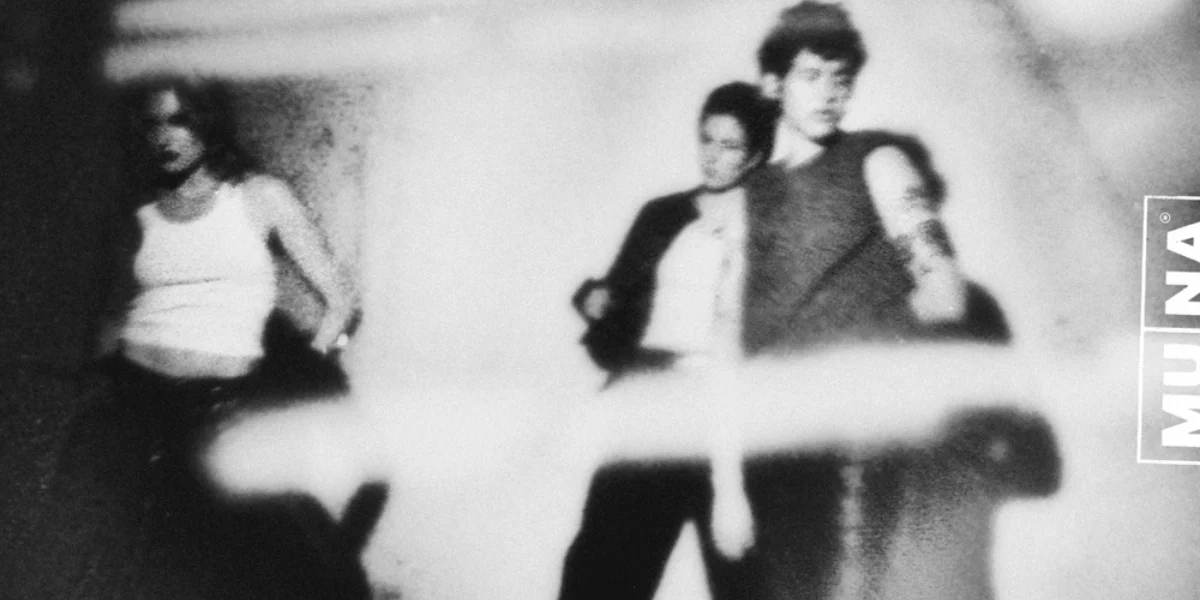
The American indie-pop trio MUNA, consisting of members Katie Gavin, Naomi McPherson, and Josette Maskin, has officially released their fourth studio project, titled Dancing On The Wall. This release arrives during a period of significant cultural and economic volatility, positioning the band as a central voice within the contemporary queer musical landscape. The album follows their critically acclaimed self-titled 2022 effort and continues their partnership with Saddest Factory Records, the independent label headed by Phoebe Bridgers. Dancing On The Wall represents a refined synthesis of the band’s previous sonic explorations, merging the dark, atmospheric textures of their debut with the high-energy, New Wave-inspired production that has become their signature.
Historical Context and Band Evolution
MUNA first entered the public consciousness in 2016 with the release of the Loudspeaker EP, followed by their debut full-length album, About U, in 2017. Initially signed to RCA Records, the group was noted for their "dark pop" aesthetic and their refusal to gender-neutralize their lyrics, a decision that established them as pioneers of unapologetically queer pop. Their sophomore effort, Saves The World (2019), moved toward a more vulnerable, introspective lyrical style, though it faced the challenge of being released shortly before the global pandemic disrupted the live music industry.
A pivotal moment in the band’s chronology occurred in 2021 when they signed with Saddest Factory Records after being dropped by their major label. This transition coincided with the release of their breakout hit "Silk Chiffon," which saw the band achieve new levels of mainstream visibility and streaming success. Dancing On The Wall serves as the culmination of this decade-long trajectory, reflecting a band that has transitioned from "baby activists" to established industry leaders. The album arrives at a time when legislative challenges regarding LGBTQ+ rights in the United States have increased, providing a sociopolitical backdrop that informs much of the record’s urgency.
Production and Technical Analysis
The production on Dancing On The Wall, primarily led by Naomi McPherson, marks a technical advancement for the group. The album utilizes frantic synth pulses and rhythmic structures reminiscent of 1980s New Wave, drawing comparisons to groups such as Depeche Mode and The Cure, while maintaining a modern pop sensibility. Musicologists have noted that the record’s sonic architecture creates a sense of "addictive anxiety"—a deliberate production choice that mirrors the precariousness of the current political and economic moment.
The instrumentation balances Maskin’s guitar work, which often provides a grounding, rock-influenced edge, with McPherson’s complex electronic layering. Katie Gavin’s vocal delivery continues to evolve, utilizing a range that shifts from nihilistic detachment to intense desire. This duality is central to the album’s thematic core: the search for embodiment and solace within a world characterized by systemic instability and personal heartbreak.
Lyrical Themes and Track Analysis
Dancing On The Wall is structured as an exploration of interpersonal dynamics, recovery, and political resistance. The songwriting is characterized by a high degree of specificity, moving away from generalized pop tropes toward a more literary, diaristic approach.
Interpersonal Conflict and Limerence
Several tracks on the album, such as "Buzzkiller" and "Why Do I Get A Good Feeling," address the psychological phenomenon of limerence—the state of being infatuated with another person. In "Buzzkiller," Gavin’s lyrics dismantle the optimism of a new connection, suggesting that the initial attraction is a temporary "drug" that will inevitably fade. This track acts as a thematic successor to earlier works like "Shooting Star," though it shifts the focus from growth to a more cynical self-assessment.
Socio-Political Commentary
While MUNA has always been a political band—exemplified by their 2017 anthem "I Know A Place"—Dancing On The Wall features some of their most explicit social critiques to date. The track "Party’s Over / Big Stick" serves as a multi-layered commentary on consumerism, media manipulation, and international conflict. The song’s tempo escalates in tandem with its lyrical scope, moving from the superficiality of influencer culture to the gravity of global warfare. This track demonstrates the band’s ability to synthesize academic leftist theory with high-energy electronic music.
Recovery and Personal Agency
The track "Mary Jane" offers a nuanced perspective on substance use and recovery. In supporting media, such as the band’s podcast Gayotic, Gavin has discussed the "therapeutic" but ultimately addictive nature of coping mechanisms. The lyrics explore the parallels between drug use and romantic acting out, framing recovery not as a linear path but as a complex reorganization of one’s relationship with self-soothing behaviors.
The Bicoastal Queer Experience
The album also captures specific sociological dynamics within the LGBTQ+ community, particularly the "bicoastal pipeline" between Los Angeles and New York. "Eastside Girl" utilizes regional references—ranging from "gender-confirmation care" to "rent control"—to create a portrait of modern queer life. By documenting these specific cultural markers, MUNA provides a historical record of the contemporary lesbian and trans experience in urban American centers.
Industry Response and Cultural Impact
Initial critical reception to Dancing On The Wall has been overwhelmingly positive, with analysts praising the band’s ability to maintain their "indie" credibility while producing stadium-ready pop. Data from streaming platforms indicates that MUNA’s listener base has expanded significantly since their 2022 self-titled release, with a notable increase in international markets.
Industry experts suggest that MUNA’s success is a blueprint for independent artists. By leveraging community-focused marketing—such as zines, podcasts, and direct fan engagement—the band has built a self-sustaining ecosystem that is less dependent on traditional radio play. This model is particularly effective for marginalized artists who may not always find support within the legacy major-label system.
The album’s release has also prompted discussions regarding the "healing era" of pop music. While many artists have leaned into themes of wellness and resolution, MUNA has been praised for their "honesty about dishonesty." In promotional statements, Gavin has admitted that certain tracks, such as "So What," employ a layer of sarcasm and performative success that masks underlying dissatisfaction. This level of meta-commentary resonates with a generation of listeners who are increasingly skeptical of curated online personas.
Broader Implications for the Music Landscape
The release of Dancing On The Wall occurs during a period of economic strain, with rising costs of living impacting both artists and consumers. The band’s acknowledgment of these realities—ranging from the price of basic goods to the volatility of the housing market—adds a layer of relatability that is often missing from high-production pop music.
Furthermore, MUNA’s continued prominence serves as a vital counter-narrative to the "breakneck speed" of anti-LGBTQ+ legislation mentioned by cultural critics. By centering queer joy, grief, and intellectualism, the band provides a space for community building that extends beyond the music itself. The album’s closing track, "Dancing On The Wall," encapsulates this sentiment, framing the act of calling out for connection—even when it is self-destructive—as a fundamental human impulse.
As MUNA prepares for a global tour in support of the album, the industry will be watching to see how their independent model scales to larger venues. With a dedicated "devotee" fan base and a sound that continues to push the boundaries of electronic pop, MUNA remains a definitive force in the 21st-century music industry. Dancing On The Wall is not merely a collection of songs but a comprehensive document of a band and a community navigating a transformative era.