The departure of Gerry Boyle from the Board of Trustees at the Equality Trust on March 23, 2026, marks the conclusion of a significant chapter for one of the United Kingdom’s most prominent social justice organizations. Having completed the maximum allowable tenure of two three-year terms under the charity’s constitution, Boyle leaves behind a legacy defined by strategic transition, financial resilience, and a steadfast commitment to the principles of egalitarianism. His exit comes at a pivotal moment for the third sector, as non-governmental organizations (NGOs) navigate an increasingly volatile economic landscape characterized by shifting donor priorities and systemic socio-economic fragmentation.
A Strategic Transition in Governance and Leadership
Gerry Boyle joined the Equality Trust board in 2020, a period of global upheaval that tested the foundational structures of charitable governance. His background, rooted in international development and private sector business, provided a unique counterpoint to the academic and campaigning expertise traditionally found within the organization’s leadership. This multidisciplinary approach proved essential as the Trust sought to translate the theoretical frameworks of inequality into actionable policy advocacy.
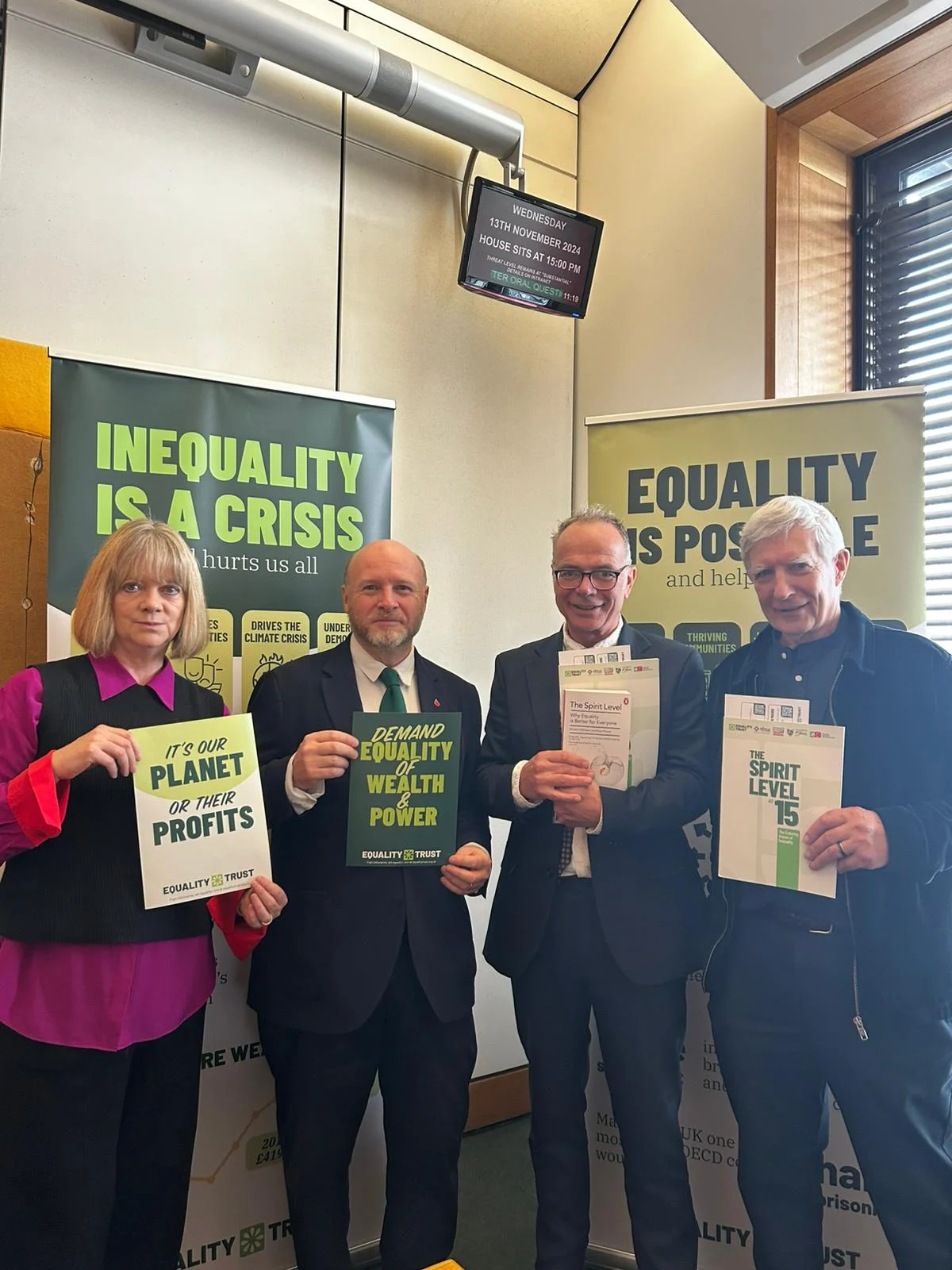
The Equality Trust was founded on the evidence-based conclusions of The Spirit Level: Why More Equal Societies Almost Always Do Better, authored by Professors Richard Wilkinson and Kate Pickett. The book demonstrated that societies with larger income gaps perform worse across a spectrum of indicators, including physical and mental health, drug abuse, education, imprisonment, and social mobility. Boyle’s tenure was dedicated to bridging the gap between this academic evidence and the practical realities of a UK economy struggling with the aftermath of a decade of austerity and the subsequent shocks of the early 2020s.
During his six years on the board, Boyle served as a critical member of the finance committee. His role involved overseeing the organization’s fiscal health during a period where the traditional "lumpy" funding model—relying on a few large, periodic grants—became increasingly precarious. The transition toward a more diversified, supporter-led funding base became a hallmark of his strategic oversight, aiming to grant the Trust greater operational autonomy and protection against the sudden withdrawal of institutional support.
Chronology of Advocacy and Institutional Milestones (2020–2026)
The period between 2020 and 2026 was marked by several landmark initiatives that redefined the Equality Trust’s influence on UK public policy.
2020–2021: The Pandemic and the Magnification of Inequality
As Boyle began his first term, the COVID-19 pandemic laid bare the deep-seated disparities in the UK. The Trust pivoted to highlight how the crisis disproportionately affected low-income households and ethnic minority communities. This period reinforced the necessity of the "Socio-Economic Duty," a dormant provision of the Equality Act 2010.
2022–2023: The Socio-Economic Duty and Local Government Adoption
A primary focus of the Trust during Boyle’s mid-tenure was the activation of Section 1 of the Equality Act 2010. This clause requires public bodies to consider how their decisions can reduce the inequalities of outcome which result from socio-economic disadvantage. While the central government had declined to commence the duty in England, the Trust successfully campaigned for its voluntary adoption by numerous local authorities and across the devolved nations of Scotland and Wales.
2024–2025: Youth Advocacy and the Next Generation of Campaigners
Recognizing that younger generations face unique hurdles regarding housing affordability and precarious employment, the Trust launched several programs aimed at elevating the voices of young people. These initiatives sought to move beyond treating youth as passive recipients of policy and instead empowered them as active researchers and advocates for economic reform.
2026: The Conclusion of a Six-Year Mandate
By the time Boyle stood down in March 2026, the Trust had successfully navigated several leadership transitions, maintaining a diverse board that integrated lived experience with professional governance. Boyle’s departure signifies the end of a stabilizing influence during a time of significant personnel and executive changes.
The Funding Crisis and the Third Sector Landscape
One of the most pressing challenges identified during Boyle’s tenure was the deteriorating funding environment for social justice organizations. According to data from the National Council for Voluntary Organisations (NCVO), the UK third sector has faced a "perfect storm" of rising demand for services and diminishing traditional revenue streams.
The Equality Trust’s financial strategy under Boyle’s guidance had to account for several external pressures:
- Domestic Austerity Measures: Continued constraints on public spending have reduced the availability of government-backed grants, forcing organizations to compete more aggressively for private philanthropic funds.
- International Aid Reductions: The UK’s decision to reduce its Official Development Assistance (ODA) from 0.7% to 0.5% of Gross National Income had a ripple effect across the sector. Boyle specifically noted that "most egregiously the US" also slashed international aid, creating a global vacuum in funding for human rights and equality-focused NGOs.
- The Cost-of-Living Crisis: As inflation impacted individual households, the ability of regular supporters to provide small-scale donations was curtailed. This necessitated a sophisticated digital fundraising strategy to maintain a steady stream of "grassroots" income.
The Trust’s shift toward a model of "many small contributions" rather than "few large grants" was a strategic move to ensure long-term sustainability. Boyle argued that this model not only provides financial security but also democratizes the organization, making it directly accountable to the public it serves rather than the whims of large-scale institutional donors.
Supporting Data: The Widening Gap in the United Kingdom
The work of the Equality Trust during Boyle’s tenure was underscored by sobering economic data. Reports from the Office for National Statistics (ONS) and the Joseph Rowntree Foundation throughout the mid-2020s highlighted a persistent trend of wealth concentration.
- Wealth Distribution: As of 2025, the top 1% of households in the UK held more wealth than the bottom 70% combined. This concentration has been linked to the stagnation of real wages and the inflation of asset prices, particularly in the housing market.
- Income Inequality: The UK remains one of the most unequal countries among high-income nations. The Gini coefficient, a standard measure of income inequality, has remained stubbornly high, hovering around 34% to 35% over the last decade.
- The "Poverty Premium": The Trust’s research highlighted that low-income households often pay more for essential goods and services, such as energy and credit, further exacerbating the gap between the wealthy and the poor.
These statistics provided the empirical backbone for the Trust’s campaigns, allowing Boyle and his colleagues to present a factual, data-driven case for systemic reform to policymakers and the public.
Official Responses and Internal Reflections
The Equality Trust has expressed its gratitude for Boyle’s service, noting that his business acumen was instrumental in professionalizing the board’s approach to risk management and financial oversight. In internal communications, staff members highlighted Boyle’s ability to remain "hands-on" when necessary while respecting the boundaries of non-executive governance—a balance often difficult to achieve in the charity sector.
Reflecting on his departure, Boyle characterized his time at the Trust as a period of "eventful" struggle against a political and intellectual background that was not always conducive to egalitarian outcomes. He emphasized that while the role of a Trustee is often "hands-off" compared to project management, the ability to contribute to a broader social struggle is a vital component of civic participation.
Colleagues from the board noted that Boyle’s departure leaves a vacancy for a leader who can continue to navigate the complexities of "lumpy" funding cycles. The Trust is expected to announce a new recruitment drive to fill the board positions vacated by retiring members, with a focus on maintaining the diversity of thought that Boyle championed.
Broader Impact and Future Implications
The legacy of Gerry Boyle’s tenure at the Equality Trust extends beyond the organization’s internal balance sheets. It reflects a broader trend in UK advocacy: the professionalization of social justice movements. By integrating business-grade financial scrutiny with grassroots campaigning, the Trust has positioned itself as a durable entity capable of surviving economic downturns.
However, the challenges identified by Boyle—specifically the fragmentation of UK society and the difficult funding environment—remain unresolved. The "fight gets harder," as Boyle noted, because the structural drivers of inequality are deeply embedded in the current economic model. The Trust’s future success will likely depend on its ability to continue the work Boyle supported:
- Legislative Pressure: Continuing to lobby for the full, mandatory implementation of the Socio-Economic Duty across all levels of government.
- Coalition Building: Strengthening ties with other third-sector organizations to create a unified front against the "fragmentation" of social services.
- Public Engagement: Translating complex economic data into compelling narratives that resonate with a public experiencing the direct effects of inequality.
As Gerry Boyle steps down, the Equality Trust remains a vital voice in the British political landscape. His six-year journey from a "part-time chair of a small volunteer organization" to a key figure in a major national campaigning body serves as a testament to the impact of dedicated governance. The organization now moves forward, tasked with maintaining its momentum in a world where the gap between the "haves" and the "have-nots" continues to define the central challenge of the 21st century.