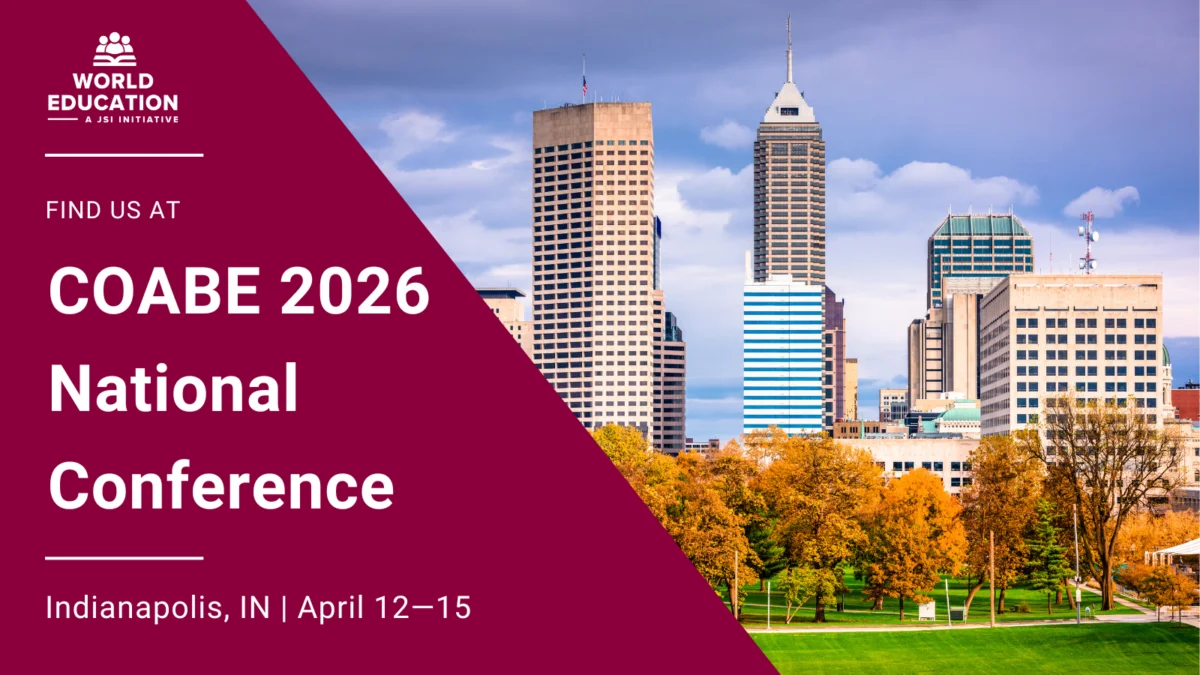
World Education, a prominent initiative of JSI, has officially announced its comprehensive participation in the Coalition on Adult Basic Education (COABE) 2026 National Conference, scheduled to take place in Indianapolis, Indiana, from April 12 to April 15. As the landscape of adult education undergoes a rapid transformation driven by technological advancements, World Education’s delegation of experts will lead a series of high-level presentations focusing on the integration of digital literacy, professional development, and the ethical application of Generative Artificial Intelligence (AI) within the classroom. The conference, which serves as the premier gathering for adult education practitioners, administrators, and advocates in the United States, provides a critical platform for World Education to disseminate research-backed strategies aimed at closing the digital divide and enhancing economic mobility for adult learners.
The Context of Adult Education in 2026
The 2026 COABE National Conference arrives at a pivotal moment for the American educational infrastructure. According to recent data from the Program for the International Assessment of Adult Competencies (PIAAC), approximately 43 million adults in the United States possess low literacy skills, while a significant portion of the workforce lacks the digital fluency required for modern employment. As the Workforce Innovation and Opportunity Act (WIOA) continues to emphasize the necessity of digital resilience, organizations like World Education are increasingly focused on scalable solutions that bridge the gap between traditional literacy and technological proficiency.
Indianapolis, a city that has seen a 15% growth in tech-sector employment over the last five years, serves as a symbolic backdrop for this year’s discussions. The conference is expected to draw over 3,000 attendees, both in-person and virtually, representing a diverse cross-section of the adult education ecosystem, including community colleges, correctional education facilities, and community-based organizations.
Chronology of Sessions and Expert Contributions
The four-day event will feature a rigorous schedule of workshops and presentations led by World Education’s senior researchers and project directors. The programming is designed to offer actionable insights, ranging from specific tool implementations to broad policy-to-practice transitions.
Monday, April 13: Bridging Policy and Practice
The first full day of the conference begins with a focus on foundational digital skills. At 8:00 AM in the JW Grand Ballroom 2, Jeff Goumas will present "Using BRIDGES Skills Checklists to Drive Digital Skills Development in Any Context." This session addresses a critical need for standardized assessment in non-formal education settings, providing a framework for educators to track and validate the digital competencies of their students.
Following the morning session, Sandy Goodman and Catalina González will lead a discussion titled "From Policy to Practice: Implementation Lessons from Boston’s Digital Literacy Initiative" at 11:50 AM. This presentation is expected to provide a case study analysis of urban digital equity programs, highlighting how municipal policies can be translated into effective classroom practices. Observers of the Boston initiative note that such programs have successfully increased participant engagement by nearly 40% through localized support networks.
The afternoon will conclude with a deep dive into evidence-based tools. At 3:50 PM in Room 205, Jen Vanek and Jeff Goumas, in collaboration with the American Institutes for Research (AIR) and other members of the CREATE Network, will present "Practical Solutions from Research: Digital Tools to Support Teaching and Learning." This session will showcase the latest findings from the CREATE Network, a federally funded initiative dedicated to advancing research-based instruction in adult education.
Tuesday, April 14: The AI Frontier and Open Resources
Tuesday’s agenda shifts toward the most disruptive force in modern education: Artificial Intelligence. Rachel Riggs will open the day at 8:00 AM in the JW Grand Ballroom 3 with "Aligning AI Literacy with Learning and Work Goals in Adult Ed." This session aims to demystify AI for educators, focusing on how large language models can be leveraged to prepare students for a workforce where AI interaction is becoming a standard requirement.
The midday programming features "Free and Open Online Literacy Curriculum: Leveraging SkillBlox and ASAP for Adult Readers," presented by Jen Vanek, Jeff Goumas, and Stephen Sireci from UMass Amherst. This session highlights the importance of Open Educational Resources (OER) in reducing the financial barriers to high-quality curriculum materials.
Simultaneous sessions at 2:00 PM will offer attendees a choice between research-based resource teaching and AI-driven content creation. In Room 206, Jen Vanek and Jeff Goumas will join Stephanie Cronen and Neha Nanda of AIR to discuss "Practitioner-Friendly Findings." Meanwhile, in the JW Grand Ballroom 3, Rachel Riggs will return to present "Generative AI and the EdTech Maker Space," which explores how "EdTech Maker Spaces"—collaborative professional development environments—can use AI to fill critical gaps in learning resources.
Wednesday, April 15: Sustainable Professional Development
The final day of the conference focuses on the sustainability of educational improvements. At 11:50 AM in Room 209, Dani Scherer will present "Maximum Impact Professional Development: A Three-Pronged Approach." The session argues that for digital literacy initiatives to succeed, the educators themselves must receive continuous, multi-layered support that goes beyond one-off training sessions.
The conference will wrap up with two sessions led by Eliana Stanislawski. The first, "EdTech in Action: Structuring a Digital Literacy Learning Series for Adult Educators" at 1:30 PM, provides a blueprint for organizations to build their own internal training programs. The final session, "Engaging Strategies for Online Instruction of Literacy-Level Adults" at 3:00 PM, addresses the unique pedagogical challenges of teaching foundational reading and writing skills through digital interfaces, a necessity in the post-pandemic "hybrid-first" educational world.
Supporting Data and Technical Frameworks
World Education’s presence at COABE 2026 is underpinned by several years of longitudinal data and the development of proprietary and open-source frameworks. A key highlight of their presentations is the "SkillBlox" platform, which has seen a 200% increase in user adoption among adult education providers since 2023. SkillBlox allows educators to aggregate and organize OER content, aligning it with college and career readiness standards.
Furthermore, the emphasis on the "BRIDGES" framework reflects a broader shift toward competency-based education. Data suggests that adult learners are 60% more likely to persist in a program when they can see clear, incremental progress toward specific digital milestones. By standardizing these milestones through the BRIDGES checklists, World Education provides a common language for both educators and employers.
Official Perspectives and Industry Implications
While World Education has not released formal external statements regarding the specific Indianapolis sessions, industry analysts suggest that their heavy focus on AI literacy reflects a strategic alignment with national workforce trends. "The integration of AI into adult basic education is no longer an elective; it is a necessity for economic survival," noted a spokesperson for a leading workforce development non-profit. "World Education’s role in translating complex AI concepts into practitioner-friendly tools is essential for ensuring that the most vulnerable populations are not left behind by the fourth industrial revolution."
Partnerships with organizations like the American Institutes for Research (AIR) and UMass Amherst further solidify the scientific rigor behind World Education’s offerings. These collaborations ensure that the tools and strategies presented at COABE are not merely anecdotal but are grounded in rigorous psychometric testing and pedagogical research.
Broader Impact on Education Systems
The implications of World Education’s work extend beyond the four days of the COABE conference. As a JSI initiative, World Education operates with a mandate to foster enduring partnerships across regions and sectors. Their services—ranging from education systems strengthening to applied research and evaluation—are designed to create systemic change.
The focus on "EdTech Maker Spaces" and "Maximum Impact Professional Development" suggests a move toward a "train-the-trainer" model. By empowering local educators to become creators and curators of digital content, World Education is helping to build a more resilient and self-sustaining adult education infrastructure. This approach is particularly vital in rural and underfunded districts where access to high-priced educational technology is limited.
As the COABE 2026 National Conference approaches, the sessions led by World Education are expected to set the tone for the national conversation on adult literacy. By prioritizing digital equity, AI literacy, and evidence-based instruction, World Education continues to position itself as a central pillar in the movement to provide every adult with the skills necessary to thrive in an increasingly digital world. The Indiana conference will likely serve as a catalyst for new policies and programs that will shape the field of adult education for the remainder of the decade.