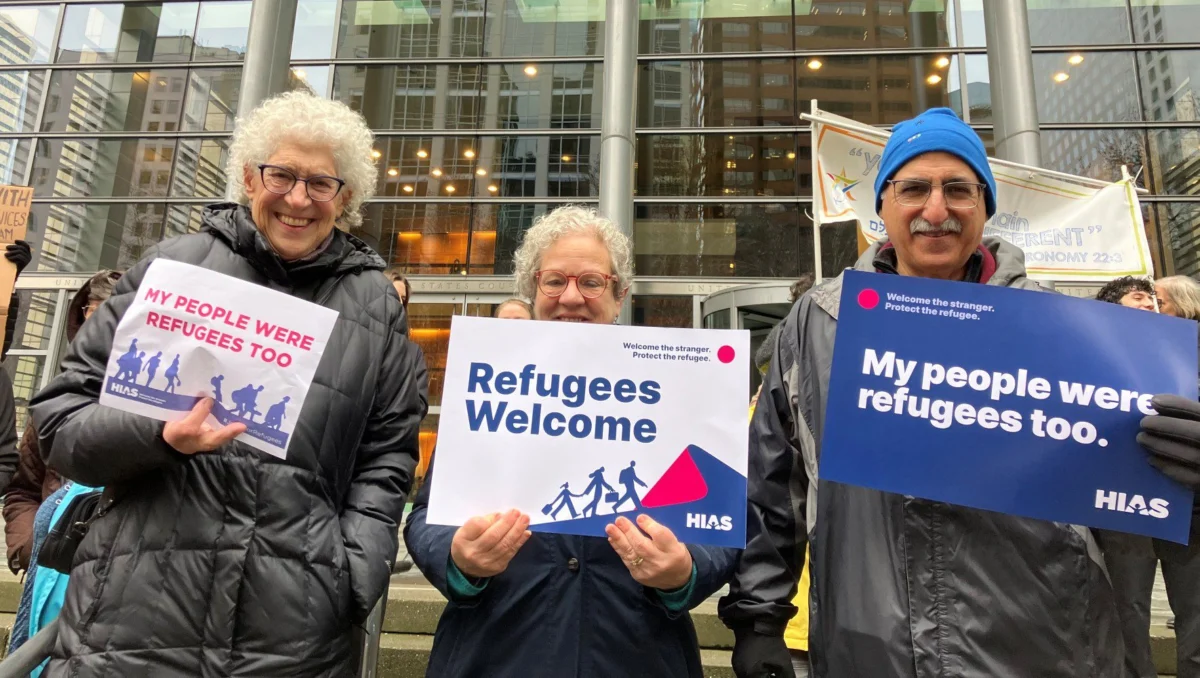
Beth Oppenheim, the Chief Executive Officer of HIAS, a venerable organization dedicated to assisting refugees, has publicly voiced profound alarm regarding recent policy shifts that could lead to the arrest and detention of individuals resettled through the United States Refugee Admissions Program (USRAP). Appearing on NBC San Diego’s "Politically Speaking" program, Oppenheim issued a fervent plea for the protection of these vulnerable populations, emphasizing the humanitarian underpinnings of a program that has historically enjoyed bipartisan support. Her remarks underscore a critical juncture for refugee resettlement in the United States, highlighting the potential erosion of established humanitarian principles and the lived experiences of those seeking safety and opportunity.
The Shifting Landscape of Refugee Protection
Oppenheim’s statement comes at a time of heightened political discourse surrounding immigration and national security. The USRAP, a cornerstone of American humanitarian policy for decades, has provided refuge to millions fleeing persecution, war, and natural disasters. However, recent policy pronouncements and legislative proposals have introduced a new layer of concern, suggesting a potential re-evaluation of protections for individuals already integrated into American communities. The specter of arrest and detention for those who have successfully navigated the rigorous vetting process of the USRAP raises fundamental questions about due process, humanitarian commitments, and the very definition of welcome in the United States.
"Whatever is in the headlines today, it involves the lived experience of people who have been refugees in the past. And for me, that’s what carries my passion and my work forward," Oppenheim stated during her NBC San Diego interview. This personal conviction, rooted in the human stories of displacement and resilience, forms the bedrock of her advocacy. She stressed the enduring narrative of America as a nation built by immigrants and refugees, a sentiment that she believes is essential to remember amidst evolving political climates. "We have to keep reminding people that that really is the story of America," she asserted, framing the current debate within a historical context of national identity and humanitarian responsibility.
Background: The United States Refugee Admissions Program (USRAP)
To fully appreciate the gravity of Oppenheim’s concerns, it is crucial to understand the history and operation of the USRAP. Established in 1980 with the Refugee Act, the program was designed to provide a systematic and humane response to the global refugee crisis. The USRAP operates through a multi-agency process involving the Department of State, the Department of Homeland Security (DHS), and various non-governmental organizations (NGOs), including HIAS.
The process is deliberately thorough and lengthy, often taking years to complete. It begins with a referral, typically from the United Nations High Commissioner for Refugees (UNHCR) or a U.S. embassy. Potential refugees then undergo multiple interviews, background checks, and security screenings conducted by various U.S. government agencies. Medical examinations are also a mandatory part of the process. Only after successfully passing all these stringent evaluations are individuals deemed eligible for resettlement in the United States. Upon arrival, refugees are typically provided with initial support services, including housing assistance, cultural orientation, and access to social services, often facilitated by organizations like HIAS, to help them integrate into their new communities.
Historically, the USRAP has been a bipartisan initiative, reflecting a shared national commitment to humanitarian values. Presidents from both Republican and Democratic administrations have supported and overseen refugee resettlement efforts. However, in recent years, the program has faced increased scrutiny and political headwinds, with debates often centering on national security concerns and the economic impact of immigration.
Recent Policy Shifts and Emerging Concerns
The specific policies that have triggered Oppenheim’s alarm are not explicitly detailed in the initial reporting but are understood to be related to potential changes in how individuals admitted through the USRAP are treated once in the United States, particularly concerning their immigration status and any potential re-evaluation of their eligibility or past actions. While the USRAP itself involves extensive vetting, there are concerns that new directives or interpretations of existing laws could subject individuals who have already been granted refugee status to new forms of scrutiny, including detention and possible deportation, under circumstances that may not align with the program’s original intent or established legal frameworks.
This shift represents a departure from the established understanding that individuals admitted through the USRAP have already undergone significant screening and have been recognized as needing protection. The implication is that a new set of criteria or a more aggressive enforcement approach could be applied, potentially undermining the stability and security of those who have been welcomed into the U.S.
Data and Statistics: The Scale of Refugee Resettlement
Understanding the scale of refugee resettlement provides vital context for the current debate. According to the Department of State’s Refugee Processing Center, the U.S. has resettled hundreds of thousands of refugees over the past several decades. For instance, in fiscal year 2023, the U.S. admitted 60,657 refugees, exceeding the presidential ceiling of 62,500. While this number fluctuates annually based on global events and presidential directives, it represents a significant ongoing commitment.
The refugees admitted come from diverse backgrounds and regions, fleeing various forms of persecution. Major populations have historically included individuals from countries like Syria, Afghanistan, Iraq, Ukraine, and the Democratic Republic of Congo. These individuals, once resettled, contribute to American society as workers, entrepreneurs, and community members, often revitalizing local economies. Data from organizations like the New American Economy has consistently shown that refugees are not only job seekers but also job creators, with high rates of entrepreneurship and labor force participation.
However, the process of resettlement is not without its challenges. Refugees often arrive with trauma, limited English proficiency, and a need for significant social and economic support. Organizations like HIAS play a critical role in bridging these gaps, providing essential services that facilitate successful integration.
Chronology of Evolving Policy and Advocacy
The current concerns are not entirely sudden but represent an escalation of trends observed over recent years.
- 2016-2017: Discussions around refugee admissions intensified, with significant reductions in the number of refugees admitted to the U.S. under the Trump administration. This period also saw increased scrutiny of the vetting process.
- 2021: The Biden administration signaled a renewed commitment to refugee resettlement, raising the annual admission ceiling. However, the actual number of arrivals often lagged behind the targets due to processing backlogs and other logistical challenges.
- Late 2023 – Early 2024: Reports and policy discussions began to emerge concerning potential changes in how individuals with certain immigration statuses, including some who may have entered through humanitarian channels or whose cases are complex, are treated by immigration enforcement. These discussions have fueled anxieties within refugee advocacy circles.
- Recent Weeks: HIAS, through its CEO Beth Oppenheim, has become increasingly vocal in public forums like NBC San Diego, directly addressing the implications of these evolving policies and calling for continued protection for resettled refugees.
This timeline illustrates a period of fluctuating policy and increasing advocacy efforts to safeguard the rights and well-being of refugees.
Statements and Reactions from Related Parties
While the NBC San Diego report focuses on Oppenheim’s statement, the broader refugee advocacy community and other resettlement agencies are likely to share similar concerns. Organizations such as the Refugee Council USA (RCUSA), Church World Service (CWS), and the International Rescue Committee (IRC) have historically worked in tandem with HIAS on advocacy efforts.
Unofficial reactions from these groups, inferred from their consistent positions on refugee protection, would likely include:
- Emphasis on Due Process: A strong call for ensuring that any actions taken against individuals are in line with established legal principles and due process, particularly for those who have already been vetted and admitted.
- Humanitarian Imperative: A reiteration of the moral and ethical obligations of the U.S. to protect those fleeing persecution, aligning with international conventions and national values.
- Impact on Trust and Integration: Concerns that policies leading to arrest and detention of resettled refugees could erode trust in the U.S. refugee system, hinder integration efforts, and create a climate of fear within refugee communities.
- Call for Clarity and Transparency: A demand for clear policy guidance and transparency regarding any new enforcement measures and their scope.
Government responses to such concerns are typically varied. While the administration may articulate its commitment to national security, agencies like DHS are tasked with implementing immigration laws. The nuances of how these laws are applied to individuals with refugee status are often the subject of intense debate and legal challenges.
Broader Impact and Implications
The potential for new policies to target resettled refugees carries significant implications for both individuals and the broader American society.
For Resettled Refugees:
- Psychological Distress: The threat of arrest and detention, even for those who believe they have done nothing wrong, can induce severe anxiety and trauma, particularly for individuals who have already experienced significant hardship and displacement.
- Disruption of Lives: Arrests can lead to family separation, loss of employment, and the disruption of ongoing integration efforts, such as education and community engagement.
- Erosion of Hope: For individuals who have placed their faith in the U.S. as a safe haven, such policies can shatter their sense of security and hope for a stable future.
For the U.S. Refugee System:
- Undermining Program Integrity: If individuals admitted through a rigorous vetting process are subsequently targeted, it could call into question the reliability and fairness of the USRAP itself, potentially impacting future admissions and international cooperation.
- Reputational Damage: The U.S. has long been a global leader in humanitarian efforts. Policies perceived as betraying commitments to refugees could damage its international standing and influence.
- Impact on Resettlement Organizations: NGOs like HIAS rely on a stable and predictable environment to effectively serve refugees. Constant policy shifts and the threat of negative repercussions create immense operational challenges.
For American Society:
- Debate on Values: The issue forces a national conversation about American values, the meaning of welcome, and the balance between national security and humanitarian responsibility.
- Economic and Social Contributions: Targeting resettled refugees could disrupt the integration of individuals who are contributing to the economy and enriching the social fabric of communities.
- Legal and Ethical Precedents: The way these policies are implemented can set important legal and ethical precedents for how the U.S. treats vulnerable populations seeking refuge.
In conclusion, Beth Oppenheim’s appearance on NBC San Diego is a critical moment in the ongoing dialogue about refugee policy. Her call for the protection of resettled refugees highlights the human cost of policy shifts and underscores the enduring importance of America’s humanitarian tradition. As the nation navigates complex geopolitical challenges and domestic debates, the experiences and rights of those who have sought solace and a new beginning in the United States remain a vital concern. The decisions made in the coming months will not only shape the lives of thousands of individuals but also reflect on the core principles that define America’s role in the world.