
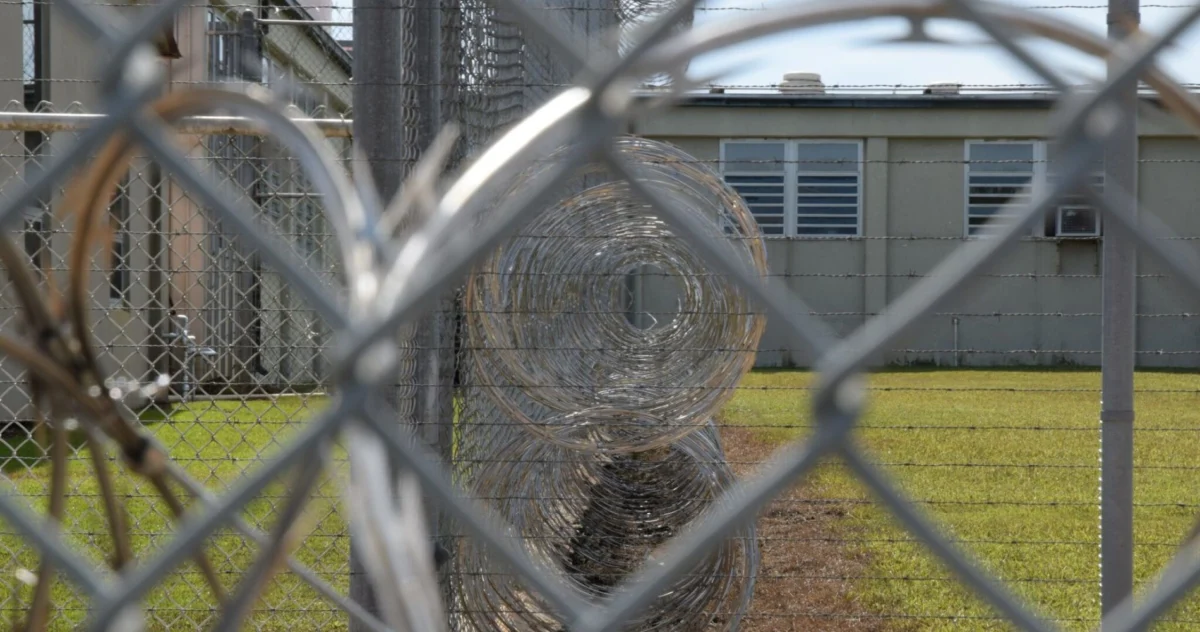
Jeffery Brian Parker, a 45-year-old incarcerated man, was fatally beaten inside a housing dormitory at Ventress Correctional Facility in Clayton, Alabama, on July 14, marking yet another grim milestone in the state’s ongoing prison crisis. Mr. Parker’s death serves as a stark reminder of the volatile conditions within Alabama’s correctional system, occurring despite his documented efforts to seek protection from prison leadership following an earlier assault on May 30. His death is the 10th homicide recorded in an Alabama state prison within the last 12 months and the third such fatality at Ventress in less than seven months.
The death of Mr. Parker highlights a persistent pattern of institutional instability that has plagued Ventress for years. In the wake of his killing, advocacy groups and legal observers have pointed to a failure of oversight, arguing that the facility remains a flashpoint for violence that the Alabama Department of Corrections (ADOC) has struggled to contain.
A Chronology of Crisis at Ventress
The circumstances surrounding Mr. Parker’s death are not isolated; they follow a series of violent incidents that have drawn significant scrutiny toward the operational practices at Ventress. On December 29, 2025, 32-year-old Marvin Taylor was severely beaten in the head within the facility. He succumbed to his injuries on January 4, 2026. Less than a week later, on January 10, 2026, 31-year-old Andre Dunlap was stabbed in the head and face in a prison dormitory, resulting in his death shortly thereafter.
These fatalities form a tragic sequence that has characterized the environment at Ventress. Data provided by the Equal Justice Initiative (EJI) indicates that the facility has consistently recorded higher rates of violence than almost any other institution in the state. The pattern of inmate-on-inmate violence at Ventress is not a recent development, but rather a long-standing issue that federal authorities have identified as a violation of fundamental constitutional standards.
The Legal Landscape: Federal Oversight and Accountability
The federal government has long been aware of the perilous conditions within Alabama’s prisons. In April 2019, the U.S. Department of Justice (DOJ) formally notified the State of Alabama that the conditions in its prisons were unconstitutional. The DOJ’s findings were scathing, describing a environment characterized by "a high level of violence that is too common, cruel, of an unusual nature, and pervasive."
Despite this notification, conditions failed to improve, prompting federal prosecutors to file a landmark lawsuit against the State of Alabama in December 2020. The complaint alleged that the state’s prisons were "riddled with prisoner-on-prisoner and guard-on-prisoner violence," explicitly stating that the failure to address these issues had led to preventable homicides, rapes, and serious injuries. Since the filing of that lawsuit, 78 incarcerated individuals have been killed in Alabama prisons—a figure that underscores the state’s failure to curb the violence despite active litigation.
In 2023, the severity of the situation was underscored by a federal judge who presided over a lawsuit involving a prisoner who had been raped at Ventress. The judge’s ruling noted that the evidence presented had plausibly demonstrated that the facility was a place "where armed, unsupervised, and violent inmates can go wherever they want, whenever they want, and do whatever they want." While the ADOC eventually reached a settlement in that lawsuit in February 2025, the recent string of homicides suggests that the underlying issues regarding safety, supervision, and control remain unaddressed.
Statistical Reality: Quantifying the Danger
The data provided by the Alabama Department of Corrections itself paints a harrowing picture of daily life within the facility. In 2025, Ventress recorded 164 documented assaults on prisoners—a rate that translates to nearly one violent incident every other day. This trend has continued into 2026, with an additional 38 assaults recorded in the first four months of the year alone.
For incarcerated individuals like Mr. Parker, these statistics are not mere data points; they represent the reality of a environment where basic safety is not guaranteed. When Mr. Parker was assaulted on May 30, his subsequent attempts to petition prison authorities for protection were essentially ignored. The failure to intervene in his case, which culminated in his death on July 14, raises critical questions about the adequacy of existing protective custody protocols and the ability of the ADOC to safeguard those under its care.
The Broader Implications for the Alabama Correctional System
The death of Mr. Parker is the 103rd homicide of an incarcerated Alabamian documented by researchers since the DOJ’s initial 2019 warning. This high mortality rate serves as a barometer for the systemic dysfunction within the ADOC. Observers suggest that the crisis is multi-faceted, stemming from a combination of chronic understaffing, outdated infrastructure, and a culture of impunity that prevents effective intervention.
From an institutional standpoint, the inability to stop the violence at Ventress despite years of federal pressure and legal settlements suggests that internal reforms have thus far been insufficient. The state’s reliance on punitive measures without addressing the environmental triggers of violence—such as gang control and the presence of contraband weapons—has left the population vulnerable.
Legal experts monitoring the ongoing federal lawsuit argue that the state is reaching a critical junction. The persistence of these deaths, despite the oversight of federal monitors, may necessitate more aggressive intervention or a complete overhaul of how the state manages its high-security facilities. For the families of those killed at Ventress, the ongoing litigation is a cold comfort for the loss of their loved ones, but it remains the primary mechanism for holding the state accountable for the safety of its prisoners.
Official Responses and the Path Forward
While the Alabama Department of Corrections has historically cited challenges regarding staffing and facility management as contributing factors to the violence, the recurring nature of these incidents has drawn sharp criticism from stakeholders. Advocacy groups have consistently called for the ADOC to prioritize the safety of the incarcerated population by increasing guard presence, enhancing security protocols, and improving the reporting mechanisms for inmates who feel their lives are in danger.
As the federal lawsuit remains active, the state is under mounting pressure to demonstrate that it can, at minimum, protect the lives of the individuals in its custody. Whether through additional funding, policy reform, or administrative changes, the state faces a significant challenge in reversing the culture of violence that has defined the Ventress facility for years.
For now, the death of Jeffery Brian Parker serves as a tragic data point in a much larger, unresolved narrative of state failure. His case, like those of Marvin Taylor and Andre Dunlap, highlights a fundamental breach of the state’s obligation to provide a safe and humane environment. Until systemic changes are enacted, the specter of further violence continues to loom over Ventress and the broader Alabama prison system, leaving families and advocates to continue their fight for justice and accountability.




