
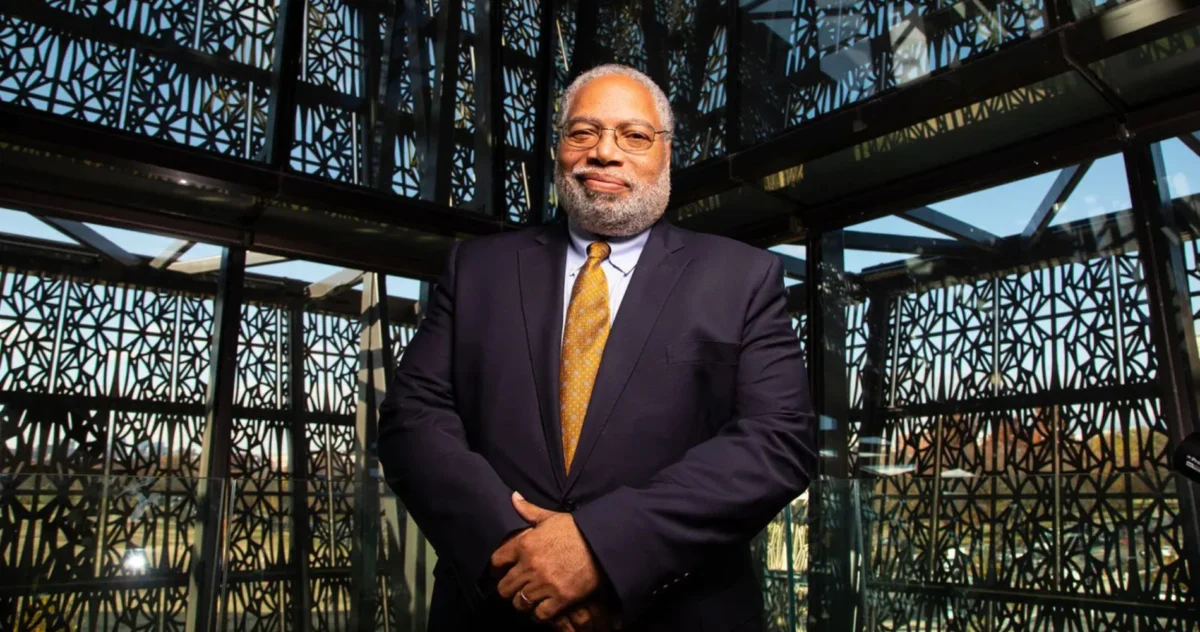
After seven years at the helm of the world’s largest museum, education, and research complex, Smithsonian Secretary Lonnie G. Bunch III announced this week that he will step down from his post at the end of the calendar year. His departure marks the conclusion of a tenure defined by both historic institutional expansion and a mounting, high-stakes collision between the Smithsonian’s mission of objective scholarship and the Trump administration’s aggressive efforts to reshape the national historical narrative.
Mr. Bunch, 73, departs as one of the most consequential figures in the institution’s 180-year history. His resignation follows months of sustained, public scrutiny from the White House, which has sought to exert federal influence over the content of museum exhibits, curriculum, and public messaging. As the first African American and the first professional historian to lead the Smithsonian, Mr. Bunch’s leadership has been viewed by supporters as a bulwark against the political sanitization of American history.
A Career Defined by Institutional Stewardship
The announcement of Mr. Bunch’s retirement closes a chapter that began nearly four decades ago. His relationship with the Smithsonian started in the late 1970s at the National Air and Space Museum, where he served as an education specialist shortly after completing his Ph.D. in American and African American history. His trajectory within the institution was marked by a series of pivotal roles that bridged the gap between academic research and public engagement.
Before assuming the role of Secretary in 2019, Mr. Bunch’s most significant achievement was the successful launch of the National Museum of African American History and Culture (NMAAHC). As its founding director, he navigated the complex political and logistical challenges of securing congressional approval and private funding to establish a permanent home for the African American experience on the National Mall. Since its 2016 opening, the museum has become a cultural touchstone, attracting millions of visitors annually and cementing the necessity of inclusive historical curation.
Chronology of a Mounting Conflict
The friction between the Smithsonian and the current administration reached a boiling point in 2025, culminating in a series of administrative actions that historians have characterized as unprecedented executive interference in cultural institutions.
- March 2025: The White House issued an executive order titled "Restoring Truth and Sanity to American History," which explicitly targeted museums for allegedly promoting "oppressive" narratives and failing to uphold "shared American values."
- August 2025: President Trump publicly labeled the Smithsonian "out of control" on social media, expressing particular dissatisfaction with the emphasis placed on the history of slavery. This was followed by a directive for a "comprehensive internal review" of all Smithsonian facilities.
- July 2026: The administration released a formal report condemning the National Museum of American History for what it termed "extreme political activism." The report served as a catalyst for renewed calls to reframe historical exhibits.
- September 2026: Secretary Bunch announced his intention to resign, citing the need for the institution to remain resilient in its commitment to historical accuracy.
The Data Behind Public Trust in Museums
Despite the administration’s claims, polling data suggests a disconnect between political rhetoric and public sentiment. According to recent surveys conducted by YouGov, museums remain among the most trusted entities in the United States, ranking significantly higher than the federal government in terms of credibility.
An August 2025 study revealed that approximately 37% of Americans have visited a Smithsonian museum, a reach that underscores the institution’s role as a primary educator of the public. Critically, 84% of Americans expressed that it is "very important" for museums to accurately represent the entirety of the nation’s history, including difficult topics like slavery, systemic racism, and inequality. Furthermore, the data indicates that a strong majority of the American public opposes government-mandated content control in institutions that receive federal funding, suggesting that the administration’s efforts to steer the historical narrative may be at odds with the preferences of the broader populace.
Institutional Responses and Professional Stance
The resignation of Mr. Bunch has drawn widespread reactions from the academic and museum communities, many of whom view his departure as a loss of a principled defender of historical truth. Smithsonian Chancellor and Chief Justice John G. Roberts Jr. issued a statement praising Mr. Bunch’s "wisdom, vision and leadership," noting that he had "pursued excellence in the telling of our nation’s story."
Professional organizations, including the Organization of American Historians (OAH), have been vocal in their defense of the Smithsonian. In July, the OAH condemned the White House’s report as a regressive attempt to suppress scholarly rigor. Sarah Weicksel, executive director of the American Historical Association, suggested that the concern surrounding Mr. Bunch’s departure is a testament to his successful efforts to shield the institution from political pressure.
In his own correspondence to staff, Mr. Bunch maintained that the institution’s work must remain "driven by scholarship, accuracy and an uncompromising commitment to tell the fullness of America’s story." He explicitly rejected the notion that history should be "softened" to satisfy contemporary political agendas.
Broader Implications for National Cultural Policy
The conflict surrounding the Smithsonian is not an isolated event but part of a broader trend of federal intervention in cultural and historical representation. Similar pressures have been observed across various federal agencies. The National Park Service has been ordered to remove exhibits related to slavery, the State Department has taken down art deemed "aesthetically terrifying," and the Department of Defense has restored Confederate names to military installations and removed historical context from memorials.
These actions signal a shift in the role of the federal government regarding public memory. By attempting to curate a "nostalgic, mythologized vision" of the nation’s past, the administration is challenging the post-war consensus that museums should serve as sites of objective inquiry and critical reflection.
Looking Toward the Future
The search for a successor to Mr. Bunch will likely become a focal point of intense political debate. As the Smithsonian navigates this transition, it faces the dual challenge of maintaining its congressional funding—which is essential for its survival—while resisting directives that threaten its integrity.
The upcoming appointment will serve as a bellwether for the future of federal cultural institutions. If the administration continues to prioritize ideological alignment over scholarly independence, the Smithsonian may face a protracted period of internal strife and external criticism.
For now, Mr. Bunch’s legacy remains tied to his vision of a Smithsonian that functions as a "reservoir of science, history, art and culture." His parting message—that Americans must be "brave enough to face their own history"—serves as both a summary of his career and a warning to his successors. As the institution prepares for a new era of leadership, the fundamental question remains whether the Smithsonian can continue to serve as a reliable narrator of the American experience under a government that seems increasingly determined to influence the very story being told.
The transition at the end of the year will not merely be a change in personnel, but a pivotal moment in the ongoing national conversation about who controls the past and, by extension, the identity of the nation itself. As the Smithsonian turns its focus toward the development of the National Museum of the American Latino and the American Women’s History Museum, the impact of these current political pressures will undoubtedly shape the trajectory of these new institutions for decades to come.




