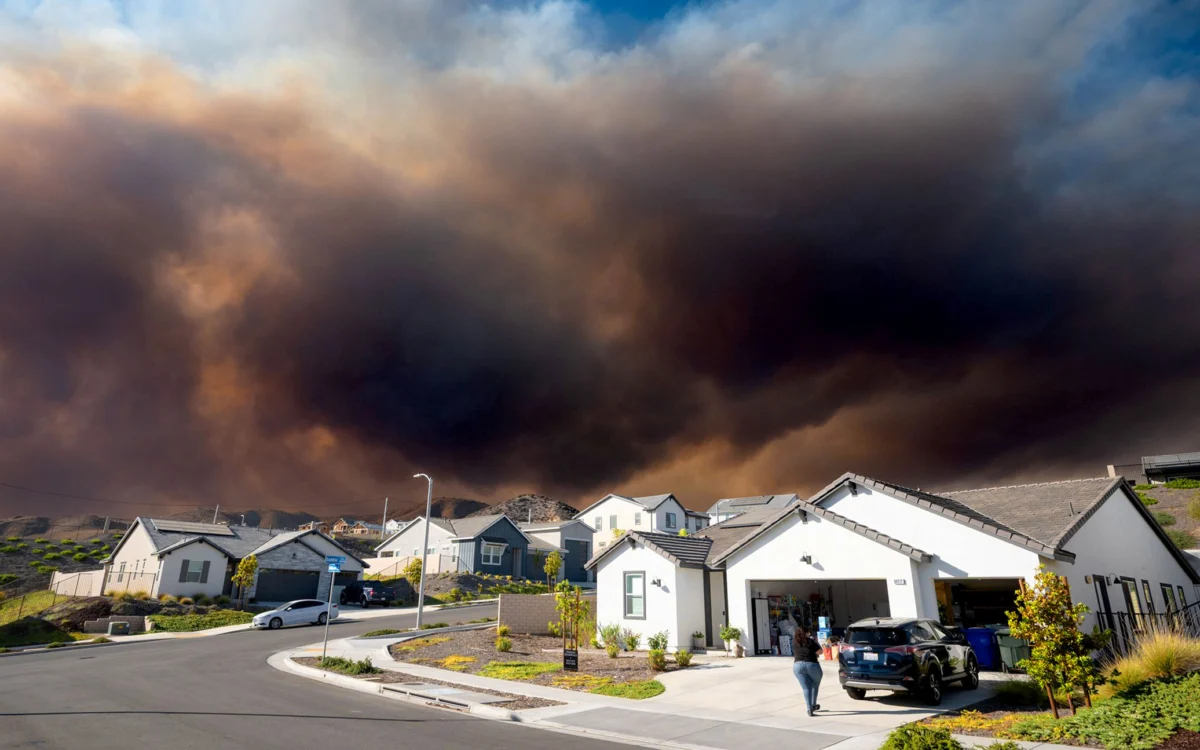
A groundbreaking study conducted by researchers at Tulane University has uncovered a concerning association between exposure to wildfire smoke during the third trimester of pregnancy and an elevated risk of a child later being diagnosed with autism spectrum disorder (ASD). Even brief periods of exposure, lasting only a few days, were found to be statistically significant, suggesting that the delicate developmental stages of fetal brain formation are particularly vulnerable to the pollutants present in wildfire smoke.
The comprehensive study, published in the esteemed journal Environmental Science & Technology, meticulously examined the medical records of over 204,000 mother-child pairs in Southern California, spanning a period from 2006 to 2014. Researchers utilized sophisticated methodologies to estimate the levels of fine particulate matter (PM2.5) – the microscopic airborne particles that pose the greatest health risk – at the mothers’ home addresses, correlating these environmental data with birth outcomes and subsequent diagnoses of autism.
Key Findings: Short Exposures Carry Significant Risk
The study’s most striking revelation is the correlation between the duration of smoke exposure and the increased risk of autism. Pregnant women exposed to wildfire smoke for more than 10 days during their third trimester, typically weeks 28 to 40 of gestation, faced approximately a 23% higher likelihood of having a child diagnosed with autism compared to those who experienced no smoke exposure during this critical period.
However, the findings underscore that even considerably shorter periods of exposure carry a notable risk. Mostafijur Rahman, an assistant professor of environmental health sciences at Tulane University’s Celia Scott Weatherhead School of Public Health and Tropical Medicine and a co-author of the study, highlighted this crucial aspect. "Even a one-day or two-day exposure is still 10%," Rahman stated, emphasizing that a 10% increase in risk, while seemingly small on an individual level, represents a substantial public health concern when extrapolated across large populations. This insight challenges the previous assumption that only prolonged exposure to air pollutants poses a significant threat to prenatal development.
Understanding the Threat: The Nature of Wildfire Smoke
Wildfires release a complex cocktail of pollutants into the atmosphere, with fine particulate matter, or PM2.5, being of primary concern. These particles are incredibly small, measuring about 30 times smaller than the diameter of a human hair, allowing them to be easily inhaled deep into the lungs and potentially cross into the bloodstream. The composition of PM2.5 from wildfires is diverse and toxic, including:
- Burned Vegetation: Ash and organic compounds from combusted plant matter.
- Soot: Carbonaceous particles resulting from incomplete combustion.
- Chemical Salts: Formed during the high-temperature burning process.
- Trace Metals: Released from the combustion of various materials.
- Secondary Particles: Gases emitted from the fire that react with other pollutants in the atmosphere to form new particulate matter.
This intricate mix of pollutants can have profound effects on developing biological systems.
Relevance to Louisiana: Beyond Wildfire Hotspots
While Southern California is a well-known region for significant wildfire activity, the study’s implications extend to areas like Louisiana, which may not experience the same frequency or intensity of wildfires but face other substantial sources of air pollution. Louisiana has experienced its share of wildfire-related smoke events, including prolonged periods of smoke from peat fires in 2023 that blanketed the New Orleans area for weeks, and significant wildfire acreage burned in western Louisiana that same year.
Beyond natural wildfires, Louisiana’s industrial landscape presents ongoing air quality challenges. The 2025 incident involving a fire at Smitty’s Supply, an industrial facility in Roseland, demonstrated how industrial accidents can release smoke and soot into surrounding communities. Furthermore, the heavily industrialized "Cancer Alley" corridor, stretching between Baton Rouge and New Orleans, is a long-standing area of concern due to persistent pollution from petrochemical plants, refineries, and manufacturing facilities.
David Luglio, another author of the study, succinctly summarized the broader concern: "We do know that air pollution – whatever form it is – is not good." This sentiment is echoed by Rahman, who stated, "Air pollution itself is bad, whether it is coming from wildfire, petrochemical industry or traffic." The Tulane research team has previously established a link between general air pollution and an increase in autism rates, reinforcing the understanding that the source of pollution is less critical than its presence and composition.
The Criticality of the Third Trimester
The study’s focus on the third trimester is not arbitrary. While most major organ systems are formed earlier in pregnancy, the third trimester is a period of accelerated development for crucial organs, particularly the brain and lungs. During these final weeks, these systems are rapidly maturing and are therefore highly susceptible to disruptions in oxygen delivery and increased inflammation, both of which can be induced by inhaled pollutants.
Dr. Stefania Papatheodorou, an OB-GYN and environmental epidemiologist at Rutgers University, who was not involved in the study but provided expert commentary, explained the biological mechanisms at play. "Air pollution can increase inflammation and oxidative stress in the mother, potentially affecting placental function and blood flow," she noted. This cascade of physiological responses can directly impact the developing fetus, compromising the essential environment required for healthy neurological development.
Broader Implications and Public Health Guidance
Dr. Papatheodorou emphasized the relevance of these findings for regions like Louisiana, even if wildfire smoke is not the primary pollutant. "Although the sources and composition differ, many of the harmful components overlap," she stated. "Both wildfire smoke and industrial pollution contain fine particulate matter and other toxic gases that can be inhaled and enter the bloodstream." This suggests that the cumulative burden of air pollution from various sources throughout pregnancy may contribute to developmental risks.
Despite the concerning findings, Dr. Papatheodorou offered reassurance, emphasizing that the vast majority of pregnancies result in healthy babies, even in areas with elevated air pollution. She stressed the importance of informed action and risk reduction strategies for pregnant individuals:
- Monitor Air Quality Alerts: Pay close attention to local air quality advisories.
- Limit Outdoor Activity: Reduce time spent outdoors on days with poor air quality.
- Improve Indoor Air: Utilize air conditioning and keep windows closed to minimize indoor exposure.
- Consider Filtration: A well-fitted N-95 mask can be effective in filtering out PM2.5 particles when outdoor activity is unavoidable.
"This is about risk reduction," Dr. Papatheodorou concluded. "Pregnant people shouldn’t feel guilty or overly anxious, just informed and supported."
The Tulane University study provides critical new evidence linking late-pregnancy exposure to wildfire smoke with an increased risk of autism in children. Its findings underscore the pervasive impact of air pollution on fetal development and highlight the need for continued research into the specific mechanisms and the cumulative effects of various pollutant sources. Public health initiatives focused on improving air quality and educating expectant parents about environmental risks are crucial steps in protecting the health and well-being of future generations.
© 2026 The Times-Picayune | The New Orleans Advocate
Distributed by Tribune Content Agency, LLC