Age Action, Ireland’s leading advocacy organization for older people, officially unveiled its Annual Report 2025 during the charity’s Annual General Meeting, marking a significant period of growth, policy engagement, and service expansion. The report provides a comprehensive retrospective of the organization’s efforts to combat ageism and foster a societal framework where dignity, security, and equality serve as the cornerstones of the ageing experience in Ireland. By documenting both the granular successes of localized support programs and the macro-level impact of national policy lobbying, the document serves as a critical barometer for the state of older persons’ welfare in the country.
A Year of Strategic Advocacy and Policy Engagement
The 2025 operational year for Age Action was defined by a multifaceted approach to policy reform. Recognizing the shifting demographic landscape—characterized by an ageing population and the associated socioeconomic pressures—the organization prioritized direct engagement with government stakeholders. Throughout the year, the charity submitted numerous policy papers and participated in high-level consultations regarding the most pressing issues affecting the demographic: income adequacy, housing security, health service access, adult safeguarding, and the persistent challenge of digital exclusion.
Central to this advocacy was the organization’s persistent call for structural change in the way Ireland approaches long-term care and financial stability. By leveraging data collected from its nationwide network of support services, Age Action provided policymakers with evidence-based insights into the reality of living in Ireland for those over the age of 65. The report highlights that these interventions were not merely administrative but were designed to translate the lived experiences of older citizens into actionable legislative agendas.
Chronology of Key Initiatives in 2025
The trajectory of the year was punctuated by several major initiatives that expanded the organization’s reach and influence. Early in the first quarter, focus was placed on internal service optimization to ensure that the influx of requests for support could be met with increased efficiency. By the second quarter, the focus shifted toward public-facing campaigns and community building.
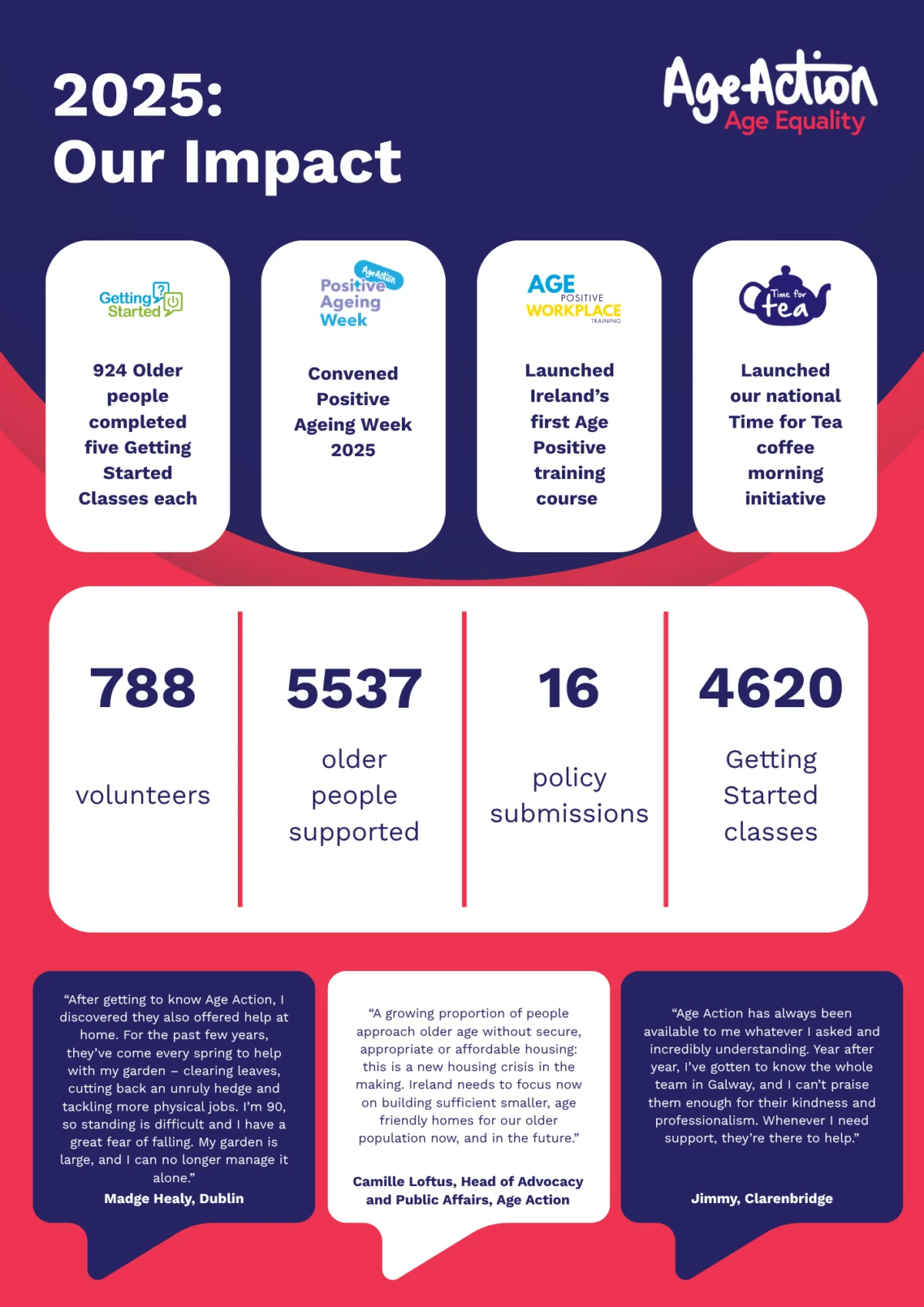
A defining moment in the calendar year was the launch of Ireland’s inaugural Age Positive training course. This educational initiative was developed to dismantle subconscious biases regarding ageing in both professional and social environments. By equipping professionals across various sectors with a deeper understanding of age-related issues, Age Action aimed to foster a more inclusive cultural environment.

Following this, the mid-year period saw the national rollout of the "Time for Tea" initiative, a community-driven project designed to combat social isolation—a critical factor in the mental and physical decline of older adults. The initiative successfully leveraged local partnerships to create social nodes, allowing for greater intergenerational connectivity. The year culminated in the highly anticipated Positive Ageing Week 2025, which served as a focal point for national discourse on the rights and contributions of older people, garnering significant media coverage and public participation.
Data-Driven Support and Service Delivery
The effectiveness of Age Action’s service model in 2025 is reflected in the quantitative data presented in the report. Thousands of individuals received direct support, ranging from assistance with digital literacy—crucial for navigating increasingly online-only public services—to navigating complex healthcare entitlements.
The role of volunteers remained a cornerstone of the organization’s operational capacity. In 2025, the hours contributed by the volunteer cohort represented a massive surge in human capital, allowing for the delivery of services that might otherwise have been constrained by budget limitations. This volunteer-led model not only extended the reach of Age Action but also reinforced the community-based support structures that are vital for maintaining the independence of older citizens within their own homes.
Analysis of the Societal Impact
The broader implications of the 2025 report suggest that while progress is being made, the challenges facing older people in Ireland remain systemic. The report highlights that digital exclusion remains a significant barrier to accessing essential services, effectively disenfranchising those who are not technologically literate. Age Action’s advocacy on this front is not merely about providing training; it is about pressuring service providers to maintain non-digital channels of communication.
Furthermore, the emphasis on housing in the report underscores the precarious nature of the current rental and ownership market for older people. As the cost-of-living crisis persisted throughout 2025, the intersection of fixed income and rising housing costs emerged as a primary threat to the dignity of the elderly. The report serves as a diagnostic tool, indicating that without targeted intervention in housing policy, the vulnerability of the ageing population is likely to increase in the coming decade.
Official Perspectives and Stakeholder Recognition
The release of the report was met with recognition from various sectors, acknowledging the pivotal role Age Action plays in the Irish civil society landscape. While specific statements from government ministers were not explicitly detailed in the summary, the report itself documents the iterative process of consultation between the charity and various state departments.

Internal leadership at Age Action emphasized that the report is not merely a record of activities, but a testament to the voices of the people they serve. By centering the narratives of older individuals, the report shifts the discourse from "the problem of an ageing population" to "the rights of individuals who have contributed to the state." This shift in framing is essential for moving toward a policy environment that views older people as active, valuable stakeholders rather than passive recipients of care.
Looking Toward the Future
The concluding sections of the 2025 Annual Report pivot toward future-proofing the organization’s efforts. With the demographic shift towards an older society continuing to accelerate, the need for robust, advocacy-led organizations is more acute than ever. The report outlines a roadmap for the coming years, emphasizing the need for continued investment in digital training, sustained pressure on healthcare providers to improve accessibility, and a long-term commitment to safeguarding the rights of those in residential and community care.
The organization extended its gratitude to its broad network of supporters, acknowledging that the achievements of 2025 were made possible through a collaborative effort. The inclusion of partners from both the private and public sectors demonstrates the growing consensus that addressing the challenges of ageing is a societal responsibility that transcends individual organizations.
Conclusion: A Call for Continued Vigilance
The 2025 Annual Report serves as both a scorecard and a manifesto. It confirms that while initiatives such as the Age Positive training and the success of Positive Ageing Week have made strides in changing the narrative, the practical, material, and policy needs of the older population remain a work in progress. As Ireland navigates the complexities of an evolving economic and social landscape, the work of Age Action stands as a necessary check on the progress of the state’s commitment to its senior citizens.
The full report is now available for public review, providing stakeholders, policymakers, and the general public with a transparent view of the fiscal and operational realities of the charity. It remains an essential document for anyone invested in the future of Irish social policy and the fundamental right of every citizen to age with security and dignity. By bridging the gap between national policy and local reality, Age Action continues to define the standard for advocacy in Ireland, ensuring that the needs of the elderly are not only heard but addressed with the urgency they deserve. The organization remains committed to the principle that age should never be a barrier to full participation in society, and the findings of this report will undoubtedly form the basis of their strategic planning for the years to come.