
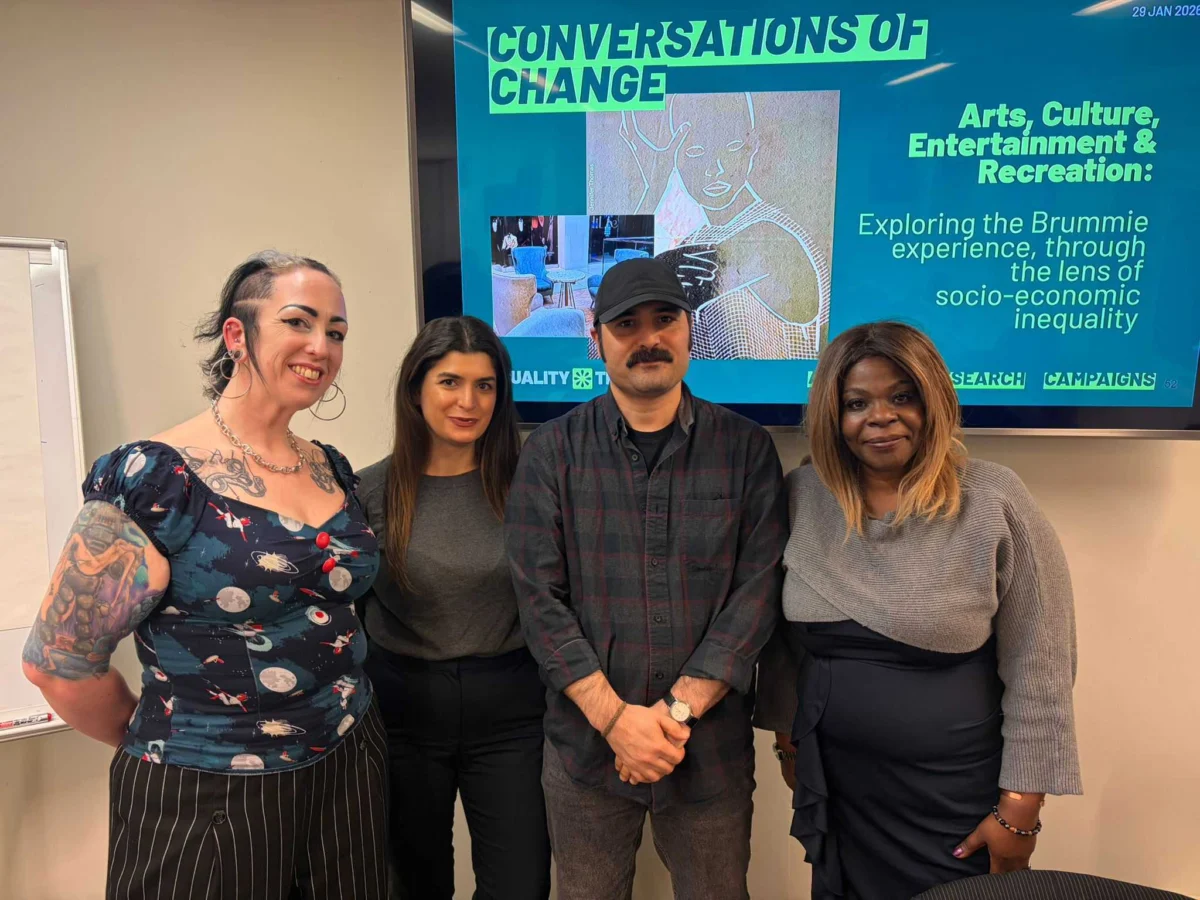
The intersection of socio-economic disparity and cultural access has long remained a peripheral concern in municipal policymaking, often overshadowed by macro-economic indicators such as employment rates and housing deficits. However, a pioneering initiative conducted across Birmingham through the summer of 2025 and into 2026 has sought to challenge this paradigm. Spearheaded by the Equality Trust in collaboration with Birmingham City Council, the "Cost of Inequality" project deployed a cohort of local Community Reporters to investigate systemic deprivation through a unique lens: equal access to arts, culture, entertainment, and recreation.
Among these reporters was Hassan Roshan, a filmmaker, student, and refugee whose reflections on the project illuminate a grassroots methodology that prioritizes listening over generalized assumption. By centering the lived experiences of marginalized populations, the initiative provides a qualitative counterweight to traditional data-driven policymaking, offering profound implications for urban development as the United Kingdom moves toward the national implementation of the Socio-economic Duty.
Main Facts and Project Genesis
The Equality Trust’s initiative in Birmingham represents a shift toward people-powered research, moving away from top-down sociological studies in favor of participatory journalism. Running intensively from mid-2025 through early 2026, the project recruited individuals from diverse backgrounds—including refugees, long-term migrants, and multi-generational West Midlands residents—to act as Community Reporters.
Rather than focusing exclusively on traditional metrics of poverty, such as household income or benefit claimant counts, the group chose to investigate access to cultural life. The rationale was rooted in the understanding that cultural participation is not merely an auxiliary luxury, but a fundamental pillar of human wellbeing, social cohesion, and civic confidence.
The investigative process involved extensive qualitative interviews with a cross-section of Birmingham residents. The findings culminated in a short documentary film titled Conversations of Change: Access to arts, culture, entertainment and recreation in Birmingham, alongside a companion piece capturing the internal reflections of the reporters themselves. These digital assets serve as primary documentation for a broader policy dialogue concerning how systemic inequality manifests in daily community life.
Chronology of the Initiative
The trajectory of the Birmingham Community Reporting project unfolded in distinct phases over an eighteen-month period:
- Recruitment and Training (Summer 2025): The Equality Trust assembled a multidisciplinary cohort of local residents, providing specialized training in qualitative interviewing, audio-visual storytelling, and ethical research methodologies. This phase emphasized the importance of neutralizing researcher bias and establishing trust within insular or hesitant communities.
- Fieldwork and Data Collection (Autumn 2025 – Winter 2025/2026): Reporters conducted semi-structured interviews across various Birmingham wards, engaging individuals spanning the socio-economic spectrum. Conversations focused on geographical, financial, linguistic, and psychological barriers to cultural spaces.
- Synthesis and Production (Early 2026): The gathered testimonies were analyzed collectively to identify recurring thematic barriers. Concurrently, multimedia assets—including short films—were edited to translate qualitative findings into accessible advocacy tools.
- Public Dissemination and Policy Reflection (August 2026): The formal release of project learnings and retrospective analyses coincided with broader institutional preparations for the nationwide commencement of the Socio-economic Duty, tying local qualitative insights directly to legislative frameworks.
Supporting Data and Socio-Economic Context
To fully understand the urgency of the Community Reporters’ findings, the initiative evaluated Birmingham’s unique socio-demographic landscape against established municipal data repositories.
According to the Birmingham Community Profiles (2025), the city stands as one of the most ethnically and culturally diverse urban centers in the United Kingdom, with more than half of its population originating from Black, Asian, and minority ethnic backgrounds. This rich tapestry of migration and history is widely recognized as a core civic asset.
However, this diversity coexists with severe structural deprivation. Data from the Indices of Deprivation 2025, published by the Birmingham City Observatory, designate Birmingham as the most deprived of England’s Core Cities. The city contains some of the highest concentrations of deprived neighborhoods nationwide, marked by acute income deprivation that severely restricts household disposable income.
In this economic climate, engagement with the arts faces compounding pressures. Public funding cuts have forced cultural institutions across the United Kingdom to seek alternative revenue models—such as the £10m self-sustainability fund launched by London’s Wigmore Hall, as reported by The Guardian in 2024. For municipal organizations operating under severe budgetary constraints, discretionary spending on community arts programs is frequently vulnerable to retrenchment, widening the gulf between well-resourced cultural hubs and economically disadvantaged neighborhoods.
Official Responses and Institutional Implications
While the project was led by civil society through the Equality Trust, its timing aligns closely with strategic shifts within local governance, notably Birmingham City Council’s preparations for the operational rollout of the Socio-economic Duty. Enshrined under Section 1 of the Equality Act 2010—though historically subject to delayed implementation in England—the duty requires public authorities to give strategic consideration to how they can reduce inequalities resulting from socio-economic disadvantage when making key decisions.
Project stakeholders and municipal observers have argued that quantitative data alone is insufficient to fulfill the mandates of the Socio-economic Duty. Statistics delineate the geography of poverty, but qualitative research captures its psychological and social toll. By demonstrating how financial precarity, language barriers, and social alienation effectively bar marginalized groups from cultural enrichment, the Community Reporters have provided local authorities with a granular roadmap for targeted intervention.
Broader Impact and Future Outlook
The implications of the Birmingham project extend beyond local cultural policy, offering a replicable model for participatory governance across the United Kingdom.
The core thesis advanced by Hassan Roshan and his fellow reporters is that meaningful social change is predicated on epistemic justice—acknowledging that individuals living through deprivation are the primary authorities on their own conditions. When community members are equipped with the tools of documentation and storytelling, they transition from passive subjects of sociological study to active agents of political and cultural advocacy.
Looking forward, the insights generated by the Birmingham project are expected to inform subsequent municipal strategies regarding public space utilization, council-funded arts grants, and community outreach initiatives. As cities across the UK grapple with post-industrial economic transitions and fiscal austerity, integrating lived experience into administrative decision-making may prove vital in ensuring that public goods—such as arts, culture, and recreation—remain accessible to all citizens, irrespective of socio-economic standing.




