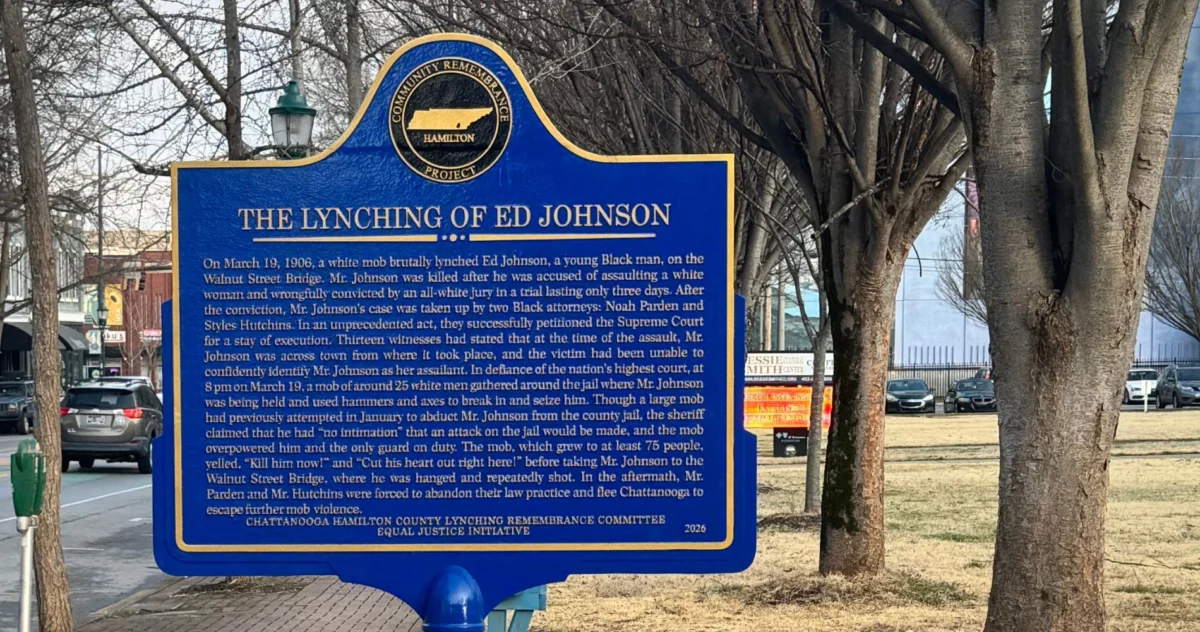
A profound step in confronting the enduring legacy of racial violence was taken last week in Hamilton County, Tennessee, as local community members, in collaboration with the Equal Justice Initiative (EJI), dedicated a historical marker commemorating Ed Johnson. Johnson, a young Black man, was brutally lynched by a white mob in 1906, an act of racial terror that reverberated through the nation and underscored the systemic injustices of the era. The ceremony, held on February 26 in downtown Chattanooga, served not only as a remembrance of a tragic past but also as a powerful affirmation of the community’s commitment to truth-telling, education, and reconciliation. The event brought together local leaders, historians, and residents, united in the shared goal of ensuring that the injustices of the past are never forgotten and that their lessons inform a more equitable future.
A Ceremony of Remembrance and Resolve
The dedication ceremony was graciously hosted by the Bessie Smith Cultural Center, a venerable institution in Chattanooga dedicated to preserving and celebrating African American history and culture through art, education, research, and entertainment since its founding in 1983. Paula Wilkes, president of the Bessie Smith Cultural Center, played a pivotal role in organizing the event, alongside Eric Atkins of the Unity Group. Atkins, a prominent community activist, has long championed the preservation of history to foster education within marginalized communities. His prior collaboration with EJI included a significant soil collection event in 2017, honoring Ed Johnson and other lynching victims in Chattanooga, a poignant precursor to this marker dedication.
The proceedings began with a prayer led by the Rev. Ernest Reid of the Second Missionary Baptist Church, who invoked themes of honoring the past while aspiring for future unity. The atmosphere was one of solemn reflection mixed with determined hope. Paula Wilkes addressed the attendees, emphasizing the critical importance of confronting historical truths. "By naming what happened here, we honor Ed Johnson’s humanity and affirm that remembrance is a necessary step toward justice and healing," Wilkes stated, her words resonating with the gravity of the occasion. "May this marker remind us not only of the past we must confront, but of the responsibility we carry forward." Her message underscored the dual purpose of the marker: to acknowledge a horrific wrong and to inspire ongoing action.
Brandon McRae, a Community Remembrance Project Team Member, offered remarks on behalf of EJI, expressing gratitude to the local community for their tireless efforts in bringing the project to fruition and for their collective commitment to remembrance. Further reinforcing the significance of the initiative, Alexa LeBoefu, Hamilton County’s economic and community development director, and Carmen Elliot, representing Chattanooga Mayor Tim Kelly, both spoke passionately about the positive impact of confronting shared history on community development and their unwavering desire to continue educational endeavors. They highlighted how understanding historical injustices is fundamental to building a stronger, more inclusive society.
Eric Atkins shared his insights into the remarkable growth of the project, reflecting on its journey from initial conception to its tangible impact on the community. "This has been five and a half years in the making," Atkins remarked, underscoring the dedication and perseverance required. His concluding words served as a powerful call to action: "We have to love together, we have to pray together, we have to stand together. Together is the only way we are at our best as a community." This sentiment encapsulated the spirit of unity and collective responsibility that permeated the dedication event.
The Unfolding Tragedy: The Lynching of Ed Johnson
The historical marker stands as a stark reminder of the events of March 19, 1906, when Ed Johnson’s life was brutally cut short. Johnson, a young Black man, was lynched by a white mob on the Walnut Street Bridge in downtown Chattanooga, following a deeply flawed legal process. His ordeal began with an accusation of assaulting a white woman, an allegation that in the Jim Crow South often served as a death sentence for Black men, irrespective of guilt or innocence.
The subsequent trial, lasting a mere three days, was a travesty of justice. Johnson, denied a fair hearing, was wrongfully convicted by an all-white jury, a common occurrence in a legal system designed to uphold white supremacy. At the time of the alleged assault, thirteen witnesses had provided alibis, placing Johnson across town. Furthermore, the victim herself had been unable to confidently identify Johnson as her assailant, casting significant doubt on the prosecution’s case. These crucial pieces of evidence were largely disregarded in a climate steeped in racial prejudice and fear.
In an extraordinary and courageous act, two Black attorneys, Noah Parden and Styles Hutchins, took up Johnson’s case. Defying the overwhelming odds and risking their own safety, they successfully petitioned the U.S. Supreme Court for a stay of execution, a truly unprecedented legal maneuver for its time. This intervention from the nation’s highest court offered a glimmer of hope for justice, setting the stage for a potential federal review of the case.
However, the forces of racial terror proved more powerful than the rule of law in Chattanooga. In a brazen act of defiance against the Supreme Court’s order, a mob of approximately 25 white men gathered around the jail where Johnson was held. Armed with hammers and axes, they forcibly broke into the facility, overwhelming the sheriff and the single guard on duty. This was not the mob’s first attempt; an earlier effort in January had also sought to abduct Johnson from the county jail, yet the sheriff claimed to have "no intimation" of an impending attack, raising questions about the level of official complicity or negligence.
The mob, which swelled to at least 75 individuals, was fueled by a bloodthirsty fervor, with members yelling "Kill him now!" and "Cut his heart out right here!" They dragged Johnson to the Walnut Street Bridge, a prominent city landmark, where he was hanged and then repeatedly shot. This horrific public spectacle was designed to instill fear and enforce racial hierarchy, serving as a brutal warning to the Black community.
The aftermath of Johnson’s lynching was equally tragic for his courageous attorneys. In the face of overwhelming threats and further mob violence, Noah Parden and Styles Hutchins were compelled to abandon their law practice and flee Chattanooga, their professional lives shattered for daring to seek justice for a Black man. Their sacrifice highlights the immense personal cost of challenging racial injustice in the early 20th century South.
The Broader Landscape of Racial Terror Lynching in America
Ed Johnson’s story is a harrowing individual tragedy, yet it is also representative of a widespread campaign of racial terror that plagued the United States, particularly the South, for decades. Between 1865 and 1950, an estimated 6,500 Black people were victims of mob violence and lynching across the nation. These acts were not merely random crimes but systematic tools of social control, designed to enforce Jim Crow laws, suppress Black political and economic advancement, and maintain white supremacy in the post-Reconstruction era.
The accusations that frequently ignited these violent mobs were often flimsy or entirely fabricated. Almost 25% of lynchings involved allegations of "assault" or inappropriate behavior between a Black man and a white woman. This particular accusation was highly potent, rooted in deeply ingrained white supremacist ideologies that propagated the myth of the "Black brute"—a stereotype depicting Black men as inherently violent, hypersexual, and a threat to white womanhood. This pervasive presumption fueled a pathological fear among white people of any perceived sexual contact between Black men and white women.
As a result, accusations of "assault" were incredibly broad, extending to any action that could be interpreted as a Black man seeking contact with a white woman. Such allegations could be based on something as innocuous as looking at, accidentally bumping into, smiling, winking, or getting too close to a white woman, or even merely being disagreeable. These accusations provided a convenient pretext for white mobs to unleash violence, often with impunity.
A chilling aspect of this era was the systemic failure of law enforcement. It was common for lynch mobs to seize their victims from jails, prisons, courtrooms, or directly from police custody. Police almost never used force to resist white lynch mobs intent on killing Black people. In far too many instances, police officials were found to be complicit, actively participating in lynchings, or simply standing aside as mobs carried out their brutal acts. This lack of protection from the very institutions sworn to uphold justice further solidified the terror and powerlessness experienced by Black communities.
Hamilton County, where Ed Johnson was lynched, was not an anomaly in this national pattern of racial terror. Johnson was one of at least five documented victims of racial terror lynching killed in Hamilton County between 1865 and 1950. Across the state of Tennessee, the numbers are even more stark, with more than 375 documented victims during the same period. These statistics underscore the pervasive nature of this violence and its deep roots within the fabric of Southern society.
The Community Remembrance Project: A Path to Healing
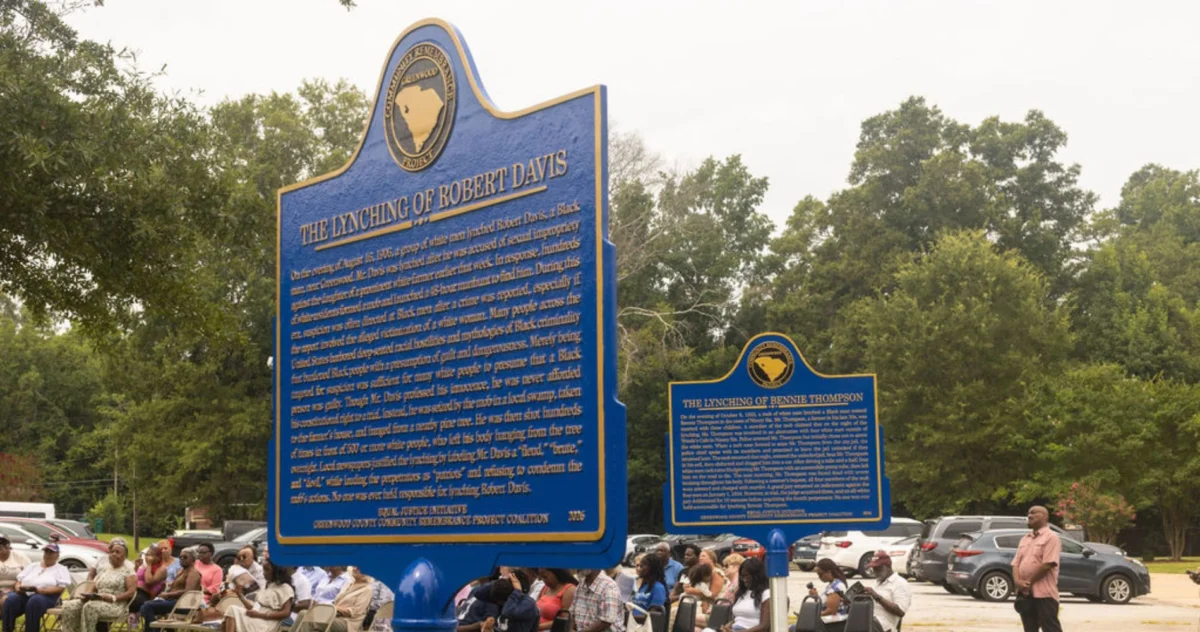
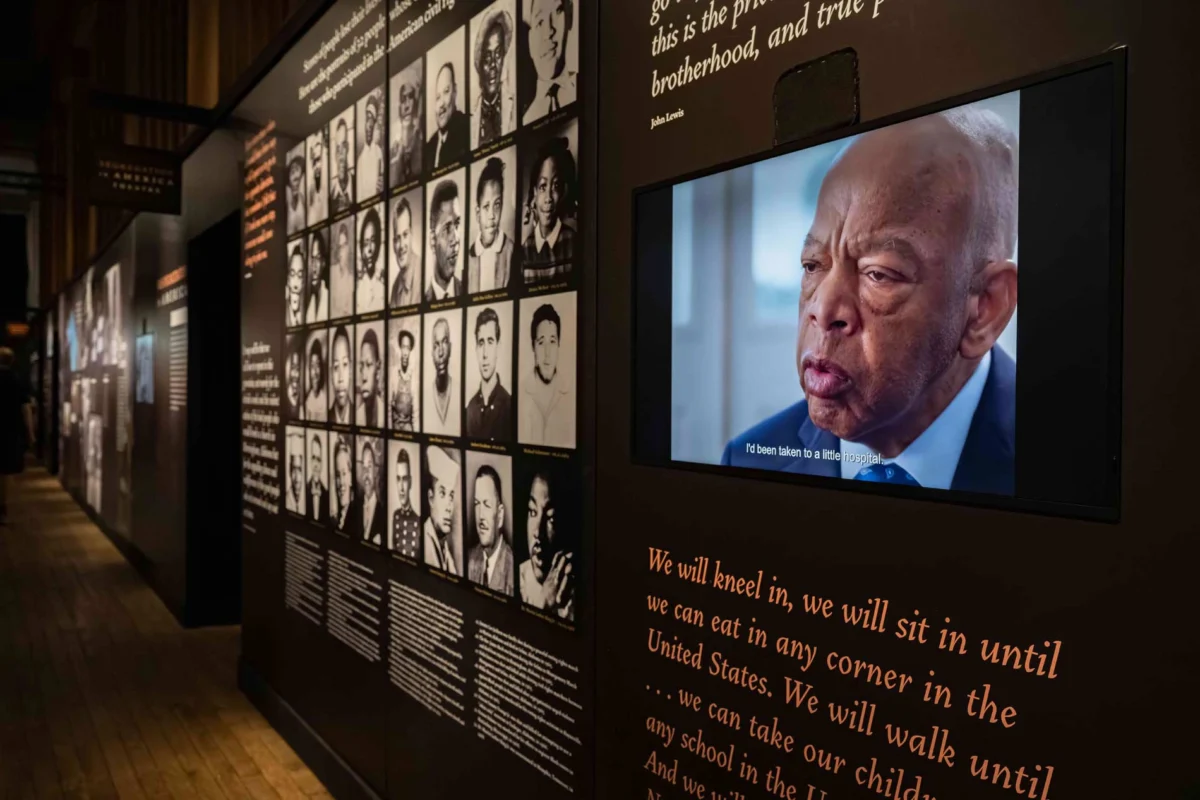
The historical marker dedicated to Ed Johnson is a tangible outcome of EJI’s broader Community Remembrance Project. This ambitious initiative seeks to recognize and memorialize victims of lynching through a multifaceted approach: collecting soil from lynching sites, erecting historical markers, and developing the Legacy Sites in Montgomery, Alabama, including the National Memorial for Peace and Justice and the Legacy Museum.
EJI’s philosophy is predicated on the belief that confronting the truth of racial violence is a prerequisite for healing and reconciliation within communities. By acknowledging these painful chapters of history, communities can initiate necessary conversations that challenge long-held narratives, foster empathy, and promote a deeper understanding of the systemic racism that continues to impact society. The act of placing a marker in a public space serves as a permanent testament, disrupting historical silence and ensuring that these injustices are integrated into the collective memory.
The Ed Johnson marker, like others across the country, is more than just a plaque; it is an educational tool. It compels passersby to stop, read, and reflect on a history that was often suppressed or distorted. It invites dialogue and encourages a critical examination of how historical injustices continue to shape contemporary realities. For the descendants of lynching victims and for the Black community, these markers are powerful affirmations of lives that mattered, offering a measure of dignity and recognition that was denied in life and in death.
Moving Forward: Education, Justice, and Continued Advocacy
The dedication of the Ed Johnson marker represents a significant milestone in Chattanooga’s journey toward racial justice and historical reckoning. It is a testament to the perseverance of local activists like Eric Atkins and institutions like the Bessie Smith Cultural Center, who have worked tirelessly to bring this history to light. The commitment articulated by county and city officials to continue educational efforts signals a broader institutional recognition of the importance of this work.
The implications of such acts of remembrance are far-reaching. They challenge the selective amnesia that often characterizes historical narratives, particularly concerning uncomfortable truths. By publicly acknowledging racial terror lynchings, communities begin to dismantle the foundations of white supremacy that allowed such violence to flourish. This process is vital for fostering a more inclusive and just society, one that understands how past injustices continue to manifest in present-day disparities.
The work, however, does not end with a marker. The dedication serves as a renewed call to action, reminding residents that true reconciliation requires ongoing education, systemic reforms, and a sustained commitment to equity. It encourages deeper engagement with the history of racial violence and its impact, fostering a more informed citizenry capable of addressing contemporary challenges related to racial injustice.
The story of Ed Johnson, once silenced and forgotten by many, now stands prominently on the streets of Chattanooga, etched into the public consciousness. This marker is a permanent declaration that his life mattered, that his lynching was an unforgivable act of racial terror, and that the community is resolved to remember, learn, and strive for a future where such injustices are truly relegated to the past. It is a beacon of remembrance, a catalyst for conversation, and a symbol of hope for a more just and unified community.