
The landscape of social research in the United Kingdom is undergoing a quiet, people-powered revolution. Over the course of 2025 and into 2026, a diverse collective of individuals operating under the banner of Community Reporters embarked on an immersive research initiative in Birmingham. Spearheaded by the Equality Trust, this initiative was designed to capture the granular, often overlooked realities of socio-economic inequality within England’s most populous core city. By decentralizing traditional research methods and placing the microphone directly into the hands of residents—ranging from multi-generational locals to recent refugees—the project sought to reframe how systemic disadvantage is understood, measured, and ultimately addressed.
As public sector institutions prepare for the national rollout of the Socio-economic Duty, initiatives like the Birmingham Community Reporting project offer a critical blueprint. This framework moves beyond abstract statistical data, infusing policy discussions with human narratives that illuminate the profound impacts of economic deprivation on everyday civic life.
The Genesis and Chronology of the Equality Trust Initiative
The roots of the Birmingham project stretch back to a growing recognition among civil society organizations that traditional metrics of deprivation fail to capture the holistic human cost of inequality. Throughout the summer of 2025, the Equality Trust recruited a cohort of Community Reporters from markedly varied walks of life. Among them was Hassan Roshan, a filmmaker, student, and refugee whose background informed his approach to the project’s investigative framework.
The initiative was structured in distinct phases. The initial months, spanning mid-to-late 2025, were dedicated to intensive training workshops. These sessions equipped reporters with the ethical and technical tools required for qualitative data collection, interviewing, and digital storytelling. Rather than acting as conventional journalists seeking quick soundbites, the reporters were trained in active listening, allowing participants to dictate the terms and boundaries of their own narratives.
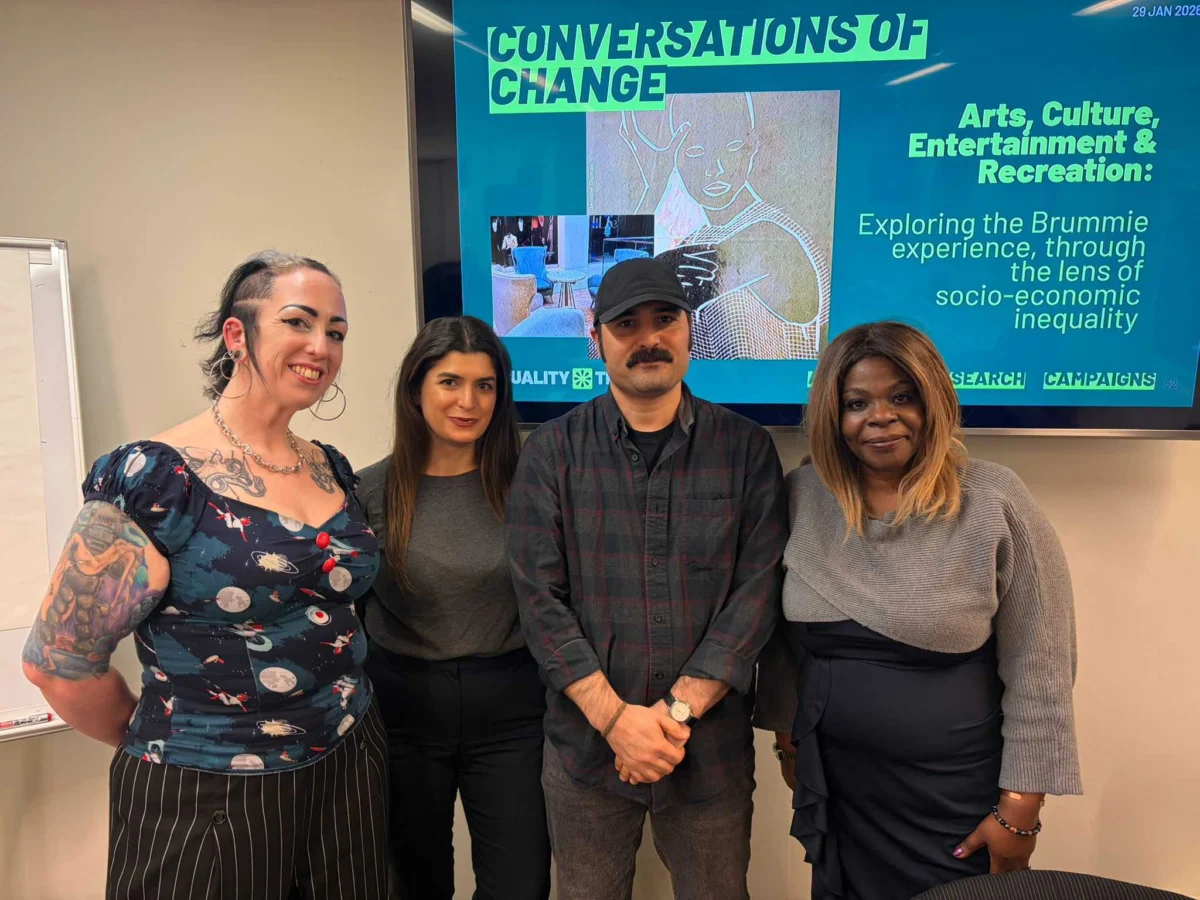
By late 2025 and into early 2026, the fieldwork shifted from training to execution. The reporters conducted extensive interviews across Birmingham, engaging with a cross-section of society that included migrants still learning English, long-term unemployed residents, and families grappling with the sharp edges of the UK’s cost-of-living crisis. The culmination of this research phase was synthesized into multimedia outputs, including short documentary films such as Conversations of Change, which premiered publicly to bridge the gap between grassroots realities and institutional decision-makers.
Contextualizing Birmingham: Diversity Amid Deep-Seated Deprivation
To fully grasp the significance of the Community Reporters’ findings, one must examine the socio-economic topography of Birmingham. As the United Kingdom’s largest municipal authority outside London, the city boasts a vibrant, cosmopolitan identity. According to the Birmingham Community Profiles published in 2025, more than half of the city’s population originates from Black, Asian, and minority ethnic backgrounds. This cultural mosaic represents one of Birmingham’s greatest structural assets, forged through decades of rich migration histories.
However, this cultural wealth exists alongside profound economic precarity. Data from the Indices of Deprivation 2025, compiled by the Birmingham City Observatory, underscores the immense challenges facing the municipality. Birmingham currently ranks as the most deprived of England’s Core Cities, featuring some of the highest concentrations of severely deprived neighbourhoods nationwide. High rates of income deprivation directly affect household stability, restricting access to essential services, adequate nutrition, and educational attainment.
It was against this complex backdrop that the Community Reporters chose their specific research vector: access to arts, culture, entertainment, and recreation. While policymakers frequently categorize cultural engagement as a non-essential luxury—something to be addressed only after basic survival needs are met—the project’s findings challenge this orthodox economic hierarchy.
The Vital Role of Arts and Culture in Social Cohesion
The core hypothesis developed by the Birmingham cohort was that cultural access is not merely a lifestyle amenity, but a fundamental determinant of social well-being and community resilience. Qualitative data gathered during the project demonstrated that participation in arts and recreational activities directly correlates with reduced social isolation, improved mental health, enhanced self-confidence, and a stronger sense of civic belonging.
Yet, structural barriers severely restrict these benefits for marginalized populations. Financial constraints, prohibitive ticket prices, geographical isolation from cultural hubs, and linguistic hurdles create a tiered system of access. Furthermore, these grassroots findings arrive at a time of acute financial pressure for local authorities and cultural institutions alike. Following years of real-term funding reductions, arts organizations across the nation have been forced to restructure, seek philanthropic endowments, or scale back community outreach programs, as evidenced by high-profile budgetary shifts across the British cultural sector.
When local councils face constrained budgets, community arts initiatives are frequently among the first line items targeted for reduction. The Community Reporters argued that this shortsighted fiscal approach exacerbates existing inequalities, depriving vulnerable demographics of the very spaces that foster social cohesion and economic mobility.
Amplifying Lived Experience: Methodology and Findings
The methodological strength of the Community Reporting model lies in its rejection of the top-down sociological gaze. By deploying reporters who shared cultural or socio-economic touchstones with interviewees, the project cultivated an environment of trust.
Participants discussed the myriad subtle ways inequality manifests in daily life. For instance, individuals highlighted the psychological barrier of cultural venues, noting an unspoken perception that places like museums, theatres, and galleries "are not meant for people like us." For refugees and recent migrants, language barriers compounded these feelings of exclusion, effectively locking them out of the city’s broader civic life.
Rather than searching for a single, uniform narrative, the reporters mapped out intersecting themes of resilience. The resulting video documentation—featuring interviews with local residents navigating the West Midlands economic spectrum—revealed that community strength often persists in spite of institutional neglect. Grassroots initiatives, community-led workshops, and informal neighborhood networks frequently stepped into the vacuum left by retreating public services.
Institutional Implications and the Socio-Economic Duty
The timing of the Birmingham project aligns closely with broader regulatory shifts in the United Kingdom. Civil society groups have increasingly advocated for the full implementation of the Socio-economic Duty—a legislative provision designed to compel public authorities, including local councils and NHS bodies, to transparently consider how strategic decisions exacerbate or alleviate inequalities resulting from socio-economic disadvantage.
Proponents of the duty argue that quantitative data alone is insufficient to guide policy. Without qualitative insights into how economic deprivation restricts access to culture, education, and health, municipal spending decisions risk missing their mark. The insights generated by Hassan Roshan and his fellow reporters provide a localized case study in how qualitative research can inform public administration. By documenting the lived realities of Birmingham’s residents, the project offers local policymakers a roadmap for targeted intervention.
Reactions from community stakeholders and municipal observers suggest a growing consensus that future urban planning must integrate cultural equity into regeneration strategies. Ensuring that children, disabled individuals, refugees, and low-income families enjoy equitable access to creative infrastructure is increasingly viewed not as an ancillary cultural goal, but as a core component of poverty reduction and social justice.
Looking Ahead: The Future of People-Powered Research
As the Equality Trust project transitions into its legacy phase, the ripple effects of the Community Reporting model are expected to influence future policy discourse in the West Midlands and beyond. For participants like Roshan, the experience has catalyzed a renewed commitment to ethical storytelling. The skills acquired during the 2025–2026 project—principally the discipline of deep listening and the elevation of underrepresented voices—are set to inform upcoming documentary and community-led initiatives.
The overarching implication of the Birmingham project is clear: sustainable urban transformation requires the active participation of those most affected by systemic inequality. By transforming passive subjects of statistical reports into active chroniclers of their own communities, the project demonstrates that human stories are indispensable tools for structural change. In a socio-economic climate defined by financial austerity and widening divides, the demand for spaces where communities can speak for themselves has never been more urgent.




