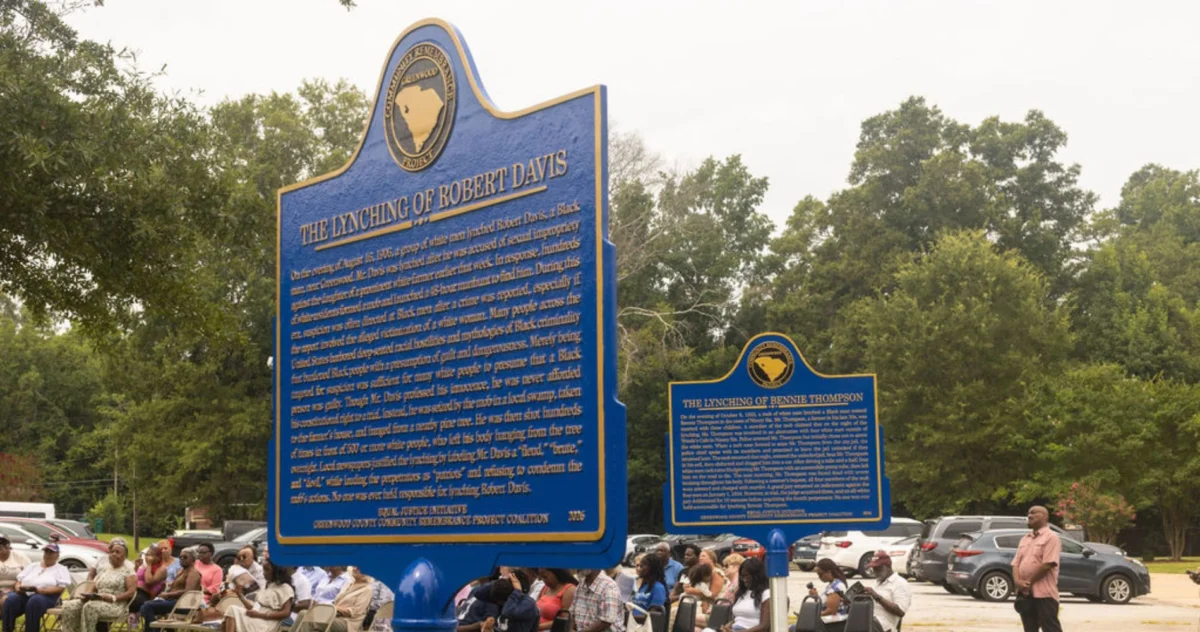
The Equal Justice Initiative (EJI) is set to host its annual Juneteenth commemoration on Friday, June 19, 2026, offering free admission to its acclaimed Legacy Sites in downtown Montgomery, Alabama, alongside an evening concert featuring Grammy Award-winning drummer Nate Smith and celebrated vocalist Lizz Wright. This extensive program underscores EJI’s commitment to historical truth-telling and racial justice, providing both profound educational experiences and a vibrant cultural celebration in honor of the federal holiday.
A Day of Reflection and Education at the Legacy Sites
Visitors are invited to explore the interconnected narratives of American history at EJI’s four pivotal Legacy Sites, open to the public without charge from 9 am to 6 pm on June 19. These sites collectively offer a comprehensive and unflinching look at the nation’s past, from the transatlantic slave trade to mass incarceration. The initiative to provide free access on Juneteenth is central to EJI’s mission of ensuring that these critical historical accounts are accessible to all, fostering a deeper understanding of the struggles for freedom and equality.
The Legacy Museum: From Enslavement to Mass Incarceration serves as the cornerstone of EJI’s educational outreach. Situated on the site of a former slave warehouse, the museum employs interactive media, historical artifacts, and first-person accounts to trace the direct line from chattel slavery and racial terrorism to the contemporary issues of mass incarceration and racial bias in the justice system. Its exhibits challenge visitors to confront uncomfortable truths about American history and the enduring legacy of racial injustice. For instance, the museum often highlights the fact that Alabama was a major hub for the domestic slave trade, with Montgomery serving as a prominent market, linking directly to the profound economic and social structures built upon forced labor. The museum’s design and content are meticulously curated, drawing on EJI’s extensive research into thousands of racial terror lynchings and the systemic nature of racial inequality.
Adjacent to the museum is The National Memorial for Peace and Justice, America’s first memorial dedicated to the legacy of enslaved Black people, people terrorized by lynching, and African Americans humiliated by racial segregation and Jim Crow laws. Opening in 2018, the memorial features 800 corten steel monuments, each representing a U.S. county where a racial terror lynching took place, inscribed with the names of victims. The descending pathway of the memorial creates a powerful, visceral experience, symbolizing the descent into racial terror and the gravity of these historical injustices. The meticulous research behind each name inscribed on the monuments, often involving community input and extensive archival work, highlights EJI’s dedication to restoring dignity to the victims and acknowledging the truth of this overlooked chapter of American history. Its impact since opening has been significant, drawing hundreds of thousands of visitors annually and sparking national conversations about racial healing and reconciliation.
The recently opened Freedom Monument Sculpture Park further expands EJI’s commemorative landscape. This expansive outdoor space features monumental sculptures and installations that narrate the journey from enslavement to contemporary struggles for civil rights. The park includes structures salvaged from plantations, sculptures by renowned artists, and thoughtful landscape design that invites contemplation on freedom, resilience, and resistance. It serves as a complementary experience to the museum and memorial, offering a different medium through which to engage with the complex historical narrative. The scale of the park allows for a more immersive and reflective experience, connecting the physical landscape of Alabama to the historical realities it represents.
Completing the quartet of sites is the newly opened Montgomery Square. While specific details about Montgomery Square’s exhibits were not provided in the initial announcement, its inclusion suggests a continued expansion of EJI’s efforts to integrate historical memory into the urban fabric of Montgomery, a city deeply resonant with the Civil Rights Movement. This new addition is expected to further enhance the visitor experience, potentially serving as a public gathering space or offering additional interpretative exhibits that connect the city’s past to its present.
Juneteenth: A National Commemoration of Freedom
The choice of Juneteenth for this extensive free program is profoundly significant. Juneteenth, celebrated annually on June 19, commemorates the day in 1865 when Union General Gordon Granger arrived in Galveston, Texas, and announced the end of slavery, more than two years after President Abraham Lincoln’s Emancipation Proclamation. This declaration marked the effective end of slavery in the United States, as Texas was the last Confederate state with a significant enslaved population where the federal army could enforce emancipation.
For generations, Juneteenth has been celebrated by African Americans as a day of liberation, resilience, and cultural pride. In recent years, its recognition has grown nationally, culminating in its establishment as a federal holiday in 2021. This broader acknowledgment reflects a growing national commitment to confronting historical injustices and celebrating milestones in the struggle for civil rights. EJI’s annual Juneteenth events contribute significantly to this national dialogue, grounding the celebration in the tangible history preserved and presented at its sites. The events serve not just as a remembrance but as a call to action, reminding attendees of the ongoing work required to achieve true equality and justice.
An Unforgettable Evening: The Juneteenth Jazz Concert
As the sun sets on June 19, the commemoration will transition into an unforgettable musical event: a jazz concert featuring two towering figures in contemporary music, Nate Smith and Lizz Wright. This one-night-only performance will take place at 7:30 pm at EJI’s Peace and Justice Memorial Center, offering a powerful artistic complement to the day’s historical reflections.
Nate Smith, a Grammy Award-winning drummer, composer, and producer, is renowned for his virtuosic technique, innovative compositions, and profound musicality. The Hype Magazine has lauded him as a "global touring powerhouse and an accomplished recording artist," a testament to his versatility and impact across various genres, from jazz and fusion to R&B and hip-hop. Smith’s work often explores themes of identity, history, and community through intricate rhythms and evocative melodies. His presence at the Juneteenth concert is particularly fitting, as jazz itself is an art form deeply rooted in African American cultural expression, born from the unique experiences of Black Americans and serving as a powerful vehicle for storytelling, protest, and celebration. His performances are known for their dynamic energy and improvisational brilliance, promising an electrifying experience for the audience.

Joining Smith is Lizz Wright, an acclaimed vocalist and songwriter whose rich, resonant voice and profound interpretations have captivated audiences worldwide. The New York Times has described her as "an awesome talent," recognizing her ability to weave together elements of jazz, gospel, blues, and folk into a distinctive and deeply moving sound. Wright’s lyrics often delve into themes of faith, resilience, and the human condition, making her an ideal artist to contribute to a Juneteenth celebration focused on truth and justice. Her previous performances, including at past EJI Juneteenth events, have been celebrated for their emotional depth and spiritual resonance. The synergy between Smith’s rhythmic prowess and Wright’s soulful vocals is anticipated to create a truly memorable and impactful concert experience.
Tickets are required for the evening concert and can be purchased in advance via the link provided on EJI’s official channels. This ticketed event helps support EJI’s ongoing work and ensures a well-organized concert experience.
A Legacy of Artistic Engagement: EJI’s "Art and Justice" Program
The Juneteenth concert featuring Nate Smith and Lizz Wright is a prominent example of EJI’s long-standing "Art and Justice" programming. This initiative is designed to harness the power of creative expression to deepen understanding, foster empathy, and inspire action in the pursuit of justice. By bringing celebrated artists and creatives to Montgomery, EJI aims to create a "new soundtrack for truth telling," enriching the experiences at the Legacy Sites and amplifying the organization’s broader mission.
EJI Executive Director Bryan Stevenson articulated this vision, stating, "We are once again thrilled to open up our sites for free in celebration of Juneteenth. With new exhibits and our recently opened Montgomery Square, there will be much to experience at the Legacy Sites. I’m also thrilled that we can bring to Montgomery two towering and phenomenally talented artists, Nate Smith and Lizz Wright, to perform at our Juneteenth concert." Stevenson’s statement underscores the dual approach of EJI: providing accessible historical education and enriching it with high-caliber cultural events that resonate with the themes of justice and liberation.
The "Art and Justice" program has a distinguished history of featuring world-renowned artists. Past Juneteenth events alone have showcased an impressive roster of talent, including jazz luminaries like Wynton Marsalis, Terence Blanchard, Esperanza Spalding, and Samara Joy, alongside gospel and classical artists such as Yolanda Adams, Donald Lawrence and Company, Anthony McGill, and the Jason Max Ferdinand Singers. The program has also previously featured Lizz Wright, demonstrating her deep connection to EJI’s mission. Beyond Juneteenth, the initiative consistently brings diverse artistic voices to Montgomery; recent events have included collaborations with legendary cellist Yo-Yo Ma and saxophonist Branford Marsalis, highlighting the program’s commitment to artistic excellence and its broad appeal. These collaborations demonstrate EJI’s belief that art transcends barriers and can illuminate complex historical narratives in uniquely powerful ways, fostering dialogue and healing.
The Broader Impact and Educational Imperative
EJI’s annual Juneteenth celebration in Montgomery holds significant educational and cultural implications. By offering free access to the Legacy Sites, EJI democratizes access to critical historical education, ensuring that individuals from all socioeconomic backgrounds can engage with the narratives of American slavery, racial terrorism, and mass incarceration. This direct engagement with primary sources and immersive exhibits has been shown to be far more impactful than textbook learning, fostering a deeper, more empathetic understanding of history.
The location of these sites in Montgomery, Alabama, further amplifies their impact. Montgomery was the first capital of the Confederacy, a major slave trading hub, and a pivotal battleground of the Civil Rights Movement. This geographical context imbues the sites with an undeniable historical weight, making the experience particularly potent. EJI’s presence has transformed Montgomery into a crucial center for historical memory and racial justice advocacy, drawing national and international attention to its ongoing efforts.
The integration of jazz music into the commemoration serves to honor the cultural heritage of African Americans and acknowledges the role of art in both documenting and transcending suffering. Jazz, with its improvisational nature and capacity for profound emotional expression, provides a powerful medium through which to reflect on themes of freedom, resilience, and the enduring human spirit. This blend of historical education and artistic celebration creates a holistic experience that educates the mind and nourishes the soul.
From a broader societal perspective, events like EJI’s Juneteenth celebration contribute to the ongoing national dialogue about racial justice, reconciliation, and the pursuit of a more equitable future. By foregrounding uncomfortable truths about the past, EJI challenges individuals and institutions to confront systemic injustices and work towards meaningful change. The widespread recognition of Juneteenth as a federal holiday has catalyzed greater public engagement with these issues, and EJI’s meticulously curated events serve as a beacon for how such commemorations can be both celebratory and profoundly educational.
The commitment of EJI, under the leadership of Bryan Stevenson, to consistently provide accessible, high-quality programming on Juneteenth underscores the organization’s dedication to its foundational principles. The annual event, now a staple in the national Juneteenth calendar, continues to evolve, incorporating new exhibits and world-class artistic talent, thereby solidifying its role as a vital contributor to America’s journey toward truth and justice.
For those planning to attend, the Legacy Sites are centrally located in downtown Montgomery, Alabama. While admission to the sites on June 19 from 9 am to 6 pm is free and requires no prior registration, attendees for the 7:30 pm concert with Nate Smith and Lizz Wright are strongly encouraged to purchase their tickets in advance due to anticipated demand for this unique artistic convergence. This blend of solemn remembrance, educational immersion, and vibrant cultural celebration promises to make EJI’s 2026 Juneteenth event a profoundly moving and enlightening experience for all who participate.