
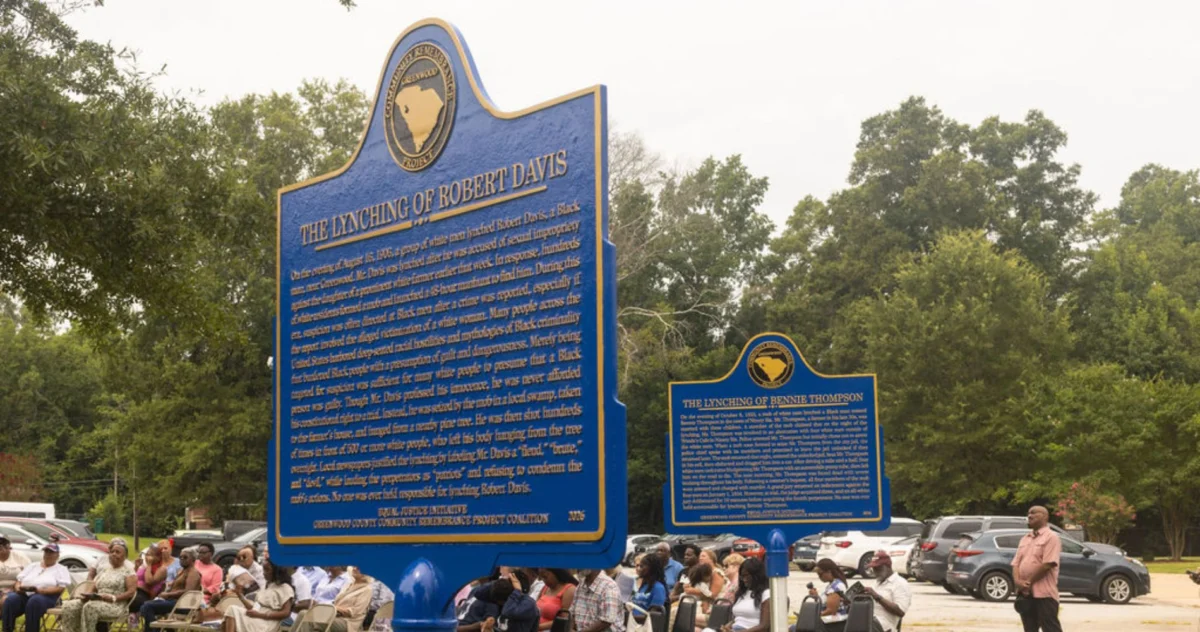
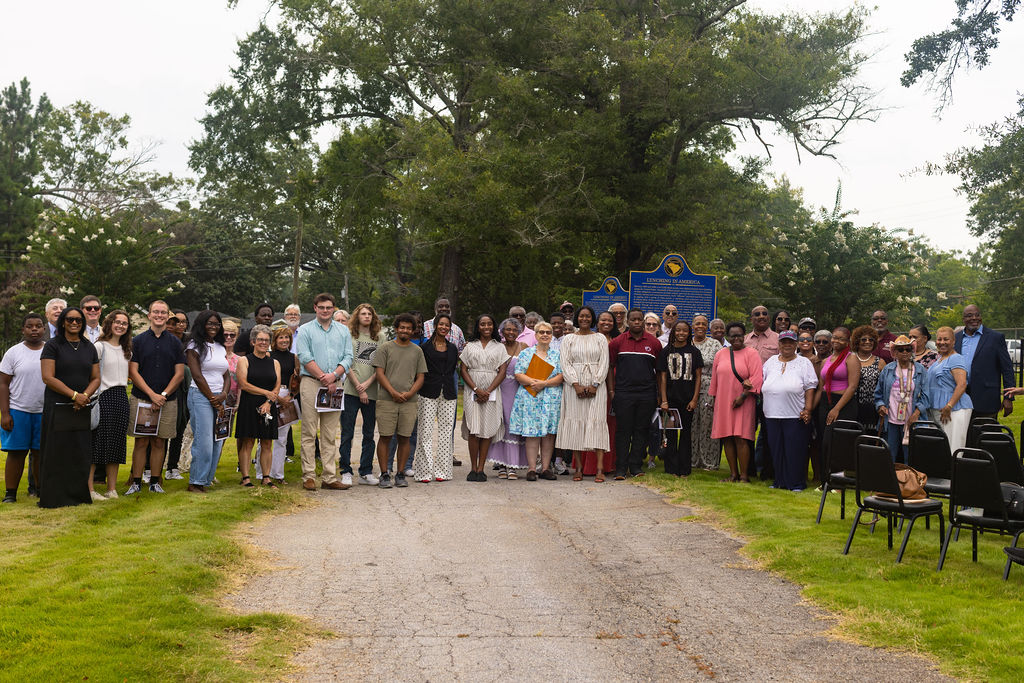
On August 1, a coalition of community members, local leaders, and officials in Greenwood County, South Carolina, convened at the GLEAMNS Dr. Benjamin E. Mays Historic Preservation Site to unveil two permanent historical markers. These markers serve as a somber acknowledgment of the lives of Robert Davis, lynched in 1906, and Bennie Thompson, lynched in 1933. The ceremony, held on the birthday of Dr. Benjamin Mays, drew approximately 70 attendees, ranging from local youth to elders, signaling a multi-generational commitment to confronting a history of racial violence that has long remained in the shadows.
A Legacy of Racial Terror in South Carolina
Greenwood County holds the distinction of having the highest number of documented racial terror lynchings in South Carolina. Between 1865 and 1950, at least 17 Black individuals were murdered by lynch mobs within the county lines. These acts of violence were not isolated incidents of spontaneous rage; they were, as the Equal Justice Initiative (EJI) has documented, a systematic mechanism of racial control designed to enforce a hierarchy of white supremacy.
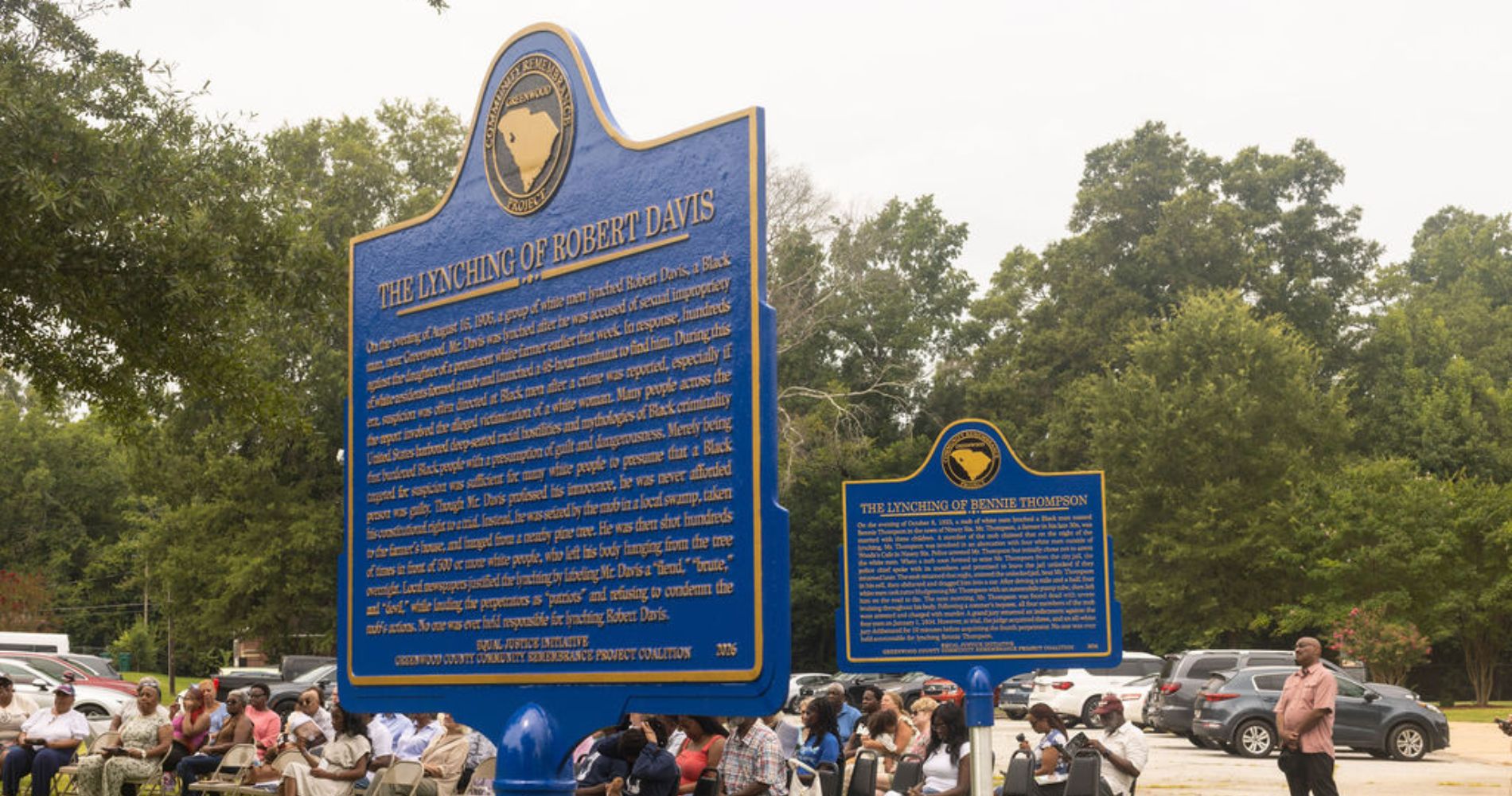
Nationally, the period following the Civil War saw more than 6,500 Black men, women, and children lose their lives to racial terror lynchings. These acts frequently involved the public spectacle of violence, often with the tacit or active participation of law enforcement and the complicity of the local press. The markers in Greenwood serve as a necessary intervention against the erasure of this history, ensuring that the names of the victims are reclaimed from the silence of archives and the negligence of past generations.
The Life and Death of Robert Davis
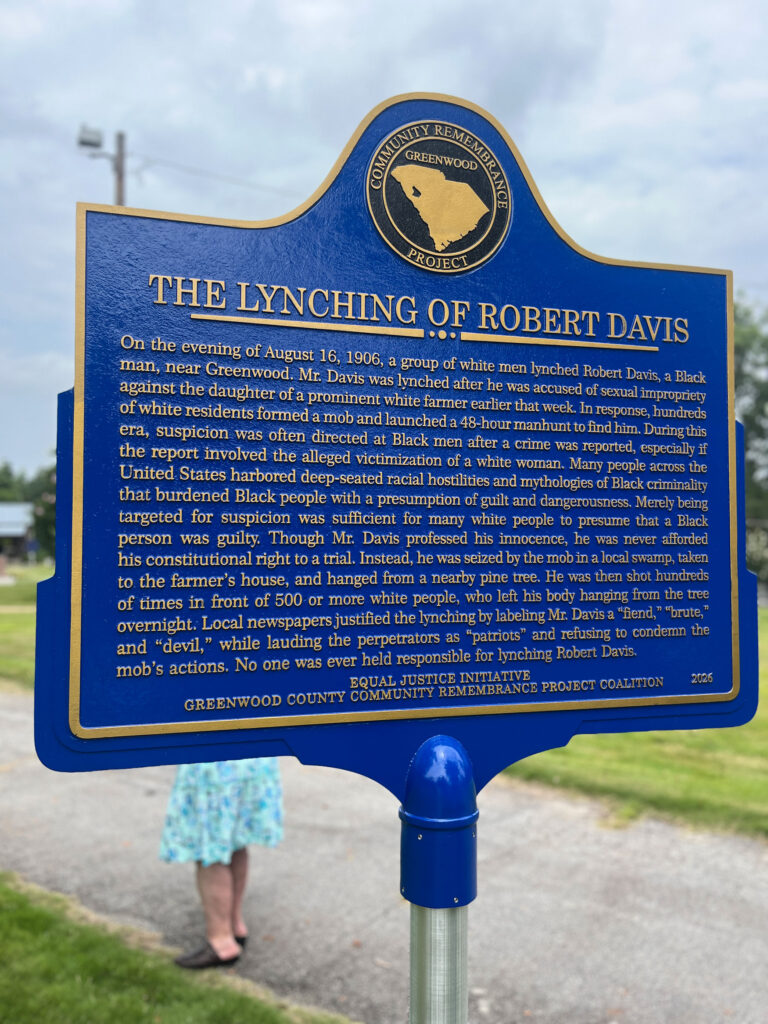
On August 16, 1906, Robert Davis was the subject of a state-sanctioned manhunt that culminated in his brutal murder. Accused of sexual impropriety against the daughter of a prominent white farmer, Mr. Davis became the target of a mob that grew to include hundreds of white residents. The presumption of guilt—a hallmark of the era’s racial climate—meant that Mr. Davis was effectively condemned by the accusation alone.
Despite his protestations of innocence, Mr. Davis was denied the due process of a trial. He was captured in a local swamp and subjected to a gruesome public execution. He was hanged from a pine tree near the farm in question and shot hundreds of times as a crowd of at least 500 onlookers watched. Local newspapers of the period, rather than reporting on the crime of the lynching, reinforced the narrative of white victimhood, using derogatory slurs to describe Mr. Davis while labeling his executioners as "patriots." No perpetrator was ever prosecuted, highlighting the total collapse of the rule of law for Black citizens in the Jim Crow South.
The Murder of Bennie Thompson
Decades later, in 1933, the town of Ninety Six became the site of another failure of the American justice system. Bennie Thompson, a farmer and father of three, was lynched following a minor altercation with four white men outside of a local café. Despite the fact that police were involved in the initial arrest, the institutional protections that should have shielded a prisoner in custody were dismantled by the racial animus of the time.
Evidence suggests the police chief colluded with the mob, promising to leave the jailhouse door unlocked to facilitate the abduction. Mr. Thompson was dragged from his cell, beaten with an automobile pump tube, and left to die on the roadside. While this case saw an attempt at legal accountability—with the four perpetrators indicted for murder—it ultimately collapsed. A judge acquitted three of the men, and an all-white jury delivered an acquittal for the fourth after only ten minutes of deliberation. This outcome served as a chilling reminder that the judicial system in South Carolina remained entirely unwilling to hold white citizens accountable for the murders of Black men.
The Role of the Greenwood Community Remembrance Project
The Greenwood Community Remembrance Project, established in 2019, represents a grassroots effort to educate the public on the legacies of slavery, Reconstruction, and racial terrorism. The organization’s work is part of a broader national initiative spearheaded by the EJI, which seeks to reconcile the American narrative with the realities of its past.
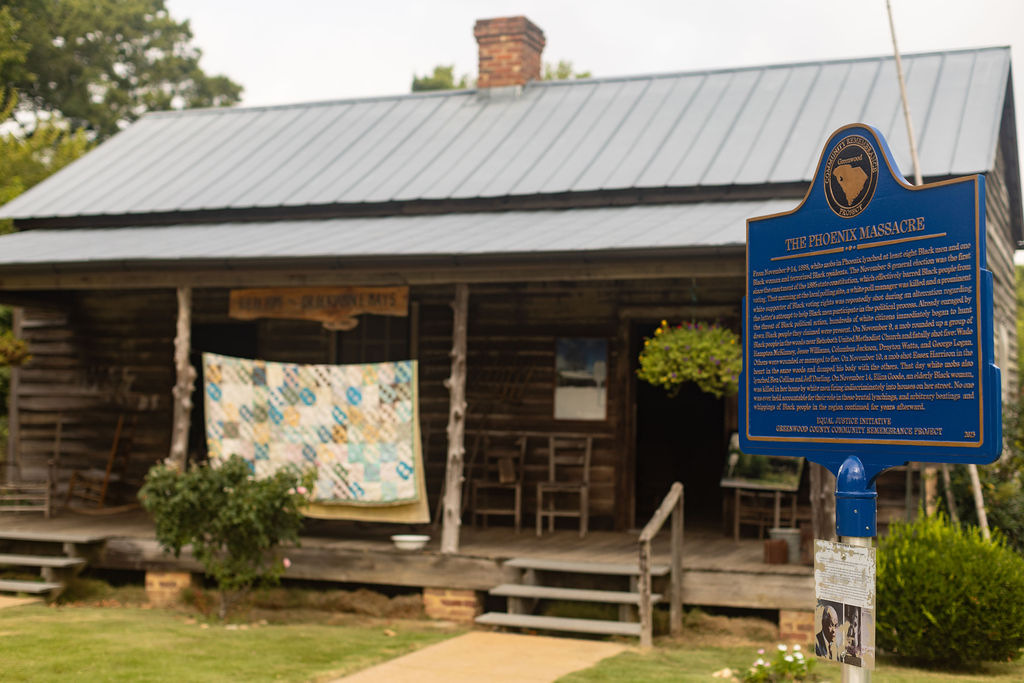
In 2023, the coalition marked a significant milestone by dedicating a historical marker to the victims of the Phoenix Riot, a massacre that occurred on Election Day in 1898. By memorializing the nine victims of that tragedy, the project has begun to construct a comprehensive map of racial violence in the region. The addition of the Davis and Thompson markers is the next step in a broader plan to build a "pathway of truth" at the Mays site, which will eventually document every recorded lynching in Greenwood County.
Educational Impact and Youth Engagement
A pivotal aspect of the project is the involvement of local youth. The Mays site, directed by the Rev. Christopher B. Thomas, has integrated the history of racial terror into its educational programming. This includes a scholarship fund for students who participate in internships at the site and travel to EJI’s Legacy Sites in Montgomery, Alabama.
During the August 1 dedication, several students spoke about the transformative experience of visiting the National Memorial for Peace and Justice. For these young people, the trip provided a tangible connection to the history they were taught in classrooms, helping them to bridge the gap between abstract historical facts and the lived realities of their ancestors. By providing these educational opportunities, the coalition ensures that the work of truth-telling is sustained by future generations who are tasked with carrying the torch of memory.
Institutional and Community Perspectives
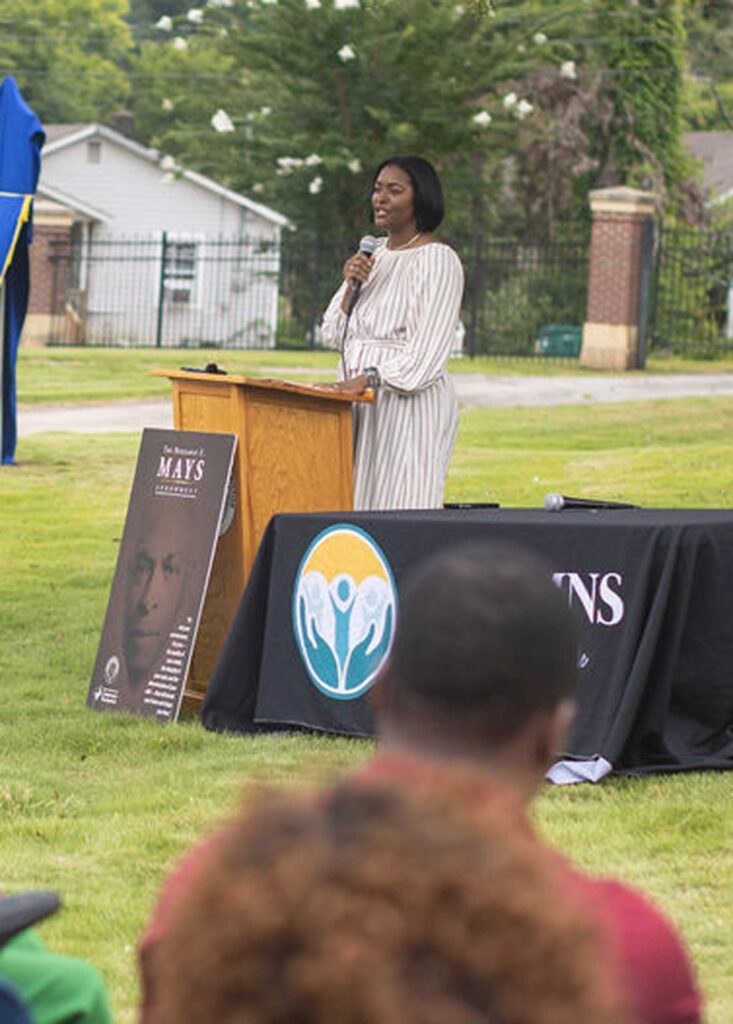
Jennifer Harris, a senior project manager at EJI, praised the Greenwood coalition for their "extraordinary work" in acknowledging the victims of racial injustice. In her remarks, she emphasized that these Community Remembrance Projects are not merely about erecting metal signs; they are about engaging in the "challenging work of truth-telling." According to Harris, the process of collecting soil from lynching sites and placing markers acts as a catalyst for community-wide healing, provided the community is willing to face the uncomfortable truths of its history.
Dr. Anika Thomas, CEO of the GLEAMNS Human Resources Commission, echoed these sentiments, noting that the act of preservation must be rooted in "honesty, integrity, and respect." The ceremony concluded with a Prayer of Dedication led by the Rev. Doug Kauffman and a Benediction by the Rev. Annette Edwards, representing a broad coalition of religious and civic leaders who view the project as both a moral and a historical imperative.
Analyzing the Broader Implications
The act of erecting these markers is a direct challenge to the "Lost Cause" narratives that have historically dominated the Southern landscape, where monuments were traditionally built to celebrate the architects of white supremacy. By replacing or supplementing these narratives with the truth about lynchings, communities like Greenwood are engaging in a process of re-centering their history around the lives of the marginalized rather than the perpetrators of violence.
However, the path to reconciliation remains complex. While the markers provide a public space for grief and acknowledgment, the systemic inequities that facilitated lynchings—such as the denial of legal counsel, biased jury selection, and economic disenfranchisement—have evolved into modern-day challenges within the American criminal justice system. The EJI’s work in Greenwood serves as a reminder that the history of lynching is not a distant, static event, but an ongoing concern for those who advocate for legal and social equality.
A Commitment to Continued Reckoning
The dedication of the markers for Robert Davis and Bennie Thompson is not the end of the project, but rather a continuation of a long-term commitment to transparency. As the Greenwood coalition continues its work, it plans to expand its educational initiatives, ensuring that the stories of the 17 documented victims in the county become part of the local collective consciousness.
The ceremony on August 1 served as a poignant reminder that while the state of South Carolina has long attempted to obscure the realities of its racial history, local coalitions are successfully reclaiming the narrative. Through the combination of historical research, youth education, and public memorialization, Greenwood County is setting a precedent for how American communities can reckon with their most painful chapters. As the markers stand in the soil of Greenwood, they serve as a permanent testimony to those who were denied justice, demanding that their stories be heard, remembered, and integrated into the broader American story.




