
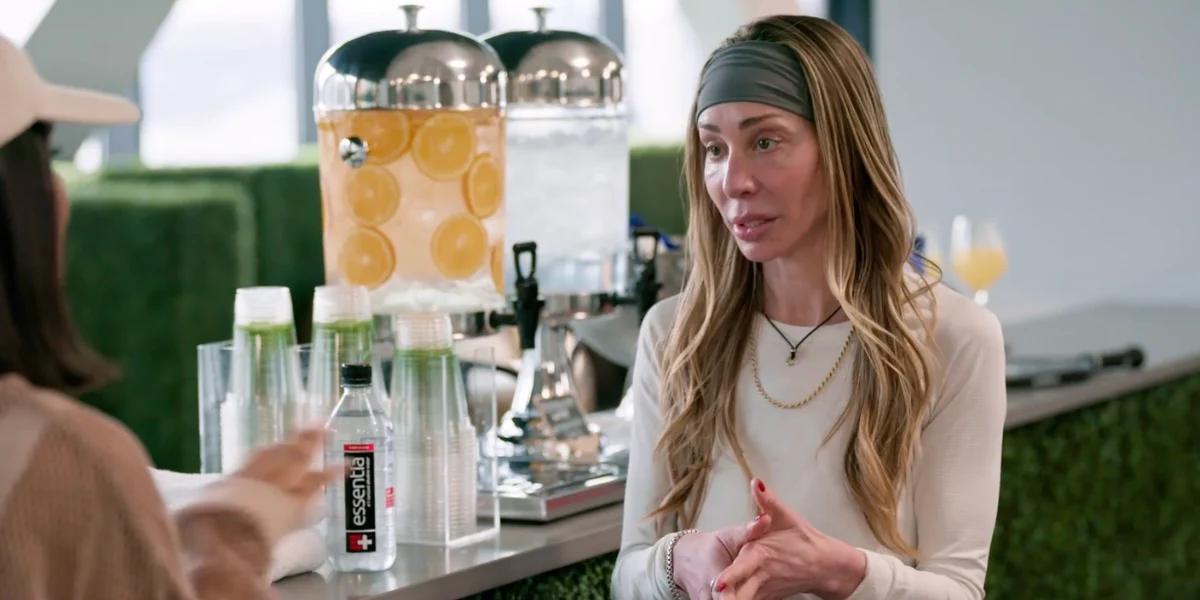
The sixteenth season of The Real Housewives of New York City (RHONY) has introduced a significant shift in the franchise’s approach to queer representation through the addition of cast member Hailey Glassman. Following a period of transition for the series—which saw the departure of previous cast members Jenna Lyons and Racquel Chevremont—the production team’s decision to feature Glassman marks a departure from the established archetype of the "monogamous, partnered queer woman" often seen in Bravo’s long-running reality portfolio. Glassman’s arrival coincides with a broader effort by the network to diversify the personal narratives featured on its platforms, though it has also reignited ongoing discourse regarding how heterosexual cast members interact with, and occasionally objectify, the queer experiences of their peers.
Contextual Background and Casting Dynamics
The reboot of The Real Housewives of New York City, which premiered in 2023, aimed to modernize the brand by highlighting a more diverse demographic of New York women. However, the loss of LGBTQ+ representation following the exit of Lyons and Chevremont created a void in the show’s social fabric. The introduction of Hailey Glassman, a figure already known to the public through her past high-profile relationships, was strategically timed. Glassman previously garnered significant media attention in the late 2000s, most notably for her involvement with Jon Gosselin, a period she has characterized as a formative experience in navigating intense public scrutiny.
Glassman’s current tenure on the series is distinguished by her unfiltered approach to discussing her personal life, specifically her sexual orientation and dating habits. Unlike her predecessors, who often maintained a level of privacy regarding their intimate lives, Glassman has integrated her dating experiences—including the complexities of her current, non-traditional marriage—directly into her storyline. She has described her union with her husband, Rubin, as a "lavender marriage," a term historically used to describe a marriage of convenience intended to conceal the sexual orientation of one or both parties. While her specific usage of the term has been subject to scrutiny by fans and media commentators, the arrangement allows Glassman the autonomy to pursue romantic and sexual relationships exclusively with women, a boundary she maintains with total transparency.
Chronology of Season 16 Developments
The arc of the current season has unfolded in several key beats, establishing Glassman as a central disruptor within the group dynamic:
- Introduction: Glassman’s entrance, characterized by a notable aesthetic of fur and rollerblades, immediately established her as a non-conformist presence.
- Social Integration: During the early episodes, Glassman began attending group events, including a Lunar New Year party hosted by castmate Jessel Taank. It was here that she introduced a female date, marking the first time in the current iteration of the show that a cast member openly navigated the nuances of contemporary sapphic dating drama.
- Conflict Resolution and Misunderstandings: By the third episode, tensions arose between Glassman and cast member Erin Lichy. The conflict stemmed from Glassman’s critical assessment of the social dynamic within the group, specifically her labeling of certain behaviors as "vanilla."
- The "Birding" Narrative: In recent episodes, Glassman’s dialogue has expanded to include topics ranging from mental health resources—specifically her interactions with her therapist—to niche subcultures such as queer birding, illustrating the eclectic nature of her personal life.
Data and Behavioral Analysis of Cast Interactions
The tension between Glassman and Lichy provides a case study in the friction that often occurs when queer experiences are introduced into a heteronormative reality television environment. When Lichy relayed disparaging remarks about the group’s personality traits, her rebuttal regarding Glassman’s sex life—specifically referencing a past incident in which Glassman sustained an injury during sexual activity—was interpreted by critics as an attempt to trivialize or sensationalize Glassman’s sexuality.
The sociological implications of these exchanges are significant. Research into media representation suggests that when LGBTQ+ individuals are introduced to reality television casts, they are often subjected to "voyeuristic questioning." In the context of RHONY, the immediate pivot to discussing the physical mechanics of queer sex acts suggests that some cast members view Glassman’s orientation through a lens of "kink" or "perversity," rather than as a normalized component of her identity. This reaction highlights a persistent gap in how diverse sexualities are integrated into mainstream ensemble reality formats.
Professional and Personal Background
Beyond her role as a reality personality, Glassman’s background includes a history as a competitive athlete. A former high school tennis captain who achieved collegiate-level status before being removed from her team due to a violation of substance policies, Glassman has demonstrated a competitive streak that has already translated to the screen. Her proficiency in pickleball, evidenced by her success against cast members in early episodes, suggests a potential for future athletic storylines. These elements of her history—her athletic background, her history with tabloid media, and her current, unapologetic public persona—provide a multifaceted portrait that diverges from the "Housewife" tropes of the past two decades.
Broader Implications for the Franchise
The inclusion of Glassman raises questions regarding the future of LGBTQ+ representation on Bravo. Historically, the network has favored "safer" representations of queer life, often focusing on long-term domestic partnerships. Glassman represents a pivot toward a more fluid, volatile, and honest portrayal of queer adulthood in Manhattan.
However, the success of this casting choice rests on the production’s ability to manage the group’s reactions. If the network continues to facilitate environments where queer cast members are used as foils or objects of amusement for the straight majority, the representation risks becoming exploitative rather than progressive. Conversely, if the series allows Glassman to navigate her own interpersonal conflicts without the constant lens of fetishization, it could signal a maturation in how reality television handles diverse sexual identities.
Media and Public Reception
While official statements from the production company, Bravo, remain limited to promotional materials, the reception from the core audience has been polarized. On one hand, there is an appreciation for the authenticity Glassman brings to the screen, particularly her willingness to speak openly about her life without the performative guardedness typical of the franchise. On the other hand, the friction within the cast underscores the reality that for some, the inclusion of a queer woman in a high-society setting remains a point of contention or confusion.
As the season progresses, the focus remains on whether Glassman can maintain her autonomy within a cast that has historically struggled to reconcile diverse lifestyles. The introduction of other periphery characters, such as Martha Stewart’s makeup artist, suggests that the series is leaning further into its "insider" New York social circle. Whether this environment will prove welcoming to Glassman’s brand of radical honesty remains the primary narrative hook for the remainder of the sixteenth season.
Conclusion: A Shift in the New York Social Order
The trajectory of The Real Housewives of New York City has always been tethered to the social shifting of Manhattan. By casting a queer woman who defies traditional domestic scripts, the show is engaging with a modern reality that exists outside the conventional marriage-and-family paradigm that defined the show’s first decade. While the conflicts between Glassman and her castmates reflect deep-seated cultural anxieties regarding sexuality, they also provide a platform for a necessary conversation about boundaries, respect, and the evolving nature of social acceptance in the public eye. As viewers continue to track her progress, the broader industry will be watching to see if this represents a sustainable model for inclusive, compelling, and honest reality television programming.




