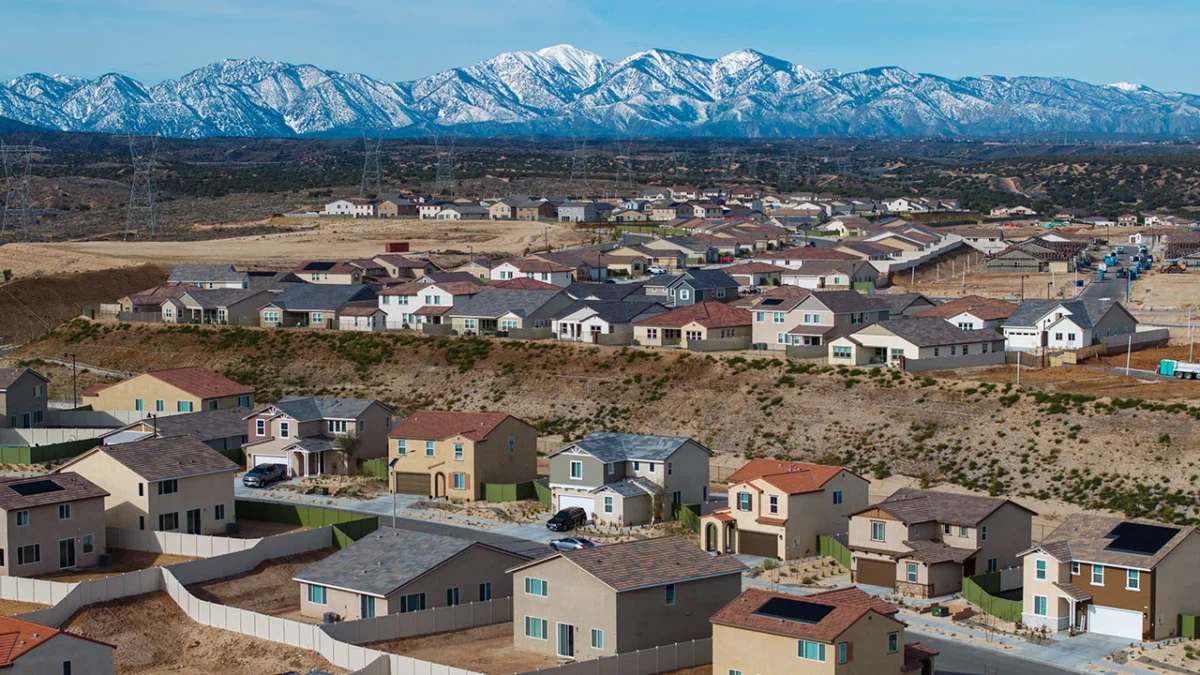
Americans have long expressed a modest preference for communities with bigger houses, even if that means schools, stores, and restaurants are farther away, over communities with smaller houses that are closer to those services. A recent Pew Research Center survey conducted from January 20-26, 2026, reveals that this preference remains strong, though it has slightly receded from its pandemic-era peak.
Shifting Preferences in Housing and Community Design
The survey found that 55% of U.S. adults would prefer to live in a community where houses are larger and farther apart, while 44% favor smaller houses that are closer together and thus closer to amenities. This marks a slight decrease from July 2021, when 60% of Americans favored more spread-out communities, a sentiment that surged during the initial phases of the COVID-19 pandemic. In 2019, prior to the pandemic, the preference for larger, more distant homes stood at 53%.
The data, collected from a diverse sample of 8,512 U.S. adults, highlights enduring patterns in American housing preferences. This trend underscores a persistent desire for personal space and larger homes, often associated with suburban and exurban lifestyles, even as urban living and its inherent walkability gain traction among certain demographics.
Demographic Divides in Community Preferences
The survey data reveals significant variations in these preferences across different demographic groups, underscoring the multifaceted nature of American community desires.
Race and Ethnicity
Preferences for community type show distinct patterns among racial and ethnic groups. White adults (59%) and Asian adults (69%) lean more strongly towards communities with larger, more spread-out homes. Notably, Asian adults demonstrate the highest preference for more walkable communities, with 69% favoring smaller houses closer to amenities. Black adults and Hispanic adults, in contrast, exhibit more balanced preferences, with Black adults leaning slightly towards smaller, closer homes (52%) and Hispanic adults being nearly evenly split (52% for larger, farther apart homes).
Age
Age plays a notable role in shaping these preferences. Younger adults, aged 18 to 29, are the only age cohort where a majority (54%) express a preference for more walkable communities with smaller houses. This preference shifts significantly with age. Adults aged 30 to 64 show a stronger inclination towards larger, more distant homes, with 57% and 62% respectively favoring this option. Older adults, 65 and over, also lean towards larger, more spread-out housing, with 52% expressing this preference.
Education Level
Educational attainment also correlates with community preferences. Adults with some college education or less are more likely to prefer spread-out communities (58%). This preference moderates slightly among those with a bachelor’s degree (52%) and is lowest among those with postgraduate degrees (47%). This suggests a potential link between higher education and an appreciation for the convenience and density offered by more walkable environments.
Political Affiliation and Ideology
Political leanings reveal a pronounced divergence in community preferences. Republicans and Republican-leaning independents overwhelmingly favor larger, more spread-out communities, with 71% expressing this desire. Conversely, a majority of Democrats and Democratic-leaning individuals (60%) prefer smaller homes closer to services.

This partisan divide extends to ideology. Conservative Republicans (74%) are the most likely to prefer spread-out communities. Moderate and liberal Republicans also show a strong preference for this lifestyle (67%). On the Democratic side, liberal Democrats (68%) are the most inclined towards walkable communities with smaller houses, followed by conservative and moderate Democrats (54%).
Community Type
The type of community where individuals currently reside also strongly influences their preferences. A significant majority of those living in rural areas (70%) prefer larger, more distant homes. Suburban residents are also inclined towards this lifestyle, with 55% favoring it. In contrast, a majority of urban dwellers (61%) express a preference for smaller houses within walking distance of amenities.
Historical Context and Evolution of Preferences
The data from the Pew Research Center traces a fascinating evolution of American housing preferences over the past decade. The preference for larger, more spread-out homes has been a consistent theme, reflecting a historical expansion of suburbs and exurbs driven by factors such as the post-World War II housing boom, the proliferation of automobiles, and a cultural idealization of single-family homeownership with ample yard space.
The surge in preference for spread-out communities observed in 2021 can be attributed to the COVID-19 pandemic. Lockdowns and the widespread adoption of remote work prompted many Americans to re-evaluate their living situations. The desire for more personal space, home offices, and a perceived escape from densely populated areas likely fueled this trend. The subsequent slight decrease in this preference suggests a gradual return to pre-pandemic patterns or a recalibration of priorities as daily life has resumed.
Analysis of Implications
The persistent preference for larger, more spread-out homes has significant implications for urban planning, infrastructure development, environmental sustainability, and economic policy.
- Urban Sprawl and Infrastructure: The demand for suburban and exurban housing continues to drive urban sprawl, placing pressure on undeveloped land and necessitating extensive infrastructure investments in roads, utilities, and services that often extend far beyond established urban centers. This can lead to increased traffic congestion, longer commute times, and higher per capita carbon emissions.
- Environmental Concerns: Larger homes and greater distances between residences and amenities contribute to increased energy consumption for heating, cooling, and transportation. This exacerbates environmental challenges, including air pollution and greenhouse gas emissions. The push for more sustainable and walkable communities is often at odds with these deeply ingrained preferences.
- Affordability and Access: While larger homes may be perceived as offering more value, the cost of land and construction in spread-out areas can still be a barrier. Furthermore, the increased reliance on personal vehicles can create financial burdens for lower-income households, particularly in areas with limited public transportation. The preference for walkability, often associated with smaller, denser communities, can offer greater affordability and accessibility for a wider range of residents.
- Social and Community Cohesion: Densely populated, walkable neighborhoods can foster greater social interaction and a stronger sense of community due to increased opportunities for casual encounters. Conversely, spread-out communities, while offering privacy, may lead to greater social isolation if residents have fewer opportunities for spontaneous interactions.
- Policy and Planning Challenges: Urban planners and policymakers face the challenge of balancing these competing preferences. While acknowledging the strong desire for space and larger homes, there is also a growing recognition of the need for more sustainable, affordable, and accessible communities. This may involve strategies to promote mixed-use development, enhance public transportation, incentivize infill development, and create more vibrant, walkable neighborhoods within existing suburban landscapes.
Methodology and Further Research
The findings are based on a robust survey conducted by the Pew Research Center, utilizing its American Trends Panel, a nationally representative online survey of U.S. adults. The survey included 8,512 participants and was conducted between January 20 and 26, 2026. The margin of error for the total sample is plus or minus 1.5 percentage points. Detailed survey questions, responses, and methodology are available through Pew Research Center’s online resources, offering transparency and allowing for further in-depth analysis by researchers and the public. This research builds upon previous surveys conducted by the Center, providing valuable longitudinal data on evolving American attitudes towards housing and community living.
The persistent, yet slightly moderating, preference for larger, more spread-out homes underscores a complex interplay of cultural ideals, economic factors, and evolving lifestyle choices. As demographic shifts and environmental concerns continue to shape the national conversation, understanding these preferences remains crucial for guiding future development and policy decisions in the United States.