
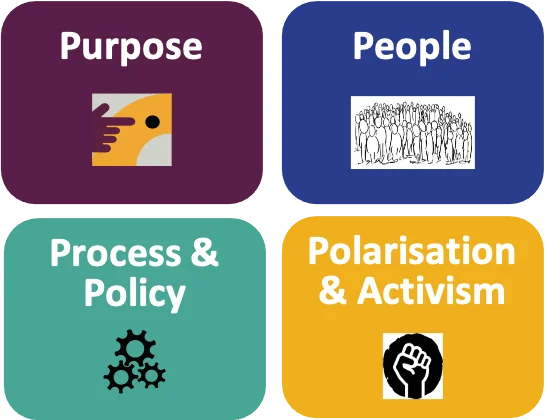
The past two years have served as the most significant, high-speed laboratory for organizational change in modern history. As the COVID-19 pandemic necessitated an abrupt transition to remote work and forced a global re-evaluation of personal priorities, the traditional social contract between employer and employee has undergone a profound, arguably irreversible, transformation. This era of systemic disruption—characterized by the so-called "Great Resignation," a surge in labor activism, and a widespread existential inquiry into the purpose of professional life—has left businesses scrambling to reconcile outdated operational models with the new, values-driven demands of a global workforce.
The Chronology of Disruption: From Lockdown to Reassessment
The timeline of this workplace evolution began in early 2020, when the sudden onset of the pandemic forced millions of office-based employees into remote environments. This initial phase, marked by the blurring of domestic and professional boundaries, quickly evolved from a temporary emergency measure into a long-term standard. By late 2020, as the initial shock subsided, a pattern emerged: employees began to report higher levels of burnout, particularly among caregivers.
By the summer of 2021, the trend reached a critical inflection point. Organizations began to demand a return to physical offices, which triggered widespread resistance. This friction point birthed the "Great Resignation," a period of historic turnover in labor markets across the United States, the United Kingdom, and Germany. Simultaneously, the summer of 2020, marked by the global expansion of the Black Lives Matter movement, served as a catalyst for employee demands regarding corporate social responsibility. Employees began to move beyond simply asking for better pay; they began to demand that their employers take public, actionable stances on systemic racism, sustainability, and political neutrality.
The Pivot Toward Purpose and Personal Alignment
Perhaps the most significant shift in the post-pandemic era is the prioritization of individual purpose over traditional corporate career ladders. According to data from McKinsey, nearly two-thirds of U.S. employees have been forced to reconsider their life’s purpose in the wake of the pandemic. This is not merely a theoretical shift; it is manifesting in tangible economic behavior. A 2021 Edelman Trust Barometer report indicated that 60% of employees are either leaving or actively seeking to leave their current roles in favor of organizations that better align with their personal values and lifestyle requirements.
This trend is notably cross-generational. In the United Kingdom, for instance, the rate of early retirement among workers over 50 has doubled since the start of the pandemic, suggesting a fundamental exit from the labor force by those who no longer view traditional work models as worth the personal sacrifice. In the United States, millennial workers are three times more likely than their older counterparts to re-evaluate their professional trajectory entirely. This indicates that the "hustle culture" of the previous decade is being replaced by a desire for holistic integration between work and life.
The Human Cost: Gender Disparity and Burnout
The pandemic era has also acted as a magnifying glass, exposing the fragility of existing DEI (Diversity, Equity, and Inclusion) policies. Women, particularly those with caregiving responsibilities, have borne the brunt of this transition. Globally, during the first year of the pandemic, women’s employment declined by approximately 54 million—a 4.2% drop, compared to a 3% decline for men.
The structural failure to support employees through this crisis has led to a realization that the "old way" of working was never truly designed for inclusivity. The "dual burden" of managing professional output while overseeing domestic life has become an unavoidable reality for millions. As a result, businesses are now facing a retention crisis. The implication is clear: to remain competitive, companies must pivot toward models that prioritize flexibility and psychological safety, or risk losing a significant portion of their diverse talent pool to burnout.
The Policy Crisis: Location and Autonomy
A primary point of contention in current boardroom discussions is the implementation of work-location policies. While some executives advocate for a return to full-time office presence, the data suggests that such a move may be fundamentally out of step with the workforce. Research from the Future Forum indicates that 66% of executives are currently drafting post-pandemic workforce policies with little to no input from their staff.
This disconnect between leadership and the workforce is creating a "transparency gap." While 66% of executives believe their communication regarding return-to-office policies is "very transparent," only 42% of employees agree. This misalignment is a major driver of turnover. The demand for flexible work is particularly high among people of color, working parents, and women, all of whom have reported improved employee experience scores while working remotely. By failing to consult these groups, organizations risk reverting to exclusionary policies that prioritize the preferences of senior leadership over the needs of the broader workforce.
Polarisation, Activism, and the New Expectations of Leadership
The societal polarization observed in the public sphere has inevitably bled into the workplace. Recent studies show that in 17 countries, 60% of people feel their society is more divided than it was pre-pandemic. This climate has fostered an environment where workers feel more emboldened to hold their employers accountable.
Modern employees no longer accept "silence" from the C-suite on sociopolitical issues. The data is striking: 76% of employees now expect their leaders to take a stand on key social issues, and 60% feel empowered to act as change-makers within their own organizations. This is manifesting in a variety of ways, from the resurgence of interest in labor unions to the rise of "rage quitting"—a phenomenon where employees walk away from toxic environments on the spot.
The implication for organizational leadership is profound. The era of the "silent executive" has ended. Trust, which has been steadily eroding in civic institutions, is now being scrutinized within the corporate sector. When employees perceive a gap between an organization’s stated values and its actions, the result is often immediate. Thirty-three percent of workers reported leaving a job specifically because their employer failed to speak out on a societal or political issue that the employee felt was a moral obligation.
Implications for the Future of DEI
As organizations attempt to navigate these shifting tides, the focus of DEI must transition from performative gestures to structural, policy-driven change. This requires a move away from the traditional, top-down implementation of diversity initiatives toward an inclusive approach that invites employees to co-create the future of the workplace.
The "inclusive recovery" must account for the 20 million fewer people in the workforce across OECD countries since the pandemic began. Addressing this requires more than just hiring initiatives; it requires a redesign of the work itself to ensure that it is sustainable, fair, and conducive to the well-being of all demographics.
Conclusion: The Mandate for Change
The pandemic has provided a definitive, if painful, stress test for the modern organization. The evidence suggests that the workplace will not return to its 2019 state. Instead, we are entering a phase where talent retention is directly tied to the ability of an organization to offer purpose, flexibility, and a genuine commitment to social values.
For business leaders, the path forward is clear: the intention-action gap—where leaders acknowledge the importance of purpose but fail to integrate it into decision-making—must be bridged. By leveraging data, facilitating inclusive policy design, and embracing the necessity of agile experimentation, organizations have a unique opportunity to reset their internal culture. The companies that will thrive in this new era are those that view the current period of instability not as a hurdle to be cleared, but as a necessary transformation toward a more equitable and human-centric model of labor. The mandate is no longer just to work; it is to build workplaces that are, at their core, worth working for.




