Family and friends across the United States provide an immense, largely unpaid, volume of care for adults with disabilities and complex medical conditions. This vital support network, often overlooked in economic analyses, is now quantified as exceeding all Medicaid spending, highlighting its profound and often unacknowledged economic and societal significance. A recent comprehensive report reveals that the monetary value of this informal caregiving workforce surpasses an astonishing $1 trillion annually.
Unveiling the Scale of Unpaid Care
The report, released by AARP, estimates that approximately 59 million Americans function as family caregivers. These individuals dedicate an average of 49.5 billion hours of their time each year to providing essential support. This care encompasses a wide spectrum of needs, ranging from fundamental daily living activities such as dressing, bathing, and toileting, to more intricate medical and nursing tasks, as well as the crucial coordination of healthcare and social services. The researchers meticulously assessed the monetary worth of this labor by applying current market rates for professional care services. Based on an average hourly earning of $20.41 for caregivers, the cumulative value of their contributions amounts to an estimated $1.01 trillion.
This valuation is not merely an academic exercise; it carries significant implications for public policy and societal understanding. The report underscores that this $1.01 trillion figure outpaces the total expenditure by all levels of government—federal, state, and local—on Medicaid in 2024. Furthermore, it exceeds the aggregate amount invested in healthcare by private businesses during the same period. This stark comparison vividly illustrates the indispensable role of family caregivers in sustaining the nation’s long-term care infrastructure, a system upon which millions of Americans depend daily.
A Growing Burden and Its Human Cost
Dr. Myechia Minter-Jordan, CEO of AARP, articulated the critical message conveyed by these findings: "This new report confirms what we have long known. Family caregivers are holding up a system that Americans nationwide rely on every day, but at a cost." She emphasized the multifaceted toll this commitment exacts on individuals. "Behind these numbers are people paying an emotional toll and a financial one. Caregivers are stretching their finances, sacrificing their own well-being, and too often, they are doing it alone," Dr. Minter-Jordan stated, highlighting the personal sacrifices inherent in this role.
The AARP report further elaborates on the composition of long-term services and supports (LTSS) in the United States, noting that the overwhelming majority are delivered by unpaid family members. This reliance on informal care has been a cornerstone of the U.S. healthcare system for decades, often operating in the background of formal medical and social support structures. The report’s findings also chart a significant historical trend: the estimated value of family caregiving has nearly tripled since AARP first began tracking this data in 2006. This substantial increase is largely attributed to the rising wages in the professional caregiving sector, which in turn elevates the benchmark for valuing informal care.
A Timeline of Evolving Recognition
The journey towards acknowledging the economic weight of family caregiving has been a gradual one. As far back as the early 2000s, researchers and advocacy groups began to recognize the significant, yet uncompensated, labor performed by family members. Initial studies, often conducted by academic institutions and non-profit organizations, attempted to quantify this contribution, but the methodologies and scope varied.
By the mid-2000s, organizations like AARP recognized the need for a more standardized and comprehensive approach. The initiation of their "Valuing the Invaluable" series of reports, beginning in 2006, marked a pivotal moment. This series aimed to provide consistent data on the economic contribution of family caregivers, using a defined methodology to calculate the monetary value of their services.
The 2006 report estimated the value of family caregiving at approximately $370 billion annually. This figure was already substantial, but it was considered a fraction of what it is today. Over the subsequent decades, several factors contributed to the dramatic increase in the reported value:
- Increased Life Expectancy and Aging Population: As the baby boomer generation ages, the demand for long-term care services has escalated, placing a greater burden on family caregivers.
- Advances in Medical Care: Improved medical treatments allow individuals with complex conditions to live longer, often requiring ongoing, intensive care from family members.
- Rising Cost of Professional Care: The cost of in-home care services, nursing homes, and assisted living facilities has continued to climb, making the unpaid labor of family caregivers even more economically critical.
- Refined Valuation Methodologies: AARP and other researchers have refined their methods for calculating the economic value, incorporating more accurate market wage data and a broader scope of caregiving activities.
The 2026 report, building on this historical data, shows a dramatic escalation from the initial estimates. The nearly threefold increase in value since 2006 underscores not only the growing demand for care but also the increasing cost of professional alternatives, thereby magnifying the economic significance of unpaid family labor.
Broader Implications and Policy Recommendations
The implications of this trillion-dollar valuation extend far beyond mere economic accounting. It serves as a powerful argument for increased support and recognition for family caregivers. AARP is actively advocating for several key policy changes to address the challenges faced by this demographic:
- National Paid Family and Medical Leave Policy: The report highlights that many caregivers are forced to reduce their work hours or leave their jobs entirely to provide care, leading to financial instability. A comprehensive paid leave policy would allow individuals to care for loved ones without jeopardizing their own economic security.
- Expanded Respite Services: Caregiver burnout is a significant concern. Increased availability and accessibility of respite care—temporary relief for caregivers—is crucial for maintaining their physical and emotional well-being.
- Tax Credits and Financial Assistance: Providing tax credits or direct financial assistance can help offset the significant out-of-pocket expenses that caregivers often incur for medical supplies, equipment, and specialized services.
- Improved Access to Training and Resources: Equipping caregivers with the knowledge and skills to manage complex medical needs and navigate the healthcare system can improve the quality of care provided and reduce caregiver stress.
Dr. Minter-Jordan’s concluding remarks in the AARP report serve as a stark call to action: "Given that most Americans will either be a caregiver or need one at some point in their lives, we need to do better. Today’s report should be a wake-up call." This sentiment underscores the universality of the caregiving experience and the urgent need for societal and governmental recognition of its value and the associated challenges.
A Look at the Numbers: Supporting Data and Context
To further contextualize the $1.01 trillion figure, examining related economic indicators provides valuable perspective. In 2024, total Medicaid spending in the United States was approximately $668 billion. This represents the federal and state governments’ combined expenditure on the program, which provides health coverage to millions of low-income individuals, including many with disabilities and chronic health conditions. The fact that the unpaid labor of family caregivers exceeds this vast sum highlights a fundamental reliance on informal support that significantly reduces direct government and private sector healthcare costs.
Furthermore, employer health spending in the U.S., a significant component of the private sector’s contribution to healthcare, also falls short of the value of family caregiving. While precise figures for 2024 employer health spending are still being compiled, projections for 2023 indicated a figure in the range of $900 billion to $1 trillion. This suggests that the economic contribution of family caregivers is on par with, or even surpasses, the substantial investments made by businesses in employee health benefits.
The average hourly wage of $20.41 used in the AARP report is derived from data on wages for home health aides, personal care aides, and similar professions. These are often minimum wage or slightly above, reflecting the current market value for direct care services. The calculation assumes that if these services were to be purchased commercially, this would be the approximate cost.
The Unseen Workforce: Demographics and Diversity
The report’s findings also shed light on the demographics of this vast caregiving population. While the majority of caregivers are women, the number of men taking on caregiving roles has steadily increased. Caregivers span all age groups, though many are in their prime working years, leading to the difficult choices between employment and care responsibilities. Racial and ethnic minority groups are disproportionately represented among family caregivers, often facing additional systemic barriers and lacking access to adequate support services.
The individuals receiving care are equally diverse, ranging from young children with complex medical needs and developmental disabilities to older adults experiencing age-related conditions and chronic illnesses. The report’s focus on adults with disabilities and complex medical conditions encompasses a wide array of conditions, including but not limited to:
- Developmental Disabilities: Autism spectrum disorder, intellectual disabilities, Down syndrome.
- Chronic Illnesses: Heart disease, diabetes, cancer, Alzheimer’s disease, Parkinson’s disease.
- Physical Disabilities: Spinal cord injuries, multiple sclerosis, cerebral palsy.
- Mental Health Conditions: Severe and persistent mental illness requiring ongoing support.
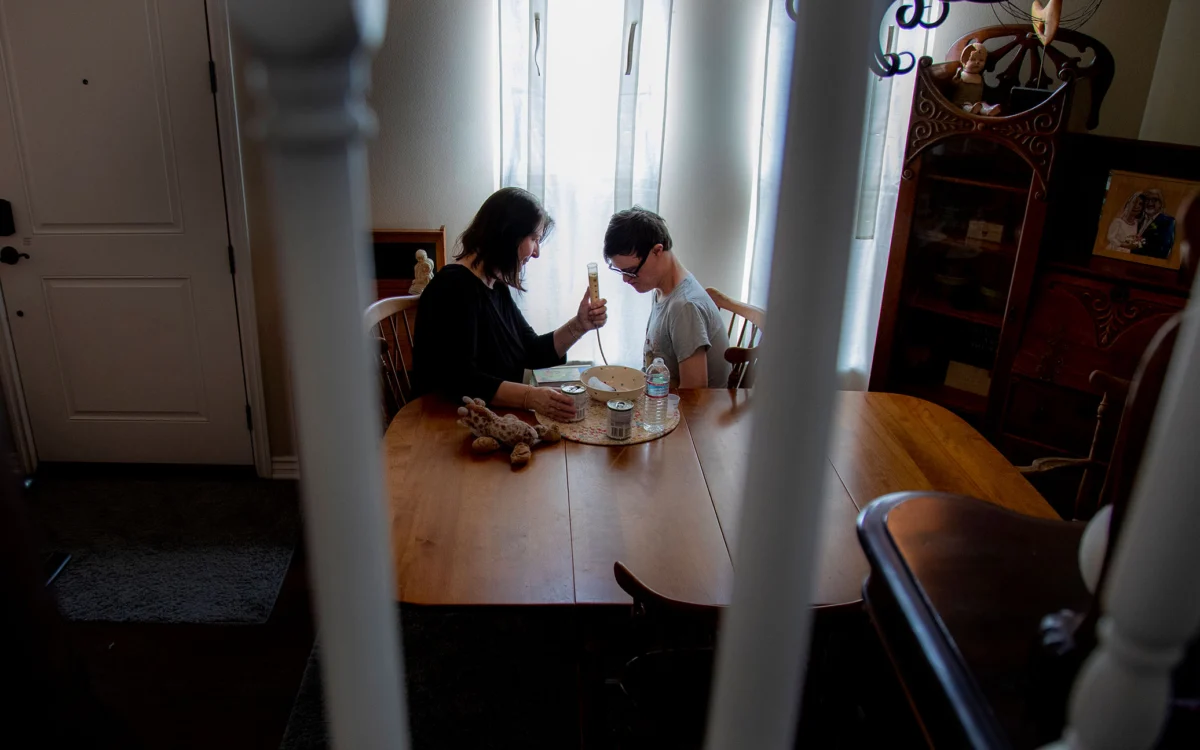
The Emily Brooke Holth case, as depicted in the accompanying image, serves as a poignant illustration of this reality. Emily’s adult son, Ry Brooke, who has autism and is immunocompromised, relies on his mother for feeding through a feeding tube. His twin sister, Kaia, also shares these health vulnerabilities. This scenario encapsulates the intensive, hands-on medical and personal care that many family caregivers provide daily, often in addition to managing household responsibilities and, for many, maintaining employment.
A Call for Systemic Change
The AARP report’s findings are not merely statistical; they represent a profound societal challenge and an urgent call for policy reform. The current system of long-term care in the United States is heavily reliant on an unpaid, often invisible, workforce. As the population ages and the prevalence of chronic conditions continues to rise, this reliance will only intensify.
The economic value of family caregiving, now quantified at over $1 trillion annually, is a powerful testament to the dedication and sacrifice of millions of Americans. Recognizing this value is the first step towards building a more sustainable and equitable care system that supports both those who provide care and those who receive it. Without a concerted effort to address the financial, emotional, and practical burdens faced by family caregivers, the long-term care infrastructure of the United States risks becoming unsustainable, leaving vulnerable individuals without the essential support they need and deserve. The "wake-up call" issued by AARP is clear: the time for meaningful action is now.