New scientific research published this month in the peer-reviewed medical journal Pediatrics indicates that equine-assisted activities offer substantial clinical benefits for youth diagnosed with autism spectrum disorder (ASD) and co-occurring psychiatric conditions. The comprehensive study, which followed 236 children between the ages of 6 and 16, reveals that participating in either therapeutic horseback riding or structured barn-based activities leads to notable decreases in irritability, hyperactivity, and social withdrawal, while simultaneously enhancing emotional regulation.
While both interactive riding lessons and non-riding barn activities yielded positive psychological and behavioral outcomes, the data underscores a distinct advantage to actually mounting and riding horses. Children assigned to the active riding groups experienced the most pronounced reductions in hyperactive behaviors, pointing to a unique therapeutic mechanism inherent to the physical act of horseback riding. As families and clinicians increasingly seek integrative, non-pharmacological interventions to manage complex behavioral challenges associated with autism, these findings provide robust empirical support for incorporating equine programs into comprehensive treatment plans.
Study Methodology and Structure
Led by Robin Gabriels, a professor of psychiatry at the University of Colorado School of Medicine, the research team designed a rigorous multi-tier trial to evaluate the efficacy of equine therapy. The study enrolled 236 participants, all of whom carried a formal diagnosis of autism spectrum disorder alongside other co-occurring psychiatric conditions, such as severe anxiety, attention-deficit/hyperactivity disorder (ADHD), or disruptive mood dysregulation.
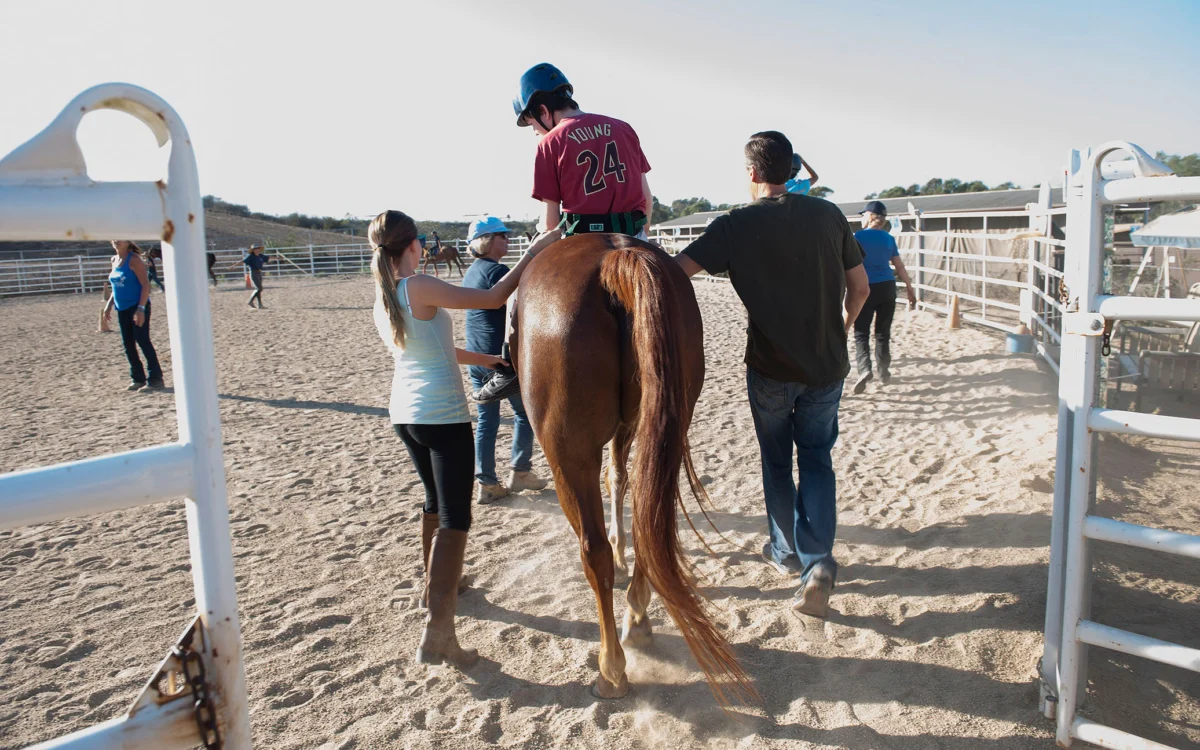
The participants were randomly assigned to one of several experimental conditions. One group participated in therapeutic horseback riding once a week for a continuous 10-week period. These sessions involved mounting, balancing, guiding the animal through obstacle courses, and learning specialized equestrian commands under the supervision of certified instructors and licensed mental health professionals.
A second cohort participated in a structured barn activity group. These children engaged in grooming, feeding, and observing horses from the ground, but they did not ride them. This specific control mechanism allowed researchers to isolate whether the therapeutic benefits stemmed from the general sensory environment of the barn and proximity to large animals, or from the dynamic, rhythmic physical experience of riding. A third cohort served as a delayed-treatment control group, undergoing a waiting period before receiving five weeks of barn activities followed by five weeks of direct riding instruction.
Across all groups, standardized behavioral assessments were administered by clinicians who were blinded to the children’s group assignments. Caregivers also completed detailed observational questionnaires regarding their children’s baseline behaviors and subsequent changes over the course of the 10-week study window.
Key Findings: Differentiating Riding from Ground Activities
When the trial data was analyzed, the researchers documented statistically significant improvements across multiple behavioral domains for both the riding and the barn activity groups. Most notably, participants in both tracks demonstrated marked drops in caregiver-reported irritability and hyperactivity compared to baseline measurements. Furthermore, children showed enhanced emotional regulation, improved attentiveness, and better peer-to-peer social interactions.
However, a critical distinction emerged when researchers analyzed the specific degree of behavioral change between the active riders and those restricted to ground-level barn interactions. While barn activities successfully reduced general anxiety and irritability, children in the therapeutic horseback riding program achieved the greatest overall reduction in hyperactive behaviors.
"There is something about riding a horse that is particularly helpful for kids with hyperactivity," Dr. Gabriels noted in discussing the outcomes. The vestibular and proprioceptive stimulation provided by the horse’s rhythmic, three-dimensional gait appears to offer a unique neurological input. As the horse moves, it forces the rider’s central nervous system to constantly process spatial awareness, balance, and core stabilization adjustments in real-time. This continuous physical feedback loop requires deep focus and physical engagement, effectively channeling excess nervous energy into purposeful, coordinated movement.
The study also highlighted improvements in social communication. Autism is frequently characterized by difficulties in understanding social cues, initiating conversations, and maintaining reciprocal relationships. Interacting with a large, responsive animal requires children to modulate their tone of voice, body language, and emotional state. If a child becomes overly loud or aggressive, the horse may react defensively or pull away; conversely, calm and deliberate behavior fosters a cooperative bond. This immediate, non-judgmental biofeedback loop creates a powerful learning environment that bridges the gap between clinical therapy rooms and real-world social engagement.
Background and Context of Equine-Assisted Therapy
Equine-assisted activities and therapies (EAAT) have grown significantly in popularity over the past three decades, transitioning from an alternative fringe practice to a widely recognized complementary intervention within pediatric medicine. Organizations such as the Professional Association of Therapeutic Horsemanship International (PATH Intl.) have established standardized training, safety protocols, and certification programs for instructors across North America.
Historically, therapeutic riding was developed primarily to assist individuals with physical and motor disabilities, such as cerebral palsy and muscular dystrophy, by utilizing the horse’s natural movement to improve muscle tone, posture, and coordination. Over time, educators and clinicians observed parallel psychological benefits among participants with neurodevelopmental differences, prompting formal academic study into its effects on autism.
Despite the growing anecdotal support and numerous small-scale pilot studies conducted throughout the 2000s and 2010s, large-scale, randomized controlled trials—such as the one led by Dr. Gabriels and published in Pediatrics—have remained relatively rare. The inclusion of 236 participants makes this study one of the most statistically powerful evaluations of equine therapy for autism conducted to date, providing the medical community with the rigorous data necessary to recommend these programs with greater clinical confidence.
Clinical Implications and Expert Perspectives
The publication of these findings comes at a time when families of children with autism face significant hurdles in accessing timely, effective behavioral health services. Traditional clinical environments—often characterized by sterile office settings, fluorescent lighting, and sedentary talk-therapy sessions—can sometimes induce anxiety or fail to engage children who struggle with severe hyperactivity.
Experts emphasize that therapeutic riding is not a standalone cure for autism, nor is it an appropriate intervention for every child. Factors such as severe animal phobias, uncontrolled seizure disorders, certain connective tissue conditions, or extreme behavioral volatility that poses safety risks to handlers can preclude participation. However, the study’s authors argue that equine programs serve as an invaluable supplement to existing evidence-based interventions, such as applied behavior analysis (ABA), speech therapy, and occupational therapy.
"Working with horses gives these kids a chance to do something active, social, and engaging," Dr. Gabriels explained. "For some children, that may be a particularly effective way to help them develop skills that can be difficult to teach in a traditional clinical environment."
Beyond the immediate behavioral improvements observed during the 10-week study period, researchers are increasingly interested in the long-term developmental trajectory of children who participate in sustained equine programs. Anecdotal reports from parents often cite lasting gains in self-esteem, confidence, and emotional resilience. When a child learns to independently direct an animal weighing upwards of 1,000 pounds through disciplined communication and physical coordination, it fosters a profound sense of agency and personal accomplishment.
Economic and Accessibility Challenges
Despite the compelling clinical data supporting equine-assisted therapy, significant practical barriers remain for families seeking to enroll their children. Therapeutic riding centers require specialized infrastructure, including accessible mounting ramps, sheltered arenas for inclement weather, well-trained and temperament-tested horses, and certified personnel who possess expertise in both equine management and special education or healthcare.
Consequently, lesson fees can be substantial, often ranging from $50 to over $100 per session. Unlike traditional physical or occupational therapy prescribed by a physician, therapeutic horseback riding is rarely covered comprehensively by private health insurance providers or state Medicaid programs. Many non-profit riding centers rely heavily on philanthropic donations, grants, and volunteer labor to subsidize the cost of lessons for low- and middle-income families, leading to long waiting lists.
Disability advocates and pediatric specialists hope that large-scale, randomized studies published in prestigious journals like Pediatrics will help shift insurance reimbursement policies over time. As the medical evidence base expands, institutional recognition of equine therapy as a legitimate, medically beneficial intervention could pave the way for broader financial coverage, making these programs accessible to a wider demographic of children who stand to benefit.
Broader Impact on Pediatric Healthcare and Future Research
The October 2026 publication marks a notable milestone in integrative pediatric medicine, reinforcing a growing trend toward multi-modal treatment strategies for neurodevelopmental disorders. As healthcare systems increasingly prioritize patient-centered outcomes, holistic interventions that combine physical activity, sensory integration, and social engagement are gaining traction among clinical practitioners.
Future research directions identified by the study team include examining the long-term durability of the behavioral gains observed after the cessation of a formal riding program. Researchers also aim to identify specific phenotypic profiles among children with autism to determine precisely which subgroups—such as those with hyperactive-impulsive presentations versus those with primarily social-withdrawal profiles—respond most favorably to equine activities.
For families navigating the complex landscape of developmental disabilities, the new findings offer both practical guidance and renewed optimism. By stepping out of the traditional clinical office and into the barnyard corral, children with autism are finding new pathways to emotional balance, self-regulation, and meaningful social connection.