The landscape of contemporary literature is witnessing a significant shift as queer Palestinian voices move from the periphery of radical zines and independent anthologies into the mainstream publishing industry. This emergence marks a critical juncture in both Middle Eastern studies and LGBTQ+ representation, challenging long-standing narratives regarding identity, displacement, and resistance. For decades, queer Palestinians have navigated a complex intersection of marginalization, facing Islamophobia and anti-Arab sentiment within Western LGBTQ+ circles while simultaneously contending with the geopolitical pressures of the Israeli-Palestinian conflict. The publication of seminal works, including the first queer Palestinian anthology to be released in the United States, signals a maturing genre that refuses to decouple sexual identity from the broader struggle for national liberation.
Historical Context and the Rise of Queer Palestinian Narratives
The trajectory of Palestinian literature has historically been defined by the Nakba of 1948 and the subsequent decades of occupation. Early resistance literature, pioneered by figures such as Ghassan Kanafani and Mahmoud Darwish, focused primarily on national identity, land, and the collective trauma of exile. However, the late 20th and early 21st centuries have seen a diversification of these narratives. The emergence of queer Palestinian literature represents a refusal to compartmentalize the "queer" and "Palestinian" aspects of identity, a phenomenon often described by scholars as a response to "pinkwashing."
Pinkwashing is a term used by critics and human rights activists to describe the perceived use of LGBTQ+ rights by states or organizations to deflect attention from human rights violations or to project a progressive image while maintaining oppressive policies. For queer Palestinians, this geopolitical tactic has often resulted in a double erasure: being used as a rhetorical tool by Western interests while being marginalized within their own liberation movements. The current literary movement seeks to reclaim this narrative space, asserting that queer liberation and Palestinian liberation are inextricably linked.
Chronology of Literary Development
The development of this genre can be traced through several key phases:
- The Underground Phase (1990s–early 2000s): Queer Palestinian voices primarily appeared in underground zines, private journals, and small-circulation radical anthologies. Organizations like al-Qaws for Sexual & Gender Diversity in Palestinian Society began creating spaces for these narratives to be nurtured.
- The Academic and Diaspora Shift (2010s): Scholars and writers in the diaspora began publishing essays and short stories that integrated queer theory with post-colonial Palestinian studies. This period saw the rise of writers like Randa Jarrar, who began gaining traction in the American literary scene.
- The Institutional Emergence (2020–Present): Major publishing houses and prestigious literary journals have begun to recognize the commercial and critical viability of queer Palestinian voices. This has culminated in the release of full-length memoirs, poetry collections, and the landmark anthology Homosexual Intifada.
Analysis of Seven Essential Works
The following seven books represent the breadth and depth of the current queer Palestinian literary canon, spanning genres from graphic novels to academic memoirs.
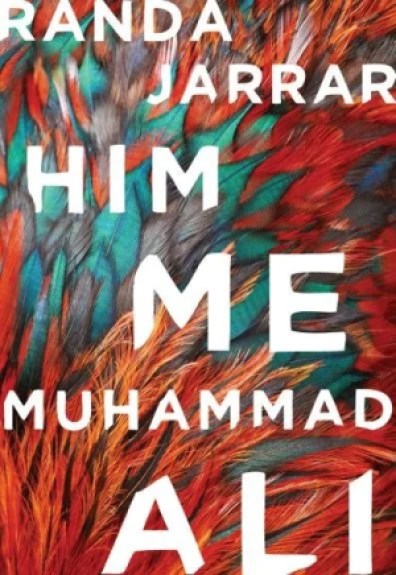
1. Him, Me, Muhammad Ali by Randa Jarrar
Randa Jarrar’s short story collection is widely regarded as a foundational text in contemporary Arab-American literature. Jarrar utilizes a blend of realism and surrealism to navigate the lives of protagonists who are often displaced or in states of transition. Her work is notable for its refusal to sanitize the Arab experience for a Western gaze, instead offering raw, often humorous explorations of sexuality, domesticity, and cultural friction. The collection has been praised for its stylistic versatility, moving seamlessly from the literal to the metaphorical.
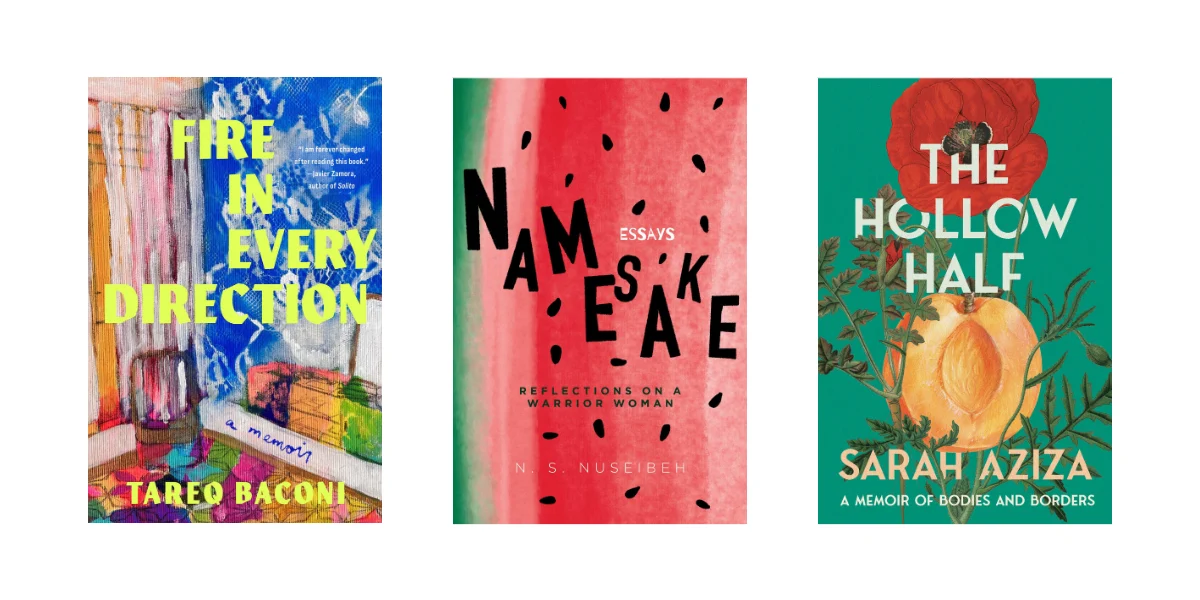
2. Fire in Every Direction by Tareq Baconi
While Tareq Baconi is well-known for his analytical work on Middle Eastern geopolitics—specifically his scholarship on Hamas—Fire in Every Direction serves as a personal departure. This memoir functions as a multi-layered narrative: a familial history of the Nakba, a queer coming-of-age story, and a meditation on the intellectual’s role in a globalized world. Baconi’s writing is characterized by its "searing" honesty regarding the abject realities of life under occupation and the complexities of the closet within both Palestinian and Western societies.
3. Namesake by N.S. Nuseibeh
N.S. Nuseibeh, a British-Palestinian academic, utilizes the essay format to explore the intersections of history, myth, and modern identity. The memoir centers on her ancestor, Nusayba bint Ka’ab al Khazrajia, a 7th-century female warrior. Through this lens, Nuseibeh examines contemporary Arab feminism, gender roles, and the psychological impact of interminable conflict. The work is noted for its intellectual rigor and its ability to connect medieval Islamic history with 21st-century queer and feminist discourse.

4. The Hollow Half by Sarah Aziza
Sarah Aziza’s memoir is distinguished by its non-linear structure and its deep engagement with the Arabic language. Organized by thematic Arabic titles rather than chronological time, the book addresses displacement, recovery from eating disorders, and the concept of "private Nakbas." Aziza’s work is heavily footnoted, creating a dialogue between Palestinian lived experience and broader lineages of Black feminist thought, disability justice, and queer theory. Critics have noted that Aziza effectively "translates" the Palestinian experience back into an Arabic sensibility while writing in English.
5. Mis(h)adra by Iasmin Omar Ata
Iasmin Omar Ata, a trans Palestinian comic artist also known as Delta, provides a unique contribution to the genre through the medium of the graphic novel. Mis(h)adra explores the life of an Arab-American man living with epilepsy. The work is a visual exploration of disability, navigating the U.S. medical system, and the intersection of chronic illness with ethnic identity. Ata’s use of light and color is frequently cited as a breakthrough in how physical and emotional pain is represented in sequential art.
6. Terror Counter by Fargo Nissim Tbakhi
Fargo Nissim Tbakhi’s poetry collection is an uncompromising look at the distance between the spectator and the subject of state violence. Tbakhi’s work is deeply rooted in the tradition of Palestinian resistance poetry but updates it for a queer, contemporary audience. The poems often deconstruct the "American poem" and its complicity in global systems of power. The collection is praised for its "apocalyptic clarity" and its insistence on the duty of the artist to "uncraft" a world built on colonial foundations.

7. Homosexual Intifada: A Queer Palestinian Anthology
Edited by George Abraham and Hannah Moushabeck, this anthology is the first of its kind to be published in the United States. Featuring nineteen contributors, the volume includes speculative fiction, photography, and interviews—most notably with trans women surviving the current humanitarian crisis in Gaza. The collection serves as a definitive statement on the diversity of the queer Palestinian experience, offering a decolonial framework for understanding identity.
Supporting Data and Industry Trends
The rise of these voices coincides with broader trends in the global book market. According to data from the Arab American Book Award and organizations like Mizna, there has been a 40% increase in the publication of Arab-authored titles in the U.S. over the last decade. Furthermore, the "Translate Aloud" initiative and various PEN America grants have prioritized voices from the SWANA (Southwest Asia and North Africa) region, recognizing a growing reader demand for authentic, intersectional narratives.
In the academic sector, the field of "Queer Arab Studies" has seen a surge in enrollment and publication. University presses, including Duke and Stanford, have released several monographs in the last five years that provide the theoretical scaffolding for the literature mentioned above. This academic validation has helped propel queer Palestinian authors into the syllabi of literature and sociology departments worldwide.

Broader Impact and Implications
The proliferation of queer Palestinian literature has significant implications for global human rights discourse and LGBTQ+ advocacy. By centering these voices, the movement challenges the "clash of civilizations" narrative that often posits Western secularism as the sole protector of queer individuals. Instead, these authors suggest that liberation must be holistic—addressing both the freedom of the body and the freedom of the land.
Furthermore, the visibility of Palestinian symbols, such as the keffiyeh and the flag, within Pride events globally suggests a growing solidarity between LGBTQ+ movements and Palestinian liberation causes. This shift is mirrored in the literary world, where the genre of "Queer Palestinian Literature" is no longer seen as a niche sub-category but as a vital component of the modern literary canon.
As these works continue to reach wider audiences, they provide a necessary counter-narrative to the dehumanization often found in political reporting. Through memoir, poetry, and fiction, queer Palestinian writers are documenting a history of survival and joy that persists despite systemic erasure. The success of these titles suggests that the future of LGBTQ+ literature will be increasingly defined by its ability to hold multiple, often conflicting, identities with nuance and courage.