Virginia Governor Abigail Spanberger recently signed into law a landmark bill, HB167, effectively terminating state tax exemptions for several organizations with historical ties to the Confederacy. This pivotal legislation reverses a deeply entrenched segregation-era provision within Virginia’s tax code that has financially benefited groups such as the United Daughters of the Confederacy (UDC) and other pro-Confederate entities since the 1950s. The move represents a significant symbolic and practical step in the Commonwealth’s ongoing efforts to reckon with its complex racial history and dismantle vestiges of the Jim Crow era.
A Legacy of State-Sanctioned Support for Confederate Ideology
For over seven decades, Virginia’s state government provided direct and indirect financial support to organizations dedicated to memorializing the Confederacy. This support was not merely passive but actively facilitated the proliferation of the "Lost Cause" narrative, which sought to romanticize the Confederacy, minimize the role of slavery in the Civil War, and justify the racial hierarchy that defined the American South for generations. The tax exemptions were a tangible manifestation of Virginia’s "Massive Resistance" strategy, a concerted effort by state leaders in the mid-20th century to defy federal mandates for desegregation and maintain white supremacy.
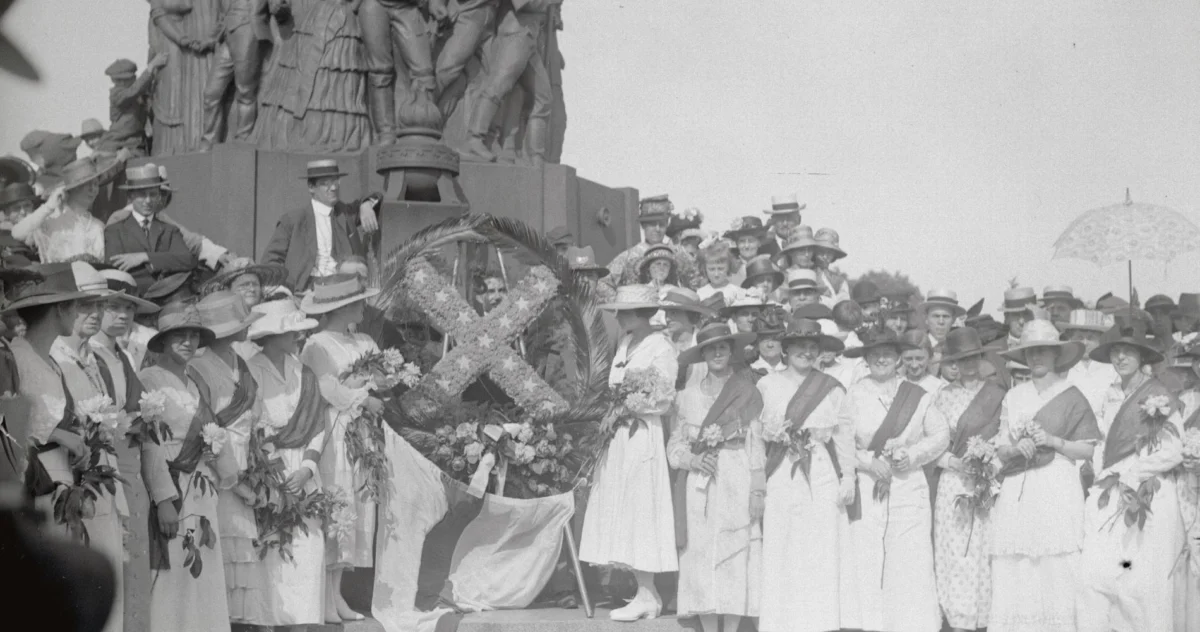
The United Daughters of the Confederacy, a prominent beneficiary of these exemptions, has long been a central force in shaping public memory of the Civil War. Alongside groups like the Sons of Confederate Veterans, the UDC played a crucial role in commissioning and installing hundreds of Confederate memorials across the Southern landscape. These monuments, often strategically placed in public spaces, were not merely historical markers but potent symbols designed to intimidate African Americans and reinforce their status as second-class citizens. Delegate Alex Askew, the sponsor of HB167, articulated this purpose succinctly, stating that these monuments were erected "to show African Americans and certain individuals, certain communities, that they were second-class citizens." Virginia, notably, holds the distinction of having more Confederate monuments than any other state in the nation, underscoring the pervasive nature of this historical narrative within its borders.
The tax breaks and other forms of state aid provided during this period were integral to the sustained efforts to counter the burgeoning Civil Rights Movement. As WHRO reported, this financial backing was "part of a wave of resistance to racial integration and civil rights efforts in the commonwealth." The exemptions allowed these organizations to dedicate more resources to their mission of promoting the Lost Cause, maintaining monuments, and influencing public discourse.
Chronology of State Endorsement and Financial Benefits
The origins of Virginia’s explicit financial support for Confederate groups trace back to the mid-20th century, a period marked by intensified racial tensions and the nascent stages of the Civil Rights movement.
- 1950: Virginia Governor John S. Battle signed a deed that granted the United Daughters of the Confederacy a prime parcel of land in Richmond. This land was subsequently used to construct the UDC’s elaborate marble-clad headquarters, a building that today carries an estimated value of approximately $4.7 million. This land grant set a precedent for state assistance, providing a significant asset to the organization.
- 1952: The Virginia General Assembly moved beyond land grants to codify specific tax exemptions. It explicitly exempted the UDC from the state recordation tax, a levy typically applied when property sales and deeds are registered for public record. This particular exemption was notable as the UDC’s Virginia division was the only organization singled out by name within that section of the state’s tax code, highlighting a deliberate legislative intent to favor the group.
- Ongoing Exemptions: Beyond the recordation tax, lawmakers also extended broad tax exemptions for both real and personal property owned by several Confederate-affiliated organizations. These included the Virginia Division of the UDC, the General Organization of the UDC, the Confederate Memorial Literary Society, and the Stonewall Jackson Memorial, Incorporated. The financial implications of these exemptions were substantial. For instance, the UDC alone saved an estimated $57,000 annually in property taxes on its Richmond headquarters, according to an analysis by The New York Times. Over the decades, these accumulated savings represented millions of dollars in state support that could have otherwise contributed to public services.
These exemptions, which remained in effect for more than 75 years, funneled taxpayer money, albeit indirectly, into organizations whose stated missions were rooted in a historical interpretation that glorified the Confederacy, whitewashed the atrocities of slavery, and actively resisted racial equality. Delegate Askew underscored the moral imperative behind ending these subsidies, stating in 2024 that the exemptions provided "tax relief to historically pro-slavery institutions." He framed the termination of these benefits as a step towards a "fairer, more inclusive tax policy that truly reflects our commitment to equality and progress."
The Legislative Path to Repeal and Its Supporters
The journey to repeal these long-standing exemptions was spearheaded by Delegate Alex Askew, who championed HB167 through the Virginia General Assembly. His advocacy highlighted the anachronistic nature of the tax breaks and their detrimental impact on the state’s contemporary identity. Askew consistently argued that continuing to provide financial benefits to groups that, in his words, "help glorify the Confederacy and essentially, I believe, have whitewashed the commonwealth’s history," was incongruous with Virginia’s aspirations for a more equitable future. "It’s truthfully time to move forward," he emphasized in January to WHRO.
The bill’s passage through both chambers of the General Assembly signaled a growing consensus among Virginia lawmakers to address historical injustices and modernize the state’s legal framework. Upon its arrival on Governor Spanberger’s desk, the signing of HB167 was widely anticipated, reflecting a commitment from the state’s executive branch to align policy with evolving societal values.
Following the Governor’s signature, Delegate Askew hailed the moment as a significant achievement: “Governor Spanberger’s signing of [HB167] is a proud moment and an important step forward for Virginia,” he stated. This legislative victory is viewed by proponents as a clear rejection of state endorsement for a divisive past and a reaffirmation of Virginia’s dedication to inclusive governance.
Broader Implications and Concurrent Reforms
The signing of HB167 is not an isolated event but rather part of a broader, multi-faceted effort by Virginia’s state government to confront and rectify its historical relationship with the Confederacy and its legacy. Governor Spanberger has concurrently taken action on several other related legislative initiatives:
- Specialty License Plates: The Governor also signed into law a bill that discontinues the issuance of specialty license plates featuring images or symbols associated with Confederate figures, specifically mentioning Robert E. Lee and the Sons of Confederate Veterans. This move further curtails state-sanctioned promotion of Confederate iconography in public life.
- Virginia Military Institute (VMI) Task Force: In a nuanced approach, Governor Spanberger returned to the Assembly with recommendations a bill (HB1377) proposing the establishment of a task force. This task force would be charged with recommending changes to distance the Virginia Military Institute, a historic state-funded institution, from the "Lost Cause" narrative. The Lost Cause narrative, a revisionist historical interpretation, asserted that the Civil War was not primarily about slavery, downplayed the Confederacy’s military defeat, and celebrated the South’s "triumph" over Reconstruction. The task force’s work aims to ensure that state institutions present an accurate and comprehensive historical account, free from the distortions of this revisionist ideology.
These legislative actions collectively signify a robust commitment by Virginia’s leadership to systematically dismantle symbols and policies that have long perpetuated a romanticized and inaccurate view of the Confederacy. The state’s approach stands in stark contrast to certain federal initiatives observed in recent years. For instance, the previous Trump administration ordered the removal of content related to slavery at several national parks and reportedly pressured the Smithsonian Institution to remove exhibits focusing on "how bad Slavery was." Furthermore, the Army reversed a congressionally mandated, multimillion-dollar effort to remove Confederate names from military bases, in some instances reportedly changing base names to honor secessionists. These federal actions have drawn criticism from historians and civil rights advocates who argue they represent an attempt to whitewash history and diminish the significance of slavery.
The Enduring Struggle for Historical Truth
The struggle to accurately represent history and confront the legacy of slavery is not confined to legislative chambers. Across Virginia and the nation, communities grapple with the presence of Confederate symbols and the narratives they represent. A prominent example within Virginia is the ongoing legal battle in the Shenandoah Valley, where Black students have filed a lawsuit against a school board that reinstated the names of two schools originally christened for Confederate generals. The students argue that the school board’s decision was intended "to make it very clear that Black students were not welcome," citing the generals’ documented advocacy for slavery and their racist beliefs. This case underscores that while state-level reforms are critical, the impact of Confederate ideology continues to be felt and challenged at the local level.
Despite federal resistance in some areas, Virginia is not alone in its endeavor to truthfully confront its past. Other states and private institutions are actively working to preserve history and educate the public about the difficult truths of American slavery and its aftermath. Museums dedicated to Black history and the Civil Rights movement, as well as educational initiatives, are gaining prominence, emphasizing the importance of a comprehensive and unvarnished understanding of the nation’s past.
The financial impact on the organizations affected by HB167, while not fully quantified, is expected to be significant. For instance, the United Daughters of the Confederacy reported approximately $2.1 million in revenue and $1.1 million in expenses in 2025, according to The New York Times. The loss of tax exemptions, including property tax savings, will necessitate these groups to re-evaluate their financial models and operational capacities. While representatives of the affected organizations have not yet issued formal statements on the specific financial impact, similar legislative efforts in other states have often drawn criticism from these groups, who typically frame their activities as preserving Southern heritage and honoring their ancestors, rather than promoting historical revisionism or divisive ideologies. However, civil rights organizations and historical bodies have largely applauded the decision, viewing it as a crucial step towards confronting Virginia’s complex racial history and promoting genuine reconciliation.
Ultimately, the passage of HB167 and the accompanying legislative actions signify a pivotal moment for Virginia. By divesting from organizations that perpetuate a sanitized version of its past, the Commonwealth is actively charting a new course. As Delegate Askew eloquently stated, the effort is fundamentally "about moving forward from our dark past that our commonwealth has had," aiming for a future where state policy and public memory are aligned with principles of equality, truth, and progress.