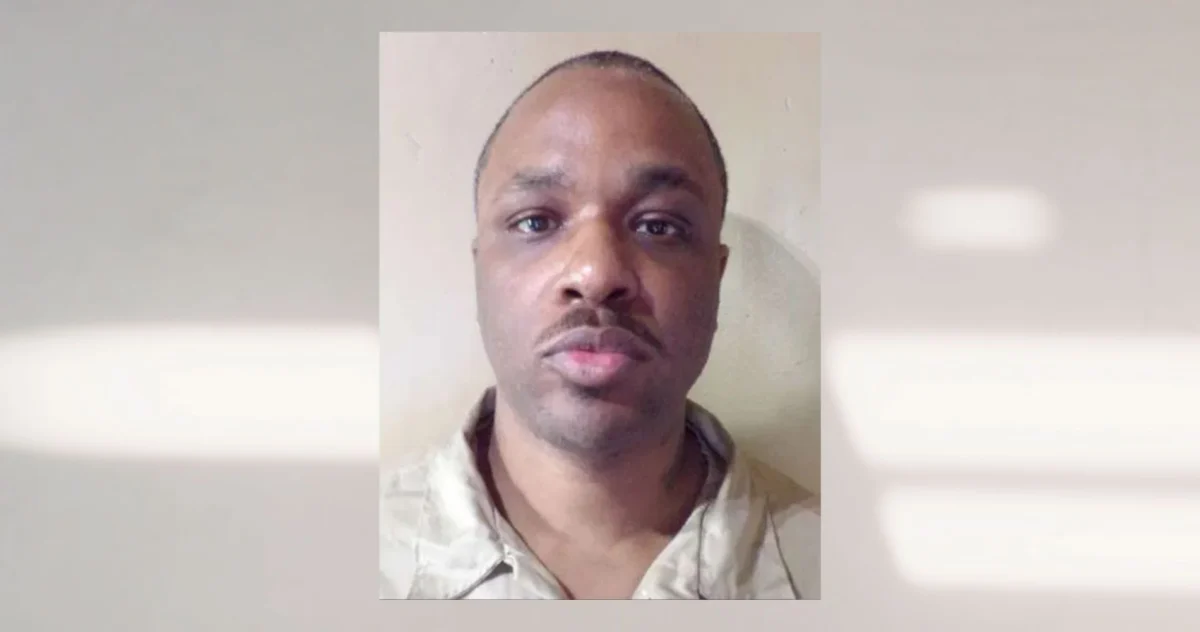
Governor Kay Ivey of Alabama has set June 11, 2026, as the execution date for Jeffery Lee, who is slated to die by nitrogen suffocation. This decision comes despite a capital jury having voted 7-5 against the death penalty in Mr. Lee’s case, instead recommending a sentence of life imprisonment without parole. The impending execution reignites profound debates surrounding judicial power, the integrity of the jury system, and the ethical implications of experimental execution methods in Alabama, a state consistently at the forefront of capital punishment controversies.
The Genesis of a Contested Sentence: Jeffery Lee’s Trial and Overridden Verdict
Jeffery Lee’s journey to death row began with a capital murder conviction in 2000. He was found guilty of the 1998 shooting deaths of Jimmy Ellis and Elaine Thompson, and the attempted murder of Helen King, during a robbery at a pawn shop near Orrville in Dallas County, Alabama. All three victims were white, while Mr. Lee is Black. The circumstances surrounding his trial and subsequent sentencing have been a focal point of criticism from legal scholars and human rights advocates for over two decades.
The trial itself, which lasted less than two days, raised numerous red flags regarding due process and fairness. Mr. Lee, who had lived his entire life in chronic poverty, could not afford private legal representation. He was assigned counsel who, critically, had no prior experience trying a capital case. This lack of specialized expertise manifested in what many observers describe as an inadequate defense, with defense counsel presenting almost no additional evidence during the sentencing phase in support of a life sentence.
Despite these procedural shortcomings, the jury, after deliberating, delivered a verdict that reflected a significant division: seven jurors favored life imprisonment without parole, while five leaned towards the death penalty. In most jurisdictions, such a split, or even a unanimous recommendation for life, would result in the defendant being spared from execution. However, Alabama, at the time, was unique among U.S. states in permitting trial judges to override a jury’s sentencing recommendation in capital cases. In Mr. Lee’s instance, the trial judge disregarded the jury’s majority vote for life and instead imposed a sentence of death, a decision that has haunted the case ever since.
Alabama’s Peculiar Practice: The Legacy of Judge Override
The practice of judicial override in capital cases, which allowed a single judge to overrule a jury’s sentencing recommendation, was a distinctive and controversial feature of Alabama’s legal landscape for decades. While Florida and Delaware also permitted judge override at various times, they abolished it in 2016. Alabama, however, continued this practice, becoming the last state to do so until its own abolition on April 11, 2017.
The statistics surrounding judge override in Alabama are stark. Since 1976, judges in the state overrode jury verdicts of life imprisonment to impose the death penalty in more than 100 cases. This unusual judicial power meant that nearly 20% of the individuals currently on Alabama’s death row were sentenced to death by elected judges, even after their respective juries had chosen life imprisonment without parole. This phenomenon has drawn significant criticism from organizations like the Equal Justice Initiative (EJI), which has consistently highlighted how judge override contributed to an arbitrary and racially biased application of the death penalty.
The legislative decision to abolish judge override in 2017 was a recognition by both the Alabama Legislature and Governor Ivey that the practice was fundamentally flawed. However, a critical caveat to this reform was its non-retroactive application. The change was not applied to cases like Mr. Lee’s, where the override had occurred prior to 2017. This legislative nuance creates a profound sense of injustice for those like Mr. Lee, who find themselves facing execution under a legal framework that the state itself has deemed unconstitutional or unjust. Had Mr. Lee’s trial taken place just a few years later, or indeed at any time after the 2017 abolition, he would have been sentenced to life imprisonment without parole, as his jury had originally decided. This disparity underscores the arbitrary nature of capital punishment, where the timing of a trial, rather than the facts of the case or the will of the jury, can determine life or death.
Voices for Clemency and the Principle of Jury Supremacy
The scheduled execution of Jeffery Lee has galvanized calls for clemency from various quarters, emphasizing the importance of respecting jury verdicts and the principles of limited government. Former Chief Justice of the Alabama Supreme Court, Drayton Nabers Jr., has been a prominent voice in this appeal. In a compelling op-ed, he directly implored Governor Ivey to commute Mr. Lee’s death sentence. Nabers articulated his plea out of “fidelity to the conservative principles of limited government, respect for the jury system, and the rule of law.”
He argued, “A jury of Alabamians voted for life. The state of Alabama later agreed that juries, not judges, should make that call. Governor Ivey can honor both of those judgments—the jury’s and the Legislature’s—by commuting Jeffery Lee’s sentence to life imprisonment without the possibility of parole.” This statement encapsulates the core argument: the state itself acknowledged the error of judge override, and honoring that legislative correction, alongside the original jury’s decision, would be a demonstration of judicial and executive integrity.
Beyond legal and political figures, religious and human rights organizations have also joined the chorus for clemency. The Catholic Mobilizing Network, for instance, has called on Governor Ivey to grant clemency, highlighting Mr. Lee’s profound transformation during his more than 25 years on death row. Now 49, Mr. Lee has become a Kairos ministry leader, an assistant chaplain, and a mentor to other men on death row. The network describes him as “a man of strong Christian faith” who has maintained a record of no violent infractions throughout his quarter-century in prison. Such personal rehabilitation narratives often play a significant role in clemency considerations, advocating for mercy based on changed character and positive influence within the carceral environment.
The Controversial Method: Execution by Nitrogen Hypoxia
Adding another layer of complexity and controversy to Mr. Lee’s case is the chosen method of execution: nitrogen suffocation, also known as nitrogen hypoxia. Alabama adopted this method as an alternative to lethal injection, which has faced increasing legal challenges and difficulties in procuring necessary drugs. However, nitrogen hypoxia itself has become a subject of intense legal and ethical debate, with critics arguing it constitutes cruel and unusual punishment.
Last year, Mr. Lee filed a federal lawsuit directly challenging the constitutionality of nitrogen suffocation. His suit argued that the method “causes inmates to experience prolonged air hunger and feelings of suffocation, which evoke severe anxiety, fear, and physiological distress.” The core of the claim rested on the assertion that nitrogen hypoxia cruelly "superadds pain" in violation of the Eighth Amendment because it triggers a person’s primal survival instincts to breathe oxygen while simultaneously preventing them from doing so.
Concerns about the experimental nature and potential for prolonged suffering associated with nitrogen hypoxia have been widely raised. Justice Sonia Sotomayor, in a previous context regarding this method, recognized that it inflicts the “unnecessary psychological terror” of “conscious, excruciating suffocation” and “severe emotional suffering” while an individual is “consciously experiencing the ‘primal urge to breathe.’” This vivid description underscores the profound psychological and physiological distress that is feared to accompany death by nitrogen.
On May 28, U.S. District Court Judge Emily Marks delivered a ruling following a bench trial on Mr. Lee’s challenge. Judge Marks found that “[w]hile Lee establishes that death by nitrogen hypoxia involves some suffering, he fails to show that the protocol is cruel and unusual in violation of the Eighth Amendment.” The court acknowledged that individuals executed by nitrogen suffocation are “likely to experience severe air hunger,” which “results in profound physiological discomfort and distress, as well as anxiety, fear, and dread” and “can be worse than pain.” However, the court concluded that this suffering was not unconstitutional because consciousness would be lost “in not significantly more than one to three minutes” after the nitrogen flow commenced.
Crucially, Judge Marks’ determination rejected unrebutted expert testimony that purposeful movements observed in four individuals previously executed in Alabama – including rolling, attempting to sit up to breathe, lifting legs and head, clenching fists, and pulling against restraints – demonstrated that they remained conscious for significantly longer, between three and seven minutes. This judicial dismissal of expert observation regarding extended consciousness in prior executions raises serious questions about the empirical basis for the court’s conclusion regarding the brevity of conscious suffering. Mr. Lee’s appeal against this ruling is currently pending, ensuring that the legality and humanity of nitrogen hypoxia will continue to be litigated.
Broader Implications: Racial Injustice, Ineffective Counsel, and Systemic Flaws
The case of Jeffery Lee is not merely an isolated instance but a microcosm reflecting broader systemic issues within capital punishment in Alabama and the United States. His trial took place in Dallas County, a region within Alabama’s "Black Belt," which carries a long and well-documented history of racial injustice. This historical context is vital when examining the prosecution’s conduct, particularly the use of all 21 peremptory strikes against Black potential jurors. Such a pattern of jury selection raises serious concerns about racial bias and the deliberate exclusion of minority voices from the deliberative process, echoing historic struggles for fair representation in Southern courts.
The inadequacy of Mr. Lee’s legal representation further compounds these concerns. The appointment of an attorney with no capital case experience to defend an indigent client facing the death penalty is a persistent critique leveled against the U.S. justice system. In capital cases, where the stakes are literally life and death, effective counsel is paramount, and its absence can lead to irreversible miscarriages of justice. Mr. Lee’s case exemplifies how the intersection of poverty, race, and deficient legal aid can fatally compromise the fairness of a trial.
The ongoing legal battles surrounding Mr. Lee’s execution, particularly concerning the method of nitrogen hypoxia, also contribute to a national dialogue on the Eighth Amendment’s prohibition against cruel and unusual punishment. As states struggle to carry out executions due to drug shortages and legal challenges to lethal injection, new methods like nitrogen hypoxia are being explored. However, the lack of scientific consensus and the profound ethical questions surrounding methods that induce suffocation challenge the very notion of a "humane" execution. The prolonged suffering documented or inferred in previous nitrogen executions, and the rejection of expert testimony in Mr. Lee’s case, will undoubtedly fuel further legal challenges and public outcry, pushing the boundaries of what constitutes acceptable punishment under the U.S. Constitution.
The Path Forward: A Call for Justice and Reflection
As June 11, 2026, approaches, Jeffery Lee’s case will remain under intense scrutiny. His legal team will continue to pursue appeals, challenging both the method of execution and the fundamental injustice of a death sentence imposed through a now-abolished judicial override. The possibility of clemency from Governor Ivey remains a critical avenue, offering a chance for the state to rectify a historical wrong and align its actions with its own legislative reforms.
The case serves as a powerful reminder of the enduring complexities and moral dilemmas inherent in capital punishment. It forces a critical examination of how justice is administered, particularly for indigent defendants in racially charged environments. It challenges the state to reflect on its own past practices, to honor the will of its citizens as expressed through jury verdicts and legislative action, and to ensure that the ultimate penalty is never imposed arbitrarily or through methods that inflict unnecessary suffering. The decision in Jeffery Lee’s case will not only determine the fate of one man but will also cast a long shadow over the future of capital punishment in Alabama and beyond.