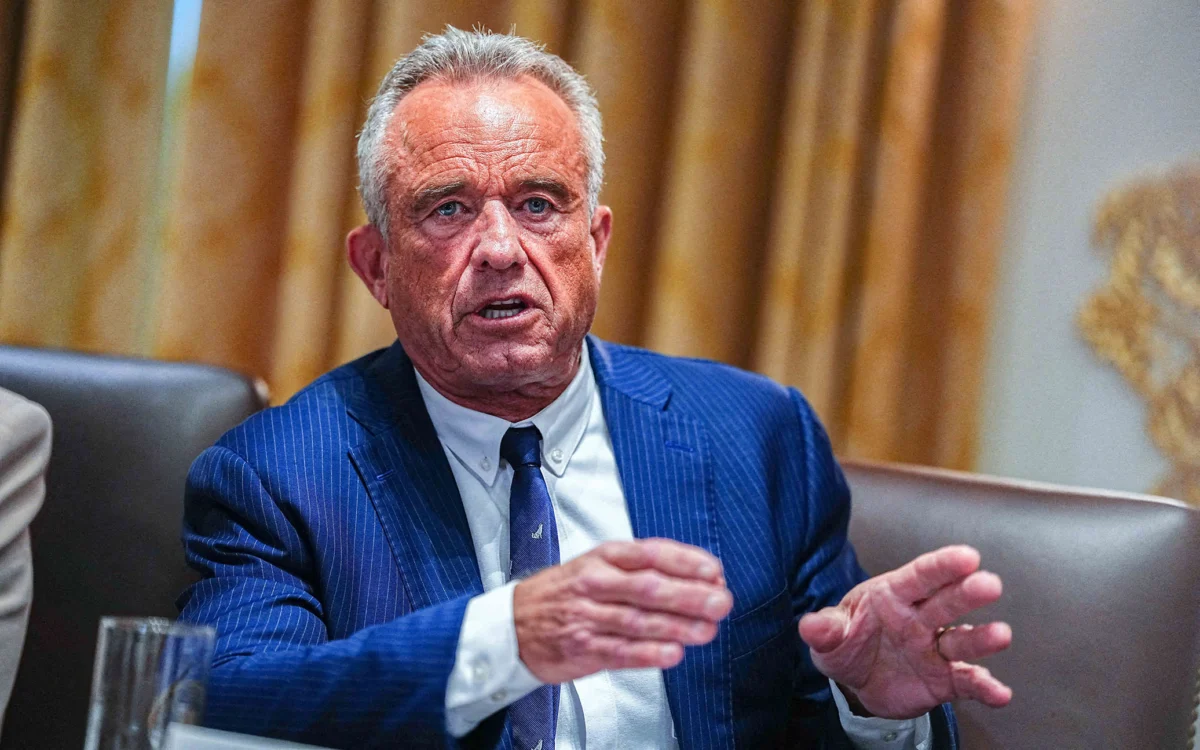
U.S. Health Secretary Robert F. Kennedy Jr. is actively seeking federal government access to a vast repository of American medical records, a move aimed at investigating a purported link between vaccines and autism. This endeavor comes despite decades of rigorous scientific study by the medical establishment, which has consistently refuted such a connection. The Department of Health and Human Services (HHS), under Kennedy’s leadership, is reportedly pursuing data from lesser-known state-level systems designed to facilitate the exchange of detailed, identifiable patient information between hospitals and clinics. This initiative has sparked apprehension among some public health officials who question the legality, utility, and potential privacy implications of granting the federal government such expansive access to sensitive personal health data.
A Quest for Data Amidst Established Consensus
The core of Secretary Kennedy’s objective is to examine what he believes are crucial links between vaccines, autism, and other chronic diseases. This pursuit is reportedly fueled by a belief that current federal access to medical records is insufficient for thorough research. Kennedy has publicly expressed his frustration with the existing data infrastructure, stating in a May interview, "We need a good health record system, and one of the things that really surprised me most when I came into office is that there is—that the systems are broken." He added, "We’ve had to go to the states and, luckily, we’ve got a lot of cooperation from the states, but we now have databases together that we can actually do the studies on. Those studies are in motion."
However, the scientific community has long since addressed the vaccine-autism hypothesis. Landmark studies, including a comprehensive analysis published in The Lancet in 1998 that initially suggested a link, have since been retracted due to fraudulent data. Subsequent, extensive research involving millions of children across numerous countries has consistently found no evidence to support a causal relationship between vaccines and autism. Organizations such as the Centers for Disease Control and Prevention (CDC) and the World Health Organization (WHO) affirm the safety and efficacy of vaccines.
Unveiling the Data Exchange Initiative
The HHS’s efforts to acquire broader access to medical records involve engaging with state-run Health Information Exchanges (HIEs). These HIEs, often operated by private companies or non-profits and governed by state laws, enable healthcare providers to share patient medical records in near real-time. This sharing is crucial for improving patient care, particularly in emergency situations or for coordinating care between specialists and primary physicians. While HIEs routinely alert public health authorities about infectious disease outbreaks, their use for broader public health surveillance, especially concerning vaccine research, is a more complex proposition fraught with privacy and legal considerations.
Federal officials have reportedly met with leaders of these state HIE systems multiple times over the past year. In these meetings, they have inquired about the potential uses of the medical records maintained by these exchanges for vaccine research. Craig Behm, who manages Maryland’s HIE, recalled being asked by a top HHS official how their extensive data holdings could be leveraged for vaccine studies. "If this administration wants to conduct research on the effectiveness of vaccines, are you saying you all can help us conduct that research?" Behm recounted being asked.
Mounting Concerns Over Privacy and Legality
The prospect of the federal government accessing detailed, identifiable patient information has raised significant red flags. In private discussions, some public health leaders have voiced strong objections, citing doubts about the legality of such data acquisition and questioning the actual usefulness of the information for Kennedy’s research goals. Concerns have been articulated about the federal government’s capacity to safeguard the privacy of such a vast trove of personal health information, which could encompass everything from detailed doctor’s notes to prescription histories. HHS has yet to provide public details on its data protection protocols for this initiative.
John Kansky, CEO of the Indiana Health Information Exchange, acknowledged the potential value of shared HIE data for public health initiatives but expressed reservations about the specific focus on vaccines. "It’s like, oh man, I wish you would have picked something that pushed fewer buttons for people," Kansky remarked, highlighting the sensitive nature of vaccine discussions. He noted that while his organization is still considering the request, no data has yet been shared for Kennedy’s project.
A Nebraska Connection and Funding Flows
Despite widespread reservations, at least one state appears to be cooperative. Jaime Bland, the former CEO of CyncHealth, Nebraska’s HIE, has been instrumental in efforts to share medical record data with the federal government. Bland, who now serves as the chief data strategist for the MAHA Institute, a think tank aligned with Kennedy and former President Trump, believes that HIE data can offer valuable insights into the causes of autism and potential vaccine injuries. She has stated that several states are exploring ways to "open up channels" to provide more analysis to Kennedy’s team, enabling them to glean insights that can be shared with the CDC.
A presentation reviewed by KFF Health News outlines a proposal where CyncHealth and other state HIEs would collect data from various sources, including hospitals, clinics, laboratories, pharmacies, payers, and social services agencies, linking claims and clinical records through a master patient index. Data would be de-identified where appropriate, and the federal government would reportedly pay exchanges $3 per person annually for furnishing these records. The proposal suggested framing this initiative publicly not as a new database but as a "federated trust model that delivers real-time data for all HHS missions."
Following a meeting where this proposal was presented, Nebraska’s state health department received a substantial grant of $18.7 million from the CDC’s Epidemiology and Laboratory Capacity program. This amount was the largest awarded to any state, despite Nebraska’s relatively lower population ranking. Subsequently, CyncHealth was awarded three contracts totaling $13.6 million from the Nebraska Department of Health. Grace McNamara, a spokesperson for CyncHealth, confirmed that $2.4 million of this funding was earmarked for Kennedy’s project, with the remainder distributed to other participating states and vendor organizations for implementation support. While McNamara stated the work is focused on improving outcomes for acute and chronic illnesses and is not specific to autism, a former CDC official familiar with the transaction confirmed the funding was intended for CyncHealth to supply data for Kennedy’s initiative examining vaccines and autism.
The Role of Political Appointees and Allies
The initiative to collect and examine medical records is reportedly being led by Kennedy’s political appointees and allies. Among them is William “Reyn” Archer III, a former Texas health official and a vocal vaccine critic, whom Kennedy hired as a senior adviser. Archer, along with Hannah Anderson, Kennedy’s former deputy chief of staff, reportedly visited the CDC’s headquarters last July to download millions of identifiable patient records directly from the Vaccine Safety Datalink (VSD), a system used by the agency to investigate vaccine complications. However, these records were decades old.
Daniel Jernigan, a former top CDC official, suggested that Kennedy might have been more interested in readily available, de-identified databases maintained by major electronic health records companies. Jernigan indicated that Kennedy did not appear receptive to this suggestion. He also noted that the federal government’s legal authority to access medical records from state HIEs is limited, and even then, the data might not yield the specific answers Kennedy seeks regarding vaccines and autism, as electronic health records primarily capture data from specific encounters rather than offering a comprehensive longitudinal view of an individual’s health journey.
Broader Implications and Future Directions
The push by Secretary Kennedy to access a wide range of medical records for vaccine research raises significant questions about the balance between public health investigation and individual privacy rights. While the stated goal is to advance understanding of complex health issues, the methods employed and the lack of transparency regarding data protection protocols have fueled considerable unease.
The White House has reportedly steered Kennedy away from implementing further changes to U.S. vaccine policy in the lead-up to the midterm elections. However, former President Trump has consistently echoed doubts about vaccine safety, and his administration has shown a willingness to explore alternative approaches to vaccine recommendations. This political backdrop underscores the sensitivity and potential divisiveness of Kennedy’s current data acquisition efforts.
The future trajectory of this initiative remains uncertain. While Nebraska has been cooperative, many other states have expressed reservations or outright declined to share data due to contractual restrictions and concerns about legal and ethical implications. The HHS has not publicly announced any new projects directly linking medical records to autism or vaccine research, despite Kennedy’s assertions of ongoing studies. The lack of clarity from HHS regarding the scope of data collection, privacy safeguards, and the specific research objectives leaves many unanswered questions about the long-term impact and ultimate utility of this ambitious data-gathering endeavor. The debate over access to personal health information for research purposes is likely to intensify as the administration navigates the complex landscape of public health, scientific consensus, and individual privacy.