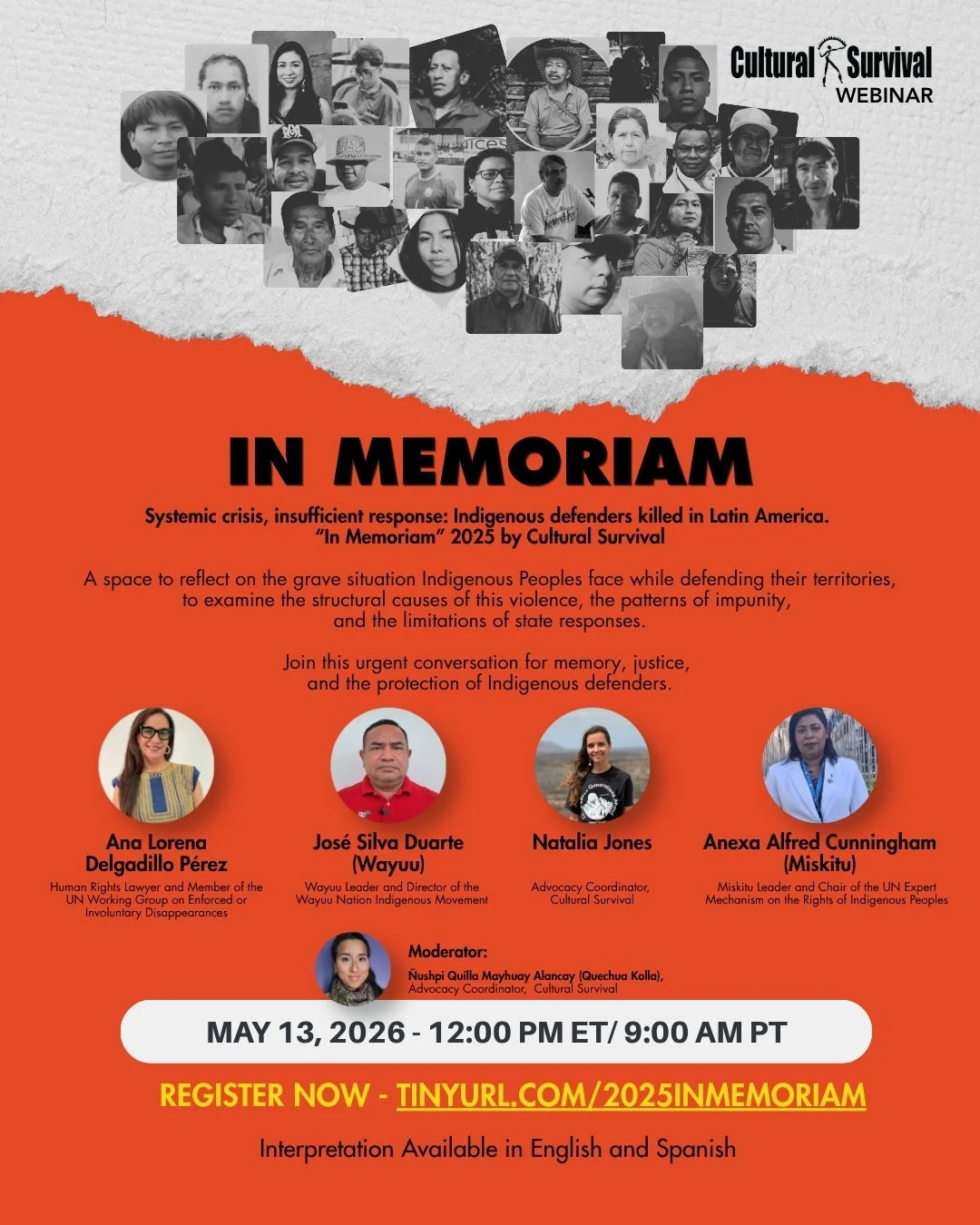
Cultural Survival, a venerable organization dedicated to advocating for Indigenous Peoples’ rights and supporting their self-determination, cultures, and political resilience, has announced a significant upcoming event. Scheduled for Wednesday, May 13, 2026, at 6:34 PM (UTC), this commemoration, titled "In Memoriam," aims to honor the enduring spirit and historical struggles of Indigenous communities worldwide. The announcement, made through Cultural Survival’s official channels, underscores the organization’s ongoing commitment to amplifying Indigenous voices and preserving their rich heritage, a mission it has steadfastly pursued since its founding in 1972.
A Legacy of Advocacy: Cultural Survival’s Enduring Mission
Founded in 1972, Cultural Survival emerged from a pressing need to address the systemic human rights violations and cultural erosion faced by Indigenous Peoples across the globe. The organization’s core mission is to advocate for their inherent rights and bolster their capacity for self-determination, cultural preservation, and political resilience. This foundational principle has guided Cultural Survival’s multifaceted approach, which includes grassroots support, advocacy for policy changes, media production, and educational initiatives. Their vision is to foster a future where Indigenous Peoples’ rights are universally respected, their dynamic cultures are deeply interwoven into the fabric of society—manifested in their lands, languages, spiritual traditions, and artistic expressions—and their self-governance is robustly established. The "In Memoriam" event is a poignant reflection of this long-standing commitment, serving as a platform to remember and celebrate the contributions and ongoing struggles of Indigenous Peoples.
The Significance of "In Memoriam"
The "In Memoriam" event, set to take place on May 13, 2026, is more than just a commemorative gathering; it represents a crucial moment for reflection, learning, and renewed commitment. In an era marked by escalating challenges such as climate change, land dispossession, cultural appropriation, and political marginalization, remembering those who have fought and continue to fight for Indigenous rights is paramount. The event will likely serve as a space to acknowledge the sacrifices made by Indigenous leaders, activists, and communities throughout history, many of whom have faced persecution, violence, and erasure. By invoking the concept of "In Memoriam," Cultural Survival signals an intent to engage with the past to inform the present and future, recognizing that the legacy of struggle and resilience is an integral part of Indigenous identity and ongoing movements for justice.
The choice of a specific date, May 13, 2026, suggests a carefully considered purpose for this commemoration. While the exact nature of the event is not detailed in the initial announcement, its placement on Cultural Survival’s calendar implies it will be a significant program, potentially encompassing a webinar, a virtual or in-person ceremony, or a series of educational presentations. Such an event provides a vital opportunity to:
- Educate the Public: Raise awareness about the historical injustices faced by Indigenous Peoples and the ongoing threats to their rights and cultures.
- Honor Ancestors and Leaders: Pay tribute to individuals who have made significant contributions to Indigenous rights movements and cultural preservation.
- Foster Solidarity: Create a space for Indigenous Peoples to connect, share their experiences, and strengthen their collective voice.
- Inspire Action: Motivate broader support for Indigenous self-determination and advocate for systemic change.
Broader Context: Indigenous Rights and Global Challenges
The "In Memoriam" event takes place against a backdrop of critical global issues directly impacting Indigenous Peoples. According to the United Nations Permanent Forum on Indigenous Issues, Indigenous Peoples constitute about 5% of the world’s population but are disproportionately affected by poverty, environmental degradation, and human rights abuses. They often face challenges related to:

- Land Rights and Resource Extraction: Many Indigenous communities rely on their ancestral lands for their livelihoods, cultural practices, and spiritual well-being. However, these lands are frequently targeted for mining, logging, agricultural expansion, and infrastructure projects, often without Free, Prior, and Informed Consent (FPIC). This has led to significant environmental damage and social disruption.
- Cultural Preservation: Indigenous languages, traditions, and knowledge systems are under threat due to assimilationist policies, globalization, and a lack of intergenerational transmission. The loss of cultural heritage is a profound loss for humanity as a whole.
- Political Marginalization: Despite increasing recognition of Indigenous rights in international law, many Indigenous Peoples continue to struggle for political representation and self-governance within their respective nation-states.
- Climate Change: Indigenous communities are often on the front lines of climate change impacts, experiencing extreme weather events, loss of biodiversity, and disruptions to their traditional ways of life, despite contributing the least to its causes.
Cultural Survival’s work, and by extension, events like "In Memoriam," are thus critical in confronting these interconnected challenges. By highlighting the resilience of Indigenous Peoples, the organization underscores their agency and their capacity to adapt and thrive in the face of adversity.
Potential Programmatic Elements and Inferred Reactions
While specific details of the "In Memoriam" event are limited, based on Cultural Survival’s established programming, it is reasonable to infer several potential elements:
- Testimonials and Personal Narratives: Indigenous leaders, elders, and community members may share personal stories of resilience, loss, and ongoing struggles. These narratives are powerful tools for fostering empathy and understanding.
- Panel Discussions: Experts in Indigenous rights, anthropology, history, and environmental studies could engage in discussions about historical injustices, contemporary challenges, and strategies for Indigenous empowerment.
- Artistic Performances: Indigenous artists—musicians, dancers, poets, and visual artists—may showcase their work, celebrating the vibrancy and diversity of Indigenous cultures. Art often serves as a vital form of cultural expression and resistance.
- Educational Resources: The event could be accompanied by the release or promotion of educational materials, such as documentaries, articles, or reports, that delve deeper into the history and contemporary issues facing Indigenous Peoples.
- Fundraising and Advocacy Appeals: Given Cultural Survival’s operational model, the event may also serve as an opportunity to solicit donations to support their ongoing projects or to mobilize support for specific advocacy campaigns.
It is also plausible to anticipate a range of reactions from various stakeholders:
- Indigenous Communities: A sense of validation, solidarity, and renewed hope, particularly if the event effectively amplifies their voices and acknowledges their struggles. There might also be a call for tangible action and follow-through on promises of support.
- Governments and Policymakers: The event could serve as a reminder of ongoing commitments to Indigenous rights and may prompt renewed dialogue or policy reviews. However, the impact would depend on the specific focus of the commemoration and the political climate.
- International Organizations: Bodies like the UN may view the event as a valuable contribution to the global discourse on Indigenous rights and a catalyst for further action and implementation of international frameworks.
- The General Public: Increased awareness and understanding of Indigenous issues, potentially leading to greater empathy and support for Indigenous causes.
Looking Ahead: Sustaining the Momentum
The "In Memoriam" event is more than a single point in time; it is part of a continuous effort by Cultural Survival and Indigenous Peoples worldwide to safeguard their rights, cultures, and futures. The organization’s commitment, as articulated in its mission and vision statements, points towards a future where Indigenous self-determination is not an aspiration but a reality, where their cultures are celebrated and protected, and where their voices are integral to global decision-making.
As the world grapples with complex issues of social justice, environmental sustainability, and cultural diversity, the wisdom and perspectives of Indigenous Peoples are increasingly recognized as vital. Events like "In Memoriam" play a critical role in ensuring that their histories are remembered, their present struggles are acknowledged, and their future aspirations are supported. Cultural Survival’s enduring dedication, spanning over five decades, serves as a testament to the power of sustained advocacy and the importance of honoring the resilience and inherent dignity of Indigenous Peoples. The date of May 13, 2026, will undoubtedly mark a significant occasion for reflection, remembrance, and the recommitment to a future where Indigenous rights and cultures flourish.