Virginia Governor Abigail Spanberger this week enacted landmark legislation, HB167, bringing an end to decades of state tax exemptions for several organizations dedicated to preserving and promoting the legacy of the Confederacy. The signing of the bill represents a significant pivot in Virginia’s historical relationship with groups such as the United Daughters of the Confederacy (UDC), the Sons of Confederate Veterans, the Confederate Memorial Literary Society, and the Stonewall Jackson Memorial, Incorporated, effectively ceasing state financial support that has benefited these entities since the mid-20th century. This legislative action, championed by Delegate Alex Askew, is part of a broader effort within the Commonwealth to confront and rectify its complex and often painful history, moving towards a more inclusive narrative.
The now-repealed tax carve-outs were established during the height of the Jim Crow era and the burgeoning "Massive Resistance" movement against desegregation, serving as a subtle yet powerful endorsement of a revisionist history that sought to romanticize the Confederacy and legitimize racial hierarchy. For over 75 years, these exemptions provided a financial lifeline to organizations actively involved in erecting monuments and memorials across the Southern landscape, symbols that critics argue were designed to intimidate African Americans and entrench their status as second-class citizens. The termination of these subsidies signals a decisive break from that contentious past, realigning state policy with contemporary understandings of civil rights and historical accuracy.
A Legacy of State Support and Historical Revisionism
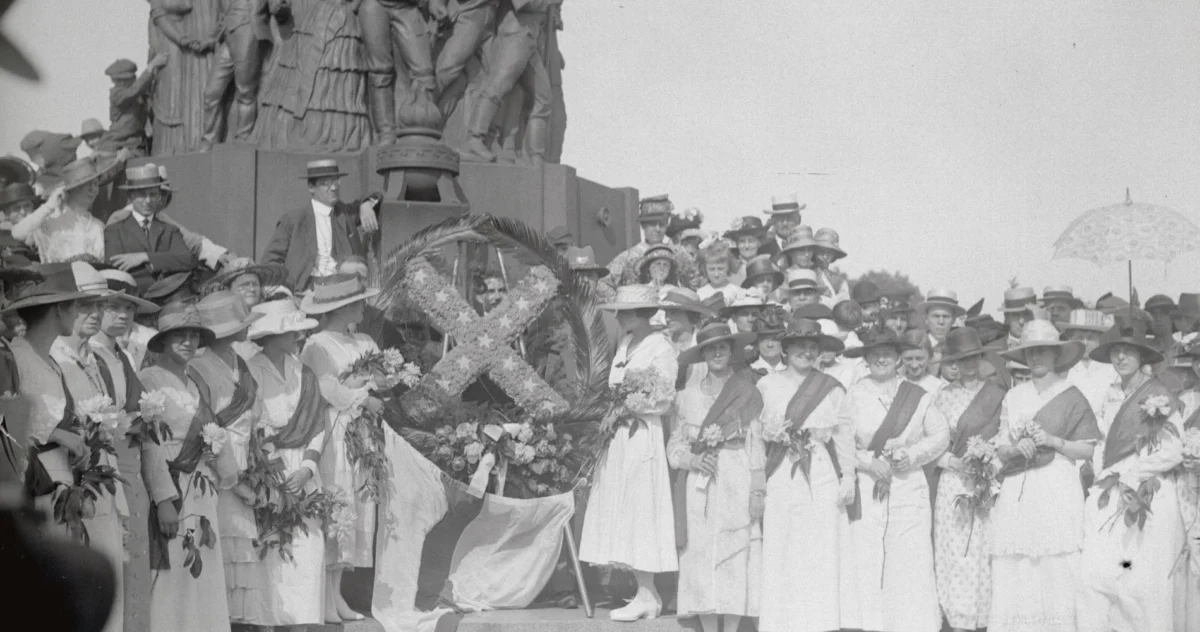
The origins of Virginia’s financial support for Confederate organizations are deeply embedded in the state’s post-Reconstruction and Jim Crow history. Following the Civil War, a concerted effort emerged in the South to reinterpret the conflict, giving rise to what became known as the "Lost Cause" narrative. This ideology asserted that the Civil War was not primarily about slavery but rather about states’ rights and Southern honor, portraying Confederate soldiers as noble defenders of their homeland and the institution of slavery as a benign system. Organizations like the United Daughters of the Confederacy, founded in 1894, and the Sons of Confederate Veterans, established in 1896, became primary architects and disseminators of this narrative. Their stated missions often revolved around commemorating the "valorous deeds" of Confederate soldiers and preserving what they termed "Southern heritage."
These groups embarked on an extensive campaign to shape public memory, erecting hundreds of monuments, commissioning textbooks, and lobbying for the inclusion of their version of history in schools. Virginia, as the former capital of the Confederacy, became a focal point for this movement. The state boasts more Confederate monuments than any other in the nation, with the Equal Justice Initiative documenting scores of these memorials across its landscape. Each monument served as a physical manifestation of the Lost Cause and a testament to the enduring power of these organizations. Many of these monuments were strategically placed in prominent public spaces, often near courthouses, town squares, or state capitols, not merely as historical markers but as overt symbols of white dominance and tools to reinforce racial segregation and social control.
The mid-20th century marked a particularly aggressive period for monument construction, often in direct defiance of the burgeoning Civil Rights Movement and federal desegregation mandates. As Delegate Alex Askew, the sponsor of HB167, told WHRO, these monuments were put in place "to show African Americans and certain individuals, certain communities, that they were second-class citizens." This period also saw the formalization of state financial aid to these groups, intertwining state resources with the propagation of the Lost Cause.
The "Massive Resistance" Era and Tax Exemptions
The specific tax exemptions targeted by HB167 were codified during Virginia’s "Massive Resistance" era, a period characterized by fierce opposition to racial integration in the wake of the 1954 Brown v. Board of Education Supreme Court decision. Virginia’s political leadership, including Governor John S. Battle, actively pursued strategies to circumvent federal mandates for desegregation. It was within this climate that the state formalized its financial support for Confederate organizations.
In 1950, Governor Battle, a staunch proponent of segregation who signed into law bills designed to maintain racial separation in schools, approved a deed granting the United Daughters of the Confederacy land in Richmond for its headquarters. This marble-clad building, a prominent structure now reportedly valued at approximately $4.7 million, became a physical symbol of the state’s implicit endorsement of the UDC’s mission. The UDC’s national headquarters on Boulevard (now Arthur Ashe Boulevard) stood as a testament to this public-private partnership in historical revisionism.
Just two years later, in 1952, the Virginia General Assembly further solidified this support by explicitly exempting the UDC from the state recordation tax, a levy typically applied when property sales are registered for public record. Notably, the UDC’s Virginia division was the only organization singled out by name in this section of the tax code, highlighting the exceptional and deliberate nature of this legislative favor. Beyond the recordation tax, lawmakers also extended property tax exemptions for real and personal property owned by the Virginia Division of the UDC, the General Organization of the UDC, the Confederate Memorial Literary Society, and the Stonewall Jackson Memorial, Incorporated. According to The New York Times, these exemptions saved the UDC an estimated $57,000 annually on property taxes for its Richmond headquarters alone, a substantial public subsidy for a private organization.
This legislative generosity was not merely an oversight; it was, as WHRO reported, "part of a wave of resistance to racial integration and civil rights efforts in the commonwealth." By providing financial relief and institutional backing, Virginia’s state government effectively partnered with these organizations in their efforts to uphold a segregated society and disseminate a distorted historical narrative that glorified the Confederacy’s fight to preserve slavery. This era saw a surge in monument building and a solidification of the Lost Cause narrative in public spaces and educational materials, all underpinned by direct or indirect state support.
The Legislative Path of HB167 and Related Measures
Delegate Alex Askew (D-Virginia Beach), who sponsored HB167, has been a vocal proponent of ending what he describes as state-sanctioned historical whitewashing. His efforts culminated in the passage of the bill through both chambers of the General Assembly, reflecting a growing consensus among Virginia’s lawmakers to address these historical inequities. The bill garnered significant support, passing the House of Delegates by a vote of 57-41 and the Senate by 21-19, indicating a clear legislative mandate despite some opposition.
Upon signing HB167, Governor Abigail Spanberger emphasized the importance of aligning state policy with modern values of equality and historical accuracy. Her administration has indicated a commitment to confronting Virginia’s past, not erasing it, but ensuring that state resources are no longer used to perpetuate harmful narratives. In a statement following the bill’s signing, Delegate Askew remarked, "Governor Spanberger’s signing of [HB167] is a proud moment and an important step forward for Virginia." He added that ending these exemptions is part of a "fairer, more inclusive tax policy that truly reflects our commitment to equality and progress," rather than "providing tax relief to historically pro-slavery institutions."
The signing of HB167 was not an isolated action. Governor Spanberger also approved a separate bill that discontinues specialty license plates featuring images of Confederate General Robert E. Lee and the Sons of Confederate Veterans. This move further dismantles symbolic state endorsements of Confederate figures and organizations. Additionally, the governor sent back to the Assembly with recommendations a bill (HB1377) proposing the establishment of a task force. This task force would be charged with recommending changes to distance the Virginia Military Institute (VMI) from the "Lost Cause" narrative. VMI, a historic state-funded military college, has long grappled with its Confederate ties and symbols, making this task force a crucial step in re-evaluating its institutional legacy. The recommendations from such a body could lead to significant reforms in how VMI acknowledges and presents its history, potentially influencing curriculum, campus memorials, and official narratives, aligning them with a more accurate account of the Civil War and its causes.
Financial Implications and Organizational Responses
The financial impact of HB167 on the affected organizations, particularly the United Daughters of the Confederacy, is noteworthy. With an estimated annual property tax saving of $57,000 on its Richmond headquarters alone, the UDC will now face a significant increase in its operational costs. This figure does not include other potential tax liabilities from the repeal of the recordation tax exemption and other property tax breaks. While the UDC reported approximately $2.1 million in revenue and $1.1 million in expenses in 2025, according to The New York Times, the loss of tax-exempt status for certain properties and activities could compel the organization to re-evaluate its financial strategies and potentially reduce its activities or divest from certain assets. This change represents a considerable shift from decades of public subsidy to self-sufficiency for these groups.
While direct official statements from the UDC or Sons of Confederate Veterans regarding HB167 were not provided in the immediate aftermath of its signing, these organizations typically frame their missions around "heritage not hate," preserving history, and honoring their ancestors. They often argue that their symbols and monuments are part of Southern heritage and do not inherently promote racism or white supremacy, but rather regional identity and historical memory. However, critics, including Delegate Askew, contend that these groups "help glorify the Confederacy and essentially, I believe, have whitewashed the commonwealth’s history." The termination of these tax exemptions challenges the financial underpinnings of these organizations, forcing them to operate without the implicit state endorsement and financial assistance they have enjoyed for decades. This shift could significantly alter their capacity to maintain properties, erect new memorials, or fund initiatives that promote the Lost Cause narrative, potentially diminishing their public presence over time.
Virginia’s Evolving Stance in a National Context
Virginia’s actions stand as a powerful example of a state actively confronting its past and dismantling symbols and structures of racial injustice. This commitment to historical truth-telling and equity contrasts sharply with recent efforts by the federal government under the previous administration to, in some instances, restore or protect Confederate symbols and downplay the role of slavery in American history. For example, the Trump administration notably ordered the removal of content related to slavery at several national parks and reportedly pressured the Smithsonian Institution to remove exhibits focusing on "how bad Slavery was." Furthermore, last year, the Army reversed a congressionally mandated, multimillion-dollar effort to remove Confederate names from military bases and instead changed some base names to honor secessionists who fought against the United States to preserve slavery and white supremacy, a move that drew widespread criticism from historians and civil rights advocates.
Conversely, Virginia’s legislative moves align with a broader national trend among many states, localities, and private institutions to critically re-examine Confederate iconography and historical narratives. Cities across the South have seen monuments removed, school names changed, and public spaces recontextualized. The ongoing legal battle in the Shenandoah Valley, where Black students sued a school board for reinstating Confederate generals’ names, arguing it was "to make it very clear that Black students were not welcome," underscores the persistent and deeply personal impact of these symbols. This case, still pending, highlights the enduring struggle for racial justice and historical accuracy in educational institutions. Many states, like Mississippi and Alabama, and private museums, such as the Legacy Museum in Montgomery, Alabama, are actively working to preserve accurate history and confront the difficult truths about the nation’s past.
Historians and civil rights advocates largely laud Virginia’s decision, viewing it as a crucial step in promoting a more accurate and inclusive understanding of American history. By severing financial ties with groups that propagate the Lost Cause, Virginia is signaling its commitment to acknowledging the horrors of slavery and the systemic racism that followed. This move not only redefines the state’s relationship with its past but also sets a precedent for how other states might address similar legacies. The long-term implications could include a reduction in the public visibility and influence of Confederate heritage groups, fostering environments where more inclusive historical narratives can take root.
The shift in Virginia reflects a growing national recognition that confronting difficult truths about the past is essential for fostering progress and healing in the present. As Delegate Askew articulated, "It’s truthfully time to move forward from our dark past that our commonwealth has had." This forward momentum, characterized by legislative action, educational reforms, and a re-evaluation of public symbols, signifies a profound transformation in Virginia’s approach to its complex heritage, moving from tacit endorsement of historical revisionism to a proactive embrace of historical accountability and a more equitable future. The termination of these tax exemptions is not just a financial adjustment; it is a powerful symbolic act that reaffirms Virginia’s commitment to justice and inclusivity, signaling to its citizens and the nation that the state is dedicated to telling its complete story, even the parts that are uncomfortable and challenging. The long shadow of the Confederacy, once financially supported by the state, is now explicitly being challenged, paving the way for a more honest and reconciled future.