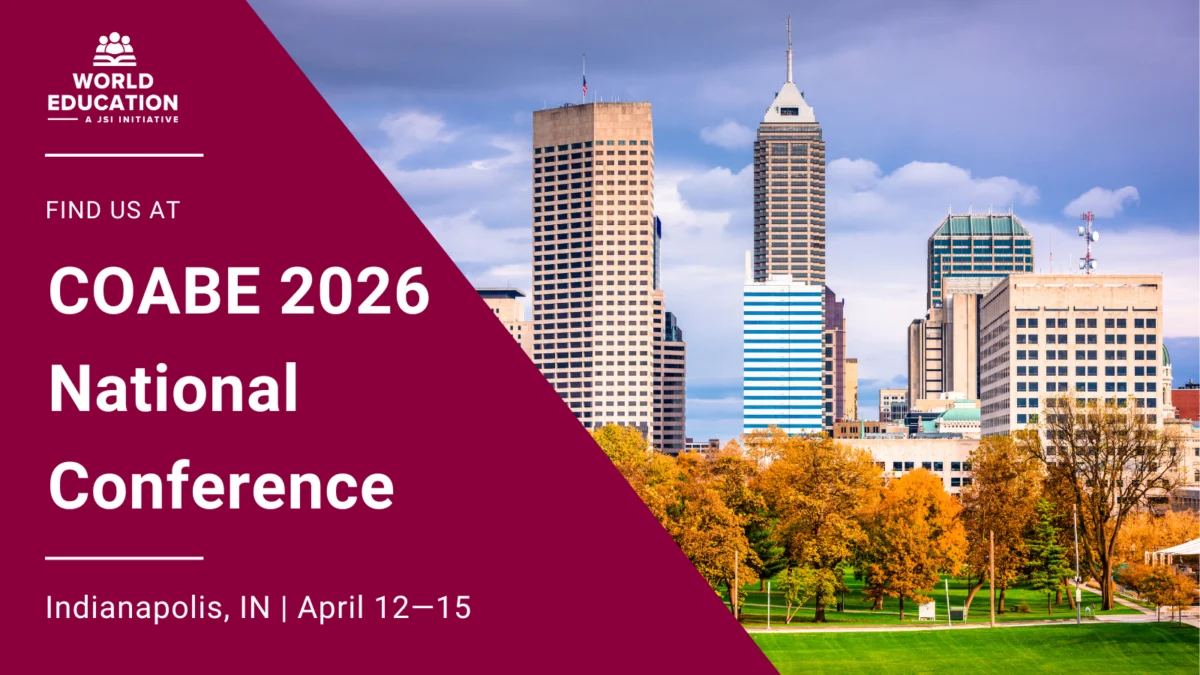
World Education, an initiative of JSI Research & Training Institute, Inc., has announced its extensive participation in the Commission on Adult Basic Education (COABE) 2026 National Conference, scheduled to take place in Indianapolis, Indiana, from April 12 to April 15. As a leading voice in adult education and workforce development, World Education is set to present a series of workshops and research-driven sessions focusing on the intersection of technology, digital equity, and instructional design. The conference, which serves as the premier gathering for adult education practitioners, administrators, and policymakers in the United States, will provide a platform for World Education experts to share advancements in Generative Artificial Intelligence (AI), digital literacy frameworks, and professional development strategies tailored for the modern learner.
Context and Background of the COABE National Conference
The COABE National Conference is widely regarded as the most significant event in the adult education sector, drawing thousands of attendees annually. The 2026 iteration in Indianapolis arrives at a critical juncture for the field. According to data from the Program for the International Assessment of Adult Competencies (PIAAC), approximately 43 million adults in the United States possess low literacy skills, while a substantial portion of the workforce lacks the digital fluency required for contemporary employment.
World Education’s involvement in COABE 2026 reflects a long-standing commitment to bridging these gaps. Since its founding, World Education has focused on improving the lives of the marginalized through education and economic development. By integrating with JSI, the organization has expanded its capacity to address the social determinants of education and health on a global scale. At the 2026 conference, the organization intends to move beyond theoretical frameworks, offering practical, scalable solutions that address the "digital divide"—the gap between those who have access to modern information technology and those who do not.
Chronological Overview of World Education Sessions
The four-day event will feature a dense schedule of presentations from World Education’s subject matter experts. These sessions are designed to provide both in-person and virtual attendees with actionable insights into classroom management and institutional policy.
Monday, April 13: Frameworks and Policy Implementation
The first full day of programming for World Education begins with a focus on measurable skill development. Jeff Goumas will lead a session from 8:00 to 9:10 AM in the JW Grand Ballroom 2 titled "Using BRIDGES Skills Checklists to Drive Digital Skills Development in Any Context." This presentation highlights the BRIDGES framework, a tool designed to standardize the assessment of digital competencies across diverse learning environments.
Later that morning, from 11:50 AM to 1:00 PM, Sandy Goodman and Catalina González will present "From Policy to Practice: Implementation Lessons from Boston’s Digital Literacy Initiative" in the JW Grand Ballroom 4. This session will provide a case study of urban policy execution, detailing how municipal investments in digital literacy can be transformed into effective community-based programs.
The afternoon session, "Practical Solutions from Research: Digital Tools to Support Teaching and Learning from the CREATE Network," will take place from 3:50 to 5:00 PM in Room 205. This in-person-only event features Jen Vanek and Jeff Goumas alongside partners from the American Institutes for Research (AIR). The session will translate complex research findings from the CREATE Network into pedagogical strategies that instructors can implement immediately.
Tuesday, April 14: AI Literacy and Open Educational Resources
The second day of the conference shifts focus toward emerging technologies and resource accessibility. Rachel Riggs will open the day at 8:00 AM in the JW Grand Ballroom 3 with "Aligning AI Literacy with Learning and Work Goals in Adult Ed." As Generative AI continues to reshape the labor market, Riggs will argue that AI literacy is no longer an elective skill but a fundamental requirement for workforce readiness.
At 11:50 AM, Jen Vanek and Jeff Goumas, joined by Stephen Sireci of UMass Amherst, will present "Free and Open Online Literacy Curriculum: Leveraging SkillBlox and ASAP for Adult Readers." This session focuses on the use of Open Educational Resources (OER) to reduce costs for adult education programs while maintaining high instructional standards.
The 2:00 PM time slot features two concurrent sessions. In Room 206, Vanek and Goumas will join Stephanie Cronen and Neha Nanda from AIR to discuss "Practitioner-Friendly Findings: How to Leverage Free Research-based Resources to Teach In-Demand Skills." Simultaneously, in the JW Grand Ballroom 3, Rachel Riggs will lead "Generative AI and the EdTech Maker Space: Leveraging GenAI to Fill Learning Resource Gaps," which explores how educators can use AI to rapidly develop customized learning materials.
Wednesday, April 15: Professional Development and Instructional Strategies
The final day of the conference emphasizes the sustainability of educational improvements through professional development. Dani Scherer will present "Maximum Impact Professional Development: A Three-Pronged Approach" from 11:50 AM to 1:00 PM in Room 209. This session outlines a model for continuous educator growth that balances technical training with pedagogical theory.
In the afternoon, Eliana Stanislawski will conduct two consecutive sessions. The first, "EdTech in Action: Structuring a Digital Literacy Learning Series for Adult Educators" (1:30–2:40 PM, Room 209), provides a blueprint for institutions to build their own internal digital training programs. The second, "Engaging Strategies for Online Instruction of Literacy-Level Adults" (3:00–4:10 PM, JW Grand Ballroom 4), addresses the specific challenges of teaching foundational literacy skills in a virtual environment.
Supporting Data: The Digital Skills Gap in the United States
The themes presented by World Education at COABE 2026 are supported by a growing body of evidence regarding the "digital skill gap." A report by the National Skills Coalition found that 92% of jobs now require some level of digital skill, yet nearly one-third of workers lack the foundational digital skills necessary to qualify for these roles.
Furthermore, the "double burden" of low literacy and low digital proficiency disproportionately affects immigrants, older workers, and individuals living in poverty. World Education’s focus on "literacy-level adults" and "accessible learning opportunities" is a direct response to these statistics. By providing free resources like SkillBlox and the BRIDGES checklists, the organization aims to lower the barrier to entry for both teachers and students.
Analysis of Implications: The Rise of Generative AI in Adult Education
A significant portion of the World Education agenda is dedicated to Generative AI, reflecting a broader trend in the educational sector. While much of the national conversation around AI has focused on academic integrity in higher education, World Education is pivoting the discussion toward "AI Literacy" for the adult learner.
The implication of these sessions is that AI can serve as a powerful equalizer. For adult learners who may have limited time due to work and family commitments, AI-driven tools can provide personalized, 24/7 tutoring and feedback. For instructors, AI can automate the administrative burden of lesson planning, allowing more time for direct student engagement. However, the sessions led by Rachel Riggs suggest that without intentional instruction on how to use these tools ethically and effectively, the digital divide may actually widen as AI becomes more prevalent in the workplace.
Collaborative Partnerships and Institutional Impact
The presence of partners such as the American Institutes for Research (AIR) and UMass Amherst in World Education’s sessions underscores the collaborative nature of modern adult education research. These partnerships allow for a "research-to-practice" pipeline, ensuring that the strategies taught at COABE are grounded in empirical data.
The CREATE Network (National Center for Research on Adult Education for Teaching and Learning), mentioned in several sessions, represents a federally funded effort to improve adult education outcomes. By bringing these findings to the COABE stage, World Education acts as a bridge between high-level academic research and the "front lines" of the classroom.
Conclusion and Future Outlook
As World Education prepares for Indianapolis, the organization’s goal is to foster enduring partnerships that transcend the four-day conference. The "Partner with Us" initiative highlights their broader service offering, including education systems strengthening and policy development.
The COABE 2026 National Conference represents a pivotal moment for adult education in the United States. As technology evolves at an unprecedented pace, organizations like World Education provide the necessary framework to ensure that adult learners are not left behind. The focus on digital literacy, AI integration, and professional development in Indianapolis is expected to set the tone for adult education priorities for the remainder of the decade. Through its comprehensive suite of presentations, World Education continues to advocate for a future where education systems are robust, inclusive, and technologically advanced, ensuring equitable outcomes for all learners regardless of their starting point.