RICHMOND, VA – In a landmark move signaling a profound reevaluation of its Confederate past, Virginia Governor Abigail Spanberger this week signed into law House Bill 167 (HB167), effectively ending state tax exemptions for several organizations dedicated to preserving the legacy of the Confederacy. The legislation repeals a contentious carve-out in the state’s tax code that has financially benefited groups such as the United Daughters of the Confederacy (UDC) and the Sons of Confederate Veterans since the 1950s, an era characterized by aggressive resistance to racial desegregation and the entrenchment of Jim Crow laws.
The passage and enactment of HB167 represent a pivotal moment in Virginia’s ongoing struggle to reconcile its complex history, moving away from state-sanctioned support for narratives that romanticize the Confederacy and minimize its foundational role in preserving slavery. The law’s immediate effect will be to remove tax-exempt status for real and personal property owned by entities like the Virginia Division of the UDC, the General Organization of the UDC, the Confederate Memorial Literary Society, and the Stonewall Jackson Memorial, Incorporated. This shift is estimated to save the state an annual sum, with the UDC alone facing an estimated $57,000 in property taxes on its Richmond headquarters, a marble-clad building reportedly valued at approximately $4.7 million today.
The Genesis of State Support: A Segregation-Era Mandate
The origins of these tax exemptions are deeply intertwined with Virginia’s "Massive Resistance" campaign against the Supreme Court’s 1954 Brown v. Board of Education ruling. While many Confederate monuments were erected in the late 19th and early 20th centuries during the height of Jim Crow, the 1950s and 1960s saw a renewed surge in monument construction and state support for pro-Confederate groups. This period marked a deliberate effort to reinforce racial hierarchy and defy federal desegregation mandates.
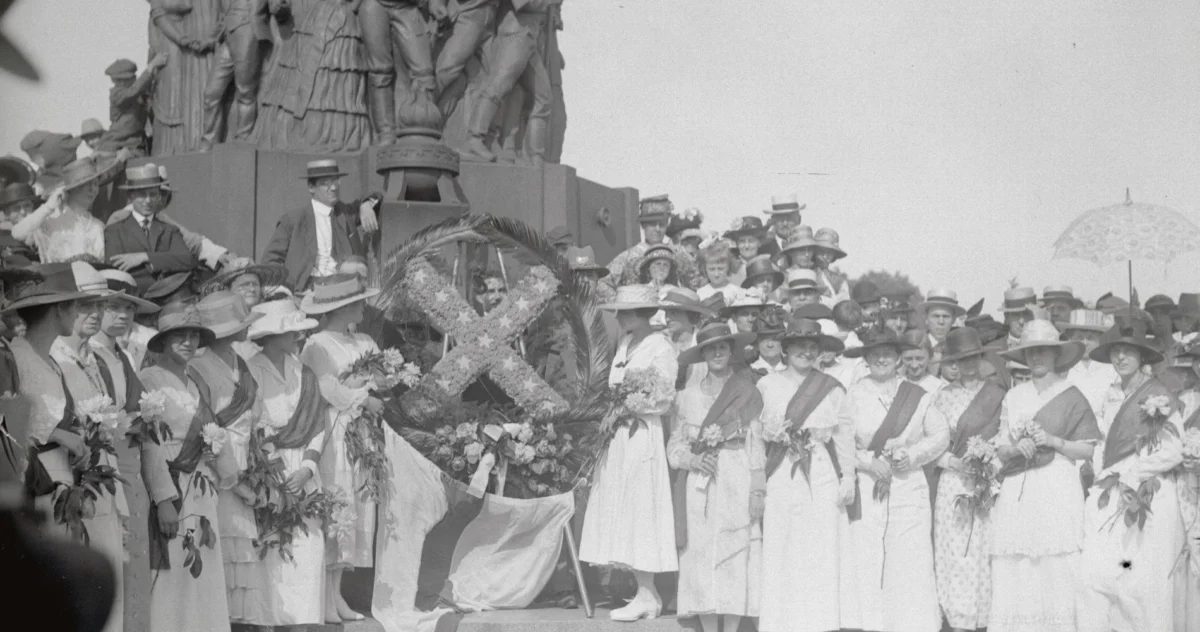
In 1950, then-Virginia Governor John S. Battle, a staunch segregationist, signed a deed granting the UDC prime land in Richmond for its headquarters. Just two years later, in 1952, the General Assembly explicitly exempted the UDC from the state recordation tax, a levy typically applied when property sales are registered. Notably, the UDC’s Virginia division was the sole organization singled out by name in this section of the tax code, underscoring the specific and deliberate nature of the state’s financial backing. This preferential treatment, as WHRO reported, was "part of a wave of resistance to racial integration and civil rights efforts in the commonwealth."
Delegate Alex Askew, who championed HB167, articulated the historical purpose of such monuments and the groups behind them. He told WHRO that these installations were designed "to show African Americans and certain individuals, certain communities, that they were second-class citizens." Virginia, a state that once served as the capital of the Confederacy, harbors more Confederate monuments than any other state in the nation, a testament to this concerted effort to shape public memory and intimidate Black citizens.
The Legislative Journey of HB167
The path to enacting HB167 was part of a broader, years-long legislative effort in Virginia to confront and dismantle symbols and financial supports tied to the Confederacy. Delegate Askew first introduced the legislation, aiming to modernize Virginia’s tax policy. The bill navigated a complex legislative landscape, passing through various committees where it faced both fervent support and historical opposition.
Advocates for the bill argued that continuing to provide tax relief to "historically pro-slavery institutions" was anachronistic and antithetical to contemporary values of equality and progress. Askew stated in 2024 that ending these exemptions was a step towards a "fairer, more inclusive tax policy that truly reflects our commitment to equality and progress." He reiterated in January to WHRO that these groups "help glorify the Confederacy and essentially, I believe, have whitewashed the commonwealth’s history. It’s truthfully time to move forward."
Opponents, historically, have often framed such tax exemptions as a way to preserve historical heritage or honor ancestors, rather than promoting any specific ideology. However, this argument has increasingly lost traction in Virginia as the state has moved to more truthfully acknowledge the Confederacy’s origins in slavery and white supremacy. The bill’s successful passage through both chambers of the General Assembly reflects a significant shift in the state’s political will and a growing consensus that state resources should not implicitly endorse a divisive and painful past.
Reactions and Implications
Governor Spanberger’s signature on HB167 was met with praise from civil rights advocates and the bill’s sponsors. "Governor Spanberger’s signing of [HB167] is a proud moment and an important step forward for Virginia," Delegate Askew said in a statement on Monday. The move aligns with a national trend of states and municipalities re-examining their historical ties to the Confederacy, particularly in the wake of renewed calls for racial justice and equity.
For the affected organizations, the loss of tax-exempt status will undoubtedly have financial implications. The UDC, for instance, reported approximately $2.1 million in revenue and $1.1 million in expenses in 2025. While the estimated $57,000 in property taxes for their Richmond headquarters may seem modest in comparison to their overall budget, it represents a symbolic and practical withdrawal of state endorsement that has been in place for over three-quarters of a century. These groups have historically relied on such exemptions to maintain their properties, fund their activities, and perpetuate their interpretations of history.
Virginia’s Broader Reckoning with its Past
The repeal of these tax exemptions is not an isolated incident but rather a significant component of Virginia’s comprehensive effort to confront its legacy of slavery and Jim Crow. The state has undertaken several other initiatives aimed at distancing itself from the "Lost Cause" narrative, a post-Civil War ideology that asserted the war was not about slavery, minimized the Confederacy’s defeat, and celebrated the South’s supposed triumph over Reconstruction.
Concurrently with HB167, Governor Spanberger also signed into law a bill discontinuing specialty license plates featuring Confederate figures like Robert E. Lee and symbols associated with the Sons of Confederate Veterans. This follows earlier legislative actions that empowered localities to remove or relocate Confederate monuments, leading to the dismantling of numerous statues, most notably along Richmond’s historic Monument Avenue.
Furthermore, the governor has taken steps to address the influence of the "Lost Cause" within state institutions. She sent back to the Assembly with recommendations a bill (HB1377) to establish a task force. This task force is charged with recommending changes to, among other things, distance the Virginia Military Institute (VMI) from the "Lost Cause" narrative that has historically permeated its curriculum and culture. VMI, one of the oldest state-supported military colleges in the United States, has faced increasing scrutiny for its historical ties to Confederate leaders and its perceived role in perpetuating a romanticized view of the Civil War.
These legislative and administrative actions are complemented by ongoing legal and community efforts at the local level. In the Shenandoah Valley, for example, Black students have filed a lawsuit against a school board that reinstated the names of two schools originally christened for Confederate generals. The students argue that the board’s decision was a deliberate act to make Black students feel unwelcome, highlighting that these generals not only fought for slavery but were also outspoken proponents of racist ideologies. This case, still pending, underscores the enduring impact of Confederate symbolism and the continued fight for inclusive public spaces and institutions.
A Stark Contrast: Virginia vs. Federal Actions
Virginia’s proactive approach to confronting its difficult history stands in notable contrast to certain actions taken at the federal level in recent years. While Virginia moves to dismantle symbols and financial supports for the Confederacy, the Trump administration has been criticized for efforts to downplay the role of slavery in American history and, in some instances, restore or protect Confederate monuments.
For example, the administration ordered the removal of content related to slavery at several national parks and reportedly pressured the Smithsonian Institution to remove exhibits focusing on "how bad Slavery was." Last year, the Army, under the previous administration, reversed a congressionally mandated, multimillion-dollar effort to remove Confederate names from military bases and, controversially, changed some base names to those that honored secessionists who fought against the United States to preserve slavery and white supremacy. These federal actions highlight a significant ideological divide in how the nation chooses to interpret and present its historical narrative, particularly concerning the Civil War and its aftermath.
However, Virginia is not alone among states and private entities in its commitment to a more truthful and inclusive historical reckoning. Other states and private museums across the country are also working to preserve history by confronting the difficult truths about America’s past, emphasizing the importance of education and remembrance that acknowledges the full scope of historical events and their impact. These efforts seek to ensure that future generations understand the profound and painful legacy of slavery and white supremacy, rather than allowing it to be whitewashed or forgotten.
As Delegate Askew concluded, the essence of these changes is "about moving forward from our dark past that our commonwealth has had." The signing of HB167 is more than a financial adjustment; it is a powerful symbolic declaration that Virginia is committed to a future built on equality, historical accuracy, and a public memory that honors all its citizens. It signals a new era where state resources will no longer inadvertently endorse a divisive past, but instead support a vision of a more inclusive commonwealth.