
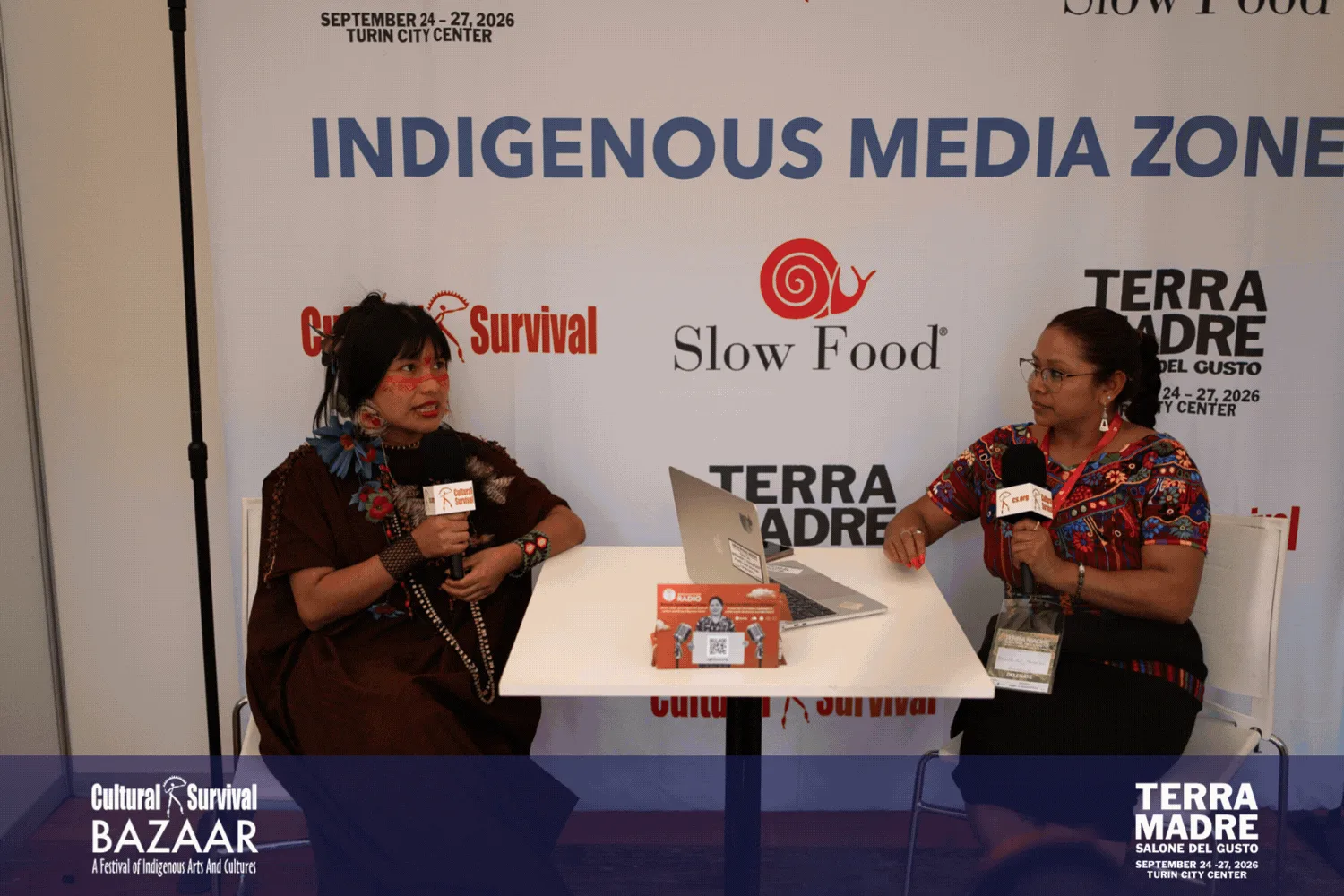
From September 24 to 27, 2026, Turin, Italy, served as the epicenter of a global movement for ecological and agricultural justice as it hosted the prestigious Terra Madre Salone del Gusto. Organized collaboratively by Slow Food International, the City of Turin (Città di Torino), and the Regional Government of Piedmont (Regione Piemonte), the multi-day gathering convened more than 1,500 delegates hailing from 125 countries. Among the prominent international organizations participating in the event was Cultural Survival, an advocacy group dedicated to defending Indigenous Peoples’ rights and cultures worldwide. The overarching mandate of the 2026 assembly was to celebrate global biodiversity, facilitate the cross-cultural exchange of traditional stories, and reaffirm the foundational capacity of food to build diplomatic and social bridges across communities, cultures, and national borders.
Background and Context of Terra Madre Salone del Gusto
Established in 2004 by Slow Food, Terra Madre has evolved into a premier international forum designed to bring together food producers, fisherfolk, academics, chefs, Indigenous representatives, and activists from every corner of the globe. The core philosophy of the event challenges industrial food models by championing sustainable agriculture, local food economies, and the preservation of culinary traditions that risk extinction.
The 2026 edition arrived at a critical juncture in environmental governance, characterized by escalating climate volatility, accelerating biodiversity loss, and deepening global food insecurity. By selecting biodiversity as its central theme, the steering committee deliberately shifted the focus toward structural solutions rooted in ecological stewardship. Within this framework, Indigenous Peoples emerged not merely as participants, but as the central authorities on land management and sustainable agriculture.
The Chronology of the 2026 Summit
The four-day summit followed a carefully structured itinerary designed to maximize collaboration, policy dialogue, and cultural visibility.
The opening day, September 24, featured high-level plenary sessions and regional assemblies organized largely through the Slow Food Indigenous Peoples’ Network. Delegates established working groups to address localized challenges, ranging from water scarcity in East Africa to land encroachment in Latin America.
On September 25, the focus shifted toward structural frameworks of food sovereignty. Advisory Council meetings allowed leaders to compare notes on legislative threats to traditional territories and formulate unified advocacy positions. Simultaneously, interactive workshops explored the intersection of traditional ecological knowledge and modern agroecology.
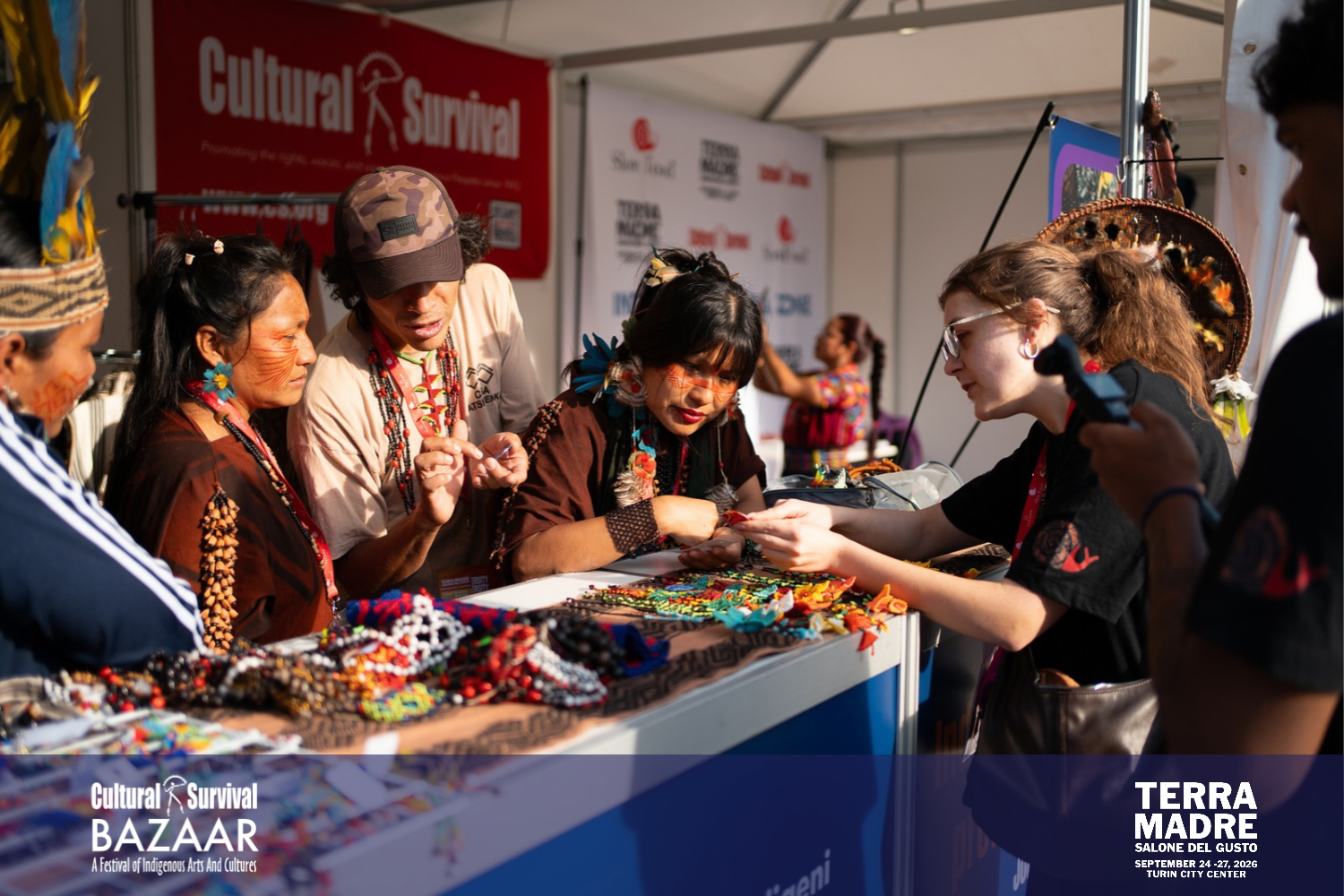
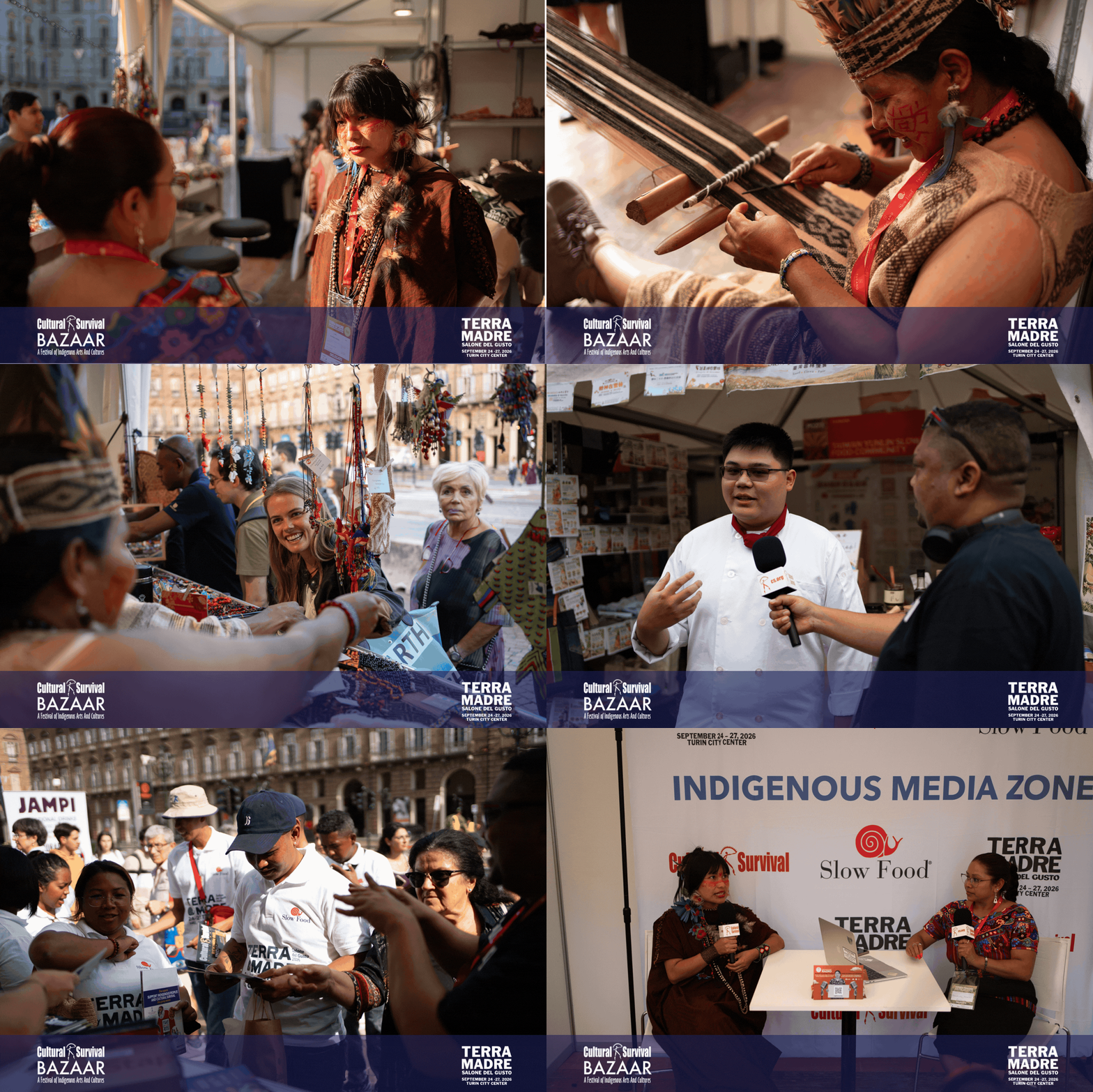
September 26 marked a day of public engagement and artistic celebration. Cultural Survival facilitated the showcase of international Indigenous artisans through its renowned bazaar platform, giving attendees direct access to works produced by global Indigenous creators. Concurrently, the Indigenous Media Zone commenced its intensive schedule of live interviews, capturing frontline perspectives from delegates representing diverse linguistic and geographic backgrounds.
The concluding day, September 27, synthesized the outcomes of the preceding panels into actionable declarations. Delegates ratified cooperative agreements designed to bolster seed-saving networks and secure ancestral territories, bringing a formal close to a historic convergence of global food movements.
Empirical Data on Indigenous Land Stewardship and Biodiversity
The discussions at Terra Madre 2026 were underpinned by stark demographic and ecological metrics that highlight the disproportionate role Indigenous communities play in sustaining the global biosphere. According to demographic figures cited during the summit, the global Indigenous population stands at approximately 476.6 million individuals, representing a mere 6.2 percent of the total human population.
Despite accounting for a small fraction of global demographics, Indigenous Peoples exercise direct management over roughly 25 percent of the Earth’s total land surface. Furthermore, data compiled by the World Resources Institute indicates that these ancestral territories harbor upwards of 40 percent of all designated Key Biodiversity Areas on the planet.
The contribution of Indigenous agricultural innovation to the modern global diet is similarly profound. Historical and scientific assessments confirm that over 60 percent of the global food supply—measured by agricultural crops consumed daily—originates from varieties first domesticated, developed, and cultivated by Indigenous Peoples, particularly across the Americas. Staple crops such as maize, potatoes, squash, beans, and various legumes owe their genetic resilience and diversity to millennia of selective breeding by ancestral stewards.
Official Statements and Institutional Perspectives
The institutional weight of the gathering was reflected in statements released by the principal organizing bodies. Slow Food International issued a comprehensive release emphasizing that biological diversity is inextricably linked to cultural identity.
"From seed guardians in Latin America and Indigenous communities safeguarding ancestral knowledge to young leaders strengthening food systems in Somalia, their stories remind us that biodiversity is not only about what we grow. It is about who we are, what we carry forward, and how we choose to live together," Slow Food stated during the summit.
Cultural Survival representatives echoed these sentiments, stressing that genuine environmental sustainability cannot be achieved without respecting the self-determination of land-based communities. Observers noted that the alignment between large-scale international NGOs like Slow Food and grassroots Indigenous networks signals a maturing coalition capable of influencing global environmental policy.
The Slow Food Indigenous Peoples’ Network as a Catalyst for Change
A vital component of the 2026 summit was the active functioning of the Slow Food Indigenous Peoples’ Network. This transnational platform serves as an ongoing conduit through which Indigenous communities share lived experiences, transfer intergenerational land-care techniques, and co-create localized solutions grounded in their specific territories.
Through a continuous cycle of regional assemblies, Advisory Council meetings, and cross-cultural dialogues, the network equips participants with the tools needed to confront modern ecological crises. Analysts observe that food sovereignty cannot exist independently of land rights; thus, the network’s emphasis on territorial defense is recognized as a necessary precondition for agricultural security. By fostering spaces where elders can transmit knowledge to younger generations—such as the youth leaders active in East African food systems—the network ensures the continuity of sustainable practices that industrial frameworks often fail to replicate.
Showcasing Global Indigenous Art and Craftsmanship
Beyond policy debates and agricultural panels, Terra Madre 2026 integrated the cultural dimensions of Indigenous existence through the display of traditional arts. Cultural Survival Bazaars curated a prominent exhibition featuring the work of four distinct international artist collectives and individual creators.
Among the participants were ANARO, an organization representing the Ashaninka people of Peru, and Manitas Creativas, representing the Matsigenka community, also from Peru. Their contributions highlighted Amazonian textile traditions, sustainable forest harvesting, and culturally significant design motifs. Representing North America was Philbert Begay, a skilled Diné (Navajo) silversmith from the United States, whose metalwork reflects traditional iconography and contemporary Indigenous aesthetics. Completing the cohort was the Afri-Root Collective, uniting Baganda and Acholi creators from Uganda, who showcased East African craft heritage. This artistic showcase underscored the reality that Indigenous economies are multifaceted, combining ecological stewardship with sophisticated artisan production.
Amplifying Voices through the Indigenous Media Zone
To ensure that the narratives generated at Terra Madre reached audiences beyond the physical confines of the venue, the Cultural Survival team established and operated a dedicated Indigenous Media Zone. This initiative provided a professional broadcast platform for Indigenous delegates to articulate their struggles, triumphs, and strategic visions regarding food sovereignty.
The media zone conducted extensive video interviews across multiple languages, ensuring accessibility for global stakeholders. Sessions conducted in English featured diverse perspectives from international delegates detailing community-led conservation efforts. Concurrently, Spanish-language interviews (En español) captured the realities of Latin American land defenders confronting extractive industries and agricultural monocultures. Additional segments conducted in Italian bridged the gap between local European audiences and the global Indigenous delegations hosted in Turin. These recorded conversations serve as a permanent archival resource, documenting frontline testimonies for researchers, educators, and policy makers worldwide.
Broader Impact, Analysis, and Policy Implications
The implications of Terra Madre Salone del Gusto 2026 extend far beyond the four-day duration of the event. As international bodies grapple with legally binding targets under global biodiversity frameworks, the empirical data presented in Turin underscores the strategic necessity of recognizing Indigenous land titles.
From an analytical perspective, the current global reliance on industrial monocultures has demonstrated severe vulnerabilities to climate shocks, supply chain disruptions, and soil degradation. By contrast, Indigenous food systems—characterized by polyculture, crop rotation, and deep ecological adaptation—offer a scientifically validated blueprint for climate-resilient agriculture.
However, experts at the summit warned that these systems remain under severe threat from illegal deforestation, mining concessions, and state-sanctioned land grabs. The policy consensus emerging from the 2026 assembly calls for immediate legislative protections for Indigenous land defenders, increased direct funding for community-led agroecology, and the formal integration of traditional ecological knowledge into national and international climate adaptation plans.
Ultimately, Cultural Survival’s participation at Terra Madre 2026 reinforced a central tenet: that global food security and environmental preservation are inextricably bound to the autonomy and well-being of the world’s Indigenous Peoples. As communities return to their respective territories across the 125 represented nations, the alliances forged in Turin will serve as a vital bulwark in the ongoing defense of the planet’s biological and cultural heritage.




