
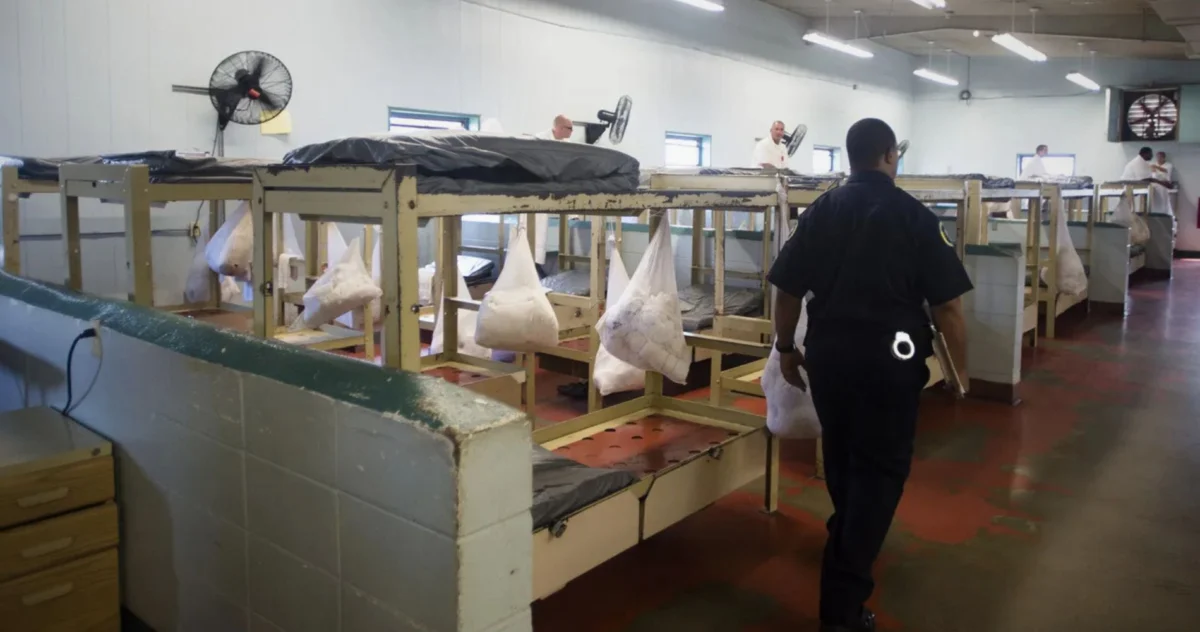
The indictment, returned on December 5, 2025, represents a significant escalation in the legal scrutiny facing Alabama’s correctional staff. Melvin Ledarrius Thomas, 35, faces two counts: reckless manslaughter and failing to perform a legal duty regarding a person in custody. These charges stem from the death of 45-year-old Antwion Webb, who was killed while incarcerated at the William E. Donaldson Correctional Facility in Bessemer, Alabama. The case has ignited renewed debate over the systemic culture within the Alabama Department of Corrections (ADOC), where allegations of negligence, mismanagement, and, in extreme cases, complicity in inmate violence have persisted for years.
The Fatal Incident at Donaldson Correctional Facility
The events leading to the death of Antwion Webb unfolded on the night of Friday, September 12, 2025. According to investigative reports, Webb was subjected to a violent assault involving a sharp-force weapon within the confines of the Donaldson facility. The severity of the injury—a deep stab wound to the chest—proved fatal. Despite the proximity of correctional staff to the living quarters where the assault occurred, Webb did not receive immediate, life-saving intervention.
The coroner’s report confirmed that the injury was the direct cause of death, with Webb being pronounced deceased at 4:36 a.m. on Saturday, September 13, 2025. The indictment against Thomas alleges that his actions—or lack thereof—directly contributed to this outcome. Specifically, investigators assert that Thomas, who was on duty at the time, knowingly returned Webb to the general population after the stabbing occurred, rather than securing medical attention. By allegedly failing to provide the duty-bound care required of a correctional officer, Thomas is accused of enabling a fatal neglect that led to the victim’s expiration.
Chronology of Events and Legal Proceedings
The timeline surrounding the incident and its aftermath highlights a period of administrative turnover and legal preparation:
- September 12, 2025: Antwion Webb is stabbed in the chest during an assault at the Donaldson Correctional Facility.
- September 13, 2025: Webb is pronounced dead at 4:36 a.m.
- September 20, 2025: Melvin Ledarrius Thomas’s employment with the Alabama Department of Corrections is terminated, exactly one week following the death of the inmate.
- December 5, 2025: A grand jury returns a two-count indictment against Thomas, charging him with reckless manslaughter and failure to perform a legal duty.
- August 26, 2026: Thomas is booked into the Jefferson County Jail. He is released the same day after posting a $20,000 bond.
- October 26, 2026: A formal arraignment is scheduled for the defendant to enter his plea regarding the charges.
The transition from the date of the incident to the formal indictment took nearly three months, a period consistent with complex investigations involving law enforcement oversight and internal affairs reviews within the ADOC.
Institutional Context: A System Under Fire
The charges against Thomas occur against a backdrop of long-standing federal intervention and public outcry regarding the safety of Alabama’s prisons. Since April 2019, when the U.S. Department of Justice (DOJ) notified the ADOC that its prison conditions were unconstitutionally violent, the state has struggled to implement meaningful reforms. The DOJ report specifically highlighted the high prevalence of inmate-on-inmate violence, sexual assault, and the failure of staff to protect those in their care.
Data provided by the Equal Justice Initiative (EJI) indicates that the situation has remained dire. More than 100 people have been killed in Alabama’s prisons since the 2019 federal notification. This alarming statistic places Alabama among the states with the highest prison homicide rates in the nation. Advocates have long argued that this violence is not merely the result of prison overcrowding or a lack of resources, but a byproduct of a culture that permits—and sometimes facilitates—staff negligence.
Allegations of Complicity and Mismanagement
For many observers, the case of Antwion Webb is not an isolated event but a symptom of a larger, systemic failure. Allegations have been documented suggesting that some correctional officers have engaged in "facilitation," where staff members turn a blind eye to gang-related activities or even provide access to weapons to specific incarcerated individuals to maintain control or settle disputes.
When correctional staff fail to act during an assault, or when they return a victim of violence to a volatile environment without medical triage, the legal boundaries of their immunity are tested. The charges against Thomas suggest that prosecutors are increasingly willing to look beyond the immediate perpetrator of a stabbing and examine the culpability of those tasked with oversight. This shift in prosecutorial strategy is a primary demand of criminal justice reform advocates, who argue that accountability for staff is the only way to deter further constitutional violations.
Implications for the Alabama Department of Corrections
The termination of Thomas’s employment just one week after the incident suggests that the ADOC was aware of serious discrepancies in his conduct almost immediately. However, the gap between his termination in 2025 and his booking in 2026 has raised questions about the speed of administrative accountability.
The broader impact of this case will likely influence ongoing federal litigation against the state. The ADOC is currently under immense pressure to modernize its facilities, increase staffing levels, and improve security protocols. Cases like the death of Antwion Webb provide a tangible illustration of why the DOJ continues to maintain an active interest in the state’s operations. If the prosecution of Thomas is successful, it could set a legal precedent in Alabama that shifts the liability for inmate deaths toward individual officers who fail to protect the people under their watch.
Public and Legal Reactions
While the legal process is currently in the discovery and pre-trial phase, the response from civil rights groups has been one of grim vindication. Organizations that track prison conditions have consistently pointed to the Donaldson Correctional Facility as a site of recurring violence. The indictment of a former guard is viewed by these groups as a necessary, albeit late, step toward justice for the victim’s family.
Conversely, correctional unions and some legal analysts may point to the complexities of prison staffing, noting that chronic understaffing at facilities like Donaldson often forces officers to work in dangerous conditions with inadequate support. While such arguments provide context, they rarely serve as a legal defense for the specific charge of failing to provide medical care to a person known to be injured.
As the October 26, 2026, arraignment approaches, the eyes of both the legal community and the families of those incarcerated in Alabama will be on the Jefferson County courthouse. The proceedings are expected to shed further light on the specific internal protocols—or lack thereof—that allowed a wounded man to be returned to the general population.
Ultimately, the case of Melvin Ledarrius Thomas serves as a stark reminder of the human cost of a correctional system that has, for years, struggled to meet basic standards of safety and care. Whether this indictment signals a turning point in the culture of the Alabama Department of Corrections remains to be seen, but it represents a clear signal that the status quo of "reckless" indifference will no longer go unchallenged by the state’s justice system. The resolution of this case will likely be studied by legal scholars and policy makers as a litmus test for how Alabama addresses the endemic violence within its borders, marking a critical chapter in the ongoing history of the state’s struggle for prison reform.




