In an era defined by persistent global volatility, economic shifts, rapid technological advancement, and complex societal challenges—often encapsulated by the acronym VUCA (Volatile, Uncertain, Complex, Ambiguous)—the strategic imperative for organizational resilience and innovation has never been more pronounced. Within this landscape, the composition of teams stands as a critical determinant of success, with a growing body of research highlighting the indispensable value of diversity. However, the contemporary understanding of diversity extends beyond readily observable demographic characteristics such as gender, race, and ethnicity, moving towards a more nuanced and profoundly impactful dimension: cognitive diversity. This distinct form of diversity, centered on varying ways individuals perceive, process, and apply information, is increasingly recognized as a potent differentiator, yet it remains frequently overlooked in traditional diversity, equity, and inclusion (DEI) frameworks.
The Evolving Imperative of Diversity in a Volatile World
The past decade has witnessed an accelerated recognition of diversity’s role in organizational performance. What began largely as a moral and legal compliance exercise has matured into a strategic business imperative. Organizations now widely acknowledge that diverse teams are more innovative, better at problem-solving, and more adept at mitigating risks. When combined with authentic inclusive leadership, this diversity also smooths the implementation of decisions by fostering greater buy-in, trust, and psychological safety among team members. Despite this evolving understanding, many corporate DEI initiatives and resource allocations continue to prioritize achieving demographic parity and representation, often at the expense of systematically cultivating cognitive diversity. While demographic representation remains vital for social equity and broad perspective-taking, a holistic approach that embraces both visible and invisible forms of diversity is essential to fully harness the potential inherent in a diverse workforce.
Beyond Demographics: A Historical Perspective on Diversity Initiatives
The journey of diversity in the workplace is a dynamic narrative, evolving significantly over several decades.
- The Early Foundations: Compliance and Representation (1960s-1990s): Initial efforts were primarily driven by civil rights legislation and affirmative action mandates in countries like the United States. The focus was on eliminating discrimination and ensuring equitable representation for historically marginalized groups. This era laid the groundwork for addressing overt biases and establishing legal frameworks for workplace equality.
- The Business Case Emerges: Linking Demographics to Performance (2000s-2010s): As societies progressed, the discourse shifted from purely legal and ethical arguments to include a robust "business case for diversity." Studies, notably from consulting firms like McKinsey & Company, began to draw correlations between gender and ethnic diversity in leadership positions and improved financial performance, such as higher profitability and returns on equity. These findings provided a compelling economic rationale for investing in diversity, pushing organizations to set targets for demographic representation. However, these early analyses often focused on surface-level diversity, occasionally struggling to fully explain the causal mechanisms beyond the presence of varied demographics.
- The Cognitive Shift: A Deeper Understanding of Value (2010s-Present): More recently, the field of organizational psychology and management research has deepened this understanding, identifying that the true value proposition of demographic diversity often lies in the cognitive diversity it can, but does not always, bring. A team composed of individuals from different backgrounds is more likely to possess varied life experiences, cultural lenses, and educational paths, which in turn can lead to diverse thinking styles, problem-solving approaches, and information processing preferences. This realization has spurred a shift towards investigating the underlying mechanisms through which diversity translates into tangible benefits, placing cognitive diversity at the forefront of advanced DEI strategies.
Unpacking Cognitive Diversity: The Science of Varied Thinking
Cognitive diversity refers to differences in how individuals process information, solve problems, and approach tasks. It encompasses varied perspectives, mental frameworks, and thinking styles, which can include preferences for innovation versus consolidation, or for applying individual expertise versus orchestrating the ideas of others.
Leading researchers in this field, such as Alison Reynolds and David Lewis, have dedicated decades to studying how individuals engage with new, uncertain, and complex situations, identifying the characteristics that define the most effective problem-solving teams. Their extensive studies consistently demonstrate that high-performing teams are not merely demographically diverse, but critically, are also cognitively diverse and operate within an environment of robust psychological safety. These teams are characterized by a pervasive sense of curiosity and a willingness to experiment. Conversely, teams lacking in either of these traits often fall into patterns of group conformity, stifling dissenting opinions, or devolve into unproductive combativeness, hindering effective collaboration and innovation.
Reynolds and Lewis’s research, building upon assessment tools like those developed by psychiatrist Peter Robertson, categorizes cognitive diversity into two primary dimensions:
- Knowledge and Information Processing: This dimension measures an individual’s preference when confronted with novel, uncertain, or complex challenges. It assesses whether they tend to consolidate and implement existing knowledge and proven methodologies, or if their inclination is to generate new knowledge, explore uncharted territories, and innovate solutions. A balanced team would feature individuals with both inclinations, ensuring both stability and adaptability.
- Perspective and Expertise Facilitation: This aspect explores whether individuals prefer to primarily apply their own specialized expertise and insights to a problem, or if they are more inclined to orchestrate and synthesize the ideas, knowledge, and perspectives of other team members. Teams that excel in this area include members who can both contribute deep individual expertise and facilitate broader collective intelligence.
The synthesis of high diversity across both these parameters is consistently linked to superior team performance in dynamic and ambiguous environments. Such teams naturally possess access to a broader spectrum of knowledge and perspectives. When this inherent diversity is coupled with a culture of psychological safety, it fosters an environment where constructive conflict, open exploration, and courageous experimentation are not just tolerated, but actively encouraged and engaged in, leading to superior outcomes.
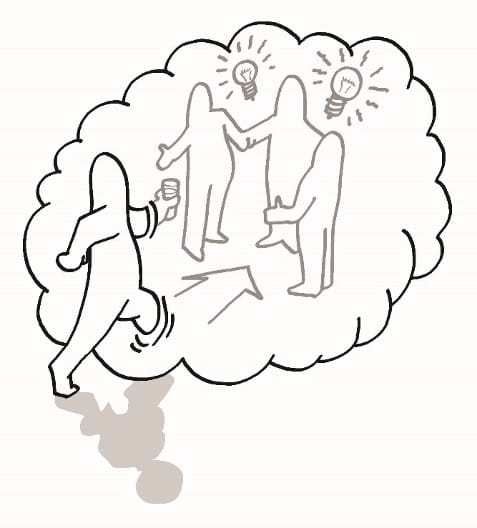
Beyond these specific dimensions, cognitive diversity also encompasses a wider array of individual personality styles—such as extroversion and introversion—and fundamental mental frameworks that govern approaches to risk assessment, process adherence, and complexity management. The inherent variation in these attributes among individuals underscores the critical need for complementary team members who can collectively cover a broader intellectual and operational landscape. It is logical that tackling novel and unknown issues necessitates both the application of existing knowledge and the proactive exploration of new frontiers. The challenge, however, lies in intentionally composing teams to strike this delicate balance, a task often overshadowed by the more visible focus on demographic diversity.
Quantifying the Advantage: Research and Data Supporting Cognitive Diversity
The benefits of cognitive diversity are not merely theoretical; they are increasingly supported by empirical evidence across various industries and organizational contexts.
- Enhanced Innovation and Problem-Solving: A 2017 study published in Harvard Business Review, aligning with Reynolds and Lewis’s work, indicated that cognitively diverse teams solve problems faster than cognitively homogenous teams. This acceleration stems from a wider array of mental models brought to bear on a problem, leading to more comprehensive analysis and novel solution generation. For instance, a team tackling a complex product development challenge with individuals who prefer both consolidating existing knowledge and generating new ideas can effectively leverage past successes while simultaneously exploring breakthrough innovations. Research by Deloitte has further supported this, noting that diverse teams can unlock innovation and boost revenues by enabling more ideas and better decision-making. Specifically, their research suggests that organizations with inclusive cultures are twice as likely to meet or exceed financial targets, three times more likely to be high-performing, and six times more likely to be innovative and agile. These outcomes are largely attributable to the underlying cognitive diversity that inclusion fosters.
- Mitigating Risk and Improving Decision Quality: Cognitively diverse teams are inherently better equipped to identify potential blind spots and challenge assumptions, leading to more robust decision-making and reduced risk exposure. When individuals approach a problem from different cognitive angles – some focusing on detail and process, others on big-picture strategy, and yet others on potential human impacts – the collective analysis is far more thorough. A study by Cloverpop found that diverse teams make better business decisions up to 87% of the time, and those decisions deliver 60% better results. This superior decision-making is a direct outcome of the varied perspectives and rigorous debate that cognitive diversity encourages, preventing groupthink and fostering critical evaluation.
These data points underscore that while demographic diversity often correlates with improved performance, the deeper causal link frequently resides in the cognitive diversity it enables. Organizations that intentionally cultivate varied thinking styles within their teams are better positioned to navigate complexity, innovate effectively, and maintain a competitive edge.
The Challenge of Implementation: Overcoming the Overlooked
Despite the compelling evidence, cognitive diversity remains an underemphasized aspect of many organizational strategies. Several factors contribute to this oversight:
- Difficulty in Measurement: Unlike demographic diversity, which can be quantified through simple metrics, cognitive diversity is more elusive. It requires specialized assessment tools, behavioral observation, and a nuanced understanding of individual thinking preferences, making it harder to track and report on.
- Human Tendency Towards Homophily: There is an inherent human inclination to connect with and prefer individuals who are similar to oneself (homophily). This natural bias can lead managers to inadvertently select team members who think like them, leading to homogenous groups that feel comfortable but lack intellectual friction.
- Recruitment Biases: Traditional recruitment processes often prioritize "culture fit," which can inadvertently lead to hiring individuals who conform to existing norms and thinking styles rather than those who bring complementary cognitive approaches. Interviewers may unconsciously favor candidates who share their communication styles or problem-solving methods, perpetuating homogeneity.
- Lack of Awareness and Training: Many leaders and HR professionals are not adequately trained to recognize, assess, or strategically leverage cognitive diversity. The focus on demographic targets often overshadows the deeper work required to build truly cognitively rich teams.
Forging Cognitively Diverse Teams: Strategic Approaches
To effectively harness the power of cognitive diversity, organizations must adopt multi-faceted strategies that integrate intentional team design with robust inclusive leadership practices.
- Redefining Recruitment and Team Formation:
- Beyond Culture Fit to Culture Add: Recruitment strategies must shift from seeking candidates who "fit" into the existing culture to those who "add" new perspectives and cognitive styles. This involves explicitly defining the cognitive gaps within a team or organization and actively recruiting for those missing elements.
- Utilizing Psychometric Assessments: Incorporating scientifically validated psychometric tools and behavioral assessments during the hiring process can help identify candidates’ cognitive preferences (e.g., analytical vs. creative, detail-oriented vs. strategic, convergent vs. divergent thinkers). These tools, when used ethically and in conjunction with other evaluation methods, can provide valuable insights into potential cognitive contributions.
- Intentional Team Design: For critical projects, leaders should proactively analyze the cognitive profiles of potential team members, ensuring a balanced mix of information processing styles and expertise facilitation preferences. This strategic approach prevents the formation of teams that are either too homogenous to innovate or too combative to collaborate effectively.
- Cultivating Inclusive Leadership as a Catalyst:
- Empowering Diverse Voices: Inclusive leaders actively solicit and value contributions from all team members, particularly those with dissenting or unconventional perspectives. They create safe spaces where individuals feel empowered to challenge assumptions, offer critiques, and explore alternative solutions without fear of reprisal.
- Facilitating Constructive Conflict: Rather than avoiding conflict, inclusive leaders recognize its potential as a source of innovation. They mediate disagreements, ensuring that debates remain focused on ideas and solutions rather than personal attacks, thereby transforming intellectual friction into productive outcomes.
- Addressing Leader Preparedness: A significant challenge lies in the fact that many leaders, despite expressing support for DEI, often feel "ill-equipped" to act inclusively, especially when facilitating difficult dialogues about exclusion or discrimination. This underscores the critical need for targeted leadership development programs that provide practical tools and behavioral frameworks. Programs like the "Inclusion Nudges for Leaders" action guide, with its 30 easy-to-apply inclusive actions, offer concrete, step-by-step guidance. Such resources empower leaders to integrate inclusive behaviors into their daily work, boosting their confidence and catalyzing wider cultural change. Deloitte Australia’s diversity research highlights the profound impact of inclusive leadership, indicating that leaders’ behaviors can account for up to a 70 percentage point difference in how included employees feel, with an even greater effect on minority group members.
- Embedding a Culture of Psychological Safety:
- Creating a "Speak Up" Culture: Beyond leadership, the entire organizational culture must reinforce psychological safety. This means establishing clear norms that encourage questioning, experimentation, and learning from failure. It involves systems that reward intellectual humility and curiosity, rather than just success.
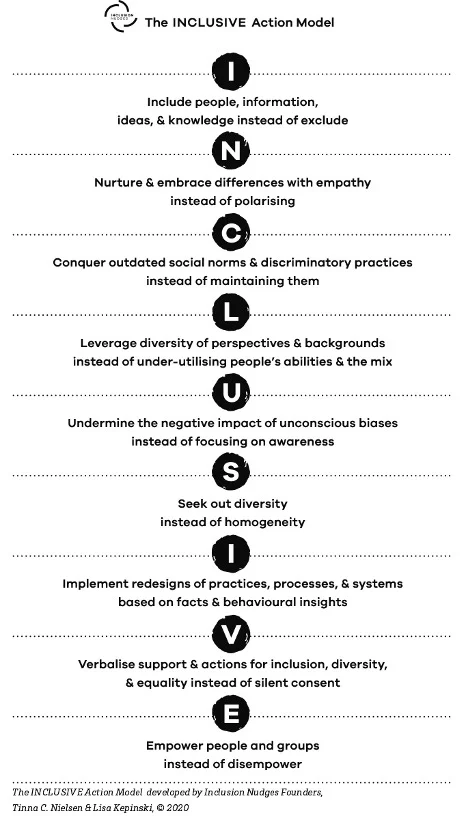
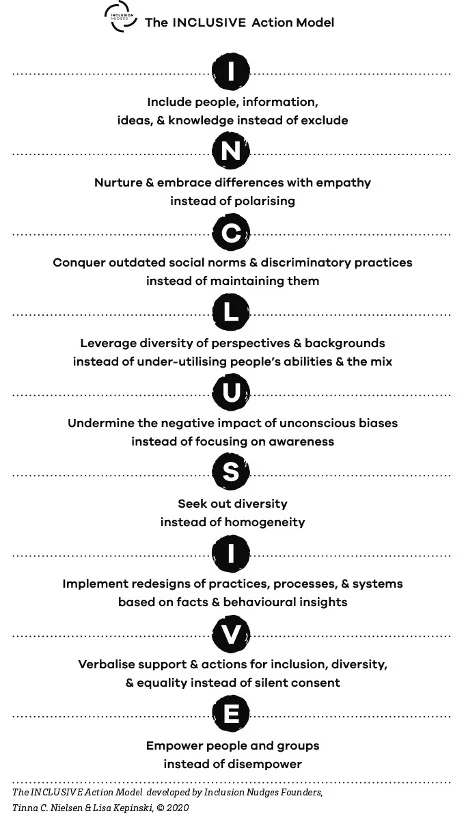
- Fairness, Respect, and Belonging: A truly inclusive culture ensures that all team members feel treated with fairness and respect, feel valued for their unique contributions, and experience a genuine sense of belonging. This foundation is crucial for individuals to feel comfortable sharing their unique cognitive perspectives. The Inclusion Nudges Inclusive Action Model provides a holistic framework for creating such cultures, addressing structures, behaviors, and systems simultaneously.
The Path Forward: Sustaining an Inclusive and Cognitively Rich Future
In an increasingly unpredictable world, the organizations that will thrive are those capable of continuous adaptation, rapid innovation, and resilient problem-solving. These capabilities are intrinsically linked to the ability to leverage a full spectrum of human intelligence, moving beyond surface-level diversity to deeply embrace cognitive richness. While the increase in CEO and world leader support for DEI in recent years is a positive development, the critical next step involves cascading this executive commitment into tangible, actionable changes across all levels of management.
The shift towards prioritizing cognitive diversity represents an evolution in how organizations understand and harness human potential. It demands a proactive, intentional approach to team formation, robust investment in inclusive leadership development, and the cultivation of organizational cultures where every mind feels safe, valued, and empowered to contribute its unique perspective. By making cognitive diversity a cornerstone of their strategic talent initiatives, organizations can not only unlock unparalleled innovation and resilience but also build more equitable and dynamic workplaces capable of navigating the uncertainties of the future. The ongoing dialogue and sharing of best practices, such as those facilitated by initiatives like Inclusion Nudges, will be crucial in enabling and empowering more organizations to embark on this transformative journey.