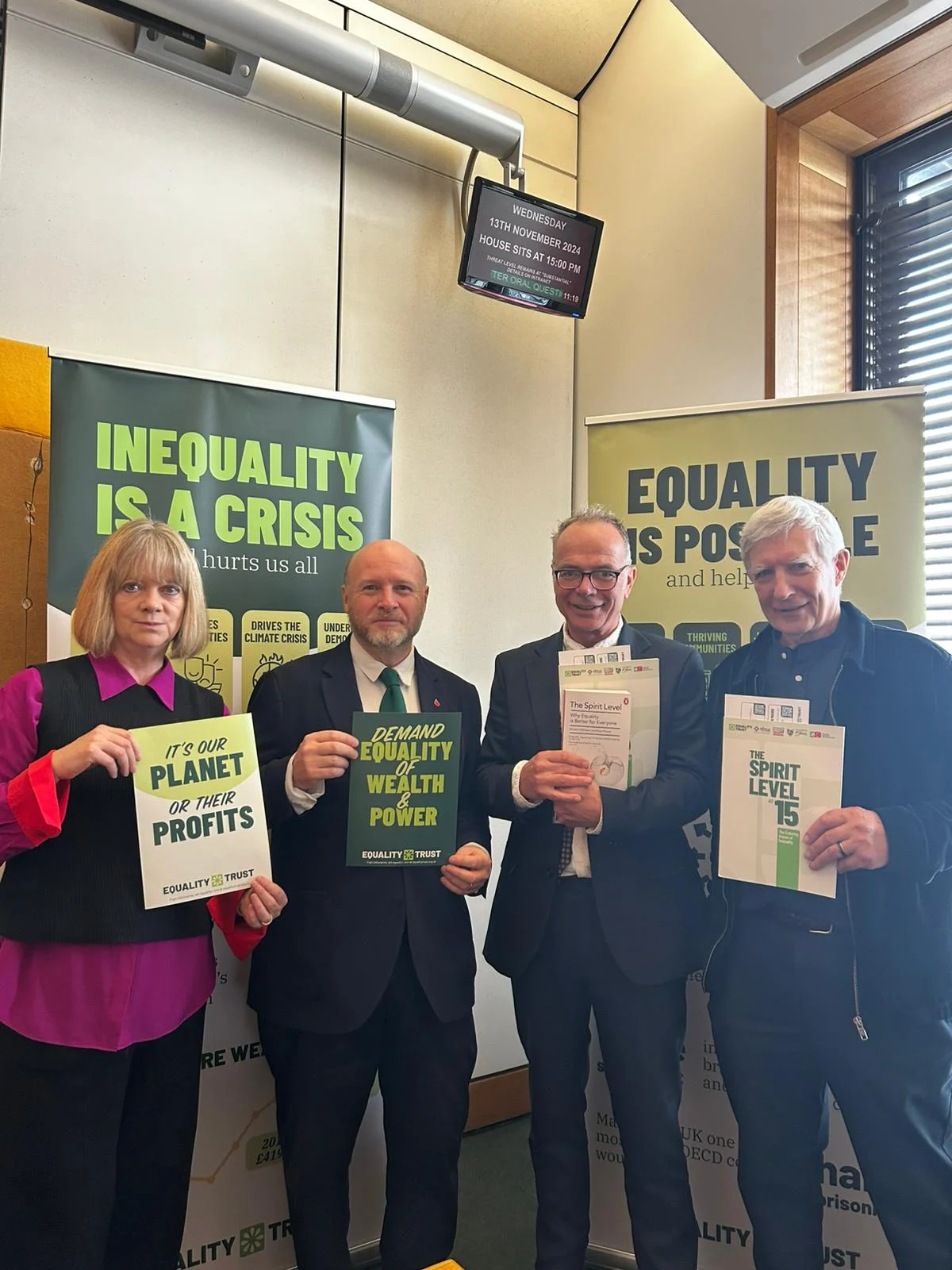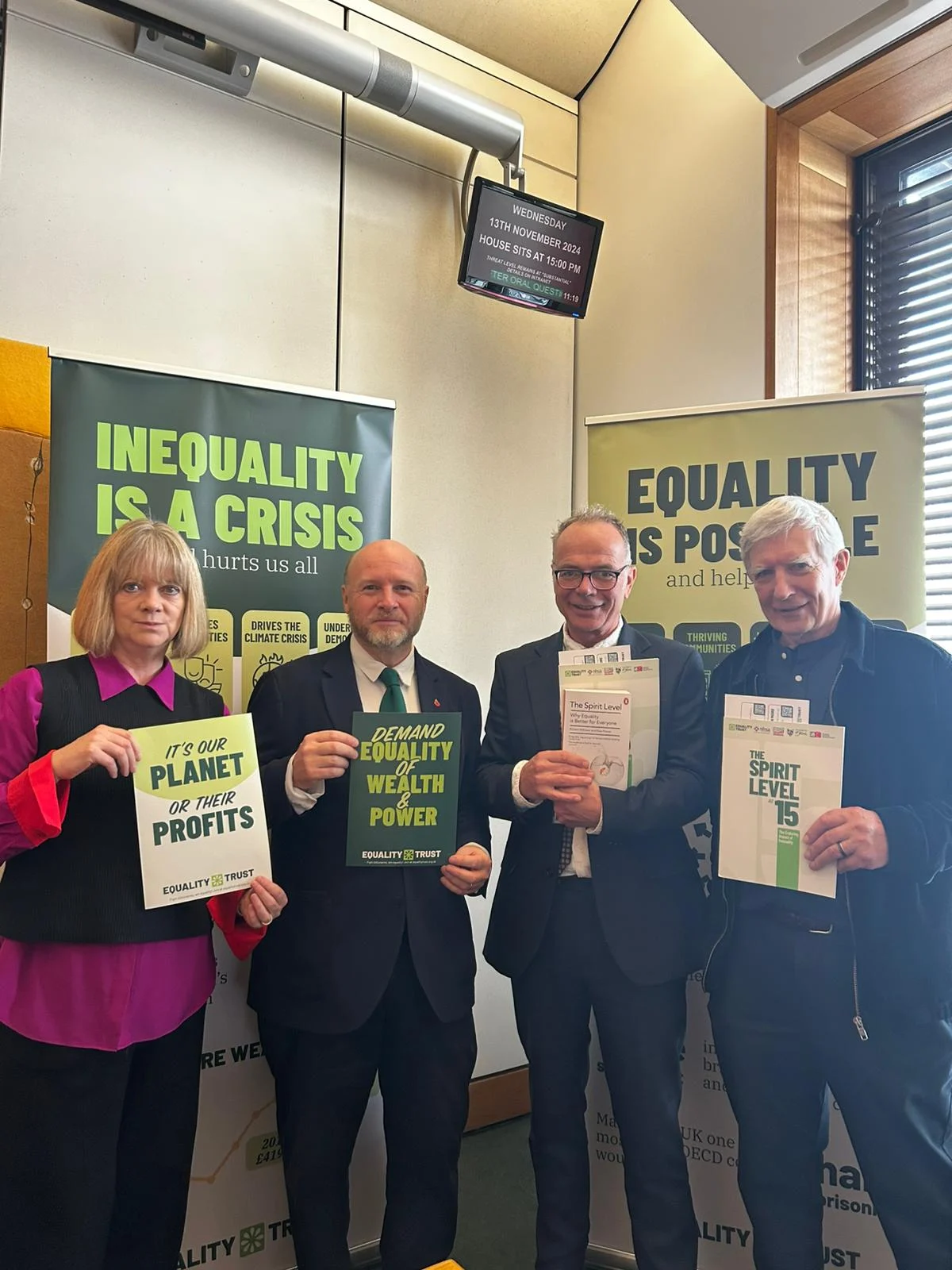
On February 4, 2026, Professor Kate Pickett, a leading figure in the study of social epidemiology and economic inequality, officially launched her latest work, The Good Society, during a high-profile virtual event. Hosted in collaboration with the advocacy group Compass, the launch drew a significant audience of over 500 participants, signaling a continued and deepening public interest in the structural reform of modern economies. The event featured a panel of prominent intellectual and political figures, including Baroness Ruth Lister, environmental journalist George Monbiot, and former Green Party leader Caroline Lucas. This assembly of speakers underscored the book’s multidisciplinary approach, linking economic policy with environmental sustainability and social justice.
The launch of The Good Society marks a significant milestone in Professor Pickett’s career, which has been defined by her rigorous analysis of how social hierarchies and income disparities impact public health and societal well-being. As a co-founder of The Equality Trust in 2009, Pickett has spent nearly two decades advocating for evidence-based policies to reduce the gap between the wealthiest and poorest members of society. This new publication is viewed by many in the academic and policy communities as a cumulative synthesis of her previous research, offering a roadmap for moving beyond the diagnosis of social ills toward the implementation of systemic solutions.
Historical Context and the Evolution of the Equality Movement
To understand the significance of The Good Society, it is necessary to examine the trajectory of Professor Pickett’s work and the broader movement she helped catalyze. In 2009, Pickett and her long-term collaborator, Professor Richard Wilkinson, published The Spirit Level: Why More Equal Societies Almost Always Do Better. That book transformed the international conversation on inequality by providing empirical evidence that societies with narrower wealth gaps perform better across a range of indicators, including life expectancy, literacy, infant mortality, and social mobility.
Following the success of The Spirit Level, Pickett co-founded The Equality Trust to translate academic findings into political action. The organization has since become a central pillar in the UK’s advocacy landscape, campaigning for reforms such as executive pay ratios, progressive taxation, and enhanced social safety nets. In 2018, Pickett and Wilkinson followed up with The Inner Level, which explored the psychological impact of inequality, specifically how high-status competition fuels anxiety, depression, and narcissism.
The Good Society arrives at a time when the global economic landscape is grappling with the long-term aftermath of the COVID-19 pandemic and the escalating pressures of the climate crisis. The 2026 launch reflects a shift in focus from merely highlighting the problems of inequality to articulating a positive vision for a sustainable and equitable future.
Panel Discussion and Key Perspectives
The virtual launch event served as a forum for exploring the intersections of social and environmental policy. Each panelist brought a distinct perspective to the discussion of Pickett’s new book, reflecting the broad coalition currently advocating for systemic change.
George Monbiot, an investigative journalist and environmental activist, emphasized the ecological necessity of equality. Monbiot argued that the hyper-consumption driven by status competition in unequal societies is a primary driver of carbon emissions and biodiversity loss. He noted that The Good Society provides a framework for "private sufficiency and public luxury," a concept that advocates for shared public resources—such as parks, libraries, and transit—as a means of improving quality of life while reducing individual environmental footprints.
Caroline Lucas, representing a political perspective, focused on the legislative challenges and opportunities of the current decade. Lucas highlighted the book’s relevance to the "Green New Deal" framework, suggesting that environmental transitions cannot succeed without addressing the economic insecurities of the working class. She praised Pickett for providing the intellectual ammunition needed to challenge the prevailing neoliberal consensus in parliamentary debates.
Baroness Ruth Lister, a peer in the House of Lords and a renowned scholar of poverty and human rights, spoke to the moral and ethical dimensions of Pickett’s work. Lister emphasized the importance of dignity and agency, arguing that The Good Society is not just about the distribution of wealth, but about the distribution of power and respect within a community.
Supporting Data: The Current State of Global Inequality
The themes explored in The Good Society are supported by a vast body of contemporary economic data. According to the World Inequality Report 2025, the gap between the top 1% and the bottom 50% of the global population has remained stubbornly high despite various international efforts. In the United Kingdom, data from the Office for National Statistics (ONS) indicates that wealth inequality has seen a gradual increase over the last five years, with the richest 10% of households holding approximately 45% of the nation’s total wealth, while the bottom 50% hold less than 5%.
Furthermore, the "cost of living" pressures that intensified in the mid-2020s have disproportionately affected low-income households. Research from The Equality Trust suggests that the "inequality multiplier" has worsened public health outcomes, with a widening gap in healthy life expectancy between the most and least deprived regions of the UK. In 2026, a man born in the most affluent decile can expect to live nearly a decade longer than a man born in the least affluent decile—a statistic that Professor Pickett argues is a direct result of policy choices rather than biological inevitability.
The Good Society utilizes such data to argue that the "neoliberal experiment" has failed to deliver on its promise of "trickle-down" prosperity. Instead, the book points to the Nordic models and other high-equality jurisdictions as evidence that a different path is viable. These nations consistently rank higher on the World Happiness Report and maintain lower carbon footprints per capita compared to highly unequal nations with similar GDP levels.
Analysis of Implications and Future Policy Directions
The publication of The Good Society is expected to influence several key areas of policy debate in the coming years. Central to Pickett’s thesis is the idea of "Economic Democracy." This involves a shift toward employee-owned businesses, cooperatives, and stronger collective bargaining rights. Analysis suggests that such structures not only reduce income disparity within firms but also increase productivity and resilience during economic downturns.
Another critical implication of the book is the move toward a "Well-being Economy." This framework proposes that government success should be measured not by Gross Domestic Product (GDP) alone, but by indicators of social health, environmental stability, and citizen satisfaction. Several nations, including New Zealand and Scotland, have already begun integrating well-being metrics into their budgetary processes, and Pickett’s work provides a theoretical and empirical foundation for expanding this approach.
The book also addresses the psychological dimensions of the modern era. By reducing the "social evaluative threat"—the fear of being judged by one’s economic status—Pickett argues that a more equal society can mitigate the current epidemic of mental health issues. This has significant implications for public spending, as a reduction in stress-related illnesses could lead to substantial savings for the National Health Service (NHS) and other social services.
Chronology of the Book’s Development and Release
The development of The Good Society followed a multi-year period of research and consultation.
- 2009: Launch of The Spirit Level and founding of The Equality Trust.
- 2018: Publication of The Inner Level, focusing on mental health and status anxiety.
- 2022-2024: Professor Pickett conducts extensive field research and meta-analyses of global economic trends following the 2020 global recession.
- Late 2025: Penguin Books announces the upcoming release of The Good Society, positioning it as a definitive guide for the late 2020s.
- February 4, 2026: The official online launch event with Compass, attracting a global audience of academics, activists, and policymakers.
- February 16, 2026: Digital recordings of the launch and supplementary materials are released to the public, facilitating a broader national conversation.
Official Responses and Public Reception
The initial reception to The Good Society has been largely positive within progressive and academic circles. A spokesperson for Compass stated that the book "arrives at a critical juncture where the old economic models are clearly broken, and the public is hungry for a vision that is both radical and achievable."
While some conservative economists have expressed skepticism regarding the feasibility of the book’s proposed tax reforms and wealth redistribution measures, the empirical weight of Pickett’s research makes it difficult to dismiss. Critics often point to the potential for capital flight; however, The Good Society addresses these concerns by advocating for international cooperation and global minimum tax standards—policies that have gained traction in G7 and G20 summits in recent years.
The Equality Trust has announced a series of regional workshops and "town hall" meetings throughout 2026 to discuss the book’s findings and encourage local communities to adopt "Equality Pledges." This grassroots engagement is designed to ensure that the ideas within The Good Society transition from the pages of a book into the fabric of local governance.
Conclusion: A New Paradigm for the Late 2020s
As the world navigates the complexities of the mid-21st century, Professor Kate Pickett’s The Good Society offers a comprehensive argument for why equality is the essential foundation for a sustainable and functional civilization. By synthesizing decades of data with a clear-eyed vision for the future, the book challenges the notion that extreme inequality is a natural byproduct of economic growth.
The successful launch of the book, supported by figures like George Monbiot and Caroline Lucas, indicates a growing consensus that the challenges of the current era—from climate change to the mental health crisis—cannot be solved in isolation. Instead, they require a holistic approach that prioritizes human well-being and ecological balance over short-term financial gain. As Professor Pickett noted during the launch, the goal is not merely to dream of a better world, but to build the institutional and social infrastructure that makes such a world possible. With over 500 people attending the virtual launch and thousands more engaging with the content online, the conversation surrounding The Good Society is set to be a defining feature of the political and social landscape for years to come.