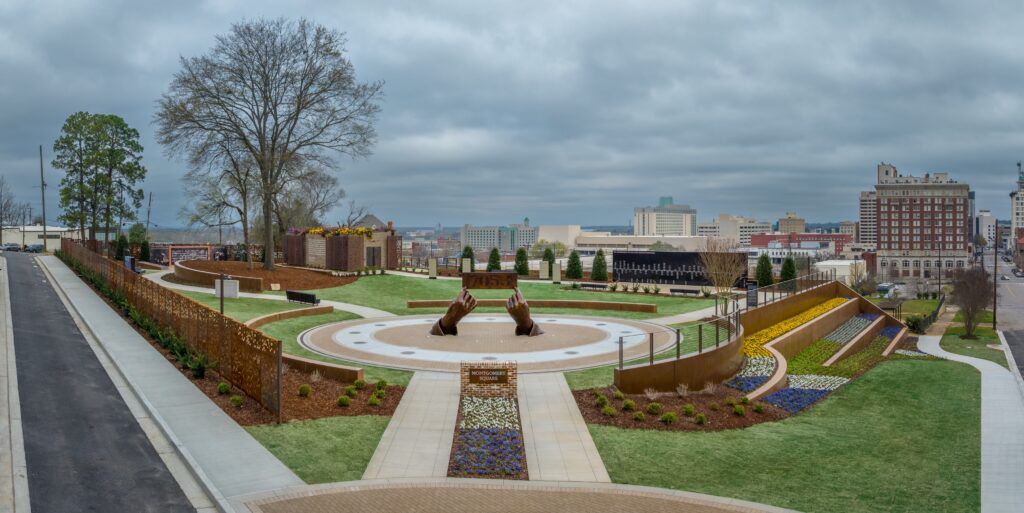
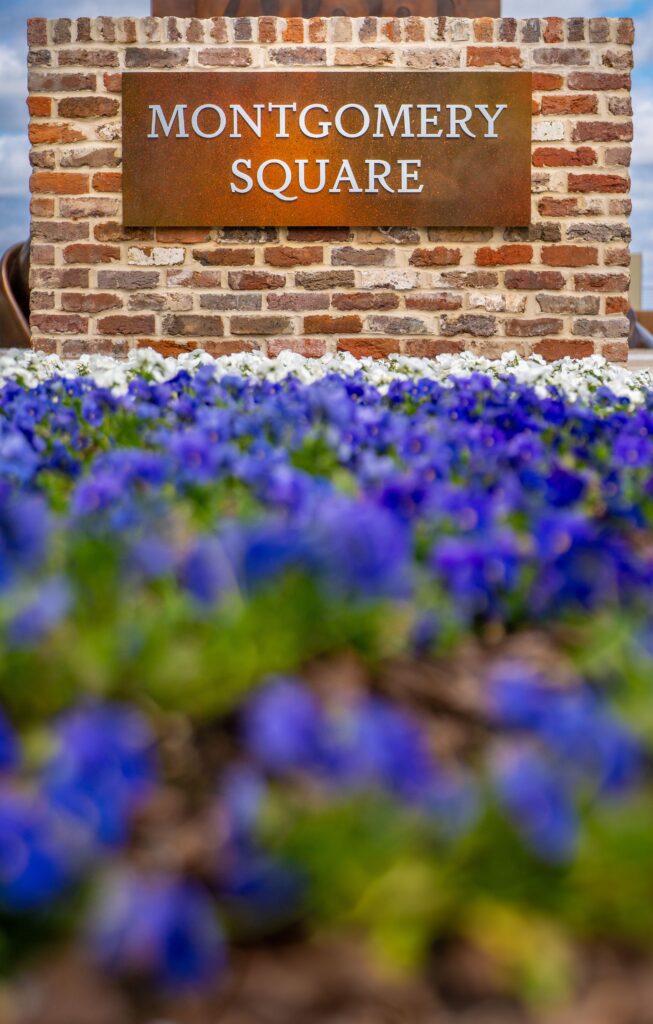
Montgomery, Alabama — The Equal Justice Initiative (EJI) has officially unveiled Montgomery Square, a transformative outdoor heritage site dedicated to the critical decade from 1955 to 1965 when Black residents in Montgomery courageously confronted racial injustice, igniting a movement that fundamentally reshaped the United States and influenced human rights struggles globally. This new addition to EJI’s revered Legacy Sites, which include the Legacy Museum, the National Memorial for Peace and Justice, and the Freedom Monument Sculpture Park, emphasizes the profound significance of place in understanding America’s complex history of racial oppression and the fight for liberation.
Situated prominently at the apex of Montgomery Street, adjacent to the new Elevation Convening Center and Hotel, Montgomery Square occupies hallowed ground. This very thoroughfare served as the triumphant final leg of the historic Selma to Montgomery March on March 25, 1965, where tens of thousands marched for voting rights, culminating in a powerful demonstration of democratic aspiration. The strategic location ensures that visitors literally walk in the footsteps of the women, men, and children whose unwavering bravery and determination, often in the face of brutal opposition, directly led to the landmark passage of the Voting Rights Act of 1965.
Bryan Stevenson, EJI Director and a leading voice in American justice reform, articulated the profound purpose behind the new site. "We are extremely excited to open this site, which explores how Montgomery created a new chapter for democracy and justice in America," Stevenson stated. "The movement birthed by Montgomery’s residents in 1955, culminating in a triumphant march in 1965, changed the cultural, legal, social, and economic landscape of this nation. This history needs to be studied and understood by every American, and we are proud to make learning about this critical decade more accessible to everyone at Montgomery Square."
A Decade of Transformation: The Montgomery Story
The period between 1955 and 1965 in Montgomery, Alabama, represents a condensed yet epochal chapter in the American Civil Rights Movement. It began with the Montgomery Bus Boycott in 1955, sparked by Rosa Parks’ defiant refusal to give up her seat, and concluded with the Selma to Montgomery Marches in 1965, which galvanized national support for voting rights. This ten-year span witnessed a powerful confluence of nonviolent protest, legal challenges, and community organizing that dismantled Jim Crow segregation and laid the groundwork for a more equitable society.
Montgomery was not merely a backdrop for these events; it was a crucible. As the capital of Alabama, a state deeply entrenched in segregationist practices, and a city where racial discrimination permeated every aspect of public life, Montgomery became a symbol of the struggle. The courage displayed by its Black citizens, who faced economic retaliation, threats of violence, and actual violence, underscored the moral imperative of the movement. Their actions demonstrated the efficacy of collective action and nonviolent resistance, inspiring similar efforts nationwide and abroad.
Chronology of Courage: 1955-1965
Montgomery Square meticulously chronicles this pivotal decade through a rich array of exhibits and narratives. A massive timeline details the progression of events, providing essential historical context:
- December 1, 1955: Rosa Parks, a seamstress and NAACP activist, is arrested for refusing to surrender her bus seat to a white passenger. Her act of defiance, though not the first, became a pivotal moment.
- December 5, 1955: The Montgomery Bus Boycott begins. Organized by the Women’s Political Council (led by Jo Ann Robinson) and the Montgomery Improvement Association (MIA), with Dr. Martin Luther King Jr. as its president, thousands of Black residents refuse to ride city buses. This collective action aimed to end segregated seating, courteous treatment for Black passengers, and the hiring of Black bus drivers.
- January 30, 1956: Dr. King’s home is bombed, a stark reminder of the violent opposition faced by civil rights leaders.
- June 5, 1956: A federal court rules in Browder v. Gayle that bus segregation in Montgomery is unconstitutional, citing the Fourteenth Amendment.
- November 13, 1956: The U.S. Supreme Court upholds the Browder v. Gayle decision.
- December 20, 1956: The Supreme Court’s order arrives in Montgomery, leading to the official end of the 381-day bus boycott the following day. This marks a significant victory for the nonviolent direct action movement.
- 1957-1964: While the bus boycott marked a major victory, the struggle for desegregation and voting rights continued. Montgomery and other Southern cities remained battlegrounds for racial equality, with ongoing efforts to integrate schools, public facilities, and ensure access to the ballot box. Figures like Fred D. Gray continued legal battles, while activists engaged in sit-ins and voter registration drives.
- March 7, 1965 ("Bloody Sunday"): State troopers and local police brutally attack peaceful civil rights marchers attempting to cross the Edmund Pettus Bridge in Selma, Alabama, on their way to Montgomery. The televised violence shocks the nation.
- March 9, 1965 ("Turnaround Tuesday"): Dr. King leads a symbolic march to the bridge but turns back to avoid further confrontation, awaiting federal protection.
- March 21-25, 1965: Under federal protection, thousands march from Selma to Montgomery, culminating in a massive demonstration on March 25th in front of the Alabama State Capitol on Montgomery Street.
- August 6, 1965: President Lyndon B. Johnson signs the Voting Rights Act into law, outlawing discriminatory voting practices adopted in many Southern states, including literacy tests and poll taxes, significantly expanding Black enfranchisement.
Immersive Exhibits and Artistic Interpretations
Montgomery Square is designed to be an immersive and deeply educational experience. The mostly outdoor site leverages its physical environment to connect visitors directly to the historical narrative.
Heroes Hall serves as a focal point, screening new documentary films that bring to life the stories of the movement’s architects and participants. Visitors will hear from revered figures such as Claudette Colvin, whose earlier act of defiance on a Montgomery bus preceded Rosa Parks’; Rosa Parks herself; NAACP leader E.D. Nixon; Women’s Political Council organizer Jo Ann Robinson; pioneering civil rights attorney Fred D. Gray; Congressman John Lewis, a veteran of the Selma marches; activists Jo Ann Bland and Sheyann Webb Christburg, who marched as children in Selma; Amelia Boynton Robinson, a leader in the voting rights movement; and Lynda Blackmon Lowery, the youngest marcher from Selma. The Hall also features interviews and powerful speeches from the Rev. Dr. Martin Luther King Jr., whose leadership was central to the decade’s triumphs.
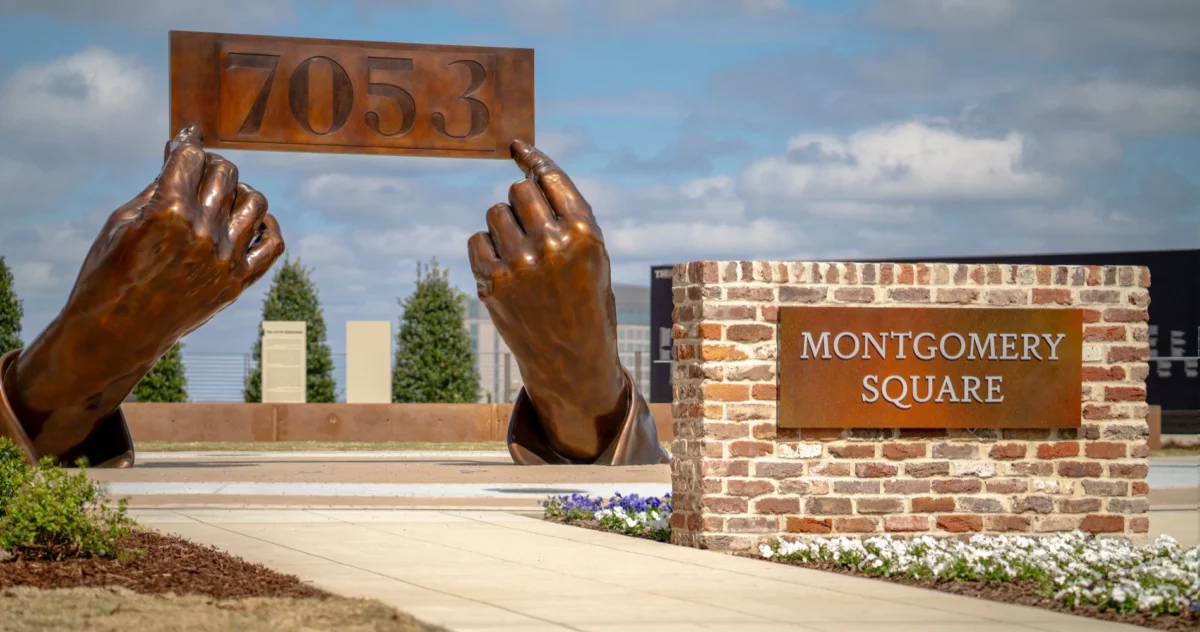
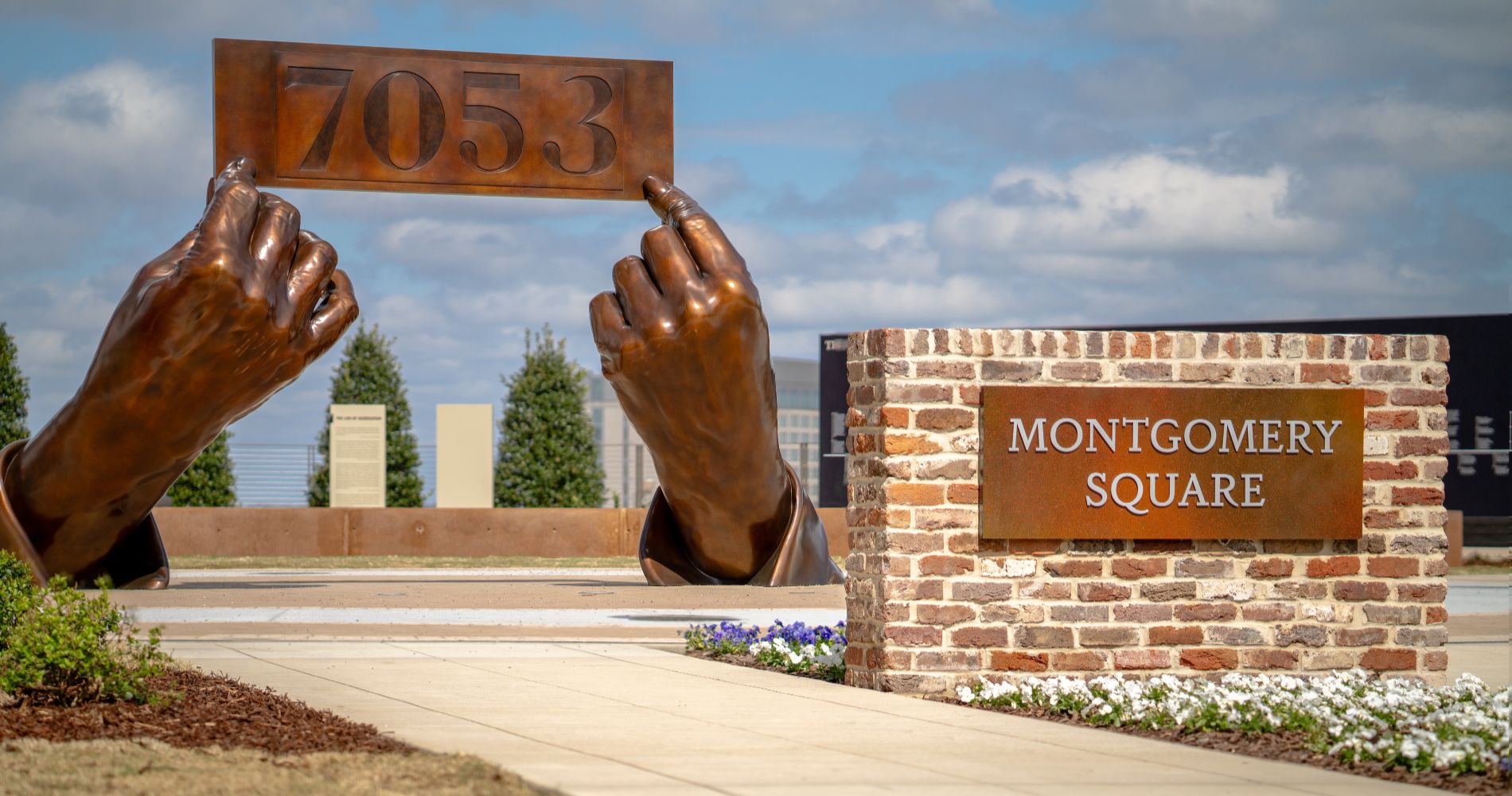
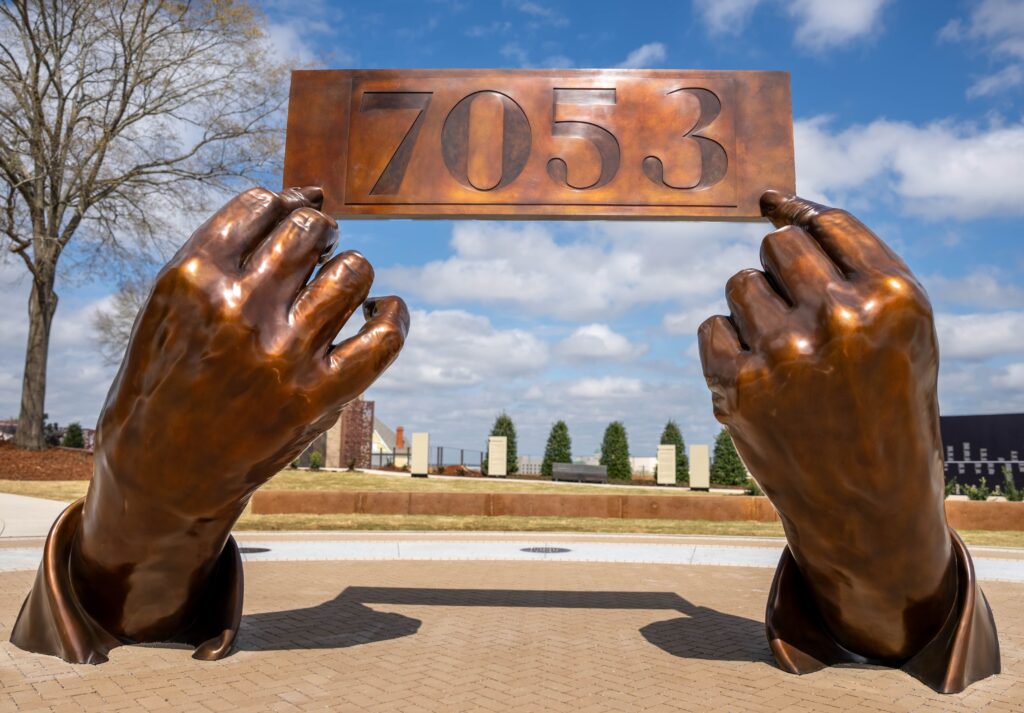
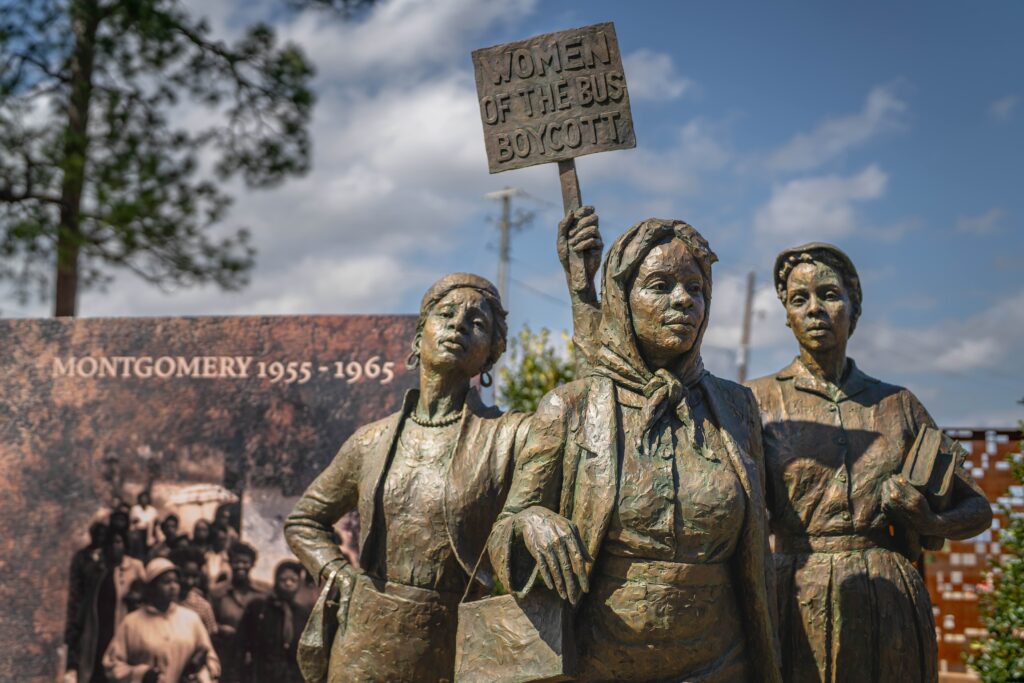
The site also integrates powerful contemporary art with historical photography. Sculptures from acclaimed artists Hank Willis Thomas and Basil Watson vividly illustrate the deeply researched narrative. Thomas’s work often explores themes of identity, commodity, and history, and at Montgomery Square, his sculpture celebrates arrest numbers—a common experience for civil rights protestors—as a badge of honor, transforming symbols of oppression into affirmations of resistance. Basil Watson’s sculpture depicts proud participants in the Montgomery Bus Boycott, capturing the dignity and resolve of those who walked for over a year to achieve justice. Period photography further grounds the narrative, offering authentic glimpses into the daily realities and extraordinary events of the era.
Unveiling the Mechanisms of Injustice
Beyond celebrating the heroes, Montgomery Square unflinchingly documents the systemic nature of racial oppression. Pillars throughout the site display actual segregation laws that created one of the most rigid and extensive systems of racial segregation in the world. These laws, often shocking in their scope and absurdity, barred Black and white people from countless shared activities, including even playing checkers together, illustrating the pervasive and dehumanizing reach of Jim Crow.
The site also confronts the relentless, often violent opposition from tens of thousands of white residents who actively organized to uphold racial segregation in Montgomery. Visitors can read the words of faith leaders, elected officials, journalists, and prominent members of the Montgomery establishment who publicly vowed to "forever stand like a rock against social equality, intermarriage, and mixing of the races in the schools." This documentation provides crucial insight into the formidable challenges faced by the movement and the deep-seated ideologies of white supremacy that had to be overcome.
The Witness Tree and Scholarly Foundations
At the heart of Montgomery Square stands a giant oak tree, a silent, living witness to the momentous events of the Montgomery decade. This venerable tree observed as thousands of Black people walked the city’s streets to end segregation in 1955 and as tens of thousands risked their lives to end Black disenfranchisement in 1965. Its presence serves as a powerful metaphor for the enduring legacy of the struggle and the resilience of the human spirit.
The physical exhibits at Montgomery Square are rooted in hundreds of hours of meticulous research conducted by the EJI. This scholarly foundation is further elaborated in EJI’s new report, The Montgomery Decade That Changed the World: 1955 to 1965, available alongside the comprehensive Montgomery Square website. These resources delve into overlooked historical contexts and highlight the unsung heroes of this transformative decade, ensuring that their contributions are no longer marginalized.
A Beacon for Education and Justice
The opening of Montgomery Square represents a significant contribution to historical education and the ongoing pursuit of justice. By making this critical history accessible and tangible, EJI aims to foster deeper understanding among diverse audiences. Educators, students, historians, local residents, and visitors to Montgomery are encouraged to utilize these resources to gain profound insights into the city’s historic role in championing human rights and launching a worldwide movement towards racial justice.
The site’s free admission and open access (9 am to 6 pm, Wednesday through Monday) underscore EJI’s commitment to making this vital history available to everyone. Montgomery Square is not merely a memorial; it is a dynamic educational space designed to provoke reflection, inspire action, and reinforce the enduring lessons of courage, perseverance, and the transformative power of collective will in the face of injustice. It invites all to experience the "power of confronting injustice in this place," fueled by the deep knowledge gained from EJI’s unparalleled Legacy Sites.