In an increasingly complex world demanding rapid information processing, the human cognitive system often diverts thinking from conscious intentions of open-mindedness, respect, and inclusion. The vast majority of human thought, primarily governed by what psychologists Daniel Kahneman and Amos Tversky termed "System 1" thinking, operates on autopilot. This fast, intuitive, and emotional processing can lead to faulty judgments rooted in immediate feelings, superficial observations, past experiences, ingrained stereotypes, societal norms, and deeply held beliefs acquired during upbringing. However, a deliberate strategy of "reframing"—consciously altering what we perceive and articulate—offers a potent mechanism to recalibrate these inherent mental shortcuts, aligning them more accurately with our aspirations for genuine self-acceptance and respectful interaction with others.
The Unseen Architects of Perception: Societal Norms and Implicit Bias
Our cognitive architecture, particularly System 1, is designed for efficiency, allowing us to navigate daily life without exhaustive deliberation. This efficiency, while crucial for survival, comes at the cost of susceptibility to biases. These biases are not inherently malicious but are the brain’s attempt to make sense of the world using readily available patterns and associations. Throughout our lives, individuals are constantly and often unconsciously internalizing messages that define normative patterns of desirable traits: who is deemed "good," "attractive," "smart," "trustworthy," "a leader," "friendly," "caring," "strong," or "talented." These snap mental associations are powerfully reinforced through a myriad of societal channels, including family dynamics, peer groups, social media influencers, traditional media portrayals, educational systems, reward structures in organizations, and broader cultural narratives.
These pervasive perceptions significantly shape not only our interactions with individuals but also the design and functioning of the systems and institutions we create. The cumulative effect can lead to profound discriminatory impacts, resulting in the systemic exclusion of countless individuals who do not conform to these dominant, often unstated, normative patterns. For instance, research consistently demonstrates how implicit biases affect hiring decisions, performance evaluations, and career advancement, favoring candidates who align with prevailing stereotypes of success or leadership, often along lines of gender, race, or age. A meta-analysis of resume audit studies, for example, revealed that job applicants with "white-sounding" names received significantly more callbacks than identical resumes with "black-sounding" names, underscoring the subtle yet powerful influence of implicit bias in professional gatekeeping. Addressing this pervasive societal challenge serves as a core motivation for practitioners dedicated to advancing diversity, equity, and inclusion (DEI).
The Personal Toll: Internalized Norms and the Rise of "Zoom Dysmorphia"
Beyond the societal impact, these normative patterns exert a profound influence on personal well-being and self-perception. Individuals frequently internalize negative associations about themselves, often unconsciously measuring their own worth against these external ideals. This phenomenon has gained particular prominence in recent years, exacerbated by the global shift to remote work and ubiquitous video conferencing. The sustained exposure to one’s own image during nearly two years of video-based online interactions has led to the emergence of "Zoom dysmorphia."
First reported widely in late 2020 and early 2021, Zoom dysmorphia describes an increased preoccupation with one’s physical appearance, often leading to heightened self-criticism and dissatisfaction with perceived flaws, which individuals attribute to their appearance on video calls. Unlike traditional body dysmorphic disorder, which is a severe mental health condition, Zoom dysmorphia refers to a broader trend of increased anxiety and negative self-assessment related to one’s image as seen through a camera lens. Studies have shown a significant rise in cosmetic surgery consultations since the pandemic began, with many patients citing their self-perception during video calls as a primary motivator. This constant, often unflattering, self-scrutiny on screen can solidify negative self-judgments, even contradicting rationally held positive self-beliefs. This underscores the potent, often irrational, power of internalized normative patterns, where individuals, despite their achievements and inherent value, may find themselves feeling like "outliers" who do not fit societal ideals.
Behavioral Science to the Rescue: Introducing Framing Perceptions Inclusion Nudges
Recognizing the pervasive influence of unconscious biases and internalized negative self-perceptions, behavioral change designers have developed targeted interventions to interrupt and reshape these entrenched mental messages. One such framework is "Inclusion Nudges," a methodology that leverages insights from behavioral science to design subtle prompts and interventions that guide individuals towards more inclusive behaviors and thoughts. A key component of this framework is "Framing Perceptions Inclusion Nudges."
These designs are specifically crafted to alter perceptions, helping the brain interpret issues related to inclusion, diversity, and equality through a more constructive and resource-oriented lens. By strategically priming specific associations and actively countering stereotypes, Framing Perceptions Nudges influence the automatic, often unconscious, and stereotyped reactions of the mind. This is achieved by changing the way an issue or message is framed, thereby shifting the mental "anchor" of a thought process. For example, instead of focusing on a perceived deficit, a reframing nudge might highlight a strength or shared humanity. This approach is rooted in the understanding that while biases cannot simply be "wished away," their influence can be significantly lessened through deliberate design.
As articulated in The Inclusion Nudges Guidebook by Kepinski & Nielsen, "Framing Perceptions Inclusion Nudges are designs that alter perceptions to help the brain perceive issues related to inclusion, diversity, equality in a resource discourse. The designs also prime specific associations and counter stereotypes. Altering the framing of an issue or message and changing the anchor of a thought process helps to promote inclusive behaviour because it influences the reactions in the automatic, stereotyped, and unconscious mind." This scientific approach moves beyond awareness training, offering concrete, actionable strategies for cognitive recalibration.
"That’s a Human…": A Practical Application of Reframing
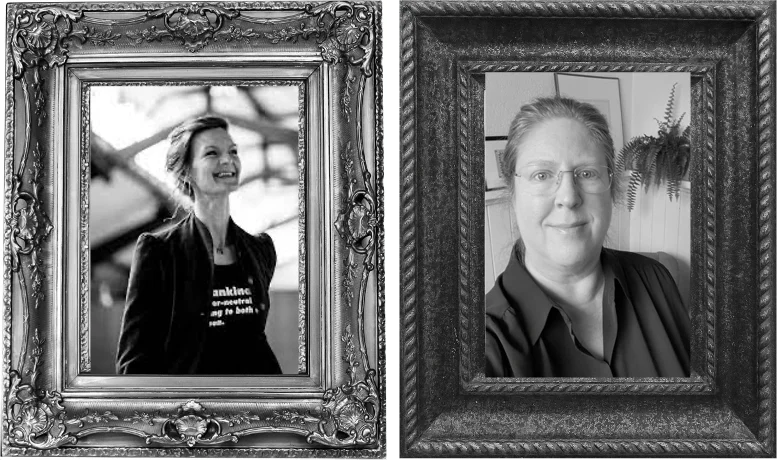
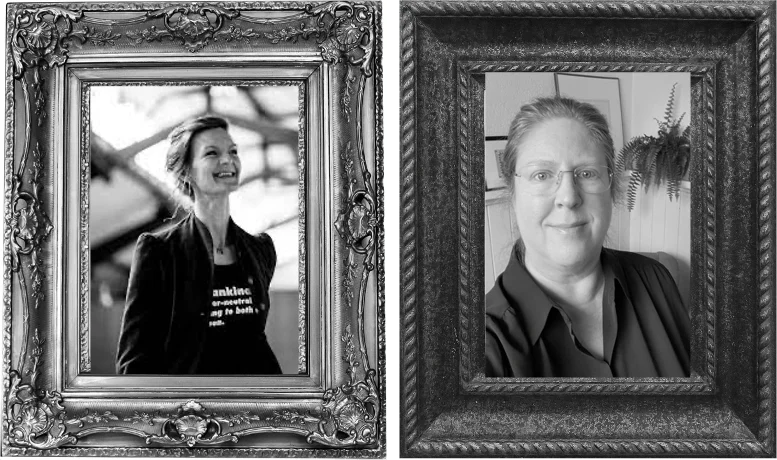
Two behavioral change designers, Lisa Kepinski and Tinna C. Nielsen, co-creators of Inclusion Nudges, developed and experimented with a specific reframing technique they named "That’s a human…" This personal experiment, conducted amidst the backdrop of pandemic-induced isolation and heightened self-scrutiny, aimed to disrupt internalized negative self-perceptions and extend a more inclusive lens to others.
Inspiration and Precedent: The genesis of "That’s a human…" lies in a powerful Inclusion Nudge detailed in The Inclusion Nudges Guidebook: "Re-Frame ‘Migrant’ to ‘Human’." This design originated from the South African non-profit organization PASSOP (People Against Suffering, Oppression and Poverty). Members of PASSOP actively engaged with social media postings that used dehumanizing terms like "refugee crisis" or "migrant problem." Their intervention was simple yet profound: they would comment, "It’s a human crisis" or "They are human beings." This strategic linguistic intervention served to redirect focus from abstract, often stigmatized labels to the inherent humanity of the individuals involved. By shifting the terminology, the design aimed to reframe public perception towards empathy and recognition of shared human dignity. The success of this approach underscored the fundamental principle that to shift perceptions, one often needs to begin by consciously changing the language used.
Methodology and Implementation: Lisa Kepinski adapted this principle to her personal challenge of countering negative self-talk, particularly concerning appearance, during the extended lockdown period. She observed a common pattern: brief, functional glances in the mirror (checking hair, teeth, clothes) would often morph into prolonged scrutiny, inviting critical internal monologues. This "waste of energy" battling between self-criticism and self-confidence became the target for her reframing experiment.
Her process involved several steps:
- Conscious Observation: When looking in a mirror, instead of allowing negative thoughts to surface, she would consciously interrupt them.
- Verbal Re-labeling: She would internally articulate simple, neutral statements such as "That’s a human face," "That’s a human body," or "That’s a human."
- Extension to Others: As this practice became more habitual, she extended it to her observations of other people in public spaces.
Tinna Nielsen, inspired by Lisa’s experiment, adopted a similar practice. She noticed her own tendency to make quick, often judgmental assessments of strangers’ appearances (e.g., "she is skinny," "he is overweight," "ugly shoes"). By consciously deploying the phrase "There’s a human being" upon seeing others, she observed a significant shift. The immediate judgment would often dissolve, replaced by a more neutral and positive internal energy. This also had a reciprocal effect on her self-perception, helping her to feel less like an "outlier" due to her height, reinforcing the idea that she, too, was simply "a human being among others."
Observed Outcomes and Mechanisms: The effectiveness of "That’s a human…" stems from several cognitive mechanisms:
- Interruption of System 1 Bias: By consciously interjecting a neutral, inclusive statement, the technique disrupts the automatic, often negatively biased, thought patterns generated by System 1. This creates a momentary pause, preventing the rapid cascade into self-criticism or judgment of others.
- Cognitive Dissonance: The act of verbally affirming "humanity" while simultaneously recalling a preceding negative or critical thought creates cognitive dissonance. This internal conflict between inclusive intentions and actual unconscious thoughts serves as a powerful motivator for continued practice and self-correction.
- Anchoring and Priming: The consistent use of "human" as an anchor primes the brain to associate individuals (including oneself) with fundamental humanity, overriding superficial judgments based on appearance or perceived deviation from norms. This re-establishes a baseline of respect and acceptance.
- Neuroplasticity: Regular practice of reframing exercises can gradually reshape neural pathways, making inclusive thought patterns more automatic over time. This aligns with the understanding that while biases may not be "cured," their influence can be significantly attenuated through consistent, deliberate interventions.
Lisa’s experience highlights the shock of realizing the disparity between inclusive intentions and actual unconscious thoughts. This dissonance, far from being discouraging, becomes a potent driver for continued engagement with the reframing technique, reinforcing the understanding that managing bias is an ongoing process requiring continuous, deliberate effort.
Broader Implications and Systemic Change
The individual practice of reframing, as demonstrated by "That’s a human…," holds significant implications for broader societal and organizational change. If individuals can consciously recalibrate their internal biases, this collective shift can contribute to more inclusive environments.
- Organizational DEI Strategies: Companies can integrate reframing principles into their DEI initiatives. This might involve training programs that equip employees with tools to identify and challenge their own biases, not just through awareness, but through actionable cognitive interventions. Inclusive language guidelines, for example, encourage employees to consciously choose words that reflect respect and equity, thereby reframing how colleagues are perceived and discussed.
- Policy and Design: The principles of Framing Perceptions can inform the design of policies and processes to mitigate bias. For instance, structuring evaluation criteria to focus on objective achievements rather than subjective impressions can reframe how candidates are assessed.
- Combating Dehumanization: In public discourse, especially concerning marginalized groups, the "Re-Frame ‘Migrant’ to ‘Human’" example illustrates how intentional language can counter dehumanizing narratives, fostering empathy and support for equitable treatment.
- Personal Growth and Well-being: Beyond external interactions, the ability to reframe negative self-perceptions is crucial for individual mental health and self-acceptance, particularly in an era of heightened digital self-scrutiny.
The Inclusion Nudges framework offers other powerful Framing Perceptions designs. "Ask Flip Questions to Change Your Perceptions in the Moment" encourages individuals to challenge their initial assumptions by deliberately asking questions that explore alternative perspectives or counter-stereotypical information. Other designs like "Images Framing Immigrants as One of Us" and "Interrupt Gender Caregiver Stereotypes with Images" strategically use visual cues to challenge stereotypes and foster inclusive associations. These varied applications underscore the versatility of reframing as a behavioral science tool.
Expert Perspectives and Future Directions
The work of behavioral change designers like Kepinski and Nielsen underscores the critical role of applied behavioral science in addressing complex challenges of inclusion. Their experiments, while seemingly simple, are grounded in robust psychological principles. The ongoing exploration and sharing of such practical, evidence-based techniques are vital for fostering a more equitable and accepting world.
The journey to mitigate bias is not about eradicating it entirely—a goal widely considered unattainable—but about designing environments and cognitive strategies that allow individuals to consistently interrupt biased thoughts and actions. This continuous effort requires vigilance, self-awareness, and the deliberate application of behavioral insights. The personal stories and practical designs shared by the creators of Inclusion Nudges serve as compelling invitations for others to engage in this transformative work. By consciously choosing to reframe what we see and say, we empower ourselves to build a more inclusive future, one thought and one interaction at a time. The ongoing dialogue and shared experiences within the DEI community will further refine and expand these powerful behavioral interventions.