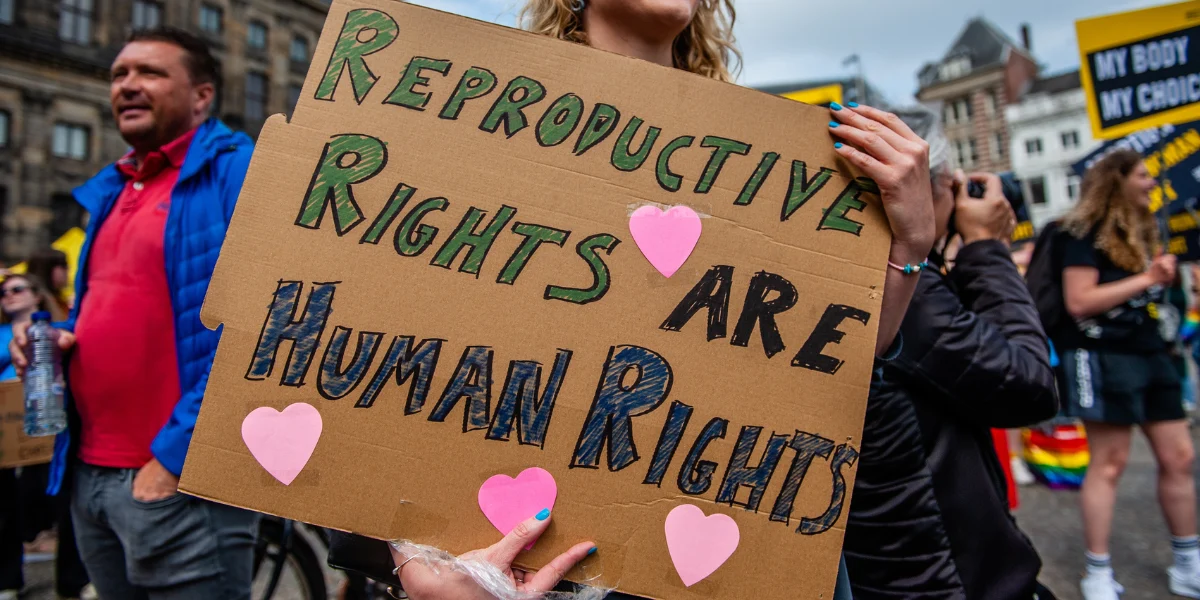
The landscape of reproductive healthcare in the United States is undergoing a period of profound transformation and legal volatility, particularly following the 2022 Supreme Court decision to overturn Roe v. Wade. While the national discourse often centers on the experiences of cisgender women, the nuances of reproductive rights extend deeply into the LGBTQ+ community. This intersection is exemplified by the complexities of reciprocal In Vitro Fertilization (IVF), the medical management of pregnancy loss, and the systemic barriers that queer and trans individuals face when navigating a healthcare system often designed for heteronormative family structures.
For many LGBTQ+ couples, the path to parenthood involves specialized procedures like reciprocal IVF, sometimes referred to as "co-IVF." In this process, one partner provides the eggs, which are fertilized with donor sperm, and the resulting embryo is transferred to the other partner’s uterus. This method allows both individuals to have a physical connection to the pregnancy. However, the success of such procedures is subject to the same biological risks as any other pregnancy, including the occurrence of a "missed miscarriage"—a clinical event that highlights the critical need for accessible surgical interventions such as Dilation and Curettage (D&C).
Clinical Realities and the Chronology of Pregnancy Loss
A missed miscarriage, or silent miscarriage, occurs when a fetus ceases to develop or a heartbeat stops, but the body does not immediately recognize the loss. Unlike a typical miscarriage, there may be no physical symptoms such as cramping or vaginal bleeding. These cases are generally identified during routine ultrasound examinations. Statistical data indicates that while approximately 20% of all known pregnancies end in miscarriage, only about 2% of pregnancies result in a missed miscarriage.
The medical chronology for a patient experiencing this often begins with the confirmation of a viable pregnancy in the early weeks. In many clinical settings, a heartbeat is detectable via ultrasound as early as six weeks. However, between the eighth and tenth weeks of gestation, a routine check-up may reveal the absence of cardiac activity. In such instances, medical providers may refer patients to Maternal Fetal Medicine (MFM) specialists, who utilize high-resolution imaging equipment to confirm the diagnosis.
Once a missed miscarriage is confirmed, patients are typically presented with three management options:
- Expectant Management: Waiting for the body to expel the pregnancy tissue naturally, which can take several weeks.
- Medical Management: The administration of medication (such as misoprostol) to induce the body to pass the tissue.
- Surgical Management (D&C): A procedure performed under anesthesia where the cervix is dilated and the uterine lining is cleared via suction.
The choice of management is often dictated by the patient’s physical health, emotional state, and the risk of complications such as hemorrhage or infection.
The Legislative Impact on Miscarriage Management
The legal environment surrounding reproductive rights significantly dictates the availability of these medical options. In states with progressive reproductive laws, such as New Jersey, patients have ready access to D&C procedures for miscarriage management. However, in the post-Roe era, the distinction between "abortion" and "miscarriage care" has become dangerously blurred in many jurisdictions.
As of late 2024, at least 13 U.S. states have enacted near-total bans on abortion, with an additional 12 states classified as "hostile" toward reproductive rights. Because the D&C procedure used to manage a miscarriage is the same procedure used for elective abortions, medical providers in restrictive states face significant legal peril. Vague statutory language has led to "medical chilling," where doctors hesitate to perform necessary D&C procedures for fear of prosecution, even when a fetus has no heartbeat.
Reporting from ProPublica has highlighted the dire consequences of these legislative hurdles. In several documented cases, women have experienced life-threatening infections or have died because hospitals delayed D&C procedures until the patient’s health had deteriorated to a critical state. This "wait-and-see" approach, necessitated by legal uncertainty, transforms a manageable medical event into a potential mortality risk.
Structural Barriers and LGBTQ+ Healthcare Disparities
For LGBTQ+ individuals, the challenges of reproductive healthcare are compounded by systemic discrimination and a lack of provider education. Data from the Center for American Progress (CAP) in 2024 reveals that 11% of LGBTQ+ individuals struggle to find competent medical providers. This figure rises to 15% for LGBTQ+ people of color and 17% for transgender individuals.
The barriers often begin at the insurance level. Many insurance policies require couples to prove "infertility" by "trying to conceive at home" for 12 months before covering IVF treatments. This requirement is fundamentally discriminatory against same-sex couples, for whom "trying at home" without medical intervention is biologically impossible. Furthermore, insurance agents and medical staff frequently lack familiarity with terms like "reciprocal IVF," leading to administrative delays and the need for patients to advocate aggressively—sometimes involving legal or therapeutic intervention—to receive the benefits they are entitled to.
The impact of clinic closures also falls disproportionately on the queer community. Facilities like Planned Parenthood often serve as primary care hubs for LGBTQ+ patients, providing not only reproductive services but also STI screenings, hormone replacement therapy (HRT), and gender-affirming care. When these clinics close due to state-level abortion bans, LGBTQ+ patients are often forced to travel long distances for basic healthcare. While 1% of the general population has had to travel out of state for reproductive care, that number quadruples to 4% for LGBTQ+ individuals and jumps to 15% for Black LGBTQ+ individuals.
Analysis of Broader Implications
The intersection of queer rights and reproductive justice is not merely a matter of shared political interests; it is a matter of shared medical necessity. The erasure of LGBTQ+ experiences in the reproductive rights debate often stems from the misconception that queer people do not require these services. On the contrary, the ability to access contraception, fertility treatments, and safe miscarriage management is essential for all individuals capable of pregnancy, regardless of their sexual orientation or gender identity.
The psychological toll of navigating these systems is significant. For a couple undergoing IVF, the transition from the "fertility clinic" to a standard OBGYN is often seen as a milestone of success. When that success is met with pregnancy loss, the trauma is exacerbated if the patient is then met with a healthcare system that views their family structure with confusion or their medical needs with legal suspicion.
Furthermore, the economic disparity in access cannot be ignored. The cost of reciprocal IVF—often exceeding $20,000 per cycle—combined with the potential need to travel out of state for a D&C in restrictive jurisdictions, creates a tier-based system of reproductive rights. Those in progressive states or with significant financial resources can navigate these crises with relative safety, while those in restrictive states or lower income brackets face heightened risks to their physical and financial well-being.
Conclusion: The Path Toward Reproductive Justice
The National LGBTQ Task Force emphasizes that reproductive justice is an inclusive framework that recognizes the right to have children, the right not to have children, and the right to raise children in safe and healthy environments. This framework is essential for lesbian, bisexual, transgender, and nonbinary individuals who continue to face unique hurdles in the healthcare system.
The current state of reproductive healthcare in the U.S. reveals a fractured system where geography determines a patient’s safety and autonomy. For LGBTQ+ couples, the journey toward building a family is often marked by both the high-tech promise of modern medicine and the low-tech reality of administrative and legislative hurdles.
As the legal landscape continues to evolve, medical experts and civil rights advocates argue that reproductive healthcare must be recognized as a universal human right. The integration of LGBTQ+ perspectives into the broader reproductive rights movement is not just an act of inclusion; it is a necessary step in ensuring that the healthcare system serves all patients with dignity, regardless of who they are or where they live. The ongoing struggle for access to D&C procedures, fertility treatments, and non-discriminatory insurance coverage remains a central pillar of the fight for equality in the 21st century.