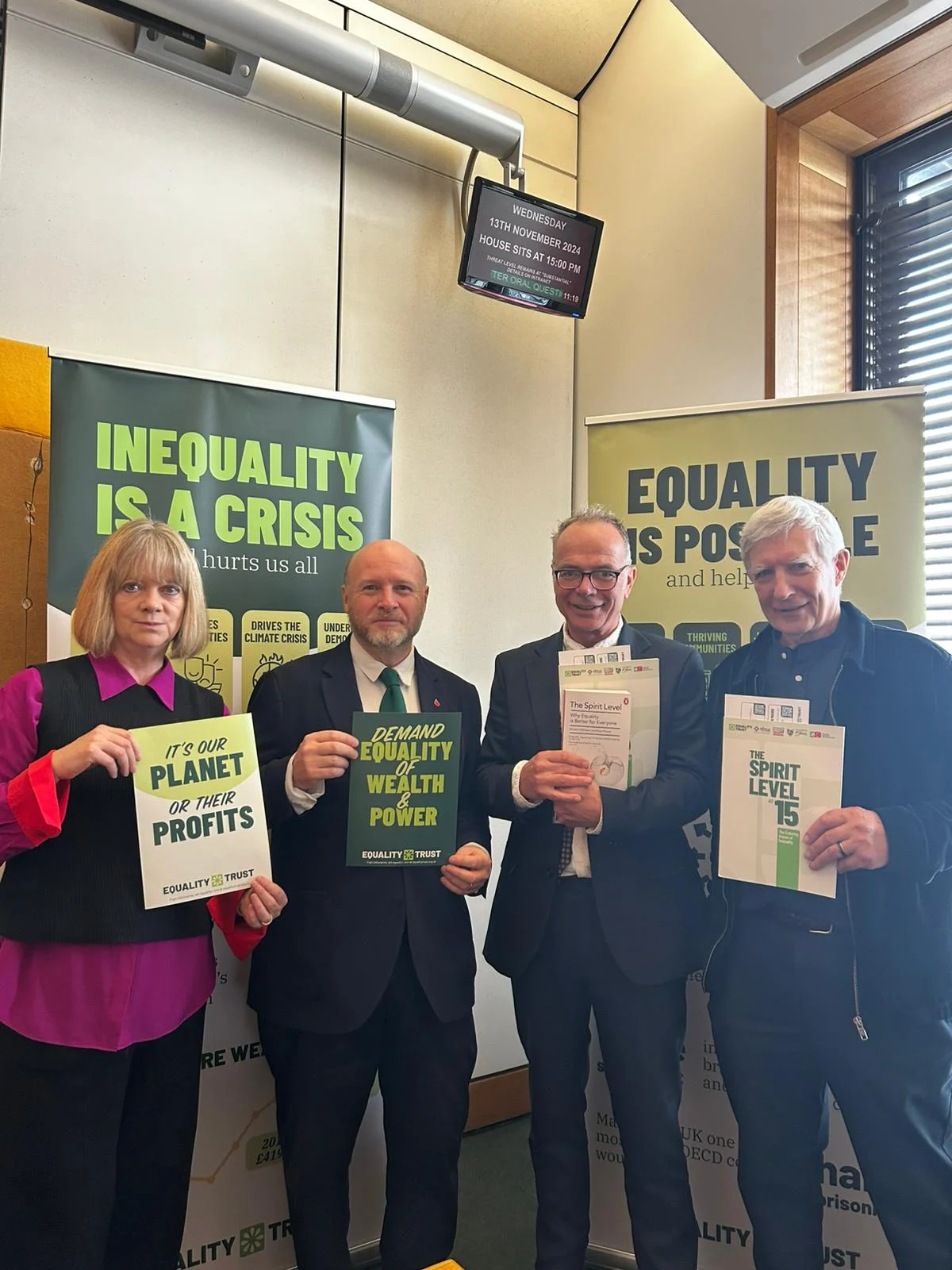
On January 13, 2026, the Public Policy Exchange hosted a high-level forum titled "Tackling Child Poverty: Improving Welfare, Security and Future Prospects," featuring a keynote analysis by Priya Sahni-Nicholas, Co-Executive Director of The Equality Trust. The event served as a critical platform for evaluating the government’s recently unveiled Child Poverty Strategy, the first UK-wide initiative of its kind since 2010. While the strategy has been largely welcomed as a moral and political shift from the austerity-driven policies of the previous decade, the analysis presented by Sahni-Nicholas suggests that the current framework fails to fully address the structural link between poverty and broader economic inequality. By focusing primarily on income redistribution and immediate cost-of-living reliefs, the government risks ignoring the compounding effects of wealth concentration and power imbalances that drive long-term deprivation.
The Current State of Child Poverty in the United Kingdom
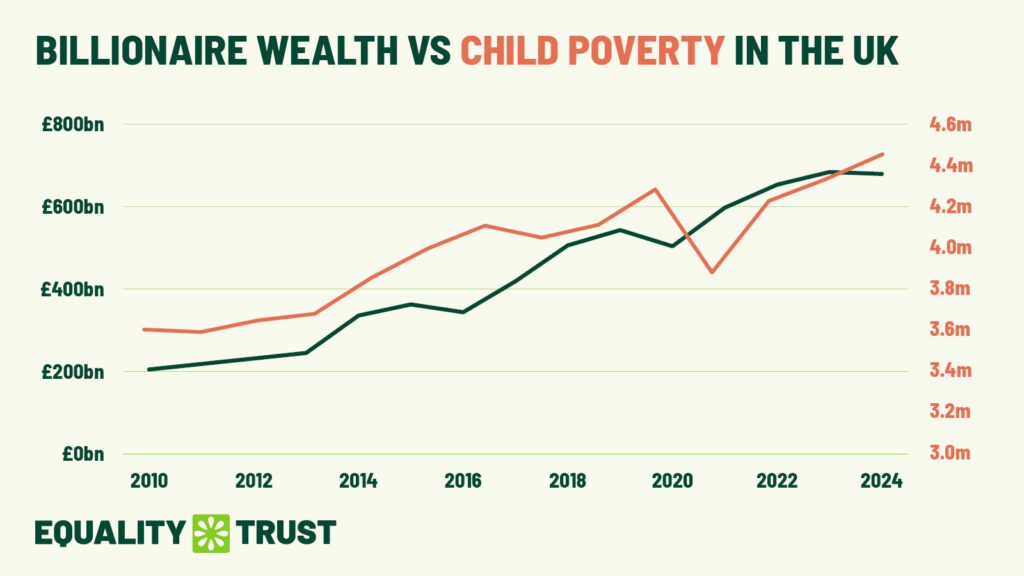
To understand the urgency of the new strategy, one must examine the statistical landscape of the UK over the last 15 years. Unlike many other advanced economies and European neighbors where child poverty rates have seen a downward trend, the UK has experienced a consistent rise in childhood hardship since 2010. As of early 2025, data indicates that 4.5 million children—approximately one in three—are living in poverty. Perhaps more alarming is the depth of this deprivation; nearly 20% of UK children now reside in households that experience consistent food insecurity, unable to meet basic nutritional needs.
The strategy, published in December 2025, explicitly frames these figures as a systemic failure resulting from policy choices made post-2010. It sets an ambitious long-term goal to "end child poverty" and a medium-term objective to significantly reduce poverty levels within the current parliamentary term. However, analysts at The Equality Trust argue that while the strategy represents a serious attempt to mitigate hardship at the "sharp end" of the economic spectrum, it lacks a comprehensive lens that views poverty as a symptom of a highly unequal distribution of assets and resources.
A Chronology of Policy and the Shift in Governance
The evolution of child poverty policy in the UK can be divided into three distinct eras, each characterized by different ideological approaches to welfare and economic distribution.
- The 1997–2010 Era: Under the previous Labour government, child poverty was a core national priority. Through a combination of tax credits, increased benefits, and expanded public services, approximately 600,000 children were lifted out of poverty. This period demonstrated that direct income redistribution is an effective, albeit temporary, tool for narrowing the gap.
- The 2010–2024 Era: This period was marked by "austerity" measures, including the introduction of the two-child limit on benefits and the freezing of local housing allowances. These policies disproportionately impacted larger families and those in low-wage sectors, leading to the current peak of 4.5 million children in poverty.
- The 2026 Strategy: The current strategy seeks to reverse the trends of the austerity era. It acknowledges that poverty is driven by low pay, insecure work, and the rising costs of essentials like housing and childcare, rather than individual moral failings or a "culture of worklessness."
Key Policy Interventions: The "Wins" of the 2026 Strategy
The government’s new roadmap includes several significant policy shifts that have been praised by social advocates. The most impactful of these is the abolition of the two-child limit, a policy widely cited by researchers as a primary driver of rising poverty levels in the late 2010s. Projections suggest that removing this limit will lift approximately 450,000 children out of relative poverty almost immediately.
Furthermore, the strategy broadens the scope of support by:
- Expanding Free School Meals and Breakfast Clubs: Targeting nutritional deficits that impact educational outcomes.
- National Living Wage Increases: Addressing the reality of "in-work poverty," where employment no longer guarantees a life above the poverty line.
- Childcare and Uniform Caps: Implementing measures to reduce the "poverty premium"—the extra costs the poor pay for essential services.
- Lived Experience Integration: For the first time, the government has formally involved organizations like "Changing Realities," ensuring that parents with direct experience of poverty shape the policy diagnosis.
While these measures are redistributive and essential for raising immediate household incomes, Sahni-Nicholas argues they do not tackle the structural "taps" that keep the bath of poverty overflowing.

The Missing Pillar: Wealth and Asset Inequality
The most significant critique leveled by The Equality Trust is the total absence of "wealth" from the government’s strategy. While income refers to the flow of money into a household, wealth refers to the stock of assets—savings, property, and investments—that provide long-term security.
The strategy treats poverty almost exclusively as a crisis of income and cost. However, two families with the same monthly income can have vastly different life chances based on their assets. A family with savings or homeownership can weather an economic shock, such as a job loss or illness, whereas a family with no assets is pushed into immediate crisis. By failing to mention wealth even once in the strategy, the government overlooks how the concentration of assets at the top of the economy directly correlates with the lack of security at the bottom.
Referencing the work of economist Thomas Piketty, the analysis highlights that when the return on capital (wealth) grows faster than the economy as a whole (wages), structural inequality widens. Current UK tax policy exacerbates this by taxing wages at a significantly higher rate than returns on assets. This creates a fiscal environment where public services, funded primarily by income tax, struggle to keep pace with the needs of a population whose wages are stagnating while the cost of asset-based essentials, like housing, continues to soar.
Power and Corporate Influence: The Unspoken Dimensions
Beyond wealth, the dimension of "power" remains unaddressed in the 2026 strategy. Inequality is not merely a distribution of resources; it is a reflection of who shapes the economy. The Equality Trust notes that the strategy discusses "opportunity" and "life chances" but avoids the more challenging conversation regarding how corporate power, the deregulation of housing markets, and political lobbying by the wealthy elite influence the conditions in which poverty is produced.
Historical data suggests that the most dramatic reductions in UK inequality—such as those seen post-World War II—were not the result of targeted anti-poverty programs alone. They were the result of systemic shifts: high levels of unionization, the establishment of the National Health Service (NHS), progressive taxation of high earners, and large-scale social housing projects. These measures shifted power from capital owners to the broader workforce. In contrast, the current strategy attempts to solve poverty at the margins of a system that remains fundamentally designed to reward those with existing capital.
Implications and Future Recommendations
The 2026 Child Poverty Strategy is viewed by many as a "floor," not a "ceiling." To transition from a corrective measure to a transformative one, Sahni-Nicholas and The Equality Trust suggest several future iterations:
1. Integration of Wealth into the National Agenda
Future strategies must address the "wealth gap" directly. This could include policies aimed at encouraging asset-building for low-income families, such as revitalized "Child Trust Funds," or more radical reforms to property and inheritance taxes to ensure a fairer distribution of national assets.
2. Fiscal Reform and Progressive Taxation
Progress in ending child poverty requires a stable and growing funding base. If government revenue remains overly dependent on stagnating wages, investment in public services will remain precarious. Reforming the tax system to align the taxation of wealth with the taxation of income is presented as a necessary step for sustainable social investment.

3. Binding Accountability and Transparency
A ten-year ambition requires more than just rhetoric; it requires binding targets. The Equality Trust calls for transparent reporting and political consequences if milestones are missed. This includes maintaining the cross-government partnership mechanisms that involve the Department for Work and Pensions (DWP), Health, Education, and Housing.
4. Narrowing the Gap, Not Just Raising the Floor
Success should be measured not just by how many children cross an arbitrary poverty line, but by the narrowing of the gap between the richest and poorest in society. High levels of inequality are linked to poorer outcomes in health, education, and social mobility across the entire population, not just those at the bottom.
Conclusion: A Necessary but Incomplete Step
The UK’s new Child Poverty Strategy represents a significant and welcome shift in the national discourse. By reinstating child poverty as a core priority and reversing harmful austerity-era policies like the two-child limit, the government has taken a meaningful step toward reducing immediate hardship. The inclusion of lived experiences and a focus on intersectionality further strengthen the strategy’s potential for impact.
However, as the analysis from The Equality Trust concludes, child poverty cannot be fully eradicated in a vacuum. It is a product of a deeply unequal economic system where wealth is increasingly concentrated and power is unevenly distributed. To truly "end" child poverty, the government must eventually confront the harder questions of structural inequality. Without addressing the mechanisms that allow wealth to grow at the expense of wages, any gains made through income redistribution may remain vulnerable to the next cycle of economic volatility. The strategy is a corrective to the failures of the past, but the path to a truly equitable future for the nation’s children requires a bolder, more systemic approach to economic reform.