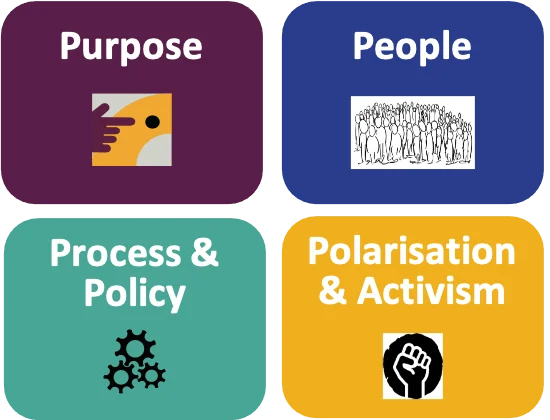
The past two years have marked a period of unprecedented upheaval, transforming the global landscape of work and accelerating a profound re-evaluation of its fundamental nature. The COVID-19 pandemic, far from a fleeting disruption, has acted as a massive, rapid-paced experiment, forcing organizations to adapt at an astonishing speed and fundamentally altering how individuals perceive their careers and their place within the professional sphere. This tumultuous era has brought to the forefront critical questions regarding the future of work, with significant and evolving implications for Diversity, Equity, and Inclusion (DEI). While many uncertainties persist, a clear set of emerging trends, categorized broadly as shifts in Purpose, People, Process & Policy, and Polarisation & Activism, are charting a new course for workplaces worldwide.
Background: The Pre-Pandemic Equilibrium and the Shockwave of Change
Prior to early 2020, the dominant work model largely adhered to established norms: centralized offices, fixed hours, hierarchical structures, and a tacit expectation of personal sacrifice for career advancement. Remote work, while technologically feasible, was often a niche benefit, frequently viewed with skepticism by management and carrying a stigma for employees. Corporate social responsibility existed, but employee activism on social and political issues within the workplace was less pronounced. The pandemic shattered this equilibrium overnight. Lockdowns, health crises, and economic instability compelled an immediate, unplanned transition to remote operations for many, exposing the vulnerabilities and inequities embedded within existing systems. This forced introspection, both organizational and individual, laid the groundwork for the transformative shifts now being observed.
1. The Resurgence of Purpose: A Fundamental Re-evaluation of Work
The pandemic served as a stark reminder of life’s fragility and the importance of personal well-being, prompting millions to re-evaluate their values and how their work aligns with their broader purpose. A U.S. McKinsey survey revealed that nearly two-thirds of respondents engaged in deep reflection on purpose due to the pandemic experience. Questions such as "Is this job truly worth my energy and time?" moved from abstract philosophical ponderings to urgent, actionable considerations.
This introspection has significantly altered traditional career motivations. An August 2021 global Edelman survey highlighted that nearly 60% of employees have either left or are actively planning to leave their jobs to find roles that better align with their personal values, while 50% seek improved lifestyles. These motivations now often eclipse the desire for higher compensation or accelerated career growth, which historically drove job changes. The shift is generational, too: U.S. millennial workers were three times more likely to be re-evaluating their careers, and in the U.K., the number of employees over 50 opting for early retirement more than doubled since the pandemic’s onset. While not every departure is solely purpose-driven, it has undeniably become a central factor.
Implications for DEI: The re-prioritization of purpose has critical DEI implications. Pre-existing inequities, such as the disproportionate burden on women with caregiving responsibilities, became glaringly apparent during lockdowns. While this dual burden was not new, the pandemic made its unsustainability undeniable. Reports indicate significantly higher rates of burnout and resignations among women with caregiving roles. Globally, women’s employment declined by 4.2% (54 million) in the first year of the pandemic, compared to 3% for men. This highlights an urgent need for work models that holistically integrate personal purpose with professional life, especially for underrepresented groups, to prevent further widening of equity gaps. Organizations that genuinely foster an environment where employees can connect their personal purpose with their work are likely to see increased engagement and retention, moving beyond a pre-pandemic "intention-action gap" where 79% of business leaders acknowledged purpose’s importance but only 34% used it in decision-making.
2. The Power Shift to People: Navigating the Great Resignation and the Inclusive Recovery
The economic and social fallout of the pandemic has undeniably shifted power dynamics, placing employees in a stronger position to voice their expectations for attracting and retaining talent. This phenomenon, widely dubbed "The Great Resignation," signifies a mass exodus from traditional employment structures. A March 2021 Microsoft survey found that over 40% of employees were considering leaving their jobs within the year. While resignation trends pre-dated the pandemic, the crisis dramatically accelerated them. In August 2021, the U.S. saw 4.3 million voluntary quits alongside 10.4 million open jobs, while the U.K. recorded over 1 million vacancies. This talent gap is projected to persist, with 70% of U.S. employers expecting it to continue into 2022, and 61% struggling with employee retention. Germany’s business leaders also reported an 11% jump in concerns over skilled labor shortages in three months to July 2021, reaching 34.6%.
Who is Leaving? Analysis by the Harvard Business Review indicated that resignation rates were particularly high among mid-career professionals (up 20% from pre-pandemic levels) in high-demand sectors like technology and healthcare. The service and hospitality industries, historically characterized by high turnover, continued this trend, but with heightened public awareness and empathy for their often-poor working conditions. A new trend, "Rage Quitting," has also emerged, where workers spontaneously leave jobs due to untenable negative work environments, underscoring a sharp decline in tolerance for exploitative or toxic workplaces.
Implications for DEI: This employee-centric shift underscores the critical need for valuing individuals and ensuring inclusive workplaces with fair labor practices. The "Great Reset" and "build back better" initiatives must inherently embed people-centered work cultures. However, the narrative of "The Great Resignation" must also be balanced with "The Great Divergence," acknowledging significant inequalities in economic recovery. Not all pandemic-era employment changes were voluntary. OECD countries reported 20 million fewer people in work since the pandemic began, with over 110 million fewer jobs globally. The ILO calculated global hours worked in 2021 to be 4.3% below pre-pandemic levels, equivalent to 125 million full-time jobs, disproportionately affecting low-paid positions. This "inclusive recovery" necessitates a fundamental reset of talent and employment strategies to ensure fairness and equity for all, especially those who experienced involuntary job losses or reduced hours.
3. Redefining Process & Policy: The Dawn of Flexible Work and Co-Created Solutions
The pandemic acted as a powerful diagnostic tool, exposing the obsolescence of many long-standing workplace norms and processes. The forced shift to remote work illuminated the impracticality of "presenteeism," long commutes, rigid dress codes, and the expectation of "always-on" availability. Issues like poor working conditions, unfair compensation, discrimination, and a lack of psychological safety, previously tolerated or overlooked, became glaringly obvious. This period presented a unique opportunity for organizations to re-evaluate, redesign, and experiment with new solutions for where and how work is done.
The Hybrid Work Revolution: The most significant policy shift revolves around work location. Emerging data, while sometimes conflicting, consistently shows a strong desire among various demographic groups for continued remote or hybrid work. In the U.S., remote work is projected to continue at least one day a week, with the desire for flexible arrangements strongest among women, working parents, and employees of color, who reported gains in employee experience scores while remote. This shift is anticipated to have wide social ramifications, including increased employee diversity, improved work-life balance, and expanded talent pools as geographical constraints diminish. However, many employees expect more than one day of remote work and are willing to quit if it’s not the norm. Pre-pandemic, remote work policies were often ad hoc, leading to biases and disproportionately favoring senior males, while working mothers faced stigma, and junior staff feared requesting flexibility. The pandemic, by normalizing remote work for a vast majority, has created an imperative to formalize inclusive, equitable policies.
The Imperative for Co-Creation: Crucially, how these new policies are developed is as important as their existence. A top-down approach, designed in isolation, risks being unfit for purpose, lacking employee acceptance, and exacerbating existing inequalities. A multi-country survey of knowledge workers revealed that a staggering 66% of executives were designing post-pandemic workforce policies with little to no direct input from their employees. This disconnect leads to overconfidence, with 66% of executives believing they are "very transparent," while only 42% of workers agree. This lack of inclusive co-creation risks alienating the very workforce these policies aim to serve. The pandemic-era demands a new approach: policies must be assessed against current and future needs, co-created with diverse input from across the organization, integrate behavioral insights, and be implemented with agile experimentation.
4. Navigating Polarisation & Activism: The Rise of the Belief-Driven Employee
The emotional toll of the pandemic—sadness, loss, fear, and anger—has spilled over into broader society, intensifying existing divisions. Research across 17 countries showed that 60% of people felt society was more divided than before the pandemic, a 30% increase from pre-pandemic rates. This polarization manifests in workplaces through debates over "no jab, no job" policies, leading to internal friction. Public frustration, fueled by pandemic-related anxieties, has also led to a surge in customer abuse towards frontline workers, particularly in hospitality and service sectors, where up to 80% reported experiencing or witnessing such incidents. Simultaneously, the pandemic has starkly highlighted widening inequalities, particularly concerning access to vaccines and economic recovery, further exacerbating the gap between the "haves" and "have-nots."
Beyond pandemic-specific issues, a long-term erosion of trust in public officials and civic institutions has reached a critical point. An August 2021 global study found that Millennials and Generation Z exhibit such deep distrust that they express higher "faith in governance by system of artificial intelligence than by a fellow human being." This generation’s frustration with corruption, stale political leadership, and threats to physical safety (e.g., surveillance, militarized policing) has fueled a surge in social activism. The tragic murder of George Floyd in May 2020 ignited global Black Lives Matter and anti-racism protests in over 60 countries, bringing issues of inequality and discrimination squarely into workplace discussions.
The Activist Workforce: Employees are no longer passive observers; they are increasingly demanding that their workplace leaders take a stand on key social issues, with one global study reporting 76% of employees expecting this. Moreover, employees are energized to act themselves, with 60% in an August 2021 survey feeling empowered to be change-makers in their workplace. A significant 75% globally stated they would take action to advance urgently needed changes within their organization, with 40% prepared to go public through whistleblowing, protesting, or social media posts. The U.S. has also seen a resurgence in interest in labor unions, with over 25,000 workers on strike in October 2021, compared to an average of 10,000 in the preceding three months, signaling a desire for collective agency in shaping workplace cultures and safeguarding human rights.
Implications for DEI: Organizational leaders appear to be lagging in their response. The same global survey indicated that only 48% of employers were perceived as acting on their values. This inaction carries significant risks: lowered trust, diminished leadership credibility, and reduced employee engagement. It directly contributes to "The Great Resignation," with 33% of employees quitting when their employer "didn’t speak out about a societal or political issue the employee felt it had an obligation to address." The era of the silent executive on DEI issues is over. Lip service and "nice sounding public statements" without tangible change are no longer acceptable. The new standard for leadership is active, inclusive allyship, demonstrated through concrete actions.
Broader Impact and Implications for DEI: A Call for Inclusive Leadership
The confluence of these four transformative trends—Purpose, People, Process & Policy, and Polarisation & Activism—has fundamentally reshaped the landscape for Diversity, Equity, and Inclusion. The pandemic has not merely highlighted existing DEI challenges; it has amplified them and created new imperatives for action.
- Purpose-driven work necessitates a deeper integration of personal values into organizational culture, requiring leaders to foster environments where diverse individuals can find meaning and belonging. This includes addressing systemic barriers that prevent certain groups, like women caregivers, from achieving work-life integration.
- The power shift to employees and the dynamics of "The Great Resignation" underscore that inclusive workplaces are no longer a "nice-to-have" but a strategic imperative for talent attraction and retention. An inclusive recovery demands targeted efforts to address the disproportionate job losses and economic impacts on marginalized communities.
- The revolution in process and policy, particularly the move towards flexible and hybrid work, presents immense opportunities to enhance DEI by expanding talent pools, improving accessibility, and supporting diverse work styles. However, without inclusive co-creation, these policies risk perpetuating or even exacerbating inequalities, highlighting the critical need for employee voice in design.
- The rise of polarization and activism within and outside the workplace means that DEI can no longer be confined to HR initiatives but must be a central tenet of organizational leadership and external engagement. Leaders are now expected to be moral compasses, actively addressing social justice issues and demonstrating allyship through action, not just rhetoric.
Looking Ahead: The Path to a More Equitable Future
The pandemic has served as an undeniable catalyst, forcing organizations to confront outdated models and embrace a future of work that is inherently more flexible, purpose-driven, and employee-centric. The challenges are significant, ranging from managing the complexities of hybrid work to fostering unity in a polarized world, all while ensuring that economic recovery is genuinely inclusive. This period of rapid experimentation and ongoing evolution demands adaptive, empathetic, and courageous leadership. Organizations that proactively engage with these shifts, integrate DEI into their core strategy, and empower their diverse workforce will not only survive but thrive in this new paradigm. The moment is ripe for profound changes, moving towards workplaces that are not just productive, but also equitable, meaningful, and sustainable for all.
Expert Advisory and Resources:
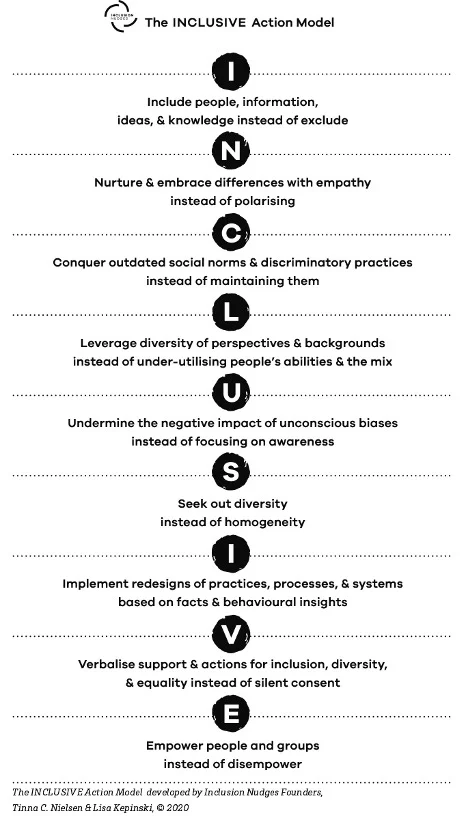
For organizations navigating these complex shifts, leveraging specialized expertise in DEI and behavioral insights is crucial. Advisory consulting, coaching, and speaking engagements can support leaders and change-makers in designing and implementing inclusive strategies. Resources such as the Inclusion Nudges framework offer practical, evidence-based tools to address unconscious biases and foster equitable environments. These include "Show Data to Easily See Problems & Do Actions," "Reveal Gaps in Flexible Working to Increase Use by All," "Flexible Working as the Default & Norm," "Ask Flip Questions to Change Your Perceptions in the Moment," "Anti-Xenophobia Campaign Realising What We Lose," and "Alternative to Diversity Excuses." Further insights are available through articles such as "Ask Lisa & Tinna: How Do I Create New Inclusive Workplace Models?" and "Reframe Language on How We Work Today," emphasizing the need for active allyship and empathetic perspective-taking in shaping the future of work.